ルージュ周辺のおすすめ交通量の少ないサイクリングルート
4.5
(98)
524
ライダー
58
ライド
ルーゲ周辺の交通量の少ないサイクリングルートは、ボワ・デ・ラ・ウセのような池や森が点在する、静かで緑豊かな田園地帯が特徴です。この地域には、「 voies verte」(グリーンウェイ)や「Sentiers des Pierres Rouges」(レッドストーントレイル)などの専用サイクリングパスがあり、安全で楽しい探索ができます。これらのルートは、かつての鉄道線路に沿っていることが多く、ほとんどが舗装されており、さまざまなスキルレベルに適した緩やかな路面を提供しています。この景観は、身体活動と文化的・自然的な発見を組み合わせるための景色の良い背景を提供します。
ルーゲ周辺の交通量の少ないサイクリングルートのベスト
- 最も人気のある交通量の少ないサイクリングルートは、シャトー・デ・シャトーブリヤン – クールティエール池ループ(シャトーブリヤン発)で、62.9マイル(101.2 km)の難易度の高いトレイルで、所要時間は6時間18分です。この広大なルートは、池や歴史的な見どころを含む、この地域の多様な地形を探索します。
- 地元のサイクリストに人気のもう一つのルートは、シャトー・デ・シャトーブリヤン – シャトーブリヤン城ループ(ルーゲ発)で、17.0マイル(27.4 km)の簡単なパスです。このルートは、ルーゲ周辺の緑豊かな景観を通り抜け、歴史的なシャトー・デ・シャトーブリヤンへ直接接続しています。
- 地元のサイクリストは、ミュゼ・デ・ミーヌ・デ・ラ・ブルッツ – シャトー・デ・シャトーブリヤンループ(マラネ発)も気に入っています。この27.7マイル(44.6 km)のトレイルは、歴史的な鉱業の重要性を持つ地域を通り抜け、所要時間は約2時間43分です。
- ルーゲ周辺のサイクリングは、緑豊かな田園地帯、専用のグリーンウェイ、歴史的な場所によって定義されます。このネットワークは、簡単なループからより挑戦的な長距離ルートまで、さまざまな能力レベルのオプションを提供します。
- ルーゲのルートは、90件以上のレビューから平均4.4つ星という高い評価をkomootコミュニティから受けています。500人以上のサイクリストがkomootを利用して、ルーゲの多様な地形を探索しています。
最終更新日: 5月 22, 2026
4.7
(3)
29
ライダー
101km
06:19
670m
670m
難しい自転車ライド. 標準以上のフィットネスレベルが必要です。 全般的に舗装された状態です。あらゆるスキルレベルに適しています。
5.0
(4)
5
ライダー
44.6km
02:43
260m
260m
中程度の自転車ライド. ある程度のフィットネスレベルが必要です。 全般的に舗装された状態です。あらゆるスキルレベルに適しています。

無料新規登録
4.0
(1)
5
ライダー
36.8km
02:32
240m
240m
中程度の自転車ライド. ある程度のフィットネスレベルが必要です。 全般的に舗装された状態です。あらゆるスキルレベルに適しています。
4.0
(1)
9
ライダー
64.7km
03:52
280m
280m
中程度の自転車ライド. ある程度のフィットネスレベルが必要です。 全般的に舗装された状態です。あらゆるスキルレベルに適しています。
5.0
(1)
4
ライダー
39.2km
02:24
270m
270m
中程度の自転車ライド. ある程度のフィットネスレベルが必要です。 全般的に舗装された状態です。あらゆるスキルレベルに適しています。
さらに多くのルートや他のユーザーのおすすめ情報を確認できます。
無料新規登録
すでにアカウントをお持ちですか?
おすすめのツアーは他のkomootユーザーが実際に経験した何千ものアクティビティに基づいています。
無料アカウントで今日から始めよう
次の冒険が待っています。
ログインまたは登録



コミュニティからのヒント

Located in Teillay, this museum traces the history of coal mining, which marked the region from the 19th to the 20th century. Located on a former mining site, it presents machinery and miners' testimonies.
0
0


The church, which consists of a large nave and two six-bay aisles, a transept, and a three-bay choir without an ambulatory, is 65 meters long. The transept is 26.50 m long, and the naves are 17.5 m wide. The bell tower is 65 meters high without the cross. It has a set of five bells made in 1895 by the Bollée foundry in Le Mans: Saint-Nicolas (the bourdon), weighing 4027 kg, playing the A of octave 2 Anne, weighing 1552 kg, playing the D of octave 3 Marie, weighing 1067 kg, playing the M of octave 3 Joséphine-Jeanne, weighing 726 kg, playing the F sharp of octave 3 Henriette-Victorienne, weighing 450 kg, playing the A of octave 3
0
0
The original chapel, initially dedicated to Notre-Dame, was built by Geoffroy IV, Baron of Châteaubriant, on the site where the cattle market was held from May to October until 1763. A text attests to its existence in 1263. [Threatening to fall into ruin, it was demolished in 1518, leaving only the choir of the old chapel standing. The place of worship was immediately rebuilt in a more spacious form using Châteaubriant schist (Nozay stone), based on the plans of Jean Delorme, brother of Philibert Delorme, thanks to the demolition of a neighboring house and the financial support of Jean de Laval. However, the latter's poor financial situation meant that by 1530, only the nave of the building had been built. At the death of Françoise de Foix in 1537 and Jean de Laval in 1543, the Notre-Dame chapel still lacked a framework. It was not until 1551 that the final work was undertaken by Baron Anne de Montmorency. The dedication of the new place of worship took place ten years later, on November 5, 1561, in the presence of the coadjutor of the Bishop of Nantes, and the name of Notre-Dame was changed to Saint-Nicolas, for an unknown reason. On the same day, the body of Jean de Laval, then encased in a lead reliquary, was transported from the castle chapel to the new building. Jean de Laval had wished to see the chapel erected as a collegiate church, but this wish was not granted. However, the building, as vast as a church, shared the honors of worship with the Church of Saint-Jean de Béré, which was then the parish church of the town, until the Revolution. Indeed, the Saint-Nicolas chapel, although of undeniable architectural value, was not suitable for worship in a parish as large as that of Châteaubriant. Nevertheless, in the 15th and 16th centuries, masses, vespers, and many ceremonies were held in the chapel for reasons of convenience, as it was closer to the town of Châteaubriant, while baptisms were all celebrated at Saint-Jean de Béré. At the end of the 19th century, the church, which became the parish seat in 1801, was completely rebuilt. The architect Eugène Boismen drew up the plans, inspired by those of the Saint-Nicolas basilica in Nantes, one of the first neo-Gothic projects in France, which was beginning to inspire architects throughout the west of the country. The foundation stone was blessed on April 25, 1875, by Bishop Fournier of Nantes. The choir, sacristies, transept, and five bays were only completed at the time of the consecration, which was performed by his successor, Bishop Le Coq, on February 1, 1881. The foundations of the bell tower and the remaining bay began in June 1892, based on plans by architect François Bougoüin. The tower and spire were completed in August 1894.
0
0
nighttime. A medieval fortress and Renaissance building, Châteaubriant Castle recounts ten centuries of history. In the Middle Ages, Châteaubriant Castle was at the heart of the Marches of Brittany. It served as a stronghold defending the duchy against the Kingdom of France. The keep, ramparts, seigneurial chapel, and the medieval courtyard lodgings still bear witness to the power of this fortress. In the 16th century, the bailey became a residence opening onto the gardens. The castle gardens are open to the public from February to December. Visit maps are available at the reception-shop for a better understanding of the site. A 3D space allows you to discover, with free access, the architectural evolution of the castle, from the 11th century to the present day. From February to December, heritage mediators will accompany you on an in-depth tour of the castle, its keep, and its gardens. During school holidays, family workshops allow parents and children to develop their creativity or spark their curiosity! Opening days: Gardens are open to the public, Wednesday to Sunday: 9am-6pm (February-March and October-December) or 9am-7:30pm (April-September). Prices: - Free entry for those over €0.00 (Free access to the château gardens) - Individual adult rate from €3.00 to €6.00 (Guided tours, free for those on minimum income and special cards) - Individual child rate from €0.00 (Guided tours free for those under 26) - Individual child rate from €0.00 (Guided tours free for those under 26) Child from €4.00 to €8.00 (Family activity) - Adult group rate from €5.00 (From 15 people) Payment methods: Credit cards - Bank and postal checks - Cash Tours Self-guided tours (individual): Yes Guided tours (individual): Yes Average visit duration (individual): 1 hour Self-guided tours (groups): Yes Guided tours on request (groups): Yes Guided tours (groups): Yes Average visit duration (groups): 1 hour Languages: Tour: French, English - Signs: French, English Services: Interactive kiosk - Shop - WiFi Additional information: Groups of 15 people or more are welcome - Pets allowed (Dogs on leashes are allowed in the park.) - Points of interest visible without a tour Access Location: SNCF train station: 0.5 km
0
0

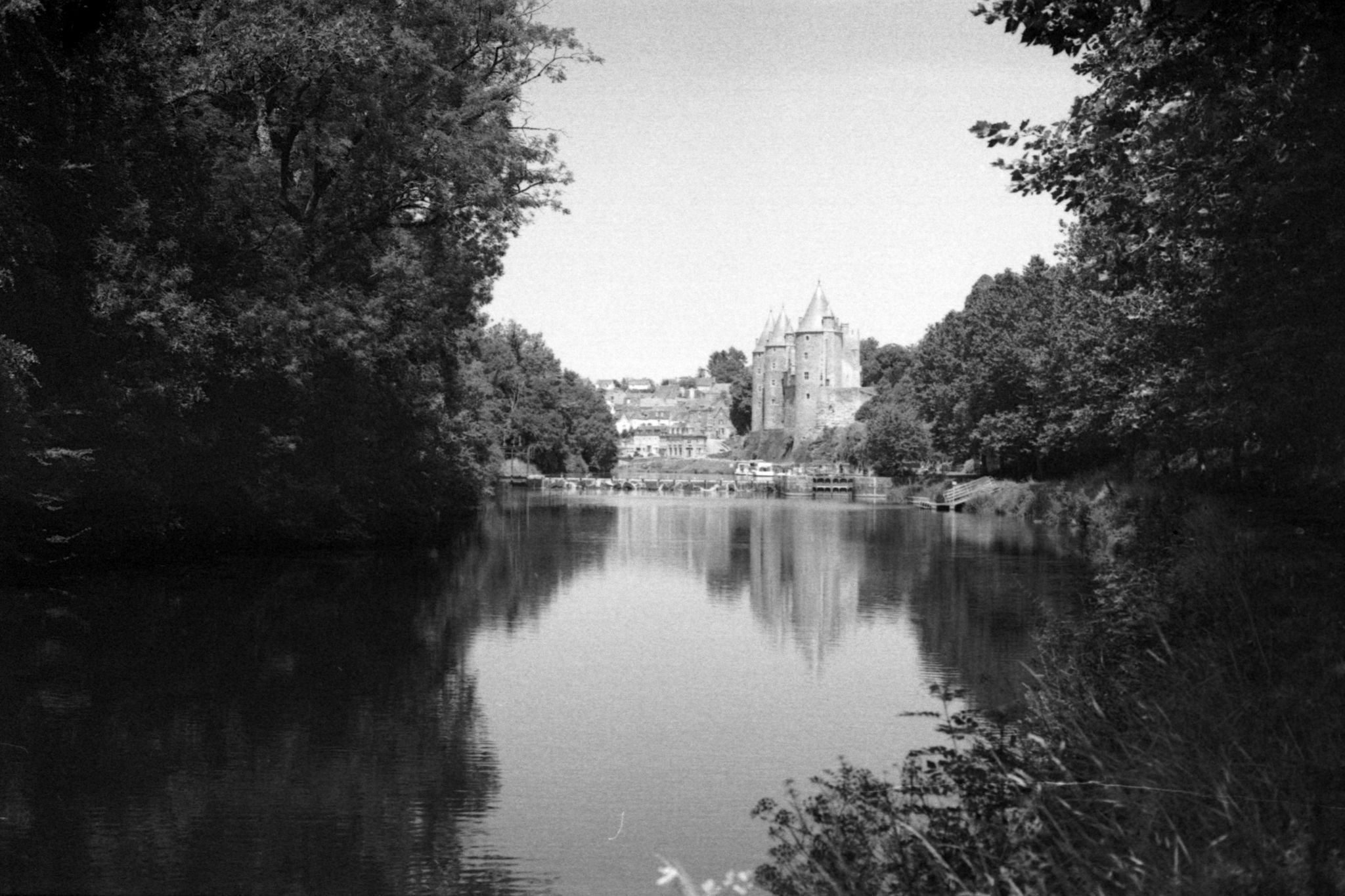
A scenic walk between the ramparts and the Torche Pond. A great spot to admire the castle. There's also a beautiful view from the bridge that crosses the Chère River.
1
0
Beautiful 25-hectare pond, which can be walked around on a very smooth white path.
1
0
よくある質問
ルージュ周辺には、交通量のないサイクリングルートがいくつありますか?
ルージュ周辺には、約60本の専用の交通量のないサイクリングルートがあります。これらのルートは、リラックスして安全なサイクリング体験のために設計されており、ロワール=アトランティック地方の静かな風景を楽しむことができます。
初心者や家族連れに適した、簡単で交通量のないルートはありますか?
はい、ルージュには初心者や家族連れに最適な、簡単で交通量のないルートが豊富にあります。例えば、ルージュ発、シャトー・ド・シャトーブリヤン~シャトーブリヤン城ループは、田園地帯を穏やかに走れる簡単なオプションです。ルージュとシャトーブリヤンを結ぶこの地域の「ヴォワ・ヴェルト」(グリーンウェイ)も理想的で、古い鉄道線路跡に建設されており、ほとんどが舗装された緩やかな路面です。
これらのルートでは、どのような自然の風景が楽しめますか?
ルージュ周辺の交通量のないサイクリングルートは、ボワ・デ・ラ・ウセ(Bois de la Houssaye)のような多くの池や森に特徴づけられる美しい緑の田園地帯を横断します。車両の交通から離れた、自然に没頭するのに最適な、平和で風光明媚な環境を体験できます。
交通量のない周回型のサイクリングルートはありますか?
はい、多くのルートはループ状に設計されており、同じ地点から出発して同じ地点に戻ることができるため、同じ道を戻る必要がありません。例として、フェルセ発、シャトー・ド・シャトーブリヤン~ショワゼル池ループがあり、変化に富んだ風景の中を中程度の難易度で周回できます。
交通量のないルート沿いには、どのような歴史的または文化的なアトラクションがありますか?
サイクリングと歴史的な場所への訪問を組み合わせることができます。歴史的なシャトー・ド・シャトーブリヤン城は、ルートによく登場する著名なアトラクションです。また、マロネー発、ブルッツ鉱山博物館~シャトー・ド・シャトーブリヤン城ループのようなルートの一部であるブルッツ鉱山博物館(Musée des Mines de la Brutz)など、地域の鉱業の歴史に関連する場所も探索できます。
ルージュ周辺の交通量のないサイクリングルートは、犬連れでも利用できますか?
ルージュ周辺の多くの専用グリーンウェイや静かな田舎道は、特に自転車トレーラーに慣れているか、一緒に走ることに慣れている犬と一緒にサイクリングするのに適しています。常に必要に応じて犬をリードにつなぎ、自然エリアやアトラクションの近くでのペットに関する地域の規制を尊重してください。「ヴォワ・ヴェルト」は、その穏やかな性質から一般的に良い選択肢です。
ルージュでのサイクリングに最適な季節はいつですか?
ルージュでのサイクリングに最適な季節は、一般的に春と秋です。この時期は気候が穏やかで、自然の風景が最も鮮やかになります。「ヴォワ・ヴェルト」は、日陰の区間があるため、暖かい月には特に快適です。夏も楽しめますが、日中の暑さを避けるために早めに開始することをお勧めします。
交通量のないサイクリングルート沿いには、食事や飲み物を楽しめる場所はありますか?
ルート自体は交通量がありませんが、多くのルートは、地元のカフェ、パン屋、レストランが見つかる魅力的な村や町を通過するか、その近くを通ります。例えば、シャトーブリヤンには、軽食や食事のオプションがいくつかあります。特に小さな集落では、事前に営業時間を確認することをお勧めします。
公共交通機関で交通量のないルートにアクセスできますか?
ルージュは、ナント、レンヌ、アンジェ、ラヴァルなどの大都市によって形成される四角形の中に位置しており、地域のアクセスが良いです。特定の交通量のないルートの開始地点への直接的な公共交通機関は異なる場合がありますが、これらの大きなハブには、ルージュ地域に近づくための接続があることが多く、そこからサイクリングの冒険を始めることができます。
ルージュでのサイクリングについて、他のサイクリストは何を最も楽しんでいますか?
この地域はkomootコミュニティから高く評価されており、平均スコアは4.4つ星以上です。レビューでは、ルートの静けさ、美しい緑の風景、そして初心者から上級者まで安全で楽しいサイクリング体験を可能にする「ヴォワ・ヴェルト」のような専用の交通量のない道が、しばしば称賛されています。
交通量のない自転車トレイルにアクセスするために、車をどこに駐車できますか?
ルージュやシャトーブリヤンから始まる多くの交通量のないルートには、指定された駐車場があります。「ヴォワ・ヴェルト」や「Sentiers des Pierres Rouges」の出発点となるルージュの古い駅は、車を停めてライドを開始するのに便利な場所です。
ルージュでのの人気観光スポット

komootモバイルアプリでインスピレーションを得よう


さらに探索
他の地域の最高のサイクリングルートを見てみましょう。
