峡谷周辺のおすすめ交通量の少ないサイクリングルート
4.5
(439)
2,576
ライダー
237
ライド
交通量の少ないゴルジュ周辺のサイクリングルートは、変化に富んだ地形が特徴で、多くは川沿いの谷をたどり、農耕地を抜けていきます。この地域は、緩やかな坂道と適度な上り坂が混在しており、高低差は通常400メートル未満です。サイクリストは、開けた田園地帯、小さな村、水辺の地域を横断するルートを期待できます。ルートネットワークは、静かな道路や専用レーンに焦点を当て、さまざまなスキルレベルに対応するオプションを提供しています。
ゴルジュ周辺の交通量の少ないサイクリングルートベスト
- 最も人気のある交通量の少ないサイクリングルートは、ゴルジュ発、シャトー・ド・クリッソン – ヴァレーブリッジ ループです。この19.6 km (12.2 マイル) のトレイルは、所要時間1時間20分です。このルートは、157メートル (515 フィート) の適度な高低差があります。
- 地元のサイクリストに人気のもう一つのルートは、ゴルジュ発、ヴァレーブリッジ – アルセナル ループです。このルートは、適度な17.2 マイル (27.6 km) の道で、標高差229メートル (753 フィート) で地元の風景の景色を提供します。
- 地元のサイクリストに人気のゴルジュ発、シャトー・ド・クリッソン – ポート・ドミノ ループは、変化に富んだ地形を通り抜ける17.7 マイル (28.5 km) のトレイルで、所要時間は約1時間50分です。
- ゴルジュ周辺のサイクリングは、川沿いの谷、開けた田園地帯、農耕地によって定義され、平坦な区間と適度な登りが混在しています。このネットワークは、簡単なライドからより挑戦的なルートまで、さまざまなレベルに対応するオプションを提供しています。
- ゴルジュのルートは、250件以上のレビューから平均4.5つ星の評価をkomootコミュニティから受けています。1600人以上のサイクリストがkomootを使用して、ゴルジュの多様な地形を探索しました。
最終更新日: 10月 6, 2026
4.6
(47)
231
ライダー
33.1km
01:40
170m
200m
中程度の自転車ライド. ある程度のフィットネスレベルが必要です。 全般的に舗装された状態です。あらゆるスキルレベルに適しています。
4.7
(3)
25
ライダー
25.7km
01:50
170m
170m
中程度の自転車ライド. ある程度のフィットネスレベルが必要です。 全般的に舗装された状態です。あらゆるスキルレベルに適しています。

4.6
(16)
33
ライダー
23.4km
01:12
140m
140m
初級者向けバイクライド. あらゆるフィットネスレベルに適しています。 全般的に舗装された状態です。あらゆるスキルレベルに適しています。
3.0
(2)
15
ライダー
17.6km
01:31
130m
130m
初級者向けバイクライド. あらゆるフィットネスレベルに適しています。 全般的に舗装された状態です。あらゆるスキルレベルに適しています。
3.0
(4)
11
ライダー
19.8km
01:18
120m
120m
初級者向けバイクライド. あらゆるフィットネスレベルに適しています。 全般的に舗装された状態です。あらゆるスキルレベルに適しています。
さらに多くのルートや他のユーザーのおすすめ情報を確認できます。
すでにアカウントをお持ちですか?
おすすめのツアーは他のkomootユーザーが実際に経験した何千ものアクティビティに基づいています。
無料アカウントで今日から始めよう
次の冒険が待っています。

コミュニティからのヒント

From 1805 to 1827, the sculptor François-Frédéric Lemot (winner of the Prix de Rome in 1790) transformed a former hunting forest belonging to the lords of Clisson into an idealized landscape. Influenced by the gardens of Ermenonville and Méréville, guided by his classical education and the memory of Tivoli, Lemot freely designed his garden whenever his official duties in Paris allowed. It is now a park managed by the department, freely accessible for a relaxing break with a beautiful view of the château.
0
0

Owned by the Departmental Council, the Bois de Buis is easily accessible from the parking lot of the Moulin du Liveau site, located along the RD 113, near the Château de l'Oiselinière. This woodland was once the grounds of the Château de l'Oiselinière, which is situated on the slopes of the Sèvre River in Nantes. The site was left to nature for about fifty years, before being purchased by the Department in 2007. In 2014, the former park was restored to create structures that will allow visitors to better appreciate this natural setting, where some one hundred animal and plant species thrive. It features a scenic lookout overlooking the Sèvre River and offers panoramic views of the village of Gorges. Activities and guided tours are regularly organized for the public. This site is classified as a sensitive natural area. Surface area (in m²): 30,000 m² (3 ha) Play area: No Bowling court: No Pets allowed: Yes Bathrooms: Yes (near the Moulin du Liveau) Other: For more information, visit the Loire-Atlantique nature walks website.
0
0
The municipality installed interpretive panels in the fall of 2022. Outside the mill, furniture reminiscent of the old mill sails showcases the mill's history and mechanism, while also promoting the vineyard's tourist attractions. Inside the mill, on both floors, glazed lava orientation tables present the various sites visible from the mill while evoking the work of the vineyard throughout the four seasons. A picnic table is available on site. The site is only accessible on foot or by bicycle. Nearest parking is at the Tuileries Pond.
0
0
The last remaining witness to the region's papermaking industry, the association "Pour les arts graphiques en Vallée de Clisson" (For Graphic Arts in the Clisson Valley) has been working with local authorities since 1998 to revive the 19th-century papermaking industry at Le Liveau in Gorges. The Moulin du Liveau is a superb example of the region's Italianate architecture. With the active support of local authorities, the mill, owned by the municipality of Gorges, was restored to its original purpose as a paper mill. This magnificent site on the Sèvre Nantaise River in the Clisson Valley opened to the public in spring 2015. MORE THAN A MUSEUM, IT'S A LIVING WORKSHOP The association "Pour les arts graphiques en Vallée de Clisson" offers activities centered around the history and manufacture of paper. Children and adults alike can discover the mechanisms of the paper mill, handcraft their own sheets of paper, and learn about printing. An informative journey through history, accompanied by the ever-present pleasure of playfully recreating the gestures of the past. Inside, a hammer mill powered by a paddle wheel driven by the Sèvre River evokes the preparation of paper pulp from rags. Visitors can also practice calligraphy, participate in writing workshops, take bookbinding courses, and enjoy many other activities.
1
0
The Liveau Paper Mill in Gorges in the Clisson Valley (Loire Atlantique, 44) offers guided tours, educational outings, group visits to the paper mill, papermaking workshops, events, and exhibitions. The mill welcomes you south of Nantes and also offers a shop with a wide selection of paper, stationery, and books. The Liveau Paper Mill is located in Loire-Atlantique, in Gorges on the banks of the Sèvre Nantaise. Two flour mills, one on the right bank, the other on the left bank, made up the Liveau hydraulic site, first mentioned in 1407. Until 1561, it was owned by the lords of Clisson. • 1826, transformation of the right bank mill into a paper mill, a more prosperous activity at that time, and construction of the drying rack (drying rack), marked in its architecture by the strong Italian influence prevalent at that time in the canton of Clisson. • 1827: Papermaking begins at the mill. It produces "large gray paper" or "envelope paper" (wrapping paper) sold to the sugar refineries of Nantes. • 1850: Papermaking ends. • 1851 to 1952: Milling resumes. • 2001: The municipality of Gorges acquires the abandoned mill. • 2004: The "Pour les arts graphiques en vallée de Clisson" association wins first prize from the Fondation du Patrimoine for its project to rehabilitate and promote the Moulin du Liveau, with the support of Gorges elected officials and the Clisson Valley community of municipalities. • 2006: The Fondation du Patrimoine approves the project and brings in financial partners. • 2008-2009: Airtight and watertight construction of the buildings (mill and dryer), half of which was financed by the Total Foundation. Additional funding was provided by the Fondation du Patrimoine, the Crédit Agricole Foundation, parliamentary funds, the Pays de Loire Regional Council, the Loire-Atlantique General Council, the Clisson Valley Community of Communes, the municipality of Gorges, and various private funds. . 2014: Rehabilitation work in preparation for an artisanal papermaking activity, for cultural and tourist purposes. • April 2015: The Liveau paper mill in Gorges welcomes its first visitors.
1
0
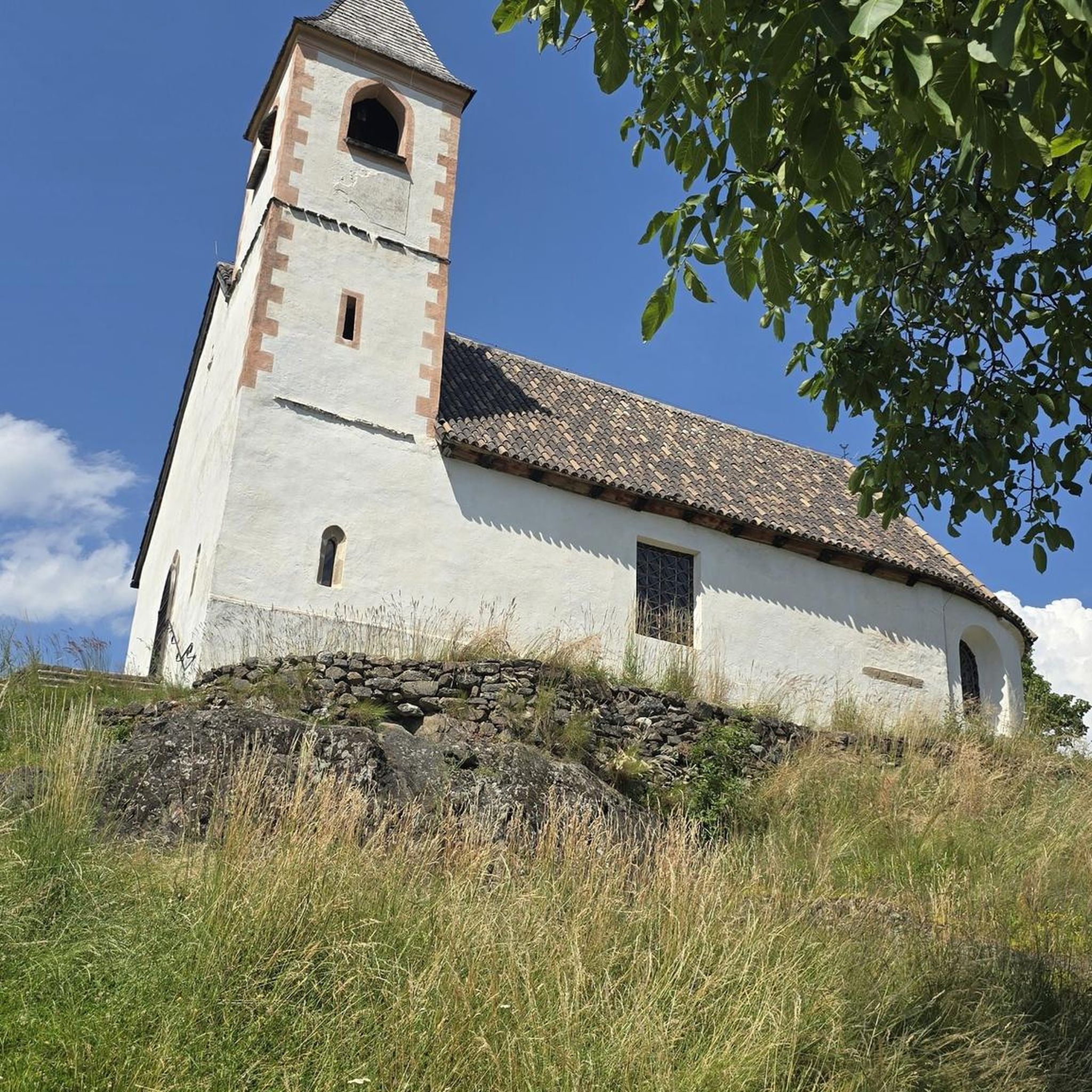
The modest Chapel of Saint Anne is the last vestige of the parish church of Saint Vincent. In the second half of the 11th century, the Chapel of Saint Anne was built. It adjoins the southern flank of a pre-existing castle chapel, probably contemporary with the keep, which dates from the late 10th or early 11th century. At an undetermined date, the two chapels were extended westward and became the chevet of the parish church of Saint Vincent. This extension was completed before 1646, the date at which a drawing by L. Doomer, preserved at the Dobrée Museum in Nantes, shows the complete building. In 1683, Archdeacon Binet described the dilapidated Church of Saint Vincent and the choir on the verge of ruin. No one dared touch it because it belonged to the lord of La Galissonnière and Le Pallet. We can therefore assume that the nave itself belongs to the parish, which is responsible for its upkeep. The choir, a former castle chapel, disappeared during the Revolution. The old church was razed in 1853, and only the Sainte-Anne chapel was spared thanks to the intervention of Prosper Mérimée. A new church was built on a new site in the village, reusing the stones from the old building. In addition to its dilapidated condition, the old church had the disadvantage of being located far from the village. The chapel was listed as a historical monument in 1941 (decree of August 9). It was restored in 1957. NOTE: THE CHURCH HAS BEEN CLOSED SINCE JULY 23, 2018, FOR INDEFINITE WORK.
1
0
The Trinity Church is getting a makeover in the heart of Clisson Off-limits since 2018, the Trinity Church in Clisson is undergoing extensive restoration work until 2027, accompanied by reinforcement and safety work. The Trinity Church in Clisson has been off-limits since 2018 due to pieces of tufa stone found on the floor of the building, raising concerns about safety issues. The restoration has been decided upon, along with reinforcement and safety work. This work is expected to continue until 2027. The construction site will soon be explained to the residents of Clisson, using signs. The artwork and furnishings have been protected and stored, tarpaulins protect the building and the workers, the vaults and framework will be restored, and the wall plasterwork will be examined and redone where necessary. The work will concern the side aisles until next summer, the nave for the following twelve months. Then it will be the turn of the choir and transepts between January 2026 and spring 2027, then the sacristy, the bell tower and the outbuildings.
2
0
The Church of the Trinity was originally a Benedictine priory, with a parish, dependent on the abbeys of Saint-Martin-de-Vertou and Saint-Jouin-de-Marnes. In the 11th century, it was occupied by the canons regular of the Order of Saint Augustine. In 1645, Fontevrist nuns from La Regrippière en Vallet settled there. The convent burned down in 1794 by the infernal columns of the Republican armies. From the 11th century onwards, the church had a choir with an apse, side chapels, and a square bell tower. In the 17th century, the Benedictine nuns replaced the Romanesque choir with an elongated one, featuring a remarkable Baroque altarpiece. They demolished the southern part of the choir to build their oratory. During the French Revolution, the church returned to the parish. Around 1867/1868, work was undertaken. The façade was redone in a neo-Romanesque style, while the neo-Gothic style was preferred for the interior of the religious monument.
1
0
よくある質問
ゴルジュ地域には、交通規制のないサイクリングルートがいくつありますか?
ゴルジュ地域には、20以上の専用交通規制なしサイクリングルートがあり、サイクリストに多様な体験を提供しています。これらのルートは初級から上級まであり、あらゆるスキルレベルに対応しています。
ゴルジュ地域の交通規制なしサイクリングルートでは、どのような地形が期待できますか?
ゴルジュ地域では、交通規制なしサイクリングのために多様な地形が楽しめます。ゴルジュ・デュ・タールによく見られるような、川床沿いのほとんど平坦なルートがあり、高い岩壁の素晴らしい景色が楽しめます。しかし、多くのルートには、特にゴルジュから高原へ登る際や、最大12%の勾配があるゴルジュ・デ・ラルデッシュのような地域では、急勾配の困難な登りもあります。
ゴルジュ地域には、初心者や家族向けの交通規制なしサイクリングルートはありますか?
はい、ゴルジュ地域には家族向けの初心者向け交通規制なしサイクリングルートがいくつかあります。一部の地域には困難な登りがありますが、特に湖畔や古い鉄道線路沿いなど、ゴルジュ・デュ・ヴェルドンで言及されているような、より緩やかな道を見つけることができます。利用可能なルートのうち6つは初級に分類されており、リラックスした家族のお出かけに最適です。
交通規制なしサイクリングルート沿いには、どのような著名なランドマークや自然の特徴がありますか?
ゴルジュ地域は、豊かな自然の美しさと歴史的ランドマークに恵まれています。サイクリング中には、ドラマチックな渓谷、そびえ立つ断崖、ターコイズブルーの川に出会うかもしれません。歴史的なシャトー・ド・クリソン、景色の良いアーセナル橋、ユニークなエマニュエル・リッツによるピクチャーフレーム展望台などのハイライトに注目してください。この地域には、ラ・プレユ城やヴァレのシャトー・ド・ラ・ノエ・ド・ベル・エールのような他の城もあります。
ゴルジュ地域でのサイクリングについて、他のツーリングサイクリストが最も楽しんでいる点は何ですか?
ゴルジュ地域はkomootコミュニティで高く評価されており、250件以上のレビューから平均4.5つ星を獲得しています。レビューアーは、ドラマチックな景観、静かで人里離れた道、そしてこれらの交通規制なしルートを特別なものにしている息をのむようなパノラマビューをしばしば称賛しています。穏やかな川沿いの道から挑戦的な登りまで、地形の多様性もその魅力に貢献しています。
交通規制なしの周回型ツーリングサイクリングルートはありますか?
はい、ゴルジュ地域の交通規制なしツーリングサイクリングルートの多くは周回型ループとして設計されており、同じ地点からスタートして終了することができます。例としては、中程度の難易度のゴルジュ発シャトー・ド・クリソン – バレーブリッジループや、より挑戦的なゴルジュ発バレーブリッジ – サングーズ川沿いの美しい区間ループがあります。
ゴルジュでの交通規制なしルートをサイクリングするのに最適な時期はいつですか?
春、特に3月から6月は、ゴルジュ地域でのサイクリングに最適な時期と考えられています。気温は穏やかで、混雑も比較的少ないです。この季節はまた、緑豊かな景色を提供し、ゴルジュ・デュ・ヴェルドンなどの一部の地域では、6月中旬から象徴的なラベンダー畑が始まります。
滝のあるルートは見つけられますか?
フランスのゴルジュ(ヴェルドン、タール、アルデッシュ)の主な焦点は川によって刻まれた渓谷とドラマチックな岩の形成ですが、アメリカのコロンビア川ゴージのような他のゴルジュ地域は、ムルトノマ滝のような多数の滝で有名です。ゴルジュ地域を探索する際は、滝がその景観の顕著な特徴であるかどうかを判断するために、訪れている特定のゴルジュに焦点を当ててください。
史跡や城を通過するルートはありますか?
もちろんです!ゴルジュ地域には史跡や城が点在しています。例えば、ゴルジュ発シャトー・ド・クリソン – ノートルダム教会、クリソンループは、印象的なシャトー・ド・クリソンを通過します。また、テンプル騎士団の礼拝堂やムーラン・ド・ジェルヴォードのような他の歴史的なハイライトを探索することもできます。
ゴルジュ地域で利用可能な最も長い交通規制なしツーリングサイクリングルートは何ですか?
交通規制なしツーリングサイクリングルートの中で、長いオプションの1つは、約48.9キロメートル(30.4マイル)をカバーし、かなりの標高差があるゴルジュ発バレーブリッジ – サングーズ川沿いの美しい区間ループです。これは挑戦的なライドになります。
パノラマビューポイントを提供するルートはありますか?
はい、ゴルジュ地域は壮大なパノラマビューポイントで有名です。多くのルートは、特に渓谷から高原へ登る際に発見される、息をのむような眺めにあなたを導くように特別に設計されています。説明に「パノラマ道路」や「ビューポイント」という言葉が含まれるルートを探してください。例えば、ゴルジュ・デュ・ヴェルドン沿いのルート・デ・クレートには、14の必見の展望台があります。
峡谷でのの人気観光スポット

komootモバイルアプリでインスピレーションを得よう


さらに探索
他の地域の最高のサイクリングルートを見てみましょう。
