ブッセ周辺のおすすめ交通量の少ないサイクリングルート
4.2
(184)
2,426
ライダー
134
ライド
日本の北西部に位置するこの地域では、穏やかな丘陵地帯、川沿いの谷、そして農耕地と森林が混在する景観の中を、交通量の少ないサイクリングロードが走っています。この地域の静かで交通量の少ない道路は、ロードサイクリングに理想的な環境を提供します。サイクリストは、風光明媚なセーヴル・ナンテーゼ川沿いの谷や、変化に富んだ地形のエリアを探索でき、パノラマビューと温暖な気候の両方を楽しめます。このエリアは、サイクリングアドベンチャーに多様な背景を提供します。
Boussay 周辺の交通量の少ないロードサイクリングルート ベスト 5
- 最も人気のある交通量の少ないロードサイクリングルートは、クガン発、ヴァンデ・ヴェロ・ループです。このルートは 21.5 マイル (34.6 km) で、所要時間は 1 時間 30 分です。このルートは、この地域の穏やかな丘陵地帯と静かな田舎道を巡る、適度なライドを提供します。
- 地元のロードサイクリストの間で次に人気が高いのは、トルフー発、トルフーのコラム~サン・ボネ山頂ループ - ル・ロンジェロン - ティフォージュです。これは適度な 34.9 マイル (56.1 km) のルートです。このルートは、起伏のある地形と、高所からの眺めを提供するいくつかの登り坂が特徴です。
- 地元のロードサイクリストに人気のもう一つのルートは、ブッセー発、サン・ボネ山頂~三つの州の谷ループ - ラ・ブルフィエールです。この 47.0 マイル (75.7 km) のルートは、有名な三つの州の谷を通り抜け、所要時間は約 3 時間 20 分です。
- Boussay 周辺のロードサイクリングは、穏やかな丘陵地帯、セーヴル・ナンテーゼ川沿いの谷、そして農耕地と森林の組み合わせが特徴です。このネットワークは、初心者、中級者、上級者向けのオプションを提供し、さまざまなスキルレベルに対応しています。
- Boussay のルートは、komoot コミュニティから 70 件以上のレビューで平均 4.0 星という高い評価を得ています。900 人以上のロードサイクリストが komoot を利用して、Boussay の変化に富んだ地形を探索しています。
最終更新日: 8月 12, 2026
5.0
(1)
17
ライダー
55.9km
02:30
510m
510m
中程度のロードライド. ある程度のフィットネスレベルが必要です。 ツアーの一部に、未舗装のため走行が難しい箇所があるかもしれません。
6
ライダー
85.8km
03:36
470m
470m
中程度のロードライド. ある程度のフィットネスレベルが必要です。 全般的に舗装状態が良好で走行しやすい道です。

無料新規登録
8
ライダー
中程度のロードライド. ある程度のフィットネスレベルが必要です。 ツアーの一部に、未舗装のため走行が難しい箇所があるかもしれません。
7
ライダー
42.3km
01:57
330m
330m
中程度のロードライド. ある程度のフィットネスレベルが必要です。 ツアーの一部に、未舗装のため走行が難しい箇所があるかもしれません。
8
ライダー
24.6km
01:03
200m
200m
初級者向けロードバイクライド. あらゆるフィットネスレベルに適しています。 全般的に舗装状態が良好で走行しやすい道です。
さらに多くのルートや他のユーザーのおすすめ情報を確認できます。
無料新規登録
すでにアカウントをお持ちですか?
おすすめのツアーは他のkomootユーザーが実際に経験した何千ものアクティビティに基づいています。
無料アカウントで今日から始めよう
次の冒険が待っています。
ログインまたは登録

コミュニティからのヒント

. Originally, there was an ovoid-shaped enclosure flanked by about ten towers and a gatehouse, located to the northeast. The fortified town was located to the north of the fortress and extended a little to the east. A dry moat separated the fortified town from the fortress. A barbican protected the gatehouse. A Romanesque keep of the Niort type, with its courtyard and small enclosure, was located in the castle courtyard, roughly in the middle in the north-south direction and located to the west. The fortified city extended from the rue de Gaulle, a gate was located at the level of the Carré de l'Europe (the porte de Nantes), then the ramparts continued along the rue de la Place du Champ de Foire, then went back down the Esplanade des Olivettes, where a gate was located towards the roundabout of the rue des Jardins (porte de Tiffauges) then the ramparts ran along the Asson to go up the rue du Pont Jarlet and around the barbican not far from the Presbytery The dry moats surrounding the city were 16 meters deep in the 15th century, today they are flowered and are the subject of different colored squares decorating this part of the ramparts.
0
0
In the 9th century, a castrum, a wooden castle built on a mound of earth, was built to counter the Viking raids that had previously sacked the city of Durivum (Saint-Georges-de-Montaigu). For strategic reasons, this fortress was built on a rocky spur at the junction between the Maine and Asson rivers. Maurice I of Montaigu, the first known lord, witnessed the consecration of the church of Saint-Nicolas de la Chaize-le-Vicomte in 1099. His successor until 1174 was Brient I of Commequiers, married to his daughter, Agathe de Montaigu. Later, his grandchildren, Brient II, Maurice II "the Younger," and Marguerite, succeeded him. It was perhaps this Brient II who had the Romanesque keep built in 1218, a large square tower with flat corner towers. He also removed the wooden palisade, replacing it with a wide moat extending to the Saint-Georges Gate. The Montagues (also known as Belleville by marriage around 1180) pledged allegiance to the Plantagenets, Henry II, Richard the Lionheart, and John Lackland. Margaret of Belleville-Montaigu, daughter of Brient de Montaigu and Agnes de Belleville, granddaughter of Maurice I de Montaigu, sister of Maurice II de Belleville-Montaigu, married Hugh of Thouars in 1203. In 1227, the couple submitted to Philip Augustus through the ceremony of homage. Hugh of Thouars died in 1229, and Margaret remarried in 1235 to the Duke of Brittany, Mauclerc, whose real name was Pierre de Dreux. Marguerite de Montaigu died in 1241, childless. The lordship of Montaigu fell to her nephew, Maurice III de Belleville-Montaigu (d. c. 1297; son of Maurice II). He became lord of Montaigu upon the death of Mauclerc in 1250[2], and his son Maurice IV (d. c. 1292) ensured the succession through his children Jeanne (d. 1284 Geoffroy II David de La Flocellière) and Maurice V de Belleville-Montaigu (he married 1° Sibylle, daughter of Geoffroy VI de Châteaubriant, then 2° Isabelle/Létice de Parthenay, daughter of Guillaume V Larchevêque de Parthenay). Jeanne de Belleville (c. 1300-c. 1359), daughter of Maurice V of Montaigu and Létice of Parthenay, married Olivier IV of Clisson for the second time in 1328. Olivier IV was executed by beheading after being suspected of "felony" against the English, during the Hundred Years' War. Jeanne became a privateer with her children Olivier V and Jeanne de Clisson, in revenge, and was banished from the kingdom of France. While she attacked French ships, the fortress of Montaigu was held by the English, according to the Treaty of Brétigny-Calais, a garrison of which engaged in pillaging the surrounding area. Jeanne lost her ship and withdrew with her children to England. Olivier V, having grown up, rallied to the king of France, recovered his property in 1362 and fought the English with Bertrand du Guesclin. In 1373, Olivier and Bertrand succeeded in driving the English out of Montaigu, and Olivier ceded the lordship to his sister Jeanne, who had married an English captain, Jean Harpedenne. The latter sided with the King of France in 1373 and became Jean de Belleville. His grandson, Jean III, married Charles VII's half-sister, Marguerite de Valois, in 1433. Louis I de Belleville succeeded Jean III. King Louis XI advised him to fortify the town between 1464 and 1468 to protect it from the Bretons.
0
0

This three-century-old mill was originally a paper mill.
2
0
A large medieval castle. It features themed shows, including siege engine demonstrations.
2
0
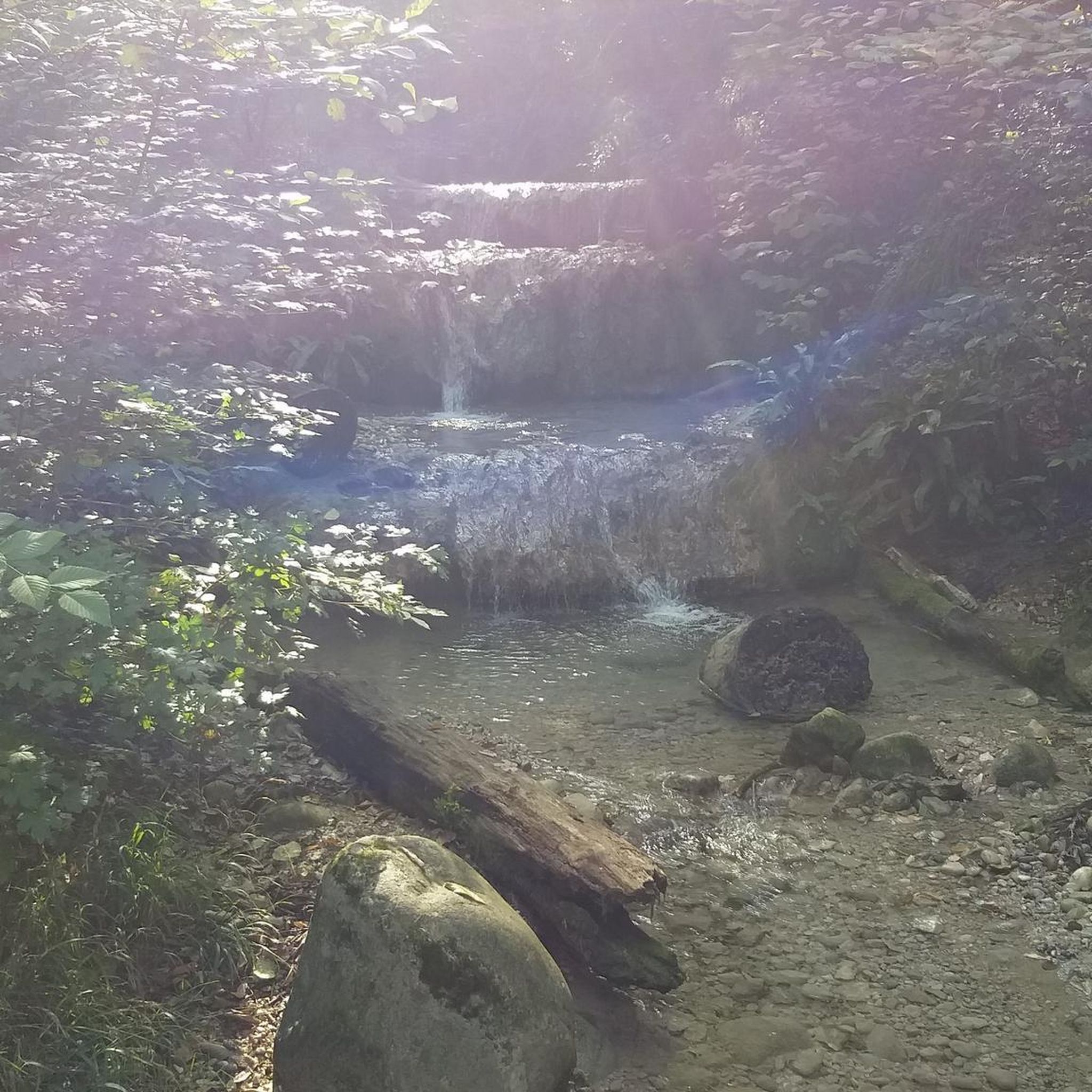
Beautiful pond surrounded by magnificent trees. Plenty of benches that encourage rest or contemplation. A welcome little patch of greenery after crossing the vineyard in the full sun. A trail allows you to go around the natural site, but I didn't have time to try it. Note that the path that connects La Fauvette to La Pontereau is very smooth and magnificent.
0
0
Another beautiful site on the Sèvre Nantaise, with the unusual feature this time: it's not only at the crossroads of three departments (LA, Vendée, and M&L), a rather common occurrence, but also of three former provinces: Brittany, Poitou, and Anjou. The crossroads is formed by the Sèvre on one side and its tributary, the Bon Débit, on the other. The inn of the same name looks very nice; in any case, the setting is splendid.
0
0
Magnificent site with this restored watermill, whose wheel still turns. I don't know if it's the case all year round, but when I was there (mid-May) you could easily cross the river using the footbridge.
2
0

よくある質問
ボッセー周辺には、交通量の少ないサイクリングロードはいくつありますか?
ボッセー周辺には130以上の交通量の少ないサイクリングロードがあり、様々なスキルレベルや好みに合わせた幅広い選択肢を提供しています。簡単から難しいものまで、交通量の多い道路を避けるように設計されたルートが見つかります。
ボッセーには初心者向けの交通量の少ないサイクリングロードはありますか?
はい、ボッセーには初心者向けの交通量の少ないサイクリングロードが豊富にあります。特に初心者向けとして分類されている33のルートでは、大きな登りや長距離を気にすることなく、景色の良い風景を楽しむことができます。これらのルートは、この地域のロードサイクリングに慣れるのに最適です。
ボッセーの交通量の少ないサイクリングロードでは、どのような地形が期待できますか?
ボッセーの交通量の少ないサイクリングロードは、なだらかな丘、絵のように美しい川の谷、農地と森林の混合地帯など、多様な風景を横断します。しばしば緑豊かな森や黄金色の畑を走り抜け、特にセーヴル・ナンテーズ川の谷周辺では、高い場所からのパノラマビューが楽しめます。
ボッセー周辺には、周回型の交通量の少ないサイクリングロードはありますか?
ボッセー周辺の交通量の少ないサイクリングロードの多くはループ型に設計されており、同じ場所からスタートしてフィニッシュすることができます。例えば、クガンからのヴァンデ・ヴェロ・ループは快適な周回ライドを提供し、ボッセー - ラ・ブルフィエール発、ピュイ・サン・ボネ山頂~三つの州の谷ループは、出発点に戻ってくる長めのオプションです。
ボッセー近郊の交通量の少ないサイクリングロード沿いには、どのような史跡や自然のランドマークがありますか?
交通量の少ないルートをサイクリングする際には、いくつかの見どころがあります。この地域には、印象的なクリソン城のような歴史的な城があります。また、歴史的な合流地点である重要な三つの州の谷を通過することもあります。ボー・ソレイユ自然保護区のような自然の特徴も、景色の良い休憩地点を提供します。
ボッセーでの交通量の少ないサイクリングに最適な時期はいつですか?
ボッセーは温暖な気候に恵まれており、一年中ロードサイクリングに適しています。しかし、一般的に春と秋は、穏やかな気温と鮮やかな風景で最も快適な時期です。この地域のなだらかな丘と多様な地形は、どの季節でも楽しめますが、天気予報の確認は常に推奨されます。
より上級者向けの長距離の交通量の少ないサイクリングロードはありますか?
もちろんです。多くの適度なルートがありますが、経験豊富なライダーは、より長い距離と標高差を提供する長距離の交通量の少ないオプションを見つけることができます。例えば、86kmを超えるボッセー - ラ・ブルフィエール発、モンタイギュー城~サン・ラドゴンド橋ループのようなルートは、やりがいのある景色とともにかなりの挑戦を提供します。
ボッセーでの交通量の少ないサイクリングについて、他のロードサイクリストが最も楽しんでいる点は何ですか?
komootコミュニティは、ボッセーでの交通量の少ないロードサイクリング体験を高く評価しており、平均スコアは3.98つ星です。レビューでは、静かで手入れの行き届いた道路、セーヴル・ナンテーズ川の谷の絵のように美しい風景、そして素晴らしい休憩地点を提供するクリソンのような魅力的な町がよく称賛されています。交通から離れた自然に没頭している感覚は、頻繁に強調される側面です。
セーヴル・ナンテーズ川の谷を強調する特定のルートはありますか?
はい、セーヴル・ナンテーズ川の谷はこの地域の顕著な特徴です。ルートはしばしば川沿いを走ったり、川の景色を楽しんだりできます。ボッセー - ラ・ブルフィエール発、ピュイ・サン・ボネ山頂~三つの州の谷ループは、例えば、森林や牧草地を蛇行する川の素晴らしい景色を楽しめる地域を通過します。
クリソン城の近くを通るルートはありますか?
すべてのルートが直接クリソン城を通るわけではありませんが、ボッセー近郊の多くのルートでは、中世のクリソン城を訪れる機会があります。この11世紀の要塞は重要なランドマークであり、地域を探索するサイクリストにとって人気の立ち寄り場所で、町とセーヴル川の素晴らしい景色を提供します。
パノラマビューを楽しめるルートはありますか?
はい、ボッセーは「パノラマ・ロードサイクリング」ルートで知られています。この地域のなだらかな丘は、息をのむような景色を楽しめる多くの高台を提供しています。ピュイ・サン・ボネ山頂のような地域へ登るルートは、セーヴル・ナンテーズ川の谷を含む周囲の田園地帯の広大な景色でサイクリストをしばしば楽しませます。
ブッセでのの人気観光スポット

komootモバイルアプリでインスピレーションを得よう


さらに探索
他の地域の最高のロードサイクリングルートを見てみましょう。
