アフガニスタン周辺のアトラクション&必見スポット - トップ20
アフガニスタンには必見のスポットがたくさんあります。ハイキング愛好家やサイクリング愛好家の方は、ぜひアフガニスタンを探索してこのエリアにある20
の隠れたスポットを訪れてみてください。このエリアの必見スポットを確認し、次の冒険に出かける計画を立てましょう。
最終更新日: 11月 21, 2026
バーミヤンの仏像
ハイライト • 歴史的な場所
The statues represented a later evolution of the classic blended style of Gandhara art. The statues consisted of the male Salsal ("light shines through the universe") and the (smaller) female Shamama ("Queen Mother"), as they were called by the locals. The main bodies were hewn directly from the sandstone cliffs, but details were modeled in mud mixed with straw, coated with stucco. This coating, practically all of which wore away long ago, was painted to enhance the expressions of the faces, hands, and folds of the robes; the larger one was painted carmine red and the smaller one was painted multiple colors. The lower parts of the statues' arms were constructed from the same mud-straw mix supported on wooden armatures. It is believed that the upper parts of their faces were made from great wooden masks or casts. The rows of holes that can be seen in photographs held wooden pegs that stabilized the outer stucco.
The Buddhas are surrounded by numerous caves and surfaces decorated with paintings.[8] It is thought that the period of florescence was from the 6th to 8th century CE, until the onset of Islamic invasions.[8] These works of art are considered as an artistic synthesis of Buddhist art and Gupta art from India, with influences from the Sasanian Empire and the Byzantine Empire, as well as the country of Tokharistan.
The statues were blown up and destroyed in March 2001 by the Taliban, on orders from leader Mullah Mohammed Omar, after the Taliban government declared that they were idols. International and local opinion strongly condemned the destruction of the Buddhas. Some Taliban sources credited Omar's decision to blow up the Buddha Statue's to the growing influence of Osama bin Laden.
役立つ情報 は

バーブル庭園(バグ・エ・バーブル)
ハイライト • 歴史的な場所
It was the tradition of Mughal princes to develop sites for recreation and pleasure during their lifetime, and choose one of these as a last resting-place. The site continued to be of significance to Babur's successors, Jahangir and his step-mother, Empress Ruqaiya Sultan Begum (Babur's granddaughter) made a pilgrimage to the site in 1607 AD (1016 AH) when he ordered that all gardens in Kabul be surrounded by walls, that a prayer platform be laid in front of Babur's grave, and an inscribed headstone placed at its head. During the visit of the Mughal Emperor Shah Jahan in 1638 (1047 AH) a marble screen was erected around tomb of his foster-mother, Ruqaiya Sultan Begum, and a mosque built on the terrace below. There are accounts from the time of the visit to the site of Shah Jahan in 1638 (1047AH) of a stone water-channel that ran between an avenue of trees from the terrace below the mosque, with pools at certain intervals.
The original construction date of the gardens (Persian: باغ, romanized: bāġ) is unknown. When Babur captured Kabul in 1504 from the Arguns he re-developed the site and used it as a guest house for special occasions, especially during the summer seasons. Since Babur had such a high rank, he would have been buried in a site that befitted him. The garden where it is believed Babur requested to be buried in is known as Bagh-e Babur. Mughal rulers saw this site as significant and aided in further development of the site and other tombs in Kabul. In an article written by the Aga Khan Historic Cities Programme, describes the marble screen built around tombs by Mughal Emperor Shah Jahan in 1638 with the following inscription:
"only this mosque of beauty, this temple of nobility, constructed for the prayer of saints and the epiphany of cherubs, was fit to stand in so venerable a sanctuary as this highway of archangels, this theatre of heaven, the light garden of the god forgiven angel king whose rest is in the garden of heaven, Zahiruddin Muhammad Babur the Conqueror."
役立つ情報 は
今すぐサインアップして、こんな場所を発見しよう
最高のシングルトラック、ピーク、その他のエキサイティングなアウトドアスポットのおすすめを受け取ろう。
ジャームのミナレット
ハイライト • 記念碑
In 2020, the Minaret of Jam was listed among cultural heritage sites of the Islamic world by the Islamic World Educational, Scientific and Cultural Organization (ICESCO). According to the Afghan Ministry of Foreign Affairs (MoFA), the Minaret of Jam is Afghanistan’s first cultural heritage site to be listed by ICESCO.
The Minaret of Jam is probably located at the site of the Ghurid Dynasty's capital, Firozkoh.
The circular minaret rests on an octagonal base; it had 2 wooden balconies and was topped by a lantern. Its formal presentation has a striking similarity to the Ghazni minarets built by Masud III. It is thought to have been a direct inspiration for the Qutub Minar in Delhi, India.
役立つ情報 は
ヘラート城(カラ・イクティアルッディーン)
ハイライト • 城
役立つ情報 は
パグマン・ヒル・キャッスル
ハイライト • 記念碑
After King Amanullah Khan and Queen Soraya Tarzi's return from Europe in 1928, Amanullah brought in foreign experts to redesign Kabul. At that time, at the entrance of Paghman, they created a European-style monumental gate similar to but smaller than the Arc de Triomphe in Paris, France, called the Taq-e Zafar (Persian: طاق ظفر Arch of Victory). Originally a small village at the bottom of the Hindu Kush, Paghman turned into a holiday retreat with villas and chalets as well as the summer capital. Its wide avenues contained fir, poplar and nut trees which flew past the arch, villas and a golf course. It was a popular place for the wealthy and the aristocrats to visit.
The new royal gardens were opened to the public under the proviso—as a matter of reform—that western dress was adopted there, as in the royal residential areas of nearby Kabul. On September 1, 1928, King Amanullah convoked the Loya Jirga to Paghman to the puzzlement of many delegates, who found themselves at odds with the dress-code. On September 7, 1928, the Hazrat of Shor Bazaar—an influential political figure in Kabul—presented the king with a petition signed by some 400 religious leaders opposing many of Amanullah's reforms. This action led to the arrest of the Hazrat, the execution of some of his followers and finally the rebellion of 1929 led by Ameer Habibullah Kalakani , that overthrew the king.
The gardens eventually became a popular place for local and foreign tourists. Wealthy Kabulites owned summer homes there who employed servants and maids.
役立つ情報 は
タフテ・ロスタム仏教僧院とストゥーパ
ハイライト • 歴史的な場所
Cultural Significance:
Following the Muslim conquests of Afghanistan the original purpose of the monastery was lost. Instead the site was incorporated into Persian mythology in the story of Rostam and Sohrab which forms part of the 10th-century Persian epic Shahnameh by the Persian poet Ferdowsi. In the story it is said that Rostam supposedly traveled to the Kingdom of Samangan and stayed with the king at Takht-e Rostam. In 2021, the Afghan government renovated the site and built a hall for tourists.
役立つ情報 は
ブルーモスク(ハズラット・アリー廟)
ハイライト • 宗教的な場所
役立つ情報 は
ヘラートのムサッラ・ミナレット
ハイライト • 記念碑
The minarets are each 55 meters tall, braced with steel cables,[5] and resemble crooked chimneys of an old factory.[3] The current minarets in Herat are the remains of 20 minarets of the former Musalla Complex.
Nine towers survived the events of 1885, but the explosions had weakened them structurally, and they remained neglected over the next few years due to an unsettled political situation. No repairs or restorations were undertaken, and over time, four more towers collapsed due to structural weaknesses, earthquake and sheer decrepitude.Only five of the original twenty minarets survive today.
Musalla Minarets of Herat were built for the Musalla complex by Queen Gawhar Shad in 1417. The complex became an architectural masterpiece of the Islamic world. It was a huge spread of magnificent Islamic religious buildings consisting of a large mosque, Madrassa religious school and mausoleum buildings. The whole complex included 20 minarets which were adorned with tiled surfaces of beautiful intricate patterns and designs.
In 1885, conflicting tensions between the British and Russian Empires has come to a head at the Panjdeh incident. During the incident, British engineers dynamited the complex to prevent the advancing Russians from using it for cover. Ultimately the crisis was resolved, and fighting never broke out, making the destruction unnecessary. Nine minarets and two mausoleums were spared destruction. However, an earthquake in 1932 destroyed two more minarets. Another minaret fell in another earthquake in 1951. The five ruined Musalla Minarets of Herat and two mausoleums are the only remnants today of a once magnificent architectural complex.
In 2001, the Society for the Preservation of Afghanistan’s Cultural Heritage (SPACH) repaired the only remaining minaret, and built protective walls around the Gawhar Shad Mausoleum and Sultan Husain Madrasa. The mausoleum garden was also replanted. In 2020, the Aga Khan Development Network made a pledge to the President of Afghanistan to restore an ancient minaret at risk of collapse. This work is being completed through the work of the Aga Khan Trust for Culture.
役立つ情報 は
ザディアン・ミナレット
ハイライト • 記念碑
役立つ情報 は
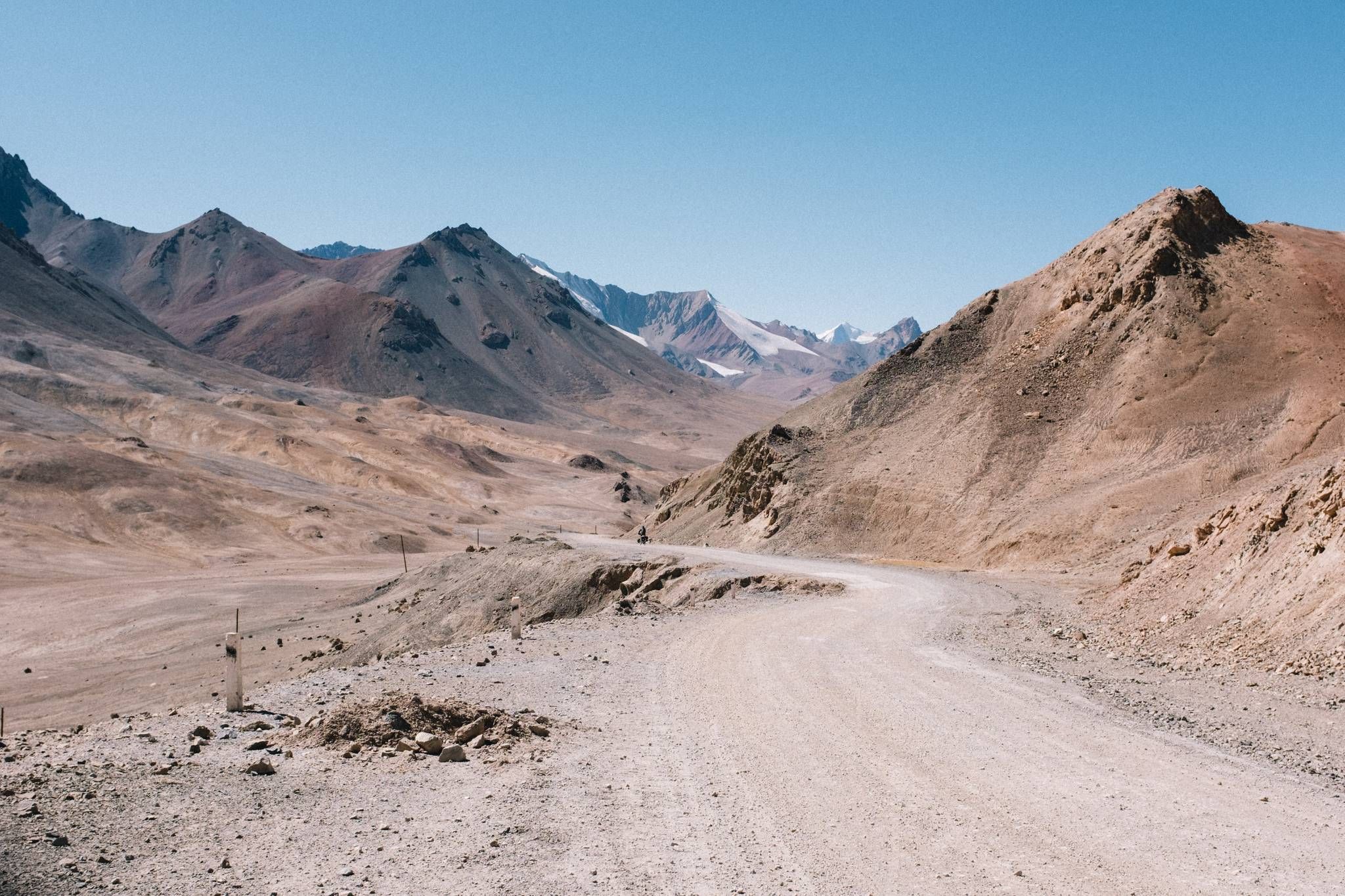
ワルサジ地区の風景
ハイライト • 展望台
The district's elevation contributes to a diverse climate, experiencing cold winters and mild to warm summers. This geographical diversity has historically made Warsaj a strategic location, connecting different provinces and serving as a natural corridor.
The district is predominantly inhabited by ethnic Tajiks, and their cultural heritage is deeply woven into the fabric of daily life. While infrastructure can be challenging due to the mountainous terrain, the resilient communities here uphold traditional Afghan hospitality and a strong sense of local identity.
The economy is largely agrarian, with farming and livestock rearing forming the backbone of livelihoods. Despite external challenges, the people of Warsaj maintain a strong connection to their land and traditions.
For those considering travel to the region (keeping in mind current travel advisories for Afghanistan), the natural beauty of Warsaj offers a unique glimpse into Afghanistan's less-seen landscapes.
While accessibility can be difficult, the opportunity to witness the traditional way of life and the stunning mountain scenery can be a profound experience.
However, it is crucial to prioritize safety, engage with local guides, and be fully informed about the dynamic security situation before contemplating any visit.
役立つ情報 は
無料でサインアップして、さらに多くの観光スポットを発見しましょう アフガニスタンでの。
すでにアカウントをお持ちですか?
無料アカウントで今日から始めよう
次の冒険が待っています。
アフガニスタン周辺で人気

コミュニティからのヒント

Warsaj District, nestled in the northeastern part of Afghanistan's Takhar Province, is a region of rugged beauty and historical significance. Its landscape is dominated by the foothills of the Hindu Kush mountains, with the Farkhar River carving through its valleys, providing essential water and shaping the topography. The district's elevation contributes to a diverse climate, experiencing cold winters and mild to warm summers. This geographical diversity has historically made Warsaj a strategic location, connecting different provinces and serving as a natural corridor. The district is predominantly inhabited by ethnic Tajiks, and their cultural heritage is deeply woven into the fabric of daily life. While infrastructure can be challenging due to the mountainous terrain, the resilient communities here uphold traditional Afghan hospitality and a strong sense of local identity. The economy is largely agrarian, with farming and livestock rearing forming the backbone of livelihoods. Despite external challenges, the people of Warsaj maintain a strong connection to their land and traditions. For those considering travel to the region (keeping in mind current travel advisories for Afghanistan), the natural beauty of Warsaj offers a unique glimpse into Afghanistan's less-seen landscapes. While accessibility can be difficult, the opportunity to witness the traditional way of life and the stunning mountain scenery can be a profound experience. However, it is crucial to prioritize safety, engage with local guides, and be fully informed about the dynamic security situation before contemplating any visit.
1
0
Information From: https://mahtttravel.com/herat-citadel/
1
0
Feel the love and affection for the poets and forerunners of science and art who have left their art and talent for the future. Only then, these stones, which have heard the footsteps of the past, come to tell you the stories.”
2
0
According to the Herat Department of Information and Culture, about 150 rare statues of the museum were broken by axes during the Taliban era. Many of these artifacts date back to the 10th and 13th centuries, when Herat was the center of politics and culture. Pottery, metal objects, tombstone of Behzad, the great Persian painter, and manuscripts are among these works. Arif Usmanov, an Afghan historian, wrote his memoirs about Herat, which were published in the Anis newspaper, No. 193-206, after visiting the Ikhtiaruddin Fortress in 1347 AH. “It would not be an exaggeration to say that each Herat stone is a separate history. Every stone of this proud land speaks to you in the language of the present and tells legends about the past of this land. Only one condition is necessary to understand this state, and that is that your heart should be full of the feeling of love and affection for the life and its beauties.
2
0
Qala Ikhtiaruddin has different galleries, which have three galleries in the north of the castle, one gallery in the south, one gallery in the southwest, two galleries in the west and another in the east. Inside the monument is the National Museum of Afghanistan, one of Afghanistan’s four provincial museums open to the public. Out of 1100 historical monuments from Herat, about 250 of them are exhibited in this historical monument. The works kept in this museum include works from the periods of Ghaznavids, Ghorians, Malukuk Crete, Safavids and Timurids. Most of these works are made of stone, pottery, metal, tiles and wood, which come in various forms such as household utensils, animal sculptures, coins, weapons of war and ornaments. This museum was founded in 1303 AH during the reign of Amanullah Khan inside Ikhtiaruddin Castle, which was repeatedly robbed by thieves.
2
0
After that, Shahrokh Mirza Teymouri in 818 AH ordered to build a fence of baked clay, stone and lime. He turned this building into his cultural and military center. Before Alexander crossed the Hindu Kush, he marched from Balkh to Herat and stayed in and around the city for two years. “When Alexander was heading south, he came to an area where there was a city called Herat, and he built a city called Alexandria in that area, and there were useless soldiers and merchants living there,” says Harold Lamp, an American writer. He built a wall around the city to be a temporary means of defending the city. The main purpose of building this fortress was to protect the military from a possible revolt of the people of the city against the domination of the Macedonians.
2
0
The length Qala Ikhtiaruddin is (250) meters and its width in some parts reaches (70) meters. The mosque is another beauty of this historical castle, so that its length is 12 meters from inside and its width is 2.5 and the thickness of the walls is 1.5 meters. The castle is located on a high hill in the northern part of the city between Qutbichaq and Bardaraniha neighborhoods. Some historians also consider this castle to be a remnant of the city of Artaguana (modern-day Herat), which has been destroyed over time. One of the reasons why this castle is known as Qala Ikhtiaruddin is that in 705 AH, during the dynasty of Crete, a person named King Fakhreddin rebuilt the castle and thanks to the services of Ikhtiaruddin who helped in this way, this castle Named after him. This historical place, when Amir Timur Gurkhani conquered Herat in 785 AH, created a distance between the castle wall and the main wall of the city to protect this building from existing threats.
2
0
Traveling to the city of Herat, a large and ancient castle will attract attention. The castle, which is attributed to Alexander the Great and is known as the Citadel of Herat or the ” Qala Ikhtiaruddin”, is a very valuable ancient monument. This historic site has been destroyed several times by civil war and natural disasters, but has been rebuilt by a number of institutions. The historical Herat Citadel has two parts, west and east. The harem of kings is located in the eastern part and the lower castle is in the western part of the military base. The area of this historic citadel is 5,000 square meters and has 21 towers. The lower castle, which is more prosperous than the upper castle, has 105 gutters, all of which are made of pottery and are very basic and strong.
2
0

komootモバイルアプリでインスピレーションを得よう


探していたものは見つかりませんでしたか?
近くの素晴らしい場所をもっと探索したいですか?ガイドを見てみましょう:
さらに探索
まだ探しているハイライトが見つかりませんか?他の地域のトップアトラクションのガイドを見てみましょう:
