4.6
(23)
858
ライダー
222
ライド
サン=マル=デ=ロクネー周辺のロードサイクリングルートは、フランスのサルト県内の静かな田園地帯を巡ります。この地域は標高102メートルから167メートルの穏やかな起伏のある地形が特徴で、極端な登り坂のないアクセスしやすいサイクリングを提供します。サイクリストは、コミューンの景観の約60%を占める広大な森林や静かな池のそばを走ることができます。これらの自然の特徴は、ロードサイクリングのツアーに木陰の道と風光明媚な背景を提供します。
最終更新日: 4月 6, 2026
8
ライダー
48.5km
02:00
240m
240m
中程度のロードライド. あらゆるフィットネスレベルに適しています。 ツアーの一部に、未舗装のため走行が難しい箇所があるかもしれません。
7
ライダー
34.4km
01:26
250m
250m
初級者向けロードバイクライド. あらゆるフィットネスレベルに適しています。 全般的に舗装状態が良好で走行しやすい道です。
無料新規登録
4.0
(1)
6
ライダー
37.5km
01:46
210m
210m
初級者向けロードバイクライド. あらゆるフィットネスレベルに適しています。 全般的に舗装状態が良好で走行しやすい道です。
6
ライダー
54.4km
02:25
430m
430m
中程度のロードライド. ある程度のフィットネスレベルが必要です。 全般的に舗装状態が良好で走行しやすい道です。
4
ライダー
55.1km
02:21
460m
460m
中程度のロードライド. ある程度のフィットネスレベルが必要です。 全般的に舗装状態が良好で走行しやすい道です。
さらに多くのルートや他のユーザーのおすすめ情報を確認できます。
無料新規登録
すでにアカウントをお持ちですか?
おすすめのツアーは他のkomootユーザーが実際に経験した何千ものアクティビティに基づいています。
無料アカウントで今日から始めよう
次の冒険が待っています。

ログインまたは登録
The first mentions of a place of worship in Tuffé refer to the Sainte-Marie church of the abbey and then the priory, from the 7th century. The creation of the parish of Tuffé is perhaps contemporary or later but currently not documented. Could the priory’s Sainte-Marie church, mentioned much earlier than the Saint-Pierre church, also have once been the parish church of Tuffé? Could the embryo of the current parish church be this private chapel that Hugues Doubleau gave to the abbey with the Sainte-Marie church at the beginning of the 11th century, according to the cartulary of the Saint-Vincent abbey in Le Mans ? In any case, the parish is only attested late by texts (beginning of the 12th century in the same cartulary), but the non-oriented plan of the church, as well as the term Saint-Pierre, argue for the age of the building. The addition of Saint-Paul to the term seems very late, even abusive, since the archival documents systematically refer to a Saint-Pierre church, as does the decoration of the building in the 19th century. If this is an error, it was perhaps induced by Julien-Rémy Pesche at the beginning of the 19th century. The oldest part of the current building is the nave, much remodeled subsequently but the base of the walls of which shows in places a structure made of small rubble stones from the Romanesque period at the latest. But above all, the north gable wall and the first bay of the gutter walls show traces of openings and corner chains made of bricks alternating with limestone cut stones. This formula, rare if not unique in Perche Sarthois, is debated as to its dating. Some historians see it as a testimony to Carolingian architecture. Others, more cautious, put forward an archaic dating of the 11th century, where the use of brick alternating with stone would be an economic choice rather than an aesthetic one: this would explain a certain irregularity in the implementation, particularly in the arch of the old door of the north gable wall. The same uncertainty hangs over the addition of the buttresses and the opening of the current north gate. The nave is covered with a new framework and a spire and the paneling was installed in 1604 as evidenced by the signature (repainted in 1885) “In 1604 this Church was labruchée – Tomas Mabile attorney of the Fabrique de Séans ". The dating of the other parts of the church is not much easier. The construction of the east chapel (presbytery side) is not in too much doubt, the Renaissance decoration of the door to the street and the cupboard, although crude, indicates the middle of the 16th century. This chapel, dedicated to the Virgin, belonged to the lords of Chéronne. Its western counterpart (square side), dedicated to the Sacré-Cœur and built by the lords of Ramée, is less easy to date due to lack of ancient decor. This chapel could have been built shortly before or shortly after that of Chéronne, but undoubtedly not simultaneously, as evidenced by the slight asymmetry of the roofs and the different profile of the structural members. The apse, generally considered to also date from the 16th century, could only be from the 3rd quarter of the 18th century, as a bundle of clues suggests: the axial wall left blind probably to accommodate an altarpiece, the plan burrow made between 1757 and 1759 which still shows a circular apse undoubtedly Romanesque, as well as a document from 1775, indicating that the priest "would have had the necessary and pleasant works done to the great altar of the said church caused by the demolition and construction that Mrs de Saint-Vincent would have had the gable of the said church made. The sacristy would be a 17th century addition.
0
0
In this architecture we find different styles and periods, from the 12th, 15th, 16th to the 19th century, including Gothic and Neo-Romanesque. Romanesque bays and foothills. Stained glass window and 16th century font as well as the current apse and the two side chapels. The south door with its lintel and its straight feet decorated with rosettes and diamonds. The church had stained glass windows from the end of the 15th and beginning of the 16th century. Fragments exist in the speckles and spandrels of the bay of the Rosary Chapel, listed in 1983. The stained glass windows are almost all dated and signed by the same glass painter between 1885-1889 "af Paris" probably Anselme Fialex, son of François Fialex who was a glass painter in Mayet Creation of an entrance to the square as well as the opening of new 19th century bays. the vault, paneled and undoubtedly painted from the beginning, was redone in 1602 with restoration in the 19th century, when a new decoration was painted. The main altar dates from 1867.
0
0
Located in the heart of Connerré, the Catholic church of Saint Symphorien is an essential historical monument of the city. With its Gothic architecture and colorful stained glass windows, this church offers visitors a unique experience. It is a place of worship as well as a place to visit for all architecture and history enthusiasts. The beauty of Saint Symphorien leaves no one indifferent, whether for a simple visit or to attend a mass. Its doors are open to all and everyone can find a place of meditation and peace there. Don't hesitate to take a trip there to discover the richness of this monument steeped in history.
0
0
The first mentions of the Saint-Germain church in Sceaux-sur-Huisne appear in the cartulary of the Saint-Vincent abbey in Le Mans: around 1050, Bouchard de Théligny gave the Sceaux church land and a meadow located at proximity. At this time, the building, then "in bad woods", was rebuilt in stone. The nave is considered to be the oldest part of the church and dates back to the 11th century, but it is in reality difficult to date due to multiple alterations and even reconstructions. The masonry shows several repetitions and a confused assembly of elements which could come from older buildings, such as the remains of the Gallo-Roman villa which was exhumed at the end of the 19th century in the valley (small regularly cut rubble stones, debris of roof tiles). There are also traces of old openings, such as a door opening onto the priory. Although it is probable, there is no element to formally identify the Romanesque construction. The current openings are later, such as the small Gothic bay in the western wall and perhaps the south door (15th century?) and the other openings probably made around the first half of the 18th century. Significant masonry and structural work is actually mentioned in the nave in 1709. The choir and the bell tower were probably built in the first half of the 16th century, in a late Gothic style. The factory accounts mention various works in the 1530s and 1540s: roofing, construction of a ballet, stained glass window of the "grant window"... The tower was perhaps built in several stages if we rely on the changes masonry nets in the elevation. It was visibly remodeled at the end of the 16th century or the beginning of the 17th century, as indicated by the semi-circular openings, one of which was walled up. From 1570, the du Bouchets were lords of Sceaux and had their coat of arms, "azure with three rings of sand", affixed to the keystone of the chapel under the bell tower (since replaced by a flower) and on the vault paneled nave and choir. As for the windows on the north wall of the choir, they were undoubtedly open in the 18th century like those in the nave. During the Revolution, the church was seized as national property and sold to a certain René Neveu in September 1796, excluding the furniture. The two bells installed in 1719 and the fittings were handed over to the administration to be melted down. The church was returned to the town after the death of Mr. Neveu in the 1810s. The church underwent some occasional maintenance work (mainly on the roof) in the 19th and 20th centuries, but not an overall restoration. In 1831, an estimate was drawn up to enlarge the church with a chapel, in order to better accommodate all parishioners: this project was not carried out. The same year, the flag which still covers the bell tower was put up. The current sacristy (Gambert architect) was added in 1862 to replace another very dilapidated one, blocking a window now only visible from the inside. The second half of the 19th century also saw the clearing of the surroundings of the church, cluttered with lean-tos and hidden by an imposing washhouse finally moved in 1870. The last work, concerning the roofing, was carried out in 1989. The church of Sceaux-sur-Huisne has been listed as a Historic Monument since 1926.
0
0
The Saint Jean Baptiste Church was built in the 16th century and transformed in the 19th century.
0
0
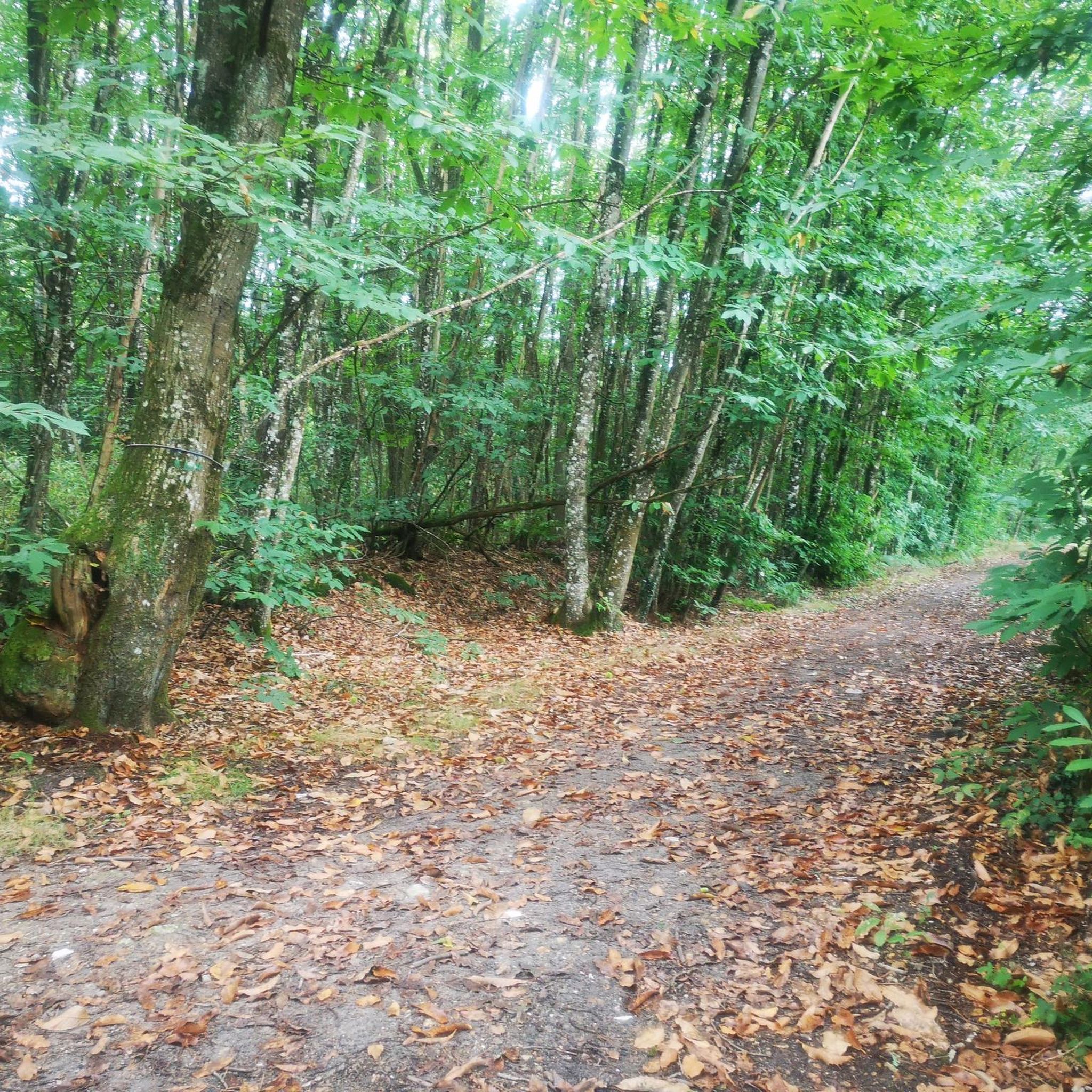
pleasant slightly winding road, fairly good surface
0
0
サン=マル=ド=ロクネー周辺には、220以上のロードサイクリングルートがあります。これらのルートは様々なスキルレベルに対応しており、初心者向けと中級者向けのオプションがバランス良く含まれているため、あらゆるサイクリストに楽しんでいただけます。
サン=マル=ド=ロクネー周辺の地形は、一般的に穏やかで起伏があり、標高は102メートルから167メートルです。極端な登り坂のないアクセスしやすいサイクリングが楽しめ、広大な森林や静かな池を通り抜けます。しかし、より広いサルト県では、アルプス・マンセル地方の「小山」など、より挑戦的で起伏のあるライドを求める人向けに、より多様な地形が提供されています。
はい、サン=マル=ド=ロクネーはサルト県内にあり、広大な「ヴェロビュイッソニエール」(V44)サイクリングルートがあります。この主要なルートは県内を230〜250キロメートルにわたって走り、主に静かな田舎道やグリーンウェイを利用しており、リラックスした体験と多様な景観を長距離ライドで提供します。詳細については、tourisme-alpesmancelles.comまたはfrancevelotourisme.comで確認できます。
この地域には、便利な周回ライドとして設計されたルートが多くあります。人気のある中級者向けオプションは、ブーロワール発のサン=モーリス教会~サン=シュルフォリアン教会周回ルートで、距離は48.5kmです。より簡単なライドをご希望の場合は、ブーロワール発のシュルフォン=ブーロワール周回ルートをご検討ください。これは、森や開けた田園地帯を抜ける37.5kmのルートです。
この地域は、コミューンの景観の約60%を占める広大な森林と静かな池のある、穏やかなフランスの田園地帯が特徴です。サルト川渓谷沿いの絵のように美しいルートもあり、よりドラマチックな岩壁や緑豊かな谷を求めてアルプス・マンセル地方へ足を延ばすこともできます。
はい、家族連れに適した簡単なルートがいくつかあります。ブーロワール発のブーロワール=ヴォルネ周回ルートは、田園風景の中を縫うように走る簡単な34.4kmのルートで、畑や小さな集落を通り抜ける快適なライドを提供し、家族での外出に最適です。
サイクリング中に、ルートに文化的な立ち寄り先を組み込むことができます。約23km離れたル・マンには、ローマ時代の城壁とサン=ジュリアン大聖堂がある歴史的なシテ・プランタジェネがあります。約32km離れたラ・フェルテ=ベルナールは、中世の雰囲気で知られています。ルートは、木骨造りの家や古い教会など、歴史的な建築物が残る魅力的な村々を通り抜けることが多いです。
サン=マル=ド=ロクネー周辺のロードサイクリングルートは、komootコミュニティから高く評価されており、20件以上のレビューで平均4.6つ星を獲得しています。サイクリストは、静かな田園風景、日陰の多い道を提供する広大な森林、そしてアクセスしやすく楽しいライドを可能にする穏やかな起伏のある地形をしばしば賞賛しています。
サン=マル=ド=ロクネー周辺の多くのルートは穏やかな起伏がありますが、より広いサルト県、特にアルプス・マンセル地方では、より挑戦的なオプションが提供されています。ここでは、標高差が大きくドラマチックな景観を持つルートを見つけることができ、経験豊富なロードサイクリストにとってより大きな挑戦となります。例えば、ブーロワール発のサン=ジャン=バティスト教会周回ルートは、標高差400メートル以上の54.3kmの中級ルートです。
サルト県はサイクリングに力を入れており、「Accueil Vélo」ラベルがその証です。これにより、サイクリストは修理キット、安全な自転車保管、清掃設備など、ルート沿いの質の高いサービスを見つけることができ、心配なくライドを楽しむことができます。
はい、多くのルートは近くのブーロワールを拠点としていますが、サン=マル=ド=ロクネーから直接開始できるルートも見つけることができます。例えば、サン=マル=ド=ロクネー発のブーロワール=ヴォルネ周回ルートは、標高差450メートル以上の55.1kmの中級ルートです。
他の地域の最高のロードサイクリングルートを見てみましょう。
無料でサインアップ