20의 마통에 클레망시가지 명소 & 주요 장소
마통에 클레망시에는 둘러볼 만한 장소가 많답니다. 하이킹 또는 사이클링을 좋아한다면 마통에 클레망시에 숨겨진 20
가지 보석을 만날 수 있을 거예요. 이 지역의 주요 명소를 살펴보면서 다음 모험을 계획해보세요.
마지막 업데이트: 9월 13, 2026
에르브몽 성(요새)
하이라이트 • 성
번역자 Google •
팁에 의해


이런 장소를 발견하려면 지금 가입하세요
최고의 싱글 트랙, 봉우리 및 다양한 흥미로운 야외 장소에 대한 추천을 받아보세요.

무료로 가입하여 마통에 클레망시 주변의 더 많은 명소를 발견하세요.
이미 komoot 계정이 있나요?
오늘 무료 계정으로 시작하세요
다음 모험이 기다리고 있어요.

마통에 클레망시 주변의 다른 모험

커뮤니티 팁

The current castle is very recent. It was built in 1960 at the request of the owners, the Otreppe de Bouvette family, based on plans by architect Emile Godin. The previous castle was severely damaged in both world wars and fell into disrepair.
10
0
The "Conques" viaduct is located 1 km from the village center of Herbeumont. Construction of the viaduct began in 1902 by the Chagnaud and Cox companies. The viaduct was the first completed structure for railway line 163a. It took two years to build and is said to have used 9 million bricks. The brick construction of graceful, high arches, the central one reaching almost 40 meters above the Semois, is truly impressive. Although construction was completed in 1904, it would be another 10 years before the first trains (under German occupation) rolled over the viaduct! (Trails and hikes)
13
0
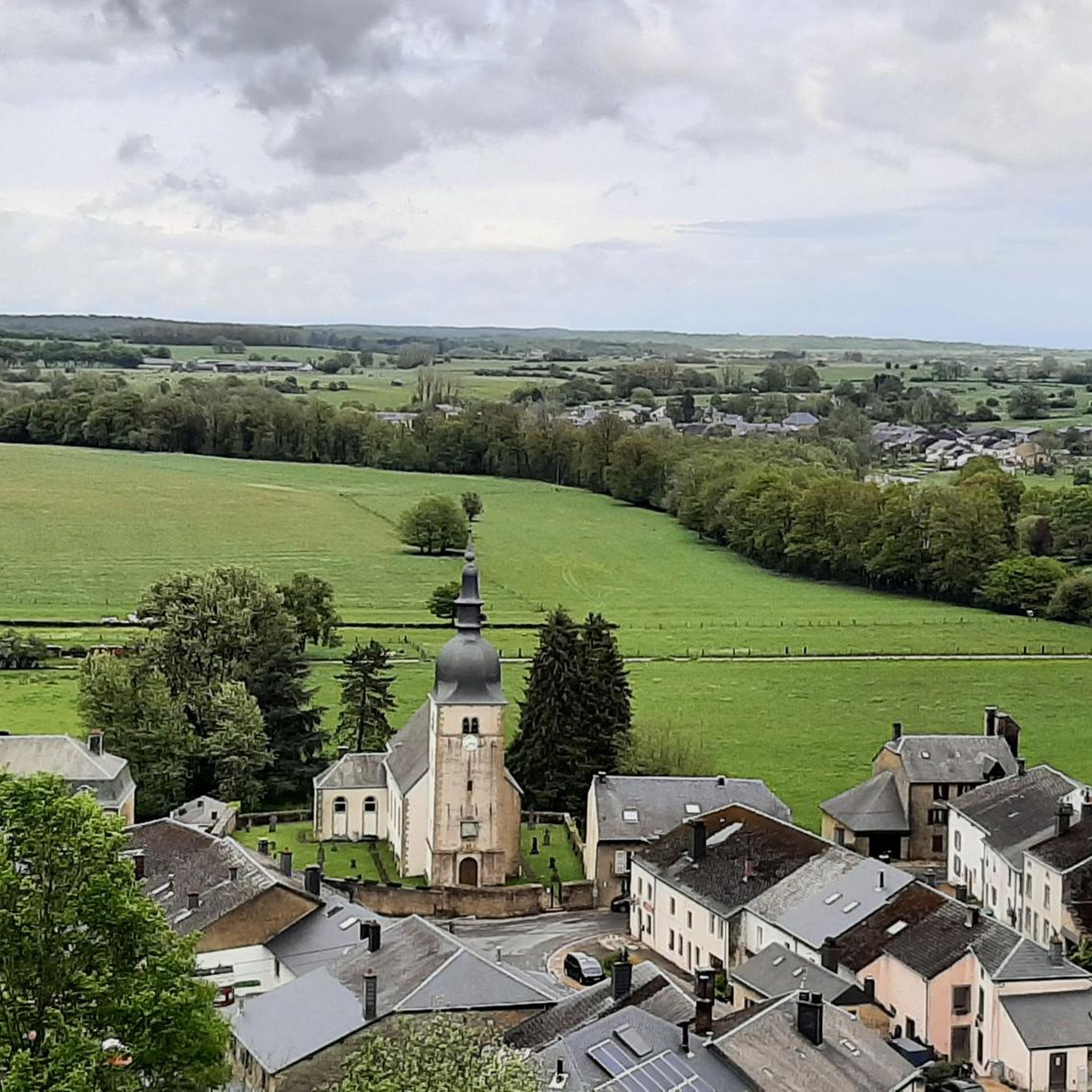
The medieval ruins of Herbeumont Castle, perched on a rocky ridge overlooking the village and the Semois River, offer many remarkable views of the meandering river. The fortress's foundation stones were laid in 1268 by Jehan de Rochefort, son of the House of Walcourt. Over the centuries, the castle was inhabited by various families: the House of Orgeo, the House of la Marck-Rochefort, the House of Stolberg, and the House of Löwestein. The natural steepness of the mountain made the castle inaccessible from three sides for a long time. In the 15th century, Herbeumont's walls were reinforced with a sturdy round tower at each southern end. Unfortunately, this did not prevent the castle from being destroyed by French troops on August 21, 1657. (Visit Wallonia)
15
0
Over a period of 22 years, from 1926 to 1948, a completely new abbey was built based on a design by architect Henri Vaes. This was primarily the work of Ghent native Albert-Marie Van der Cruyssen, who became the first abbot in 1936. On August 20, 1929, the foundation stone was laid in the presence of Prince Leopold and Cardinal Van Roey. The new abbey was completed in 1948. On June 5, 1939, the abbey church was consecrated and elevated to Basilica Minor by Pope Pius XII. On September 8, 1948, the abbey church and the completed cloister were solemnly consecrated by Cardinal Micara, who served as Apostolic Nuncio to Belgium from 1923 to 1946 and subsequently became Prefect of the Congregation for Rites. To finance the major construction projects, which by then had already cost tens of millions of Belgian francs, various fundraising activities were initiated. For example, special postage stamps with a surcharge were issued by the Belgian government. The cheese factory (1931) and the brewery (1932) were established to generate the necessary funds, and laypeople were employed from the outset. After the construction work was completed, these proceeds were used for social and charitable purposes. (Wikipedia)
12
0


Magnificent estate of 1721 hectares Located north of Lacuisine and west of Chiny, it belongs to the CPAS of the city of Mons, which inherited it in 1887. This sublime estate includes 1,500 hectares of forests and four artificial ponds fed by several streams, including the Tamij-Austria, a tributary of the Semois. The ponds of the Epioux are the last witnesses of the important metallurgical past of our region. Indeed, for more than three centuries, the estate experienced intense metallurgical activity. Since the end of this industrial activity, the only profitable economic activity has been that of forest production. Today, the large forest of the Epioux is a magnificent forest. Several beautiful walks cross the estate.
0
0
Magnificent estate of 1721 hectares Located north of Lacuisine and west of Chiny, it belongs to the CPAS of the city of Mons, which inherited it in 1887. This sublime estate includes 1,500 hectares of forests and four artificial ponds fed by several streams, including the Tamij-Austria, a tributary of the Semois. The ponds of the Epioux are the last witnesses of the important metallurgical past of our region. Indeed, for more than three centuries, the estate experienced intense metallurgical activity. Since the end of this industrial activity, the only profitable economic activity has been that of forest production. Today, the large forest of the Epioux is a magnificent forest. Several beautiful walks cross the estate.
2
1

A highlight of any walk through Herbeumont is definitely Herbeumont Castle, a medieval ruin that towers high above the village. The castle dates back to the 12th century and was once a strategic defense point in the region. Although the castle ruins are not completely intact, they still offer a fascinating glimpse into the past. Some of the original castle's towers and walls have been preserved.
3
0
마통에 클레망시 주변에서 가장 인기 있는 명소


더 살펴보기
찾고 있는 하이라이트를 아직 못 찾으셨나요? 다른 지역의 주요 명소 가이드를 확인해보세요:
