토스톡 최고의 러닝 경로
4.7
(24)
2,047
달리기 하는 사람
192
러닝
토스톡에서 하이킹하며 미드 서퍽 구석 부분까지 살펴볼까요? 토스톡에 있는 모든 하이킹 및 워킹 경로 컬렉션 중 가장 멋진 하이킹 경로를 엄선하여 소개해드릴게요. 다른 하이커가 공유한 실제 팁과 사진을 살펴보고 후기를 읽으며 마음에 드는 토스톡 워킹 경로를 찾아보세요.
마지막 업데이트: 8월 31, 2026
2
달리기 하는 사람
21.9km
02:28
120m
120m
어려운 조깅. 우수한 체력 필요. 대부분 갈 수 있는 길. 일부 구간에서 미끄러지지 않게 조심해야 함.
3.0
(1)
78
달리기 하는 사람
16.6km
01:44
100m
100m
어려운 조깅. 우수한 체력 필요. 대부분 포장된 지면. 실력과 관계없이 누구나 갈 수 있음.

무료 회원 가입
8
달리기 하는 사람
7.00km
00:43
40m
40m
보통 조깅. 좋은 체력 필요. 대부분 포장된 지면. 실력과 관계없이 누구나 갈 수 있음.
10
달리기 하는 사람
보통 조깅. 좋은 체력 필요. 대부분 포장된 지면. 실력과 관계없이 누구나 갈 수 있음.
7
달리기 하는 사람
5.40km
00:34
30m
30m
보통 조깅. 좋은 체력 필요. 대부분 포장된 지면. 실력과 관계없이 누구나 갈 수 있음.
더 다양한 경로와 다른 탐험가들의 추천을 살펴보세요.
무료 회원 가입
이미 komoot 계정이 있나요?
투어 추천은 다른 사람들이 komoot에서 완료한 수천 개의 활동을 바탕으로 구성되어 있습니다.
오늘 무료 계정으로 시작하세요
다음 모험이 기다리고 있어요.
로그인 또는 가입하기

커뮤니티 팁

This small yet charming church owes its name to the East Anglian king who was murdered in 794. Notably, in addition to its tower, it houses surprising interior wall paintings.
1
0
In this church, you can see one of the forty-four round towers that exist in Suffolk. Although the tower of this church, perhaps its most distinctive feature, has undergone alterations over the years, there is evidence suggesting that its core may be over a thousand years old.
1
0
At one end of the small village of Gedding, you'll find St. Mary's Church. Unlike its neighboring church in Felsham, a grand construction from the 14th and 15th centuries, this church features a much simpler and more modest style, which makes it even more homely.
1
0
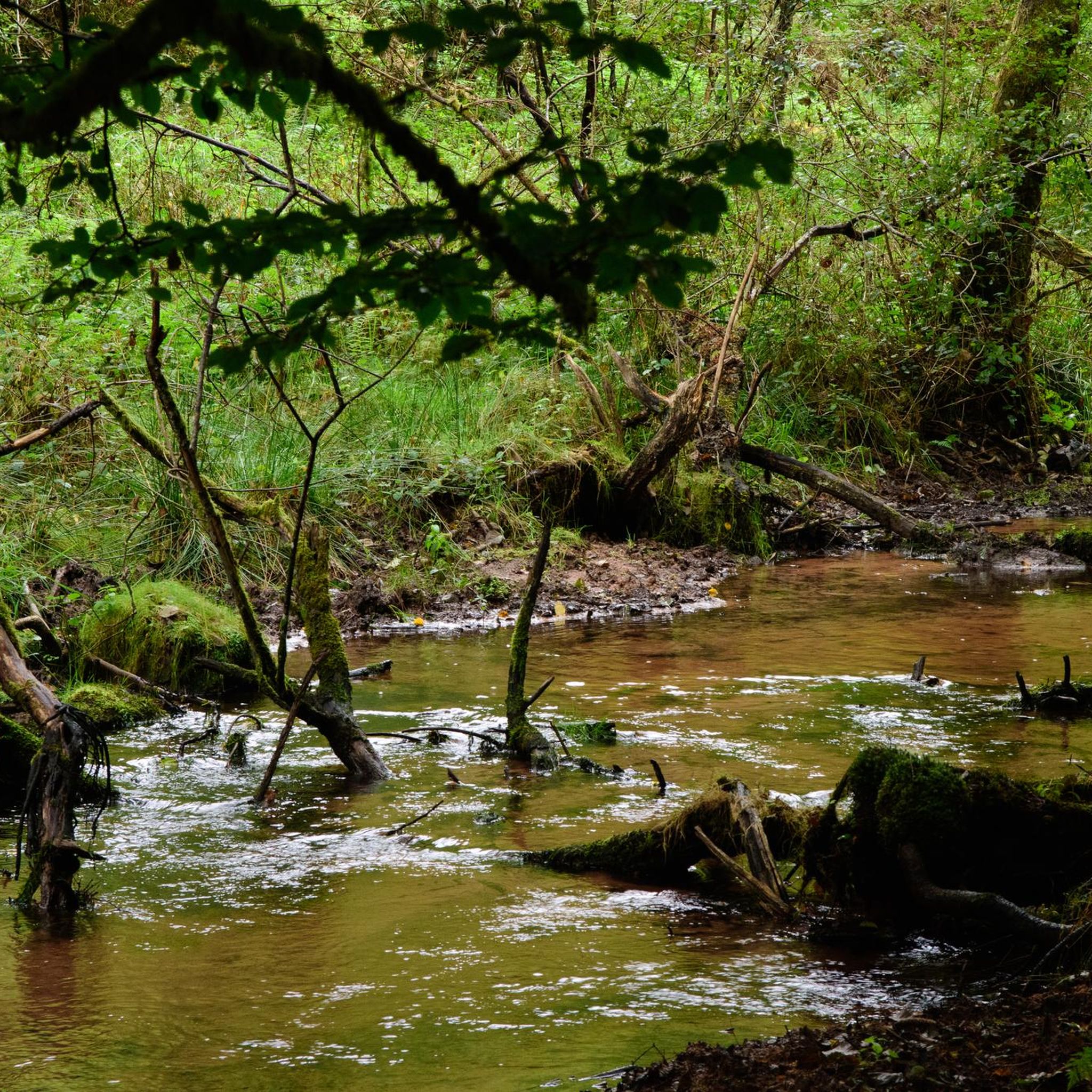
Bradfield Woods is one of the best ancient woodlands in the UK, as there is evidence of its coppicing and upkeep dating back to 1252. With over 370 registered plant species, it boasts a wide variety of flora. But even more astonishing is its array of fungi, as it hosts two species that haven't been recorded anywhere else in Britain.
1
0

Lovely picturesque village centre with a co-op, a tea room (10-4.30, closed Sun & Mon) and a fish & chip shop (lunchtimes and after 5pm, closed Sun).
0
0

Well preserved medieval church, with some evidence of an even earlier church, which is full of references to the village history. Open the 14th century south door and imagine this door handle turning every day since 1340. Inside is the Purbeck marble font, recut from one predating the 1340 church. Are this and several romanesque carved stones in the arcade bases from the earlier church listed in the Doomsday Book? View the finely carved rood screen (1460-80), ogee arched, double sided and painted. The Lavers & Barraud east window is amongst the finest high Victorian stained glass in East Anglia. In the traceries of other windows are rescued pieces of medieval painted glass. Chancel memorials commemorate the 17th and 18th century Grigby family of Drinkstone Park and others who were killed by gunshot or drowned at sea. The fine carving of iconic animals and figures on the wooden pews are the work of Thomas Wormald of Bury St Edmunds. The associations of the church go back to the famous Norman Louvaine, Bohun and Burchier 14th and 15th century families.
0
0
A very imposing commemorative pump in the centre of the village of Woolpit, Suffolk, erected to mark the Jubilee of Queen Victoria. Each wooden pillar carries the carved wooden effigy of a renowned British queen, and the pump itself is capped by what seems to be a lion couchant - or maybe it's a dog couchant. The pump is in a boxed wooden housing, with a padlocked inspection door at the back, and the wrought iron handle with its system of levers, is chained. There's some decorative ironwork on the wooden housing, some of which has been lost, especially around the spout. The spout itself is made of lead. Around the top of the pump, each face in turn carries the words: "All noblest things are still the commonest"; "Every place has"; "Water light and air and"; God's abounding grace". The front face carries a carved crown and the inscription:A Well of Remembrance Victoria By the Grace of God Queen and Empress 1837 1897
1
0
The legend of the "'green children of Woolpit'" concerns two children of unusual skin colour who reportedly appeared in the village of Woolpit in Suffolk, England, sometime in the 12th century, perhaps during the reign of King Stephen. The children, brother and sister, were of generally normal appearance except for the green colour of their skin. They spoke in an unknown language and would eat only raw broad beans. Eventually, they learned to eat other food and lost their green colour, but the boy was sickly and died soon after he and his sister were baptised. The girl adjusted to her new life, but she was considered to be "rather loose and wanton in her conduct. After she learned to speak English, the girl explained that she and her brother had come from Saint Martin's Land, a subterranean world inhabited by green people. At harvest time, one day during the reign of King Stephen (r. 1135–1154) according to William of Newburgh the villagers of Woolpit discovered two children, a brother and sister, beside one of the wolf pits that gave the village its name. Their skin was green, they spoke an unknown language, and their clothing was unfamiliar. Ralph reports that the children were taken to the home of Richard de Calne. Ralph and William agree that the pair refused all food for several days until they came across some raw broad beans, which they consumed eagerly. The children gradually adapted to normal food and in time lost their green colour. The boy, who appeared to be the younger of the two, became sickly and died shortly after he and his sister were baptised. After learning to speak English, the children—Ralph says just the surviving girl—explained that they came from a land where the sun never shone and the light was like twilight. William says the children called their home St Martin's Land; Ralph adds that everything there was green. According to William, the children were unable to account for their arrival in Woolpit; they had been herding their father's cattle when they heard a loud noise (according to William, the bells of Bury St Edmunds) and suddenly found themselves by the wolf pit where they were found. Ralph says that they had become lost when they followed the cattle into a cave and, after being guided by the sound of bells, eventually emerged into our land. According to Ralph, the girl was employed for many years as a servant in Richard de Calne's household, where she was considered to be "very wanton and impudent". William says that she eventually married a man from King's Lynn, about 40 miles (64 km) from Woolpit, where she was still living shortly before he wrote. Based on his research into Richard de Calne's family history, the astronomer and writer Duncan Lunan has concluded that the girl was given the name 'Agnes' and that she married a royal official named Richard Barre.
0
0
토스톡 주변에서 가장 인기 있는 경로
토스톡 주변에서 가장 인기 있는 명소


더 살펴보기
다른 지역의 최고의 러닝 트레일 & 경로를 살펴보세요.
