경로

플래너

기능

업데이트

App

로그인 또는 가입

앱 다운로드

로그인 또는 가입

로그인 또는 가입

경로
사이클링 경로
영국
영국
웨스트미들랜즈 지역
워릭셔
스트랫퍼드 온 에이번

쇼테스웰

쇼테스웰 최고의 사이클링 경로

4.4

(59)

792

자전거 타는 사람

153

라이딩

쇼테스웰 최고의 사이클링 경로를 찾으시나요? 쇼테스웰에서 가장 멋진 자전거 라이딩 장소를 살펴본 후에 바로 떠나보세요. 여기서 마음에 드는 경로만 고르시면 돼요!

마지막 업데이트: 5월 25, 2026

9

자전거 타는 사람

#1.

Bourton에서 출발하는 Great Bourton에서 Cropredy로 가는 도로 – Cropredy Wharf 순환 코스

25.0km

01:32

180m

180m

보통 자전거 타기. 좋은 체력 필요. 대부분 포장된 지면. 실력과 관계없이 누구나 갈 수 있음.

기기에서 길안내

휴대폰으로 전송

저장

보통

보통 자전거 타기. 좋은 체력 필요. 대부분 포장된 지면. 실력과 관계없이 누구나 갈 수 있음.

보통
guide_signup
저희가 komoot 모바일 앱로 길을 안내해 드리겠습니다.
무료 komoot 계정로 끝없는 야외 모험을 손쉽게 찾고, 맞춤 설정하며 길안내할 수 있어요.

무료 회원 가입

보통 자전거 타기. 좋은 체력 필요. 대부분 포장된 지면. 실력과 관계없이 누구나 갈 수 있음.

보통

보통 자전거 타기. 좋은 체력 필요. 대부분 포장된 지면. 실력과 관계없이 누구나 갈 수 있음.

보통

초급용 자전거 라이딩. 모든 체력 수준에 적합. 대부분 포장된 지면. 실력과 관계없이 누구나 갈 수 있음.

초급
무료 회원 가입 후 쇼테스웰 주변 라이딩 경로를 149개 더 확인하세요

더 다양한 경로와 다른 탐험가들의 추천을 살펴보세요.

무료 회원 가입

이미 komoot 계정이 있나요?

투어 추천은 다른 사람들이 komoot에서 완료한 수천 개의 활동을 바탕으로 구성되어 있습니다.

오늘 무료 계정으로 시작하세요

다음 모험이 기다리고 있어요.

로그인 또는 가입하기

쇼테스웰 주변 인기 장소

쇼테스웰 로드 사이클링 경로

쇼테스웰 MTB 트레일

쇼테스웰 하이킹

쇼테스웰 러닝 트레일

커뮤니티 팁

Roly
8월 10, 2025, View from Edgehill

great place to stop off

0

0

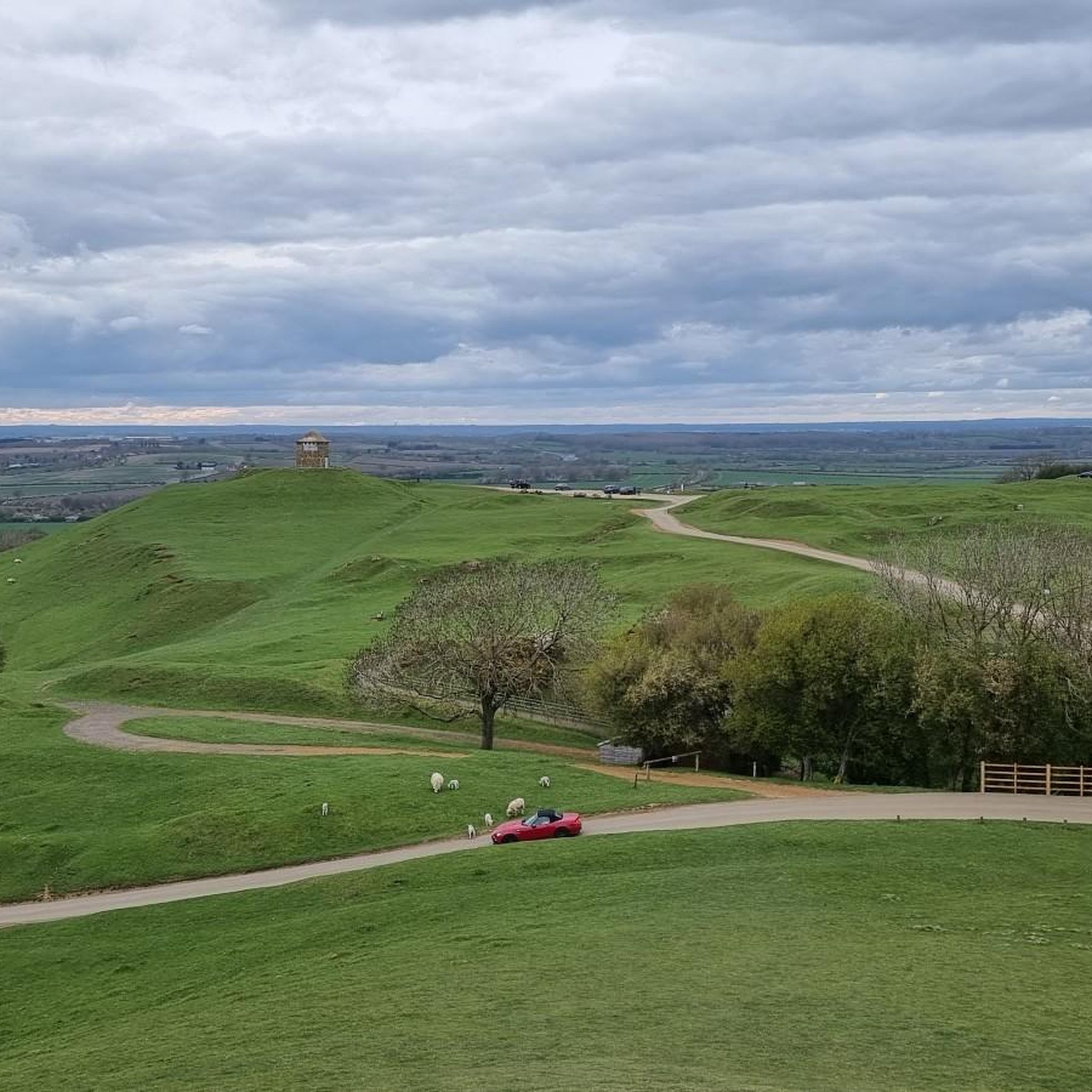
Edgehill Castle (Tower) which is now a rather nice pub/restaurant. The castle was built in the 18th Century as a 'sham' castle reputedly on the exact spot where Charles I raised his standard before the Battle of Edgehill during the first English Civil War. Apparently Cromwell got there too late for the battle.

1

0

strange 'castle', with nice views.

0

0

Cracking cafe in the middle of Brackley, set in - you guessed it - an old fire station. Good coffee, bike spaces and friendly staff.

0

0

Cropredy is a lovely village with walks along the Oxford Canal

0

0

Napton Lock No 12 is a minor waterways place on the Oxford Canal (Southern Section - Main Line) between Old Engine House Arm Junction (4¾ furlongs and 2 locks to the south) and Napton Junction (Junction of Grand Union and Oxford Canals) (2 miles and 4½ furlongs and 4 locks to the northeast). It is part of Napton Locks. The nearest place in the direction of Old Engine House Arm Junction is Napton Lock No 13; ¾ furlongs away. The nearest place in the direction of Napton Junction is Shut Bridge No 115; a few yards away.

0

0

Shut Bridge No 115 is a minor waterways place on the Oxford Canal (Southern Section - Main Line) between Old Engine House Arm Junction (5 furlongs and 3 locks to the south) and Napton Junction (Junction of Grand Union and Oxford Canals) (2 miles and 4½ furlongs and 4 locks to the northeast). It is part of Napton Locks. The nearest place in the direction of Old Engine House Arm Junction is Napton Lock No 12; a few yards away. The nearest place in the direction of Napton Junction is Napton Lock No 11; 1¼ furlongs away.

0

0

The parish church of ST. MARY THE VIRGIN, a large and imposing building in the local ironstone, consists of a nave of four lofty arches, a chancel with vestry at its north-east corner, north and south aisles which contain chapels at their eastern ends, a battlemented west tower, and a south porch. The south aisle is the Prescote and Williamscot aisle; the north aisle was called the Bourton aisle during the period of its use by the inhabitants of Bourton. The vestry contains a priest's chamber in its upper story. The oldest parts of the present building are the east portion of the south wall of the south aisle which contains a three-light window of c. 1300. From the early 14th century onwards the chancel, south aisle, nave, and, in the 15th century, the north aisle were successively rebuilt, and the chancel arch was enlarged to match the nave arcade; the two aisles were in the 15th century extended to form chapels, which over-lap the chancel. Mouldings on the nave arcade and on the tower and chancel arches are continuous to the ground without capitals. The porch dates from the 14th century and replaced an earlier porch; the tower was added in the late 14th century. In the Middle Ages there was a chapel or chantry of St. Fremund, perhaps in the parish church, to which money was bequeathed in the 15th and 16th centuries. In 1549 the chapel, described as the late chantry chapel of St. Fruenna (sic) was sold by the Crown to George Owen and William Martin, together with its ground, lead, glass, iron, and stones. Probably the chantry was pulled down and the materials re-used. All memory of it had been lost by the end of the 19th century. The identification of the south or Prescote aisle of Cropredy church with St. Fremund's chapel was made by W. Wood in 1893, presumably on the grounds of its association with Prescote. In 18256 Cropredy church was repewed: the middle of the church was left as open sittings for the poor and surrounded by 'sleeping-boxes' and partitions were put up between the nave and the chancel and between the north chapel and the chancel. New inner and outer doors were installed in the porch, and the musicians' gallery was enlarged; the font was recased. The work was done mainly by a local contractor, Charles Cook. Some old materials were used in the work, the fine 14th century rood-screen being cut into pieces and used for railings. The blocked doorway which gave access to the rood-loft can be seen above the pulpit. A west porch, of which the upper part was timber-framed, was removed in the period 182550. Though Bishop Wilberforce thought the church 'very handsome' in 1855, by 1875 the vicar said that it was only in a 'tolerable' state of repair and much required reseating. In 1877 an extensive restoration was carried out under the direction of E. W. Christian. The lead of the roofs was relaid; the internal walls were restuccoed; the dilapidated south-east turret over the tower staircase was rebuilt; the gallery at the west end was removed and the tower arch opened; the level of the chancel floor, then mostly of lias, was raised and encaustic tiles laid down; the church was completely reseated and a mixed array of benches and chairs removed, extra seats having been installed in 1855 for the children of the new National school. A blocked double piscina in the south wall of the sanctuary was opened, as was an aumbry opposite. The church was again reseated in 1914, when the oak pews were designed by the architect Guy Dawber; the chancel was repaired in 1922; a hotwater heating system was installed in 1925 in place of slow-combustion stoves. The chancel and south aisle roofs were releaded in 1934. The church possesses an ancient oak chest, probably of the 13th century, with three iron clasps and locks; the carved wooden pulpit is late-medieval in character, but is said to have had the date 1619 carved on it. The pre-Reformation brass lectern is in the form of an eagle, and is the only one of its kind in the county outside Oxford. According to village tradition the eagle was hidden in the Cherwell to preserve it from the parliamentary troops on the eve of the battle of 1644, remaining there some 50 years; it had certainly emerged by 1695. In 1841 the eagle was 'sadly mutilated and the feet used as ornaments to a wooden desk'. One of the three lions which form the eagle's feet is of bronze and replaces a lost brass one. Some weapons and armour from the battlefield of 1644 hang in the north aisle. A brass chandelier for the chancel and a litany desk were among gifts given at the restoration of 1877. The medieval octagonal font was returned to the church in the mid 19th century after a long sojourn in the vicarage garden. There is also an octagonal font presented by Mrs. Tonge in 1853. Mural paintings discovered during the restoration of 1877 'perished from exposure to the weather and the workmen', except for the remains of a Doom over the chancel arch and one figure on the north wall of the north aisle. The north aisle had representations on one side of the north door of the Seven Deadly Sins and on the other of the Seven Works of Mercy, each in a medallion with a text, and there were portions of leaf and interlacing patterns in the chancel. The medieval rood-screen was reconstituted in 1877, furnished with new panels and a moulded crest, and re-erected on the south side of the chancel. A medieval screen is still in place at the east end of the south aisle; it contains many times over the initials A.D., probably for Anne Danvers (d. 1539), wife of John. The church has in the north aisle one fragment of 15th-century glass showing the head of a crowned female saint. The east window by Lavers, Barrand, and Westlake was given by the vicar and wardens in 1877. There are further memorial windows painted by Messrs. Heaton, Butler, and Bayne. In the south aisle and chapel are monuments to members of the families of Danvers and Gostelow of Prescote, and Calcott, Taylor, and Loveday of Williamscot. An inscription no longer existing but recorded in the early 18th century was to Elizabeth, wife of Richard Danvers (1482). Sir John Danvers (d. 1721) is commemorated by a brass plate in the floor of the south chapel and by a large marble monument, which formerly blocked a window in the south aisle but was moved to the north wall of the church. On the south chapel wall is a freestone monument to Walter Calcott (d. 1582) and his wife Alice, the inscription being largely defaced. In the south wall of the south aisle are two sepulchral arches, in one of which are the remains of a stone figure of a knight in chain armour. In the nave is a brass to Priscilla Plant of Great Bourton (d. 1637). In the chancel are memorials to a vicar, Francis Stanier (d. 1725), and his wife Mary; and to William Taylor of Williamscot (d. 1733) and his wife Abigail. The peal of six bells with a sanctus was cast in 1686 and 168990, by the Bagleys of Chacombe (Northants.). The tenor was evidently recast, for its inscription says that it was given by Calcott Chambre; the two brothers of that name were lords of Williamscot in the late 16th and early 17th century. In 1706 three bells and the sanctus bell were broken, and were ordered to be new cast with their own metal. The bells were rehung and their fittings renewed by Messrs. Warner in 1913. The church already had a clock in 1512 which was perhaps the clock repaired in 16945 and sold for 5s. in 171920; a new clock had been made for 6 in 171314 by an unnamed Daventry clockmaker. The clock surviving in 1966 was made by John Moore & Sons, Clerkenwell, in 1831; it was bought partly by subscription from Cropredy and Bourton and partly by subventions (18316) from the rent of the bell charity.  The bell charity dates from at least 1512, when Roger Lupton, Vicar of Cropredy, gave 6 13s. 4d. to find a person to keep Cropredy parish clock going hourly, and to ring bells at specified times. In 1614 the charity was stated to be also for the repair of the church. Two separate quarter yardlands in Wardington bought with the endowment in 1513 and 1517 were confiscated under the Chantries Act and sold to William Harrison, but were restored to the trustees in 1557.  At the inclosure of Wardington in 1762 the trustees were awarded 14 a., subsequently known as Bell Land, which in 1823 brought in an income of 32. The money was divided equally between the churchwardens of Cropredy and Bourton and the excess of the income over the sum paid to the parish clerk for ringing and winding the clock (4 10s.) saved Cropredy from raising its full church rate for many years. In 1966 the curfew was rung twice weekly at 6 p.m., and it was stated that a bell had been rung until recent times at 6 a.m. The church plate, besides a silver chalice of 1570 and a pewter paten, alms-dish, and flagon (the two last given by Mr. Holloway in 1666), includes what may be a small oval tin pyx, claimed to be the only medieval pyx still in existence in England, but is more probably a seal-skippet.  A churchyard cross was demolished in the Civil War. There is a sundial on the south wall of the church. Probably the most imposing tomb in the churchyard is that of John Chamberlin (1817) , and the oldest are two of 1631. In 1923 Mrs. George Barr, wife of Cropredy's vicar, gave 100 of which the income was to be used for mowing the churchyard; to this her husband added 50 in 1926. In 1966 the income was 6 10s. The churchyard may once have extended further east, in which direction many human bones were dug up in the 19th century. A burial ground adjoining the Mollington lane was consecrated in 1950. A mission hall, designed by W. E. Mills, was built near the church in 18879.

0

0

쇼테스웰 주변에서 가장 인기 있는 경로

쇼테스웰 로드 사이클링 경로

쇼테스웰 주변에서 가장 인기 있는 명소

Places to see

Store rating

komoot 모바일 앱으로 영감을 받아보세요

무료 komoot 계정로 끝없는 야외 모험을 손쉽게 찾고, 맞춤 설정하며 길안내할 수 있어요.

또는

지금 komoot에 가입하세요

Store rating

더 살펴보기

다른 지역의 최고의 자전거 경로를 살펴보세요.

스니터필드리틀 콤프턴클리포드 챔버스와 밀코트스트랫퍼드 어폰 에이번바튼 온 히스그레이트 울포드Weethley와 화살웰즈본라이트혼하셀러록슬리쿠튼킨워튼스페날스톡턴엔진 하우스 수영장알스터알더민스터롱 이칭턴모튼 모렐그레이트 알네웨스턴 온 에이번필러턴 허시리틀 울포드베어리윌름코트웰포드 온 에이번Idlicote할포드뉴볼드 페이시티드밍턴스트레튼 온 포세애스턴 캔트로빌슬리샤를코트호닝턴쉽스톤 온 스투어바체스톤풀브룩돌싱턴사우스햄아더스톤 온 스투어롱 마스턴버튼 다셋와이퍼드트레딩턴탠워스 인 아덴템플 그래프턴모튼 바곳우프턴래드브로크샘본필러턴 프라이어스울버튼콤프턴 버니라이트혼 히스타이소올드베로우옥스힐클라베르돈폭포에팅턴키네톤판버러웜레이턴보데저트Hodnell과 Wills 목초지에이본 다셋체링턴콤프턴 윈야츠러딩턴래드웨이게이돈점자빈턴워밍턴헨리 인 아덴채드 션트페니 콤프턴햄튼 루시풍차풀윅스포드래드본채플 애스코트하버리올드 스트랫퍼드와 드레이튼일밍턴롱 콤프턴버밍턴내쉬다우튼 와웬프레스턴 바곳컴브룩냅톤 온 힐스터들리애드밍턴상부 및 하부 Shuckburgh왓코트스터튼체스터튼과 킹스턴Sutton Under Brailes울렌홀비드포드 온 에이번퀸턴집사 마스턴샐포드 프라이어스프라이어스 마스턴스톤턴프라이어스 하드윅랭글리프레스턴 온 스투어이칭턴 주교메이플보로 그린

근처 어드벤처 가이드

홀리 즐길거리

background

새로운 정복을 위한 준비를 하세요

무료로 가입하기

탐험하기
경로경로 플래너기능하이킹MTB 트레일로드 사이클링 경로바이크패킹사이트맵
앱 다운로드
소셜 미디어에서 팔로우하기

© komoot GmbH

개인 정보 보호 정책