메이드 모튼 최고의 러닝 경로
4.1
(13)
3,983
달리기 하는 사람
218
러닝
메이드 모튼에서 하이킹하며 에일즈버리 베일 구석 부분까지 살펴볼까요? 메이드 모튼에 있는 모든 하이킹 및 워킹 경로 컬렉션 중 가장 멋진 하이킹 경로를 엄선하여 소개해드릴게요. 다른 하이커가 공유한 실제 팁과 사진을 살펴보고 후기를 읽으며 마음에 드는 메이드 모튼 워킹 경로를 찾아보세요.
마지막 업데이트: 5월 27, 2026
3.16km
00:20
10m
10m
보통 조깅. 모든 체력 수준에 적합. 대부분 갈 수 있는 길. 일부 구간에서 미끄러지지 않게 조심해야 함.
62
달리기 하는 사람
17.9km
01:56
150m
150m
어려운 조깅. 우수한 체력 필요. 대부분 포장된 지면. 실력과 관계없이 누구나 갈 수 있음.

무료 회원 가입
32
달리기 하는 사람
7.30km
00:47
50m
50m
보통 조깅. 좋은 체력 필요. 대부분 포장된 지면. 실력과 관계없이 누구나 갈 수 있음.
29
달리기 하는 사람
11.6km
01:14
80m
80m
보통 조깅. 좋은 체력 필요. 대부분 포장된 지면. 실력과 관계없이 누구나 갈 수 있음.
15
달리기 하는 사람
14.0km
01:27
70m
70m
보통 조깅. 좋은 체력 필요. 대부분 포장된 지면. 실력과 관계없이 누구나 갈 수 있음.
더 다양한 경로와 다른 탐험가들의 추천을 살펴보세요.
무료 회원 가입
이미 komoot 계정이 있나요?
투어 추천은 다른 사람들이 komoot에서 완료한 수천 개의 활동을 바탕으로 구성되어 있습니다.
오늘 무료 계정으로 시작하세요
다음 모험이 기다리고 있어요.
로그인 또는 가입하기


커뮤니티 팁

수요일 오전 10시-12시 사이에 지나게 된다면, 들러서 직접 만든 케이크와 차/커피를 맛보세요.
0
0

Lying in a rolling Buckinghamshire landscape of arable fields, pasture and woodland, Foxcote Reservoir is the kind of place that rewards patient visitors. Created in 1956 by damming a small tributary of the River Great Ouse, this site has become important for the numbers of wintering waterfowl, especially wigeon and coot. https://www.bbowt.org.uk/nature-reserves/foxcote-reservoir
0
0

Public school-boy favourite for stone-skipping and a spot of fishing on the sly. We had a picnic on the bank - it's a lovely place.
0
0

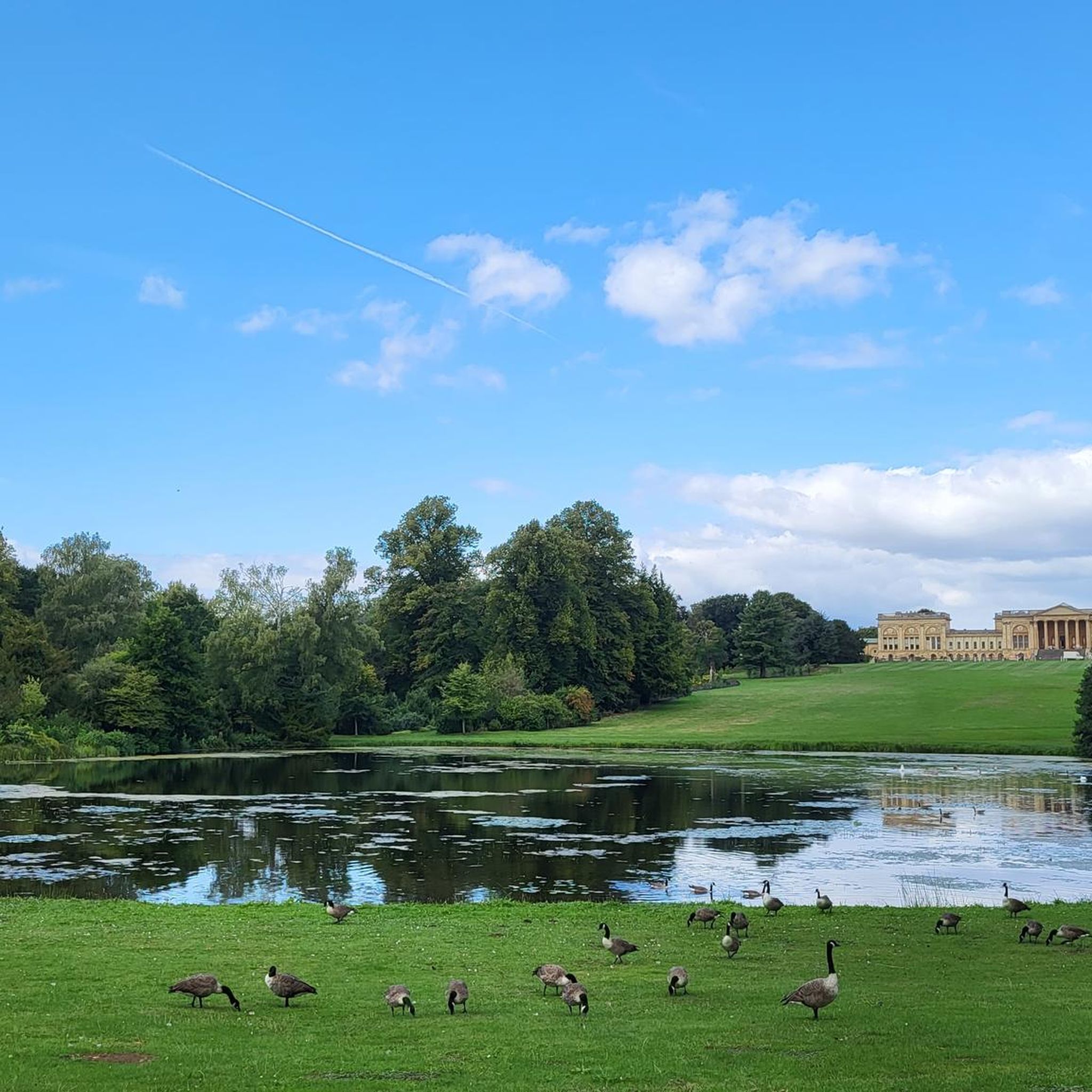
One of the first areas of the garden that visitors may encounter is the Octagon Lake and the features associated with it. The lake was originally designed as a formal octagonal pool, with sharp corners, as part of the seventeenth century formal gardens. Over the years, the shape of the pond was softened, gradually harmonising it within Stowe's increasingly naturalistic landscape. Source: Wikipedia
0
0
The Temple of Venus stands on the southern bastion of Bridgeman’s ha-ha overlooking the south end of the Eleven-Acre Lake. Dating from 1732. The Temple of Venus is a strictly Palladian building with a central pedimented block with a coffered ceiling flanked by arcaded Ionic colonnaded quadrant wings terminating in rusticated pavilions. Built in about 1731 and probably designed by Kent the interior was originally painted. Palladian building. Circa 1732 by Kent. Central pedimented block has arched central apsidal recess with coffered ceiling and Ionic collonade. Quadrant wings of three arches with ball finials to cornice, linking to rusticated stone pavilions with open arches and broken pediments. The Temple of Venus stands on the southern bastion of Bridgeman’s ha-ha overlooking the south end of the Eleven-Acre Lake. Dating from 1731, it marks the beginning of William Kent’s employment in the gardens at Stowe, and the completion of the garden as it then existed. Even after Kent had contributed several more temples, it kept the alternative name of ‘Kent’s building’. It is built of Helmdon limestone and consists of a central pedimented block with an apsidal Ionic portico in antis linked to corner pavilions by arcaded quadrant walls. Apart from the central block, it has only one façade; the rear walls were rendered and for the most part hidden by shrubberies, which in the late eighteenth century consisted of a garden of evergreens. No direct source for the design has been suggested. The careful siting of the building and the pronounced lean of the arcade piers were noticed by Thomas Whately in 1770, who observed that the ‘elegant structure, inclined a little from a front view, becomes more beautiful by being thrown into perspective; and though at a greater distance, is more important than before, because it is alone in the view.’ Within the Temple of Venus the goddess was represented by a painting in the centre of the ceiling by the Venetian Francesco Sleter; the room was furnished with what was described as a ‘pleasuring sopha’, and inscribed around the frieze was the encouraging couplet from a Renaissance adaptation of the Pervigilium Veneris: "Nunc amet, qui nondum amavit; Quique amavit, nunc amet. (Let him love, who never lov’d before; Let him who always lov’d, now love the more.) The other parts of the decoration emphasised Venus’s role in promoting sexual jealousy and strife. In the niches surrounding the portico were busts (copies recently reinstated) of the debauched emperors Nero and Vespasian and the adultresses Cleopatra and Faustina. The internal walls were once decorated with scenes from Spenser’s Faerie Queene, also provided by Sleter. They told the story of Malbecco, the octagenarian husband of the seventeen-year-old Hellinore. She soon sought alternative pleasures, which were portrayed with frankness in the murals. The stone domes to the pavilions collapsed before the end of the eighteenth century, and in 1827–8 the 1st Duke of Buckingham replaced them with pitched lead roofs. In 1827 the doorways were altered to form round-headed arches, but the recent restoration of the temple has reinstated Kent’s design. Sleter’s murals evidently perished or were painted over during the later eighteenth century and were replaced by the 1st Duke of Buckingham with a scheme of plain, pale-coloured walls bordered with wash lines in greenish blue. The recent restoration has included the excavation of the ground to the south in order to reinstate the original line of the ha-ha. The shrubberies to either side will be replanted in the ‘ranked’ manner of the mid-eighteenth century according to available evidence, and beyond the ha-ha there now appears a scene Lord Cobham himself would have recognised: files of ‘cased’ tree seedlings on the lines of his original plantings, swinging round the bastion to link up with the earlier replantings on Warden Hill to the west. Source: nationaltrust.org.uk
0
0
Eighteenth century shell-encrusted dam disguised as a bridge, formerly the site of a monument to Captain Cook. Grade I. A dam in the Elysian Fields, disguised as a low bridge. c1740 by Kent. Stone dressings, rendering encrusted with shells. Five bays with low arches, central bay projecting and pedimented, 2 smaller pediments each side above piers. Captain Cook's Monument, standing on the bridge, is a small monument with portrait medallion dated 1778 which was moved to Duck Island in th 1990s. The National Trust's Survey of Stowe undertaken in 1989 noted that the south front is encrusted with conch shells and that the overflow from the upper lake originally ran through channels in the centre and on either side creating a cascade. The abutments on either side may have supported a wooden footbridge giving views of the fake meander in the Styx and Worthies river. Source: Buckinghamshire.gov.uk
1
0
A small classical facade of carrara marble probably built about 1800, perhaps part of a reused chimneypiece with a dolphin head spout and a stone basin below. Probably built about 1800. The Seasons Fountain is a small classical facade of carrara marble, perhaps part of a reused chimneypiece with a dolphin head spout and a stone basin below. Probably built about 1800 for the Marquis of Buckingham. This feature uses the water supply of the Temple of Contemplation which included a cold bath and stood slightly to the north of this feature. Circa 1800 small classical facade of Carrara marble, evidently made up of the parts of a chimneypiece, with lines from Thompson's 'Seasons' inscribed. Lionhead spout and stone basin. Among the last additions to the garden, the Seasons Fountain is thought to be one of the monuments erected in honour of the visit of the Prince of Wales to Stowe in 1805. It is named after James Thomson’s The Seasons (1746), one of the most influential and universally popular poems of the eighteenth century, and inscribed with extracts from it. The fountain is unusual in being constructed in statuary marble, a material all too obviously unsuited to English gardens and to the iron-rich spring water it dispenses, and its origin as an eighteenth-century chimneypiece is not hard to discern (it is not known whether it came from Stowe or another house). Originally the façade of the fountain was decorated with Wedgwood plaques of the Four Seasons, and silver drinking cups were suspended on either side from chains. Source: nationaltrust.org.uk
1
0
메이드 모튼 주변에서 가장 인기 있는 명소


더 살펴보기
다른 지역의 최고의 러닝 트레일 & 경로를 살펴보세요.
