20의 카운튼가지 명소 & 주요 장소
카운튼에는 둘러볼 만한 장소가 많답니다. 하이킹 또는 사이클링을 좋아한다면 카운튼에 숨겨진 20
가지 보석을 만날 수 있을 거예요. 이 지역의 주요 명소를 살펴보면서 다음 모험을 계획해보세요.
마지막 업데이트: 10월 10, 2026

러퍼드 아이스하우스
하이라이트 • 역사적 장소
팁에 의해

이런 장소를 발견하려면 지금 가입하세요
최고의 싱글 트랙, 봉우리 및 다양한 흥미로운 야외 장소에 대한 추천을 받아보세요.
Maythorne Mill
하이라이트 • 기념물
팁에 의해

세인트 마이클 교회, 판스필드
하이라이트 • 기타
팁에 의해
Caudwell's Mill
하이라이트 • 기념물
When Charles Caudwell, whose family originated from Derbyshire, bought the mill in 1851 he made …
팁에 의해
무료로 가입하여 카운튼 주변의 더 많은 명소를 발견하세요.
이미 komoot 계정이 있나요?
오늘 무료 계정으로 시작하세요
다음 모험이 기다리고 있어요.
커뮤니티 팁

The first mention of Farnsfield emerges in 956AD in a document in which King Edwy of Northumbria gave the Danish Archbishop of York, Oscytel, the manor of Southwell, which included the farmstead of Farnsfield. Farnsfield was a small community of farmsteads scraping a living from agriculture in a clearing at the edge of Sherwood Forest. By 1520 Farnsfield was the responsibility of Southwell Minster under the Archbishop of York, Cardinal Wolsey. Most people were farmers and poor land, bad weather, disease and starvation were constant hazards. By the 1600s more specialised trades were developing in Farnsfield including bakers, tailors and shoemakers. By the late 1700s sheep rearing was the main source of income from outside.
0
0
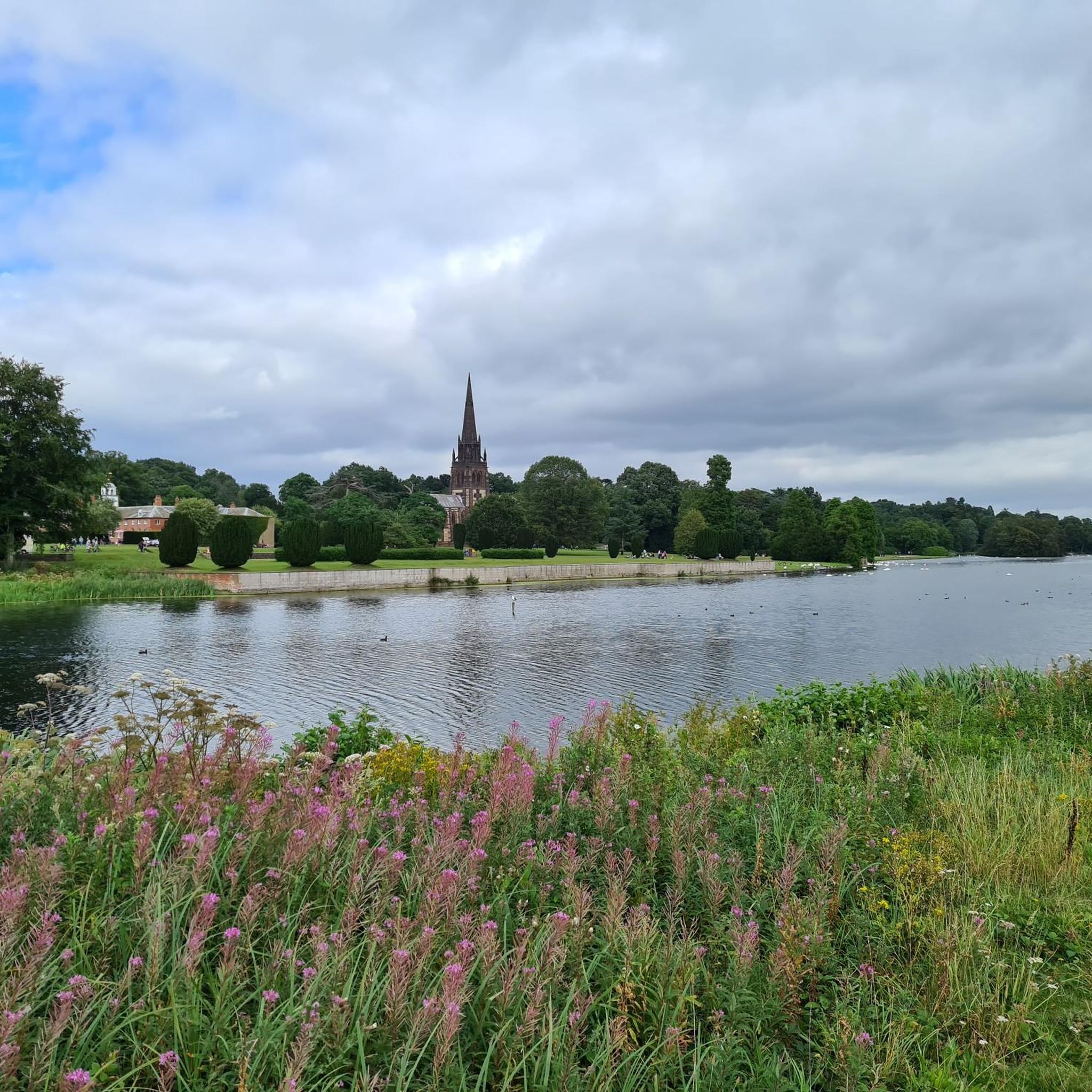
The church dates from the 15th century but was rebuilt between 1859 and 1860 by Thomas Chambers Hine and Robert Evans following a fire. Only a fragment of the tower from the 15th-century building survives.
0
0
The former Maythorne Mill, its former workers’ cottages and its ancillary buildings, plus a farm, form the greater part of this small hamlet. It was a cotton mill built in 1785 to supply the framework knitting industry with yarns. The speculator that built Maythorne was a Southwell hop merchant. In the early C19th the mill was adapted to produce silk and lace thread. There was also a Mission Hall, a pub & general store. The mainly female workforce was required to wind silk on bobbins, form it into shanks before it was finally washed and pressed and despatched to Nottingham. However, yarn & thread products were not the only items produced here as osier beds provided willow for basket-making and hops were also grown locally. From 1939-45 the mill was used to billet soldiers and in 1948 the land & buildings were put to agricultural use. the mill building has been converted into residential flats & some workshops in various outbuildings. The mill wheel was powered by the River Greet.
0
0
Caudwell's Mill stands on the River Greet on the site of Southwell’s mediaeval Burgage mill. When Charles Caudwell, whose family originated from Derbyshire, bought the mill in 1851 he made changes, thus greatly increasing the mill’s capacity. Wheat was transported to the mill by road, rail and water. Local corn arrived by horse and cart, supplies from further afield came from the R.Trent by barge to a wharf at Fiskerton which still stands. The mill suffered serious fires on three occasions in 1867, 1893 and 1917. On each occasion the opportunity was taken to modernise the plant. Local bakers took their supply of flour from the mill, best known was ‘Mosedale’s’ Bakery and Caudwell’s ‘Greet Lily Flour’ won the Nottinghamshire’s Bakers Cup in 1907, 1908, 1909, 1912 and 1914. The mill was taken over by Associated British Foods, who closed it in 1977 and in 1989 the mill was converted into residential apartments.
0
0
The earliest church on the site is believed to have been founded in 627 by Paulinus, the first Archbishop of York, when he visited the area while baptising believers in the River Trent. The legend is commemorated in the Minster's baptistry window. In 956 King Eadwig gave land in Southwell to Oskytel, Archbishop of York, on which a minster church was established. The Domesday Book of 1086 recorded the Southwell manor in great detail. The Norman reconstruction of the church began in 1108, probably as a rebuilding of the Anglo-Saxon church, starting at the east end so that the high altar could be used as soon as possible and the Saxon building was dismantled as work progressed. Many stones from this earlier Anglo-Saxon church were reused in the construction. The church was originally attached to the Archbishop of York's Palace which stood next door and is now ruined.
0
0

Between 1729 and c.1845 many improvements were made to the Rufford estate. For example, the addition of the bath house, the creation of the lake and mill buildings, the construction of the brewhouse, water tower and coach house, and also the addition of five ice houses. Although Rufford Abbey once boasted five ice houses, only two remain today. All were constructed around 1820, when the estate was owned by John Lumley-Savile, 8th Earl of Scarbrough (1788–1856). The five ice houses are located near Rufford lake, created c. 1750; for the simple reason that the movement of ice from its source was easier. Not all of Rufford's ice houses faced north, as accessibility and the logistics of the ice may have meant that the builders found it easier to place the doorways facing the lake rather than northerly. It is believed that ice was mainly taken from Blackwalk Pond, which was drained to make way for housing in the 20th century. Blackwalk Pond was used to serve the abbey in Rufford's monastic era, and later supplied water to Rufford's water tower and brewhouse, which remain on site today.
0
0

A pretty red-brick village that boasts a couple of pubs, a small Co-op and a village bakery, if you are in need refreshment or supplies. To the north is the former Southwell to Mansfield railway line, which has since been converted into the Southwell Trail for walkers, cyclists and horse riders. To the south is a memorial to a Halifax bomber that crashed here in 1944, killing all on board.
2
0
카운튼 주변에서 가장 인기 있는 경로
카운튼 주변에서 가장 인기 있는 명소


더 살펴보기
찾고 있는 하이라이트를 아직 못 찾으셨나요? 다른 지역의 주요 명소 가이드를 확인해보세요:
