오레에서 가장 멋진 20개의 동굴
성을 방문하는 건 언제나 특별한 일이에요. 하이킹을 하다가 잠깐 들를 때도, 가이드를 따라 제대로 둘러볼 때도 말이죠. 오레에 있는 아름다운 성 20
곳을 아래에서 살펴본 후에 마음에 드는 성을 다음 모험 때 만나보세요!
마지막 업데이트: 5월 27, 2026


오늘 무료 계정으로 시작하세요
다음 모험이 기다리고 있어요.
로그인 또는 가입하기
커뮤니티 팁

Just outside the village center of Widooie, on Kasteelweg, lies the beautifully preserved Widooie Castle: a secluded castle farm with deep historical roots. Four wings surrounding a rectangular courtyard form a harmonious whole, with marlstone bands, ornate wall anchors, and a stately gate dating from 1662 where the coat of arms of Richard Vaes still proudly stands. The corner tower, the classically renovated residential wing, and the 17th-century barns together tell the story of a place where generations have come and gone for centuries.
1
0

The castle belonged to the goods of the abbey of Corbie, which were given in leasehold by the abbot to Godfried van Bocholtz in 1559. The castle was sold in 1588 to Hendrik Vaes-Valck, mayor of Tongeren. He began rebuilding the castle. The work was completed by Richard Vaes-van den Hove, as indicated on the facade stone with his coat of arms above the entrance gate (1662). It is said that the actual castle extended south of the current buildings, on the site of the current garden, and was completely destroyed in a fire in 1670 and not rebuilt. The castle remained in the possession of the Vaes family until 1816. See also: https://inventaris.onroerenderfgoed.be/erfgoedobjecten/37615
5
0
The imposing castle of Betho was originally a moated castle. The residential domain is symmetrically laid out and consists of the castle, a square farm and a park with a pond. The current buildings mainly date from the seventeenth and eighteenth centuries. The marlstone corner tower is a remnant of the medieval castle. The castle is named after its first resident Arnold van Betu, popularly known as 'Betho'.
6
0

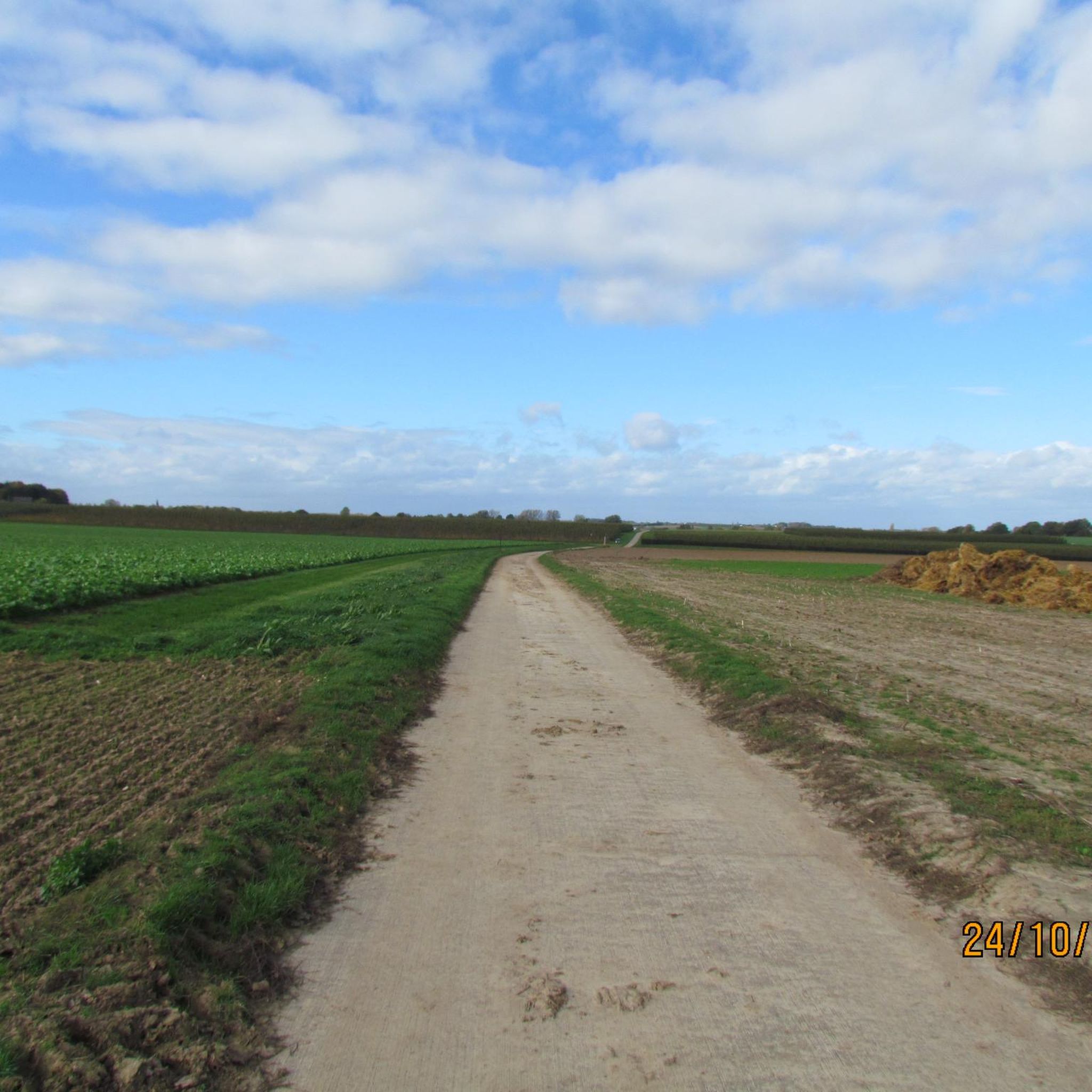
visible from the road with a bench and trash can to take a break
0
0

Hex Castle is one of the most beautiful and best preserved estates in Belgium. The castle is attributed to the Liège architect Etienne Fayn and dates from around 1775. It was built as a hunting lodge for Prince-Bishop François-Charles de Velbrück. It is surrounded by period gardens, a vegetable garden with an original vegetable cellar and a landscape park by Louis Fuchs, known for its collection of old and wild roses and age-old exotics. The annual garden days/plant fair are an opportunity for many to meet friends and colleagues in a relaxed atmosphere - and in the exceptional setting of these historic gardens - to discover special plants and to seek advice from growers and specialists. More: - https://www.visitsinttruiden.be/aanbod/tuinen-van-kasteel-van-hex/ - https://www.hex.be/ - https://inventaris.onroerenderfgoed.be/erfgoedobjecten/32081
5
0

The castle consists of four wings built of brick and provided with curled wall anchors. The whole is covered by hipped roofs of slate. The southern corner tower is topped by a bell-shaped spire while the other three corner towers have a tent roof. Each corner tower is crowned by a roof turret. The southern corner tower is built of marlstone and dates from the 15th century, the other parts of the castle are the result of thorough adjustments in the 17th century. The front facade of the castle on the southeastern side has two floors and is thirteen bays wide. Above each bay is a dormer window. The middle bay was converted into a monumental entrance gate at the beginning of the 18th century by Frans van Hinnisdael, Count of Betho. This gate was provided with a rectangular frame spread over two floors. In the second floor is a rectangular window with balustrade. The whole is crowned by a pediment showing the coat of arms of the van Hinnisdael family. The other wings of the castle date from the middle of the 17th century, these wings are also built of brick and marlstone. The farm dates back to the 17th century. The buildings are built of brick and have hipped and saddle roofs covered with slates. The northwestern facade of the farm contains a central round-arched entrance gate with a limestone frame. On either side of this entrance gate are living areas that protrude from the facade like risalits.
2
1
The castle of Heks is a Belgian castle, located in the village of Heks (part of Heers) in the province of Limburg. The palatial castle was built from 1770, probably by the Liège architect Etienne Fayen, for the Prince-Bishop of Liège Franciscus Karel de Velbrück. As a lover of nature, the Prince-Bishop chose this place in the slightly hilly Haspengouw to build his summer residence and pleasure garden. He had a Chinese garden, a rose garden and a vegetable garden laid out there. Later, the castle was embellished with one of the first landscape parks on the European mainland, inspired by the English garden architecture of Capability Brown. He died on his estate in 1784. The estate is owned by the d'Ursel family. The rose garden now (2004) has an exceptional assortment of rose varieties, the oldest of which were present in the original garden. The gardens and park are open to the public during the first weekend in June and the second weekend in September. The castle features in Harry Kümel's 1968 film Monsieur Hawarden.
7
1
Located just outside the city, in the middle of a beautifully preserved landscape. Impressive, partially moated castle with farm, symmetrically laid out: castle and farm are built around two connecting courtyards, the castle to the southeast, the farm to the northwest. The castle has a tower on each corner. Access to each section is at both ends of the central southwest-northeast axis. First mentioned in 1267 as Betue. It was a Liège fief, successively owned by the families Betho, Huwenial (1417), Betho (1442), Oyembrugge (1524), Krafft (1598), de Simonis (mid-17th century), de Hinnisdael (1691), van der Gracht (1728), the Hinnisdael (1748), the Copis (1828). In 1412 the castle is mentioned as "une maison et cour", in 1478 a tower is added, probably the current southern corner tower, almost entirely made of marl stone, the only remainder of this original building. The other buildings and the barn of the farm date from a subsequent building campaign (mid-17th century). The southeast wing of the castle and the farm date from the second half of the 17th century and the beginning of the 18th century. These parts are probably the result of the building activities of Pierre de Simonis (+ 1691) and his heir François de Hinnisdael (1691-1720). The castle groups its buildings around a courtyard (not open to visitors). Brick buildings, anchored by means of wrought iron wall anchors with curls, under hipped roofs (slate); the corner towers have tent roofs, the south tower has a bell-shaped roof, each crowned with a roof turret. The mid-17th century buildings are brick and marlstone constructions, equipped with bands, corner blocks, profiled cornice on ojief-shaped consoles and rectangular windows in a marlstone frame with nave blocks and cockscomb. Source: https://inventaris.onroerenderfgoed.be/erfgoedobjecten/37305
10
0
오레 주변에서 가장 인기 있는 명소


더 살펴보기
다른 곳에서 최고의 성을 찾고 계신가요? 다른 가이드를 발견해보세요 오레 주변:
