오데르헴 - 오데르젬 최고의 워킹 & 하이킹 경로
4.6
(742)
4,342
등산객
94
하이킹
정확한 경로를 찾는 것이 때로는 어렵지만 오데르헴 - 오데르젬에서 하이킹을 하면 다양한 경치를 마음껏 감상할 수 있답니다. 오데르헴 - 오데르젬에서 가장 멋진 하이킹과 워킹 중에서 마음에 드는 활동을 시작해보세요.
마지막 업데이트: 9월 10, 2026
4.6
(88)
446
등산객
15.1km
03:56
100m
100m
보통 하이킹. 좋은 체력 필요. 실력과 관계없이 누구나 쉽게 갈 수 있는 길.
4.6
(34)
171
등산객
5.24km
01:23
50m
50m
초급용 하이킹. 모든 체력 수준에 적합. 실력과 관계없이 누구나 쉽게 갈 수 있는 길.

4.4
(25)
82
등산객
7.44km
01:58
70m
70m
초급용 하이킹. 모든 체력 수준에 적합. 실력과 관계없이 누구나 쉽게 갈 수 있는 길.
4.7
(29)
152
등산객
11.1km
02:55
90m
90m
보통 하이킹. 좋은 체력 필요. 실력과 관계없이 누구나 쉽게 갈 수 있는 길.
4.5
(17)
108
등산객
21.2km
05:33
160m
160m
어려운 하이킹. 우수한 체력 필요. 실력과 관계없이 누구나 쉽게 갈 수 있는 길.
더 다양한 경로와 다른 탐험가들의 추천을 살펴보세요.
이미 komoot 계정이 있나요?
투어 추천은 다른 사람들이 komoot에서 완료한 수천 개의 활동을 바탕으로 구성되어 있습니다.
오늘 무료 계정으로 시작하세요
다음 모험이 기다리고 있어요.

오데르헴 - 오데르젬 주변의 다른 모험

커뮤니티 팁

Different every season...
0
0

Magnificent rites, super even we can find a bar
1
0

A beech tree likes shade in its youth. They can establish themselves in the shade of other more light-loving tree species. Conversely, no tree is able to establish itself under a closed canopy of beeches. We therefore call the beech the climax tree species. It closes off the natural forest succession and can maintain it for a very long time, provided that no large-scale and brutal disturbances disrupt its kingdom. This place is very typical of the forest management of the Sonian Forest: all the trees are the same age and of the same species. In this part you see monospecific forest management, they are all beeches.
1
0
Forests are central to the fight against the triple global crisis of climate change, biodiversity loss, and pollution. They cover nearly a third of the Earth’s land surface and are home to the vast majority of terrestrial biodiversity. Despite efforts to halt deforestation and restore degraded areas, forest cover continues to shrink. Since the end of the last great ice age, about 10,000 years ago, 57% of the Earth’s habitable land was covered by forests. Over the past 10,000 years, a third of the world’s forests have been lost, an area twice the size of the United States. Half of that loss has occurred in the past century. Forests are essential to combating climate change. They contain 662 billion tons of carbon, more than half of the world’s total carbon stock in soils and vegetation. Societies derive significant benefits from forests and are heavily dependent on them. It is estimated that more than half of global gross domestic product is heavily dependent on what ecosystems provide. The forestry sector contributes more than USD 1.52 trillion to global gross domestic product and employs 33 million people. Yet many people living close to forests do not benefit sufficiently from them. Although 75 percent of rural residents live within 1 km of a forest, they have little right to those forests. Nearly three-quarters (73 percent) of all forests are state-owned, while 80 percent of people live in extreme poverty in rural areas. The COVID-19 pandemic had a major impact on forest value chains and trade in early 2020. Most sectors have recovered quickly, but the risk of future pandemics remains. Forest management is well-positioned to play a key role in a green recovery.
1
0
The beech likes shade in its youth. It can settle in the shade of other species of trees that are more light-hungry. Conversely, no tree is able to establish itself under a closed crown of beeches. This is why we call the beech a climax tree species. It closes the natural forest succession and can maintain it for a very long time, provided that no sudden and large-scale disturbance comes to upset its domain. This place is typical of the management of the Sonian Forest: all the trees are the same age and belong to the same species. In this part, we observe a monospecific silviculture, they are all beeches.
1
0
In its youth, a beech tree likes shade. They can establish in the shade of other more light-loving tree species. Conversely, no tree is able to establish itself under a closed crown canopy of beeches. We therefore call beech the climax tree species. It closes the natural forest succession and can maintain it for a very long time, provided that no large-scale and brutal disturbances turn its realm upside down. This spot is very typical of the forest management of the Sonian forest: all the trees are the same age, same species. In this part you see mono-specific forestry, these are all beech trees.
1
0
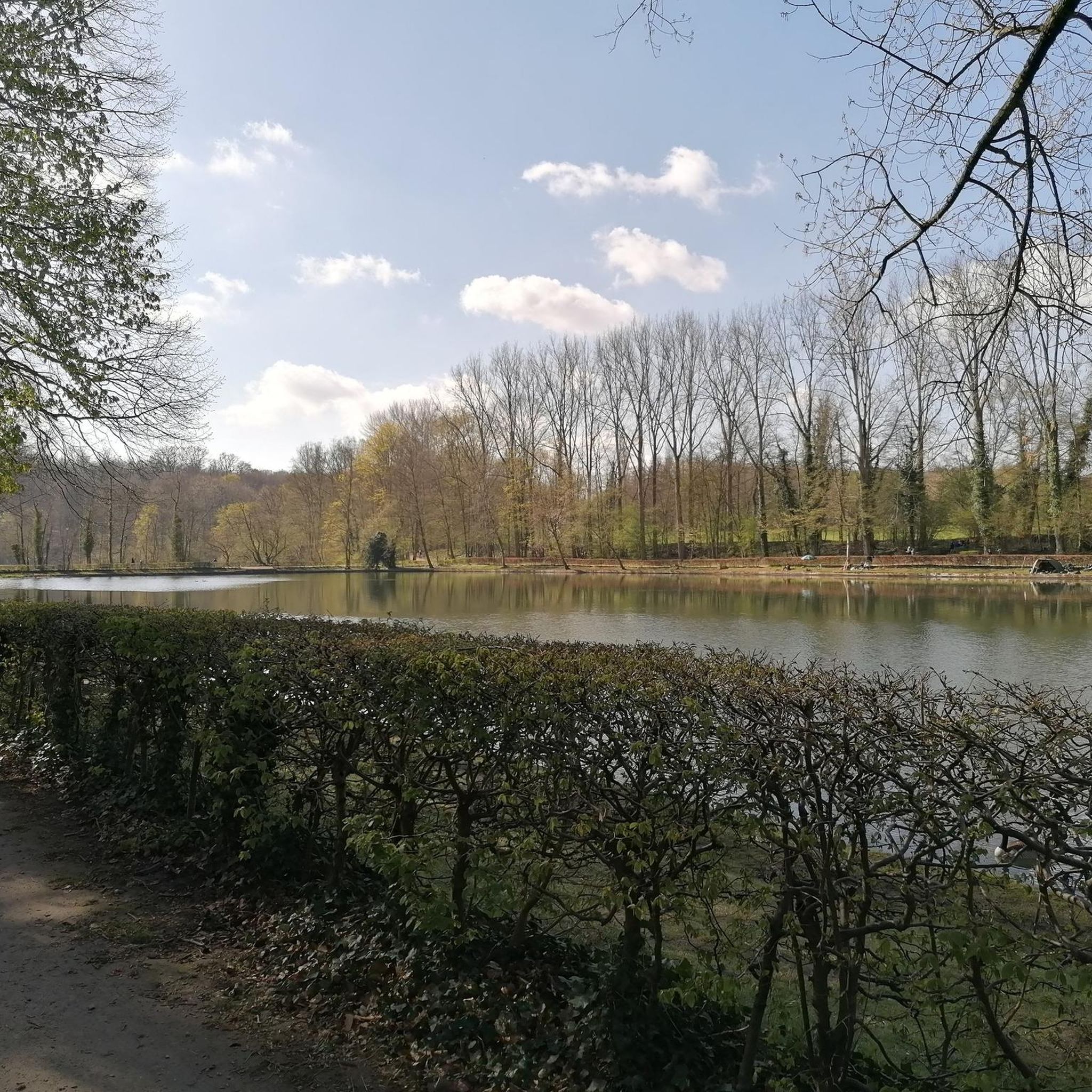
The Sonian Forest is a complex ecosystem at the landscape level. At this spot, these wet grasslands and ponds are a ‘micro-ecosystem’, with many various species: in spring you will hear frogs singing and see quite a lot of insects as this is an open space with a lot of light. We could even go to a more granular level and look at a tree trunk as an ecosystem hosting various insect species and microscopic animals living in it.
1
0
오데르헴 - 오데르젬 주변에서 가장 인기 있는 명소


더 살펴보기
다른 지역의 최고의 하이킹를 살펴보세요.
