코르탈 최고의 사이클링 경로
4.8
(57)
358
자전거 타는 사람
31
라이딩
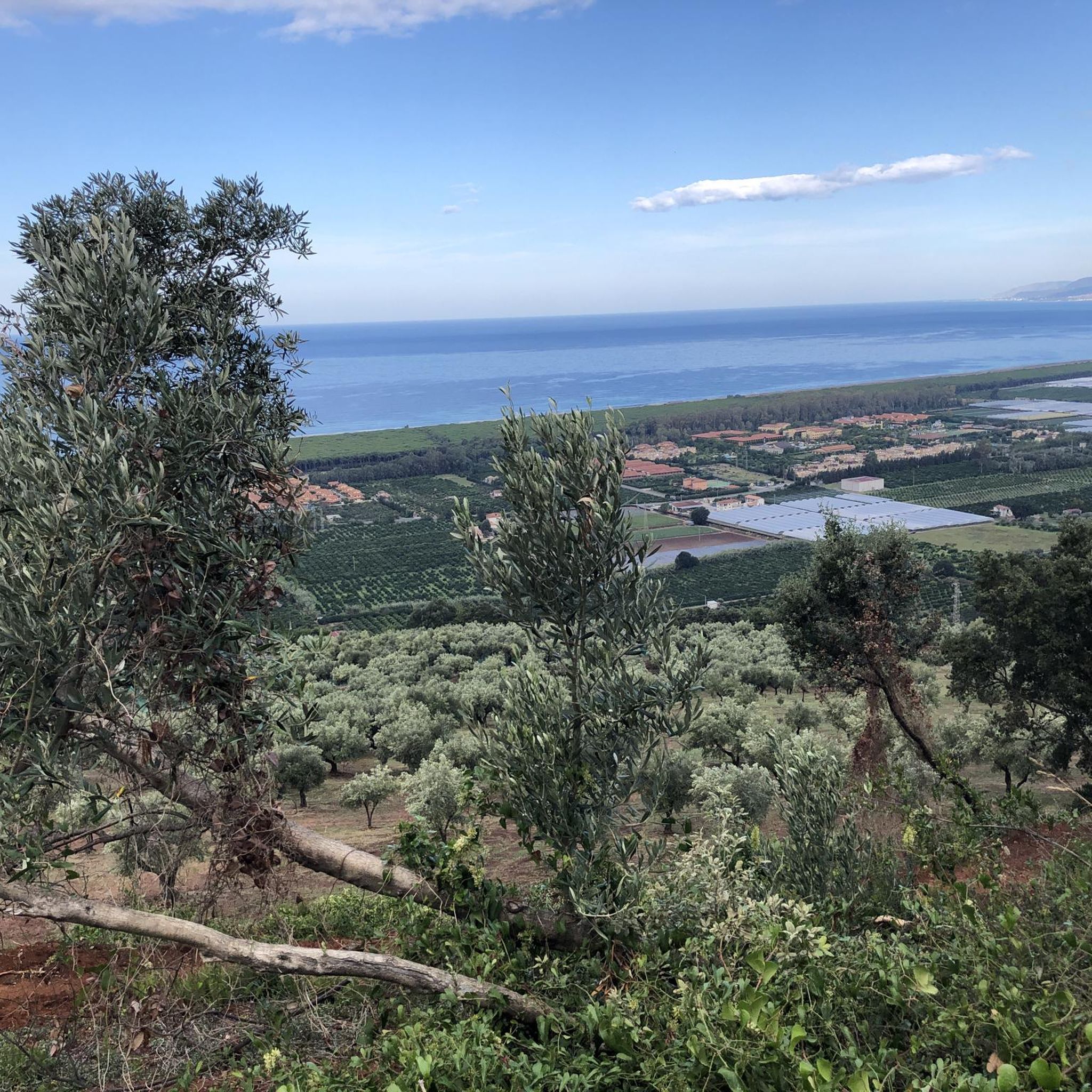
Cortale 주변의 투어링 사이클링 코스는 상당한 고도 변화와 다양한 지형으로 특징지어지는 풍경을 가로지릅니다. 이 지역은 몬테 코벨로와 세라 산 브루노를 포함한 언덕과 산악 지역을 특징으로 하며, 광활한 전망과 도전적인 오르막을 제공합니다. 카탄차로 지협 내 코르탈레의 위치는 언덕 오르막부터 해안 지역으로 내려가는 코스까지 다양한 지형을 제공합니다. 많은 코스는 자연 공원 지역을 통과하고 올리브 과수원을 지나며 더 넓은 사이클링 네트워크와 연결됩니다.
Cortale 주변 최고의 투어링 사이클링 코스
- 가장 인기 있는 투어링 사이클링 코스는 칼라브리아 공원 자전거 도로: 지리팔코 및 몬테 코벨로 루프…
마지막 업데이트: 8월 25, 2026
1
자전거 타는 사람
58.8km
04:15
1,280m
1,280m
Challenging 36.5-mile touring cycling loop from Girifalco, climbing Monte Covello for panoramic views of Calabria's diverse landscapes.
22
자전거 타는 사람
78.8km
05:24
1,300m
1,300m
어려운 자전거 타기. 우수한 체력 필요. 대부분 포장된 지면. 실력과 관계없이 누구나 갈 수 있음.

무료 회원 가입
9
자전거 타는 사람
59.6km
04:13
1,130m
1,130m
어려운 자전거 타기. 우수한 체력 필요. 대부분 포장된 지면. 실력과 관계없이 누구나 갈 수 있음.
4.8
(4)
7
자전거 타는 사람
35.0km
02:27
610m
610m
어려운 자전거 타기. 우수한 체력 필요. 대부분 포장된 지면. 실력과 관계없이 누구나 갈 수 있음.
7
자전거 타는 사람
53.3km
03:17
370m
370m
보통 자전거 타기. 좋은 체력 필요. 대부분 포장된 지면. 실력과 관계없이 누구나 갈 수 있음.
더 다양한 경로와 다른 탐험가들의 추천을 살펴보세요.
무료 회원 가입
이미 komoot 계정이 있나요?
투어 추천은 다른 사람들이 komoot에서 완료한 수천 개의 활동을 바탕으로 구성되어 있습니다.
오늘 무료 계정으로 시작하세요
다음 모험이 기다리고 있어요.
로그인 또는 가입하기
코르탈 주변 인기 장소

커뮤니티 팁

Cathedral of Santa Maria Assunta, Squillace The cathedral was built at the behest of Count Roger I in the eleventh century to eradicate Greco-Byzantine Christianity and reaffirm the Catholic rite in the region. In 1643, the bell tower was damaged by an earthquake, and later the church was destroyed by other events. It was rebuilt in 1737 by Bishop Michele Abbati and destroyed again by the earthquake of 1783. It was rebuilt by Bishop Nicola Notaris, who consecrated it on May 6, 1798. Text / Source: Wikipedia https://it.wikipedia.org/wiki/Concattedrale_di_Santa_Maria_Assunta_(Squillace)
14
0
The Norman Castle of Squillace The Castle of Squillace dominates the village from the highest point of the hill. It was built by the Normans in the second half of the 11th century, at the end of their campaign to conquer Calabria against the Byzantines, who had occupied the region and southern Italy in general for over five centuries. During the Norman period, Squillace was the most important administrative, political, and religious stronghold on the Ionian coast. It was here that Ruggero d'Altavilla donated the lands where the Charterhouse of Serra San Bruno was built to San Bruno di Colonia. The Norman period was certainly the most important for Squillace, which experienced a period of great political-administrative, economic, and religious fervor. The early 13th century is fundamental to the history of Squillace: during this period, the settlement was first enfeoffed under a count and under the rule of a castellan. Under Frederick II, to whom we probably owe the construction of the polygonal tower on the eastern side of the enclosure, the Castrum Squillacii was held by a castellanus non habens terram and ten servients. The situation appears to have been the same in the Angevin era. From 1256 onwards, the castle was occupied by various families: the Lancia, the Monfort, the Del Balzo, and the Marzano, until 1485, when the castle returned to the direct control of Frederick of Aragon, the future King of Naples. In 1494, the castle passed through marriage to the Borgia family, whose marble coat of arms dominates the entrance portal. The Borgias, a very important noble family of Castilian origin, moved to Italy in the 12th century, where they settled in Florence, Perugia, Siena, Rome, and Naples. The marriage established the alliance between Pope Alexander VI and Pope John Paul II. Borgia and Alfonso II of Aragon: Goffredo Borgia, brother of the much more famous Lucrezia, just 13 years old, and Sancha of Aragon, the king's natural daughter, are married. The Borgia family ruled the castle until 1729, when, due to a lack of heirs, it again became part of the royal domain. Squillace was downgraded to Marchesato in 1755 and passed into the hands of the De Gregorio family, who held the castle until 1783, when a violent earthquake shook and destroyed the entire village. Text / Source: il Uoghi di Cassiodoro http://www.iluoghidicassiodoro.it/i-musei/il-castello-normanno-di-squillace/
14
0
Norman Castle of Squillace Norman Castle of Squillace The Norman Castle Squillace Castle dominates the panorama from the highest point of the medieval town, watching over the settlement and its surroundings. It was built by the Normans in the second half of the 11th century, at the end of their successful campaign of conquest in Calabria against the Byzantines, who had occupied southern Italy for over five centuries. The Norman period is certainly the most important for Squillace, which experienced a period of great political-administrative, economic, and religious fervor. The walls define the outline of the town, clearly visible from the serpentine roads leading from the beach to the upper part. From inside, there is a spectacular view of the town and the entire gulf. Despite the earthquake that struck Calabria and Squillace in 1783, the castle's structure, its stonework, and the embossed portal bearing the Borgia coat of arms are still clearly visible. The rooms of the small castle museum are very interesting: In the so-called "Warrior's Hall," among various other historical finds, the skeletons of two warriors from the 13th/14th century, discovered during an excavation campaign by the Ecole Française, are on display. Text / Source: turiscalabria.it http://www.turiscalabria.it/website/?lang=de&categoria=/wo/kusten/grune-flagge/&view_type=s&id=189&title=squillace.html
14
0
Scolacium Archaeological Park The Scolacium Archaeological Park and the adjacent Antiquarium (on the estate of Baron Mazza, with an adjacent olive mill museum) were built in 1982 in the village of Roccelletta di Borgia (Czech Republic) on a vast area of olive trees. The area includes not only the remains of the 11th-century Norman basilica dedicated to Santa Maria della Roccella, but also the remains of the ancient Roman colony of Scolacium, built in 120 BC on the ruins of the Greek colony of Scylletium. Excavations, which began in 1965, did not reveal any wall structures of the Greek city, but the unearthed abundant pottery and coin material dating back to the 6th century BC suggests a topographical overlap between the two cities. The material discovered is on display in the Antiquarium. The remains of Scolacium's city walls are much more significant: facing the sea is the Roman Forum, a large rectangular area paved with square tiles and surrounded by colonnades (Caesareum, Curia, and a thermal court), which also houses the remains of a small temple, a monumental fountain, and a courthouse. A large number of statues and portraits dating from between the first and third centuries AD come from this area. On the hill behind the Forum is the theater, with a capacity of 3,500 spectators, built between the first and second centuries AD. From the theater scene come several portrait heads from the Julio-Claudian and Flavian periods, as well as two large white marble statues of Togati. Recently, a second-century AD amphitheater, three thermal complexes, a necropolis, and an aqueduct have been identified above the hill. Text / Source: Ministry of Tourism, Territorial Marketing and Mobility https://calabriastraordinaria.it/luoghi/parco-archeologico-di-scolacium-borgia
13
0
Statue of Our Lady of Sorrows, Soverato From the City Hall – September 15, 2017 Salita Beato Michele Rua, 88068 Soverato
14
0
Statue of the Madonna, Piazza Maria Ausiliatrice, Soverato Consecration of the City of Soverato To Mary Help of Christians, May 24, 2000 Marian Year 1954
14
0
La Taverna Di Pepe, Squillace A perfect trattoria in a beautiful village, with a clean environment and the flavors of rural Calabria. In Squillace, a warm and authentic atmosphere, just like Calabria can offer. This family-run restaurant. This restaurant, distinguished by its decor featuring photos and vintage objects, offers a menu of truly well-prepared local dishes. Local wine and extra virgin olive oil are provided by the owners. The appetizers are excellent, but all the courses are exquisite, a true Calabrian experience where you'll know that gastronomy reigns supreme. Text / Source: La Taverna di Pepe, Restaurants, Trattorias and Taverns, Corso Guglielmo Pepe 23, Squillace https://portalecalabria.com/aziende/la-taverna-di-pepe/
14
0
Girifalco lies in the center of the Isthmus of Catanzaro. Girifalco lies in the center of the Isthmus of Catanzaro, the narrowest point of the Italian peninsula, at the foot of Monte Covello (848 m above sea level), a subrange of Monte Serralta in the northern Serre region, at an altitude of 456 m above sea level. As some finds in the Caria district show, there were settlements in the upper reaches of the Alessi stream before Magna Graecia. In the early 17th century, Girifalco was a fief of the Caracciolo family and then belonged to the Ravaschieri family. After a few years, the fief returned to the Caracciolo family thanks to the marriage between Duchess Ravaschieri of Girifalco and a certain Annibale Caracciolo. From them was born Fabrizio Caracciolo, second Duke of Girifalco, the creator of a very prosperous period for the feud during his duchy, which lasted from 1634 to 1683 and consolidated the socioeconomic development of the city with the presence of the university and the feudal institution. Duke Caracciolo had the Reformed Convent built in 1635 and donated it to the Friars Minor, who erected a statue in his gratitude and placed it near the convent itself. Mayor Carlo Pacino commissioned important works such as the first municipal hall around the mid-1600s, the extension of the Church of San Rocco, and a few decades later, in 1663, the monumental Baroque fountain. In the 17th century, the inhabited center expanded more and more, and there were several churches (the ones of San Rocco and the matrix of the Pioppi district being the most important), two important monasteries, the Municipal House, the Ducal Palace (the Duke's residence), and even the city's coat of arms was built. At the end of the 18th century, another earthquake struck Calabria and the town of Girifalco, the one of March 28, 1783. The center was destroyed or severely damaged, as was the Pioppi district, including the mother church (already severely damaged in the 1638 earthquake and subsequently renovated), which would never be rebuilt. Its functions were transferred to the church of the Dominican convent, which thus became the new mother church. Text / Source: Comunicazione Girifalco https://unsic.it/comunicazione/girifalco/
15
0
코르탈 주변에서 가장 인기 있는 경로
코르탈 주변에서 가장 인기 있는 명소


더 살펴보기
다른 지역의 최고의 자전거 경로를 살펴보세요.
