4.9
(19)
120
자전거 타는 사람
13
라이딩
무레스에서 하이킹하며 알바 구석 부분까지 살펴볼까요? 무레스에 있는 모든 하이킹 및 워킹 경로 컬렉션 중 가장 멋진 하이킹 경로를 엄선하여 소개해드릴게요. 다른 하이커가 공유한 실제 팁과 사진을 살펴보고 후기를 읽으며 마음에 드는 무레스 워킹 경로를 찾아보세요.
마지막 업데이트: 4월 20, 2026
42
자전거 타는 사람
38.2km
03:58
1,090m
1,090m
어려운 산악 자전거 타기. 우수한 체력 필요. 뛰어난 라이딩 실력이 필요함.
5.0
(2)
14
자전거 타는 사람
49.2km
04:09
600m
600m
보통 산악 자전거 타기. 좋은 체력 필요. 실력과 관계없이 누구나 갈 수 있음.
무료 회원 가입
17
자전거 타는 사람
60.3km
05:22
1,190m
1,190m
어려운 산악 자전거 타기. 우수한 체력 필요. 뛰어난 라이딩 실력이 필요함.
4.7
(10)
13
자전거 타는 사람
19.5km
01:45
510m
510m
보통 산악 자전거 타기. 좋은 체력 필요. 실력과 관계없이 누구나 갈 수 있음.
5.0
(1)
7
자전거 타는 사람
23.1km
01:33
50m
50m
초급용 산악자전거 라이딩. 모든 체력 수준에 적합. 실력과 관계없이 누구나 갈 수 있음.
2
자전거 타는 사람
39.2km
03:18
610m
610m
보통 산악 자전거 타기. 좋은 체력 필요. 실력과 관계없이 누구나 갈 수 있음.
4.5
(2)
7
자전거 타는 사람
16.4km
01:41
530m
530m
보통 산악 자전거 타기. 좋은 체력 필요. 실력과 관계없이 누구나 갈 수 있음.
3
자전거 타는 사람
33.9km
03:00
660m
660m
보통 산악 자전거 타기. 좋은 체력 필요. 실력과 관계없이 누구나 갈 수 있음.
5.0
(2)
3
자전거 타는 사람
37.9km
02:06
250m
250m
보통 산악 자전거 타기. 좋은 체력 필요. 실력과 관계없이 누구나 갈 수 있음.
3
자전거 타는 사람
69.1km
04:36
880m
880m
보통 산악 자전거 타기. 좋은 체력 필요. 뛰어난 라이딩 실력이 필요함.
더 다양한 경로와 다른 탐험가들의 추천을 살펴보세요.
무료 회원 가입
이미 komoot 계정이 있나요?
투어 추천은 다른 사람들이 komoot에서 완료한 수천 개의 활동을 바탕으로 구성되어 있습니다.
오늘 무료 계정으로 시작하세요
다음 모험이 기다리고 있어요.
로그인 또는 가입하기
The Via Principalis was the main road connecting the two main gates of the ancient Roman castrum of Apulum, to the north and south. The road ran in front of the "Principia" of the Roman fort, the headquarters of the 13th Gemina Legion. Carts transporting salt, oil, wine, and military equipment for the camp's inhabitants drove along the stone-paved road. The remains of the road, along which the Roman soldiers walked, were uncovered during the fort's renovation. The Roman-era slabs can be seen here, as well as the masonry canal beneath the road's longitudinal axis, which was intended to ensure its drainage.
8
0
The National Museum of the Union (Muzeul Național al Unirii) is housed in Alba Iulia's largest Romantic-style building, built between 1851 and 1853. It once housed the Habsburg army in the citadel. Its residents were recruited from across the Habsburg Empire, and it was said that "all the languages of the world" were spoken here. Hence, locals called the building the "Babylon Building." With its thick walls and over 100 rooms, it resembles a fortress within a fortress. After the union of 1918, the Romanian army moved in. It wasn't until November 28, 1968, that the National Museum of the Union opened in the building, one of Romania's most famous museums, both culturally and scientifically.
9
1
Originally built by Saxon settlers, it houses, among other churches, a Saxon Lutheran church and a Hungarian Reformed church.
0
0
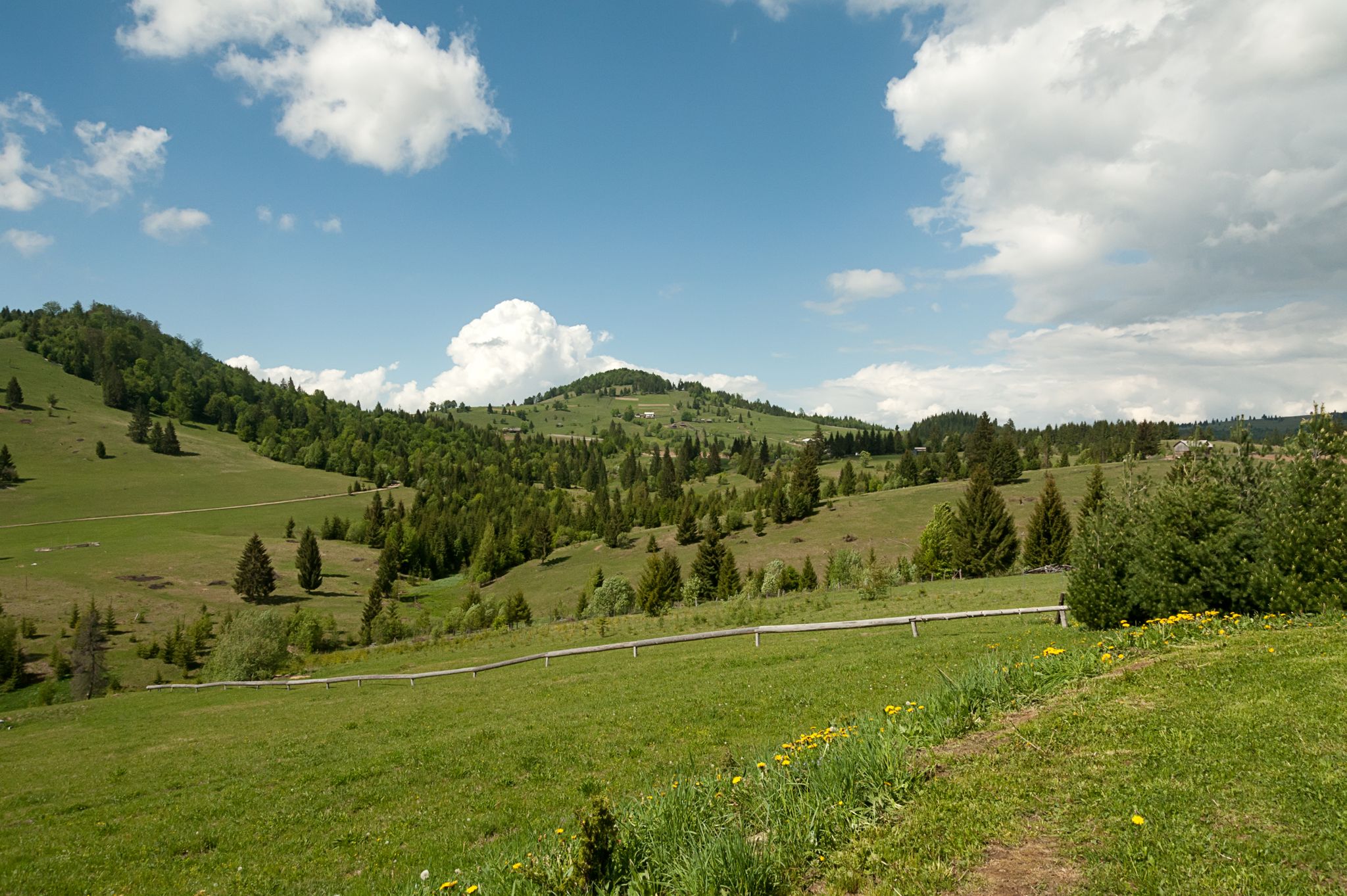
Beautiful and quiet place for mountain biking and hiking.
2
0
Rectangular, with a gate on each side and main roads connecting the gates on opposite sides. This is how a Roman Castrum Apulum was planned by the engineers and architects of the Roman Empire almost two millennia ago. In Alba Iulia, a section of the Via Principalis can be seen. It was the road that connected the main gates of the castrum, the southern and the northern. The Via Principalis passed by the "Principia" of the Roman castrum, the headquarters of the 13th Legion, Gemina. Part of the 1800-year-old building can be seen in the Principia Museum. On the stone-paved road, carts carrying salt, oil, wine, or even military equipment needed by the inhabitants of the castrum passed by daily. The remains of the road, once trodden by Roman soldiers, were unearthed during the restoration of the Alba Iulia Citadel. ... The central section of the road was flanked by two rows of stone slabs with carved edges, designed to prevent the carts that supplied the military camp with food and equipment from slipping. The restoration team also highlighted sections of the side channels built by the Romans to ensure rainwater drainage, as well as some of the columns of the portico, the covered gallery that protected the road on both sides. Source: https://albaiuliaqr.ro/via-principalis
2
0
The museum has two buildings with historical monument value. The “Babilon” building was built between 1851 and 1853 in the spirit of romantic architecture. It was used as a living pavilion for officers and was converted into a museum room in 1967–1968. The Sala Unirii was built between 1898 and 1900 and was originally intended as a military casino. It was restored in 1922 and between 1967 and 1968. The union of Transylvania with Romania was voted on in this building. The museum in Alba Iulia was inaugurated in 1888 on the initiative of the Society for History, Archeology and Natural Sciences of the Lower Alba District under the direction of the renowned archaeologist Adalbert Cserny (1842 - 1916). In 1929 it was organized as the Unirii Museum under the auspices of ASTRA. Valuable pieces of modern Romanian history have been added to the rich archaeological collections. ... Source: Wikipedia
3
0
In Gurghiu, you have many must-see attractions to discover. In addition to the charming village, there is a botanical garden to the south of the town which ensures the protection of daffodils and certain species of tulips. There is also the baroque Rákóczi-Bornemisza Castle to visit. Finally overlooking the village, at the top of a wooded hill are the remains of the Gurghiu fortress. It was destroyed during the siege of 1708, led by the French military commander Jean-Louis de Bussy-Rabutin allied with the Habsburgs. Only a Roman Catholic chapel remains, rebuilt in 1887.
1
0
At the foot of Gurghiu Citadel Hill is Rákóczi-Bornemisza Castle. It was built during the reign of Prince George Rákóczi between 1630 and 1646. The latter wanted a residence in the Gurghiului mountains. His love for hunting determined this choice. In 1717, the castle became the property of Vice-Chancellor Ioan Bornemisza. His descendants occupied the residence for 100 years. After the suicide of Rudolf of Habsburg in 1883, the castle returned to the State. The location was then used as a forestry school for a period, then became a hunting museum, in which Sámuel Teleki's trophies are also displayed. New buildings were added over the centuries, including a chapel, a mill and finally a glass and porcelain factory at the end of the 19th century. Now the castle is included in the list of national monuments of national interest protected by law. It is visited because of its unique character and its anchoring in the history of the region. It also hosts events, such as the Gurghiu Girls' Fair and the Ibanești Valley of the Kings Festival.
1
0
다른 지역의 최고의 MTB 트레일를 살펴보세요.
무료로 가입하기