배긴턴 주변 최고의 버스 정류장 출발 하이킹 & 워킹 코스
4.5
(989)
8,217
등산객
450
하이킹
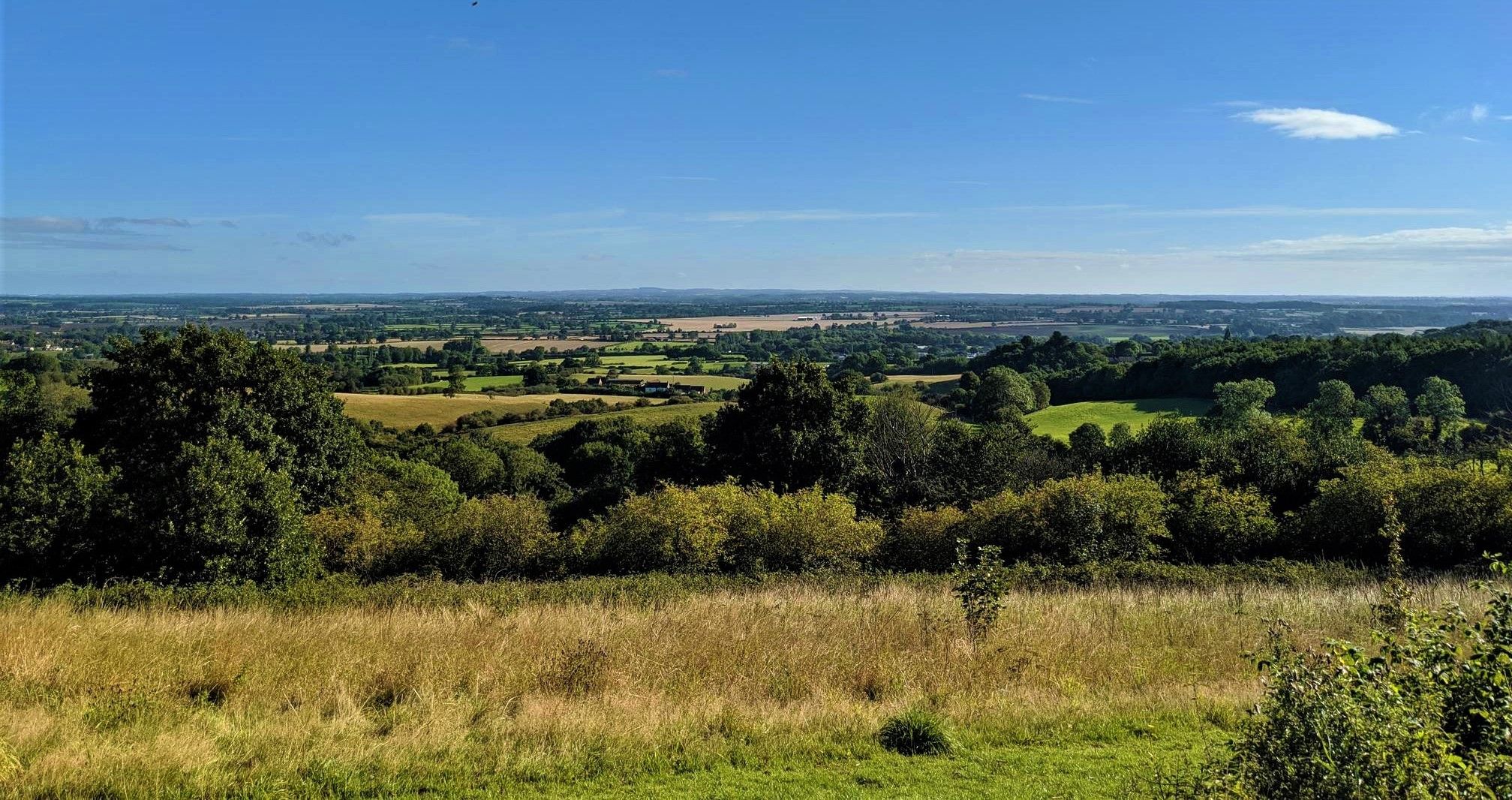
바긴턴 주변 버스 정류장 하이킹 코스는 구불구불한 소 강(River Sowe), 탁 트인 들판, 다양한 숲이 우거진 구간으로 특징지어지는 풍경을 가로지르는 접근하기 쉬운 경로를 제공합니다. 지형은 일반적으로 평탄하며 고도 변화가 거의 없어 다양한 수준의 능력에 적합합니다. 하이커들은 바긴턴 성(Baginton Castle)의 유적과 룬트 로마 요새(Lunt Roman Fort)를 포함한 자연의 아름다움과 역사 유적지를 탐험할 수 있습니다. 이 지역은 야외 탐험을 위한 고요한 환경을 제공하며, 길은 종종 강을 따라가거나 시골 풍경을 가로지릅니다.
바긴턴 주변 최고의 버스 정류장 하이킹 코스
- 가장 인기 있는 버스 정류장…
마지막 업데이트: 8월 21, 2026
5.0
(2)
11
등산객
8.36km
02:10
50m
50m
보통 하이킹. 좋은 체력 필요. 실력과 관계없이 누구나 쉽게 갈 수 있는 길.
5.0
(1)
7
등산객
4.25km
01:06
20m
20m
초급용 하이킹. 모든 체력 수준에 적합. 실력과 관계없이 누구나 쉽게 갈 수 있는 길.
1
등산객
15.8km
04:05
90m
90m
보통 하이킹. 좋은 체력 필요. 실력과 관계없이 누구나 쉽게 갈 수 있는 길.
더 다양한 경로와 다른 탐험가들의 추천을 살펴보세요.
무료 회원 가입
이미 komoot 계정이 있나요?
투어 추천은 다른 사람들이 komoot에서 완료한 수천 개의 활동을 바탕으로 구성되어 있습니다.
오늘 무료 계정으로 시작하세요
다음 모험이 기다리고 있어요.
로그인 또는 가입하기
배긴턴 주변 인기 장소

커뮤니티 팁


If you have an interest in old churches you will like it very much.
0
0
Should have gone anticlockwise so as to get the streets out of the way first. The detour around HS2 site was a pain as not clearly sign posted. Apart from that a good walk.
0
0

The primary structure of St. Giles Parish Church dates back to the 13th and 14th centuries, while the chapel's origins can be traced back to a period prior to 1153. In the church, you'll come across a pair of "green men" that hail from the 13th century, a Norman font, and stained glass created by Kempe. Additionally, the medieval tower houses a set of six bells.
1
0
St John the Baptist Church stands on a plateau 30m above the River Sowe. It is first mentioned in the reign of Henry II (1154-1189) as a chapel attached to the church at Stoneleigh. Nothing of this chapel remains and the present church was built in the 13th century. In 1285 the first parish priest, Thomas de Dunton, was appointed by the Prior of Kenilworth. The story of the church revolves around 3 families, who held the manor (Ensors, Herthills and Bagots), plus the Bromleys of Baginton Hall. The church is now part of a combined benefice with patrons the Bishop of Coventry and Lord Leigh.
1
0
The Norman Church of St Mary the Virgin across Stoneleigh Meadows was created by the villagers into a Trust for the public in 1982. The Domesday Book of 1086 mentions two priests at Stoneleigh, but nothing about the church. Any building was probably of wood and rebuilt in red sandstone during the 12th century, representing over 800 years of births, marriages and deaths. Many of the old village names are on the headstones in the churchyard and have been researched by the Stoneleigh History Society.
1
0

The church of ST. GILES is situated in a cul-de-sac at the western end of the village on the north side of the LeamingtonWolston road. It has a small churchyard. The church consists of chancel, nave, west tower, vestry, and south porch. The church was built late in the 13th century, when it consisted of chancel and nave. The tower was added early in the 14th century and the top stage late in the same century. The only evidence of an earlier church is the 12th-century font in the tower. A modern vestry and boiler-house have been built on the north side. The 13th-century church is built with a dark red sandstone in roughly coursed rubble with ashlar dressings; for the later work a lighter coloured stone was used. The roofs are modern, covered with tiles. The east gable wall of the chancel has been completely rebuilt, with twin buttresses, in a light-coloured sandstone. It has a three-light tracery window with a hood-moulding. The south side has three late-13thcentury single-light windows with pointed arches of two splayed orders; a splayed string-course runs at sill level, and below the westernmost window is a blocked low-side chamfered window with a flat head, the sill 1 ft. 9 in. above ground. (fn. 42) The north side is similar but with only two windows; a third has probably been built up. It has a tiled roof finishing on a splayed eavescourse, and a plinth of one splay. The south wall of the nave has two single-light windows with pointed arches of two splayed orders, and towards the east another with two orders of wave-mouldings and a hood-mould. The string-course continues from the chancel and is carried round twin buttresses at its west end; the east buttress is modern. The 13th-century south door has a richly moulded pointed arch, the moulding continued down the jambs to a square stop of modern cement. It has a label-moulding with both stops broken off. Outside this door is a modern brick porch with a tiled roof; the roof timbers are re-used from elsewhere and have the initials IB: PA: C: W and the date 1616. On the north side the string-and eaves-courses carry on from the chancel, and the string is taken across a large buttress with a gabled head and twin buttresses at the west end There are two single-light windows corresponding in detail with the western on the south side. The early14th-century north doorway has a pointed arch with a single wave-moulding continued down the jambs and a hood-moulding with mask stops. Above, there is a modern triangular window enclosing a cusped circle. At the east end, overlapping the chancel, is a modern vestry built of sandstone ashlar. The tower rises in four stages, unmarked by string-courses, but with a splayed offset for the later top stage. There are twin buttresses in three stages at the north-east and south-west angles, which only reach to the top of the first stage. On the west side a battered brick base has been built between the buttresses, and it extends to the height of the second stage of the buttresses. There are single lights with pointed arches of two splayed orders to the second and third stages, except on the north side, which has one to the third stage only. On the south side there is a similar modern window to the lower stage. The wall is built of light-coloured sandstone ashlar, patched with red bricks, and the upper stages of the buttresses at the south-west angle are rebuilt with red brick. The top stage is built of a mixture of red and light-coloured sandstone ashlar, with a plain parapet and crocketed pinnacles at the angles. On each face is a tracery window of two trefoil lights, of two splayed orders, with four-centred arches and hood-mouldings with grotesque head stops. On the east face there is a roof line of steep pitch with a clock-face above. The chancel (25 ft. 6 in. by 18 ft. 3 in.) has a modern hammer-beam roof resting on stone corbels, and a modern tiled floor. The window recesses have widesplayed reveals and pointed arches with stopped hollow splays, and at the sill level there is a large continuous roll-moulding which is carried on round the nave. The splayed window-recess at the west end of the south wall is carried down to the floor to embrace the blocked lowside window, the sill moulding being stopped against its moulded arris. The nave (43 ft. by 20 ft.) has a modern roof similar to that over the chancel, and a modern tiled floor. The window recesses are splayed and have segmentalpointed arches with stop-chamfers; the arches over both the north and south doorways are similar. The large roll-moulding at sill level in the chancel is continued on both sides of the nave. The chancel arch is tall and narrow with a pointed arch of two hollow splays supported on moulded corbels decorated with carved knots, and on either side are similar arches, but lower, which appear to be modern. The centre arch has been rebuilt 2 ft. east of its original position, and the wall now overlaps the splay of the low-side window recess. The tower (9 ft. 3 in. by 9 ft. 3 in.) has no staircase, and access is now by a ladder from a modern boiler-house to a door broken through the wall on the north side of the tower. The pointed tower arch has two orders, the inner a wave-moulding, the other a splay on the nave side, and two chamfers towards the tower. It rests on moulded corbels with grotesque masks. The modern window recess has a segmentalpointed arch. The font dates from the 12th century and has a tapered circular basin, supported by a central shaft and eight detached columns with moulded capitals and bases on a modern step. The seating is modern varnished pitch-pine. The pulpit is a large modern one of stone and coloured marbles, and is placed on the south side of the chancel arch. Opposite is a reading-desk of similar materials. There are three bells: (fn. 43) one (c. 1600) by Newcombe, the second by Henry Bagley, 1670, and the third by T. Mears, 1803. The registers begin in 1698, but the first volume is imperfect.
0
0
자주 묻는 질문
배깅턴에는 버스 정류장에서 접근 가능한 하이킹 트레일이 몇 개나 있나요?
배깅턴 주변에는 버스 정류장에서 접근 가능한 450개 이상의 하이킹 트레일이 있어 탐험을 위한 다양한 선택지를 제공합니다.
배깅턴에서 버스로 접근 가능한 쉬운 하이킹 옵션이 많나요?
네, 배깅턴은 쉬운 산책에 매우 적합합니다. 버스 정류장에서 접근 가능한 경로 중 290개 이상이 쉬움으로 분류되어 초보자나 여유로운 산책을 원하는 사람들에게 이상적입니다.
배깅턴 주변의 버스 정류장 하이킹에서 어떤 풍경을 기대할 수 있나요?
버스 정류장에서 접근 가능한 배깅턴 주변의 하이킹은 일반적으로 다양한 풍경을 특징으로 합니다. 구불구불한 소 강(River Sowe)을 따라 이어지는 길, 고요한 숲이 우거진 지역, 탁 트인 전망을 제공하는 넓은 들판을 자주 볼 수 있습니다. 지형은 일반적으로 평탄하며 고도 변화가 거의 없습니다.
배깅턴 주변의 버스 정류장 하이킹에서 어떤 역사 유적지를 볼 수 있나요?
배깅턴의 많은 버스 정류장 하이킹은 이 지역의 풍부한 역사에 대한 통찰력을 제공합니다. 바곳 성(Bagot's Castle)의 유적이나 배깅턴 성(Baginton Castle)과 중세 토목 공사의 현장을 볼 수 있습니다. 재건된 룬트 로마 요새(Lunt Roman Fort)는 이 지역의 또 다른 중요한 역사적 랜드마크입니다.
배깅턴의 버스 정류장에서 출발하는 순환 경로가 있나요?
네, 배깅턴에서 버스 정류장으로 접근 가능한 많은 경로가 순환형이므로 같은 지점에서 하이킹을 시작하고 끝낼 수 있습니다. 예를 들어, 코벤트리 공항에서 출발하는 소 강 – 바곳 성 루프는 적당한 난이도의 순환 하이킹이며, 코벤트리 공항에서 출발하는 올드 밀 – 소 강변 전망 루프는 쉬운 난이도의 순환 옵션을 제공합니다.
다른 하이커들은 배깅턴의 버스 정류장에서 출발하는 하이킹에 대해 가장 무엇을 즐기나요?
이 지역은 komoot 커뮤니티에서 높은 평가를 받고 있으며, 900개 이상의 평가에서 평균 4.5점의 점수를 받았습니다. 리뷰어들은 종종 평화로운 강변 길, 바곳 성과 같은 역사 유적지의 접근성, 대중교통 정류장에서 바로 즐길 수 있는 잘 관리된 트레일을 칭찬합니다.
Baginton의 버스 정류장 하이킹은 가족에게 적합한가요?
물론입니다. Baginton의 버스 정류장에서 접근 가능한 쉽고 순환적인 많은 코스는 가족에게 매우 적합합니다. 일반적으로 평탄한 지형과 강변 산책로 및 탁 트인 들판을 포함한 다양한 풍경은 모든 연령대에 즐거운 경험을 제공합니다. 가족 친화적인 편의 시설을 위해 Ryton Pools Country Park와 같은 지역을 지나는 코스를 고려해 보세요.
이 버스 정류장 접근 가능한 트레일에 강아지를 데려갈 수 있나요?
Baginton 주변의 대부분 트레일은 강아지 동반이 가능하지만, 야생 동물과 가축을 보호하기 위해 농지나 Leam Valley Local Nature Reserve와 같은 자연 보호 구역을 지날 때는 항상 목줄을 착용하는 것이 가장 좋습니다. 특정 제한 사항은 항상 현지 표지판을 확인하십시오.
버스 정류장 하이킹 트레일 근처에 펍이나 식당이 있나요?
네, 마실 거리를 찾을 수 있습니다. River Sowe 근처에 개조된 제방인 The Old Mill은 현재 레스토랑이자 호텔로 운영되어 일부 코스를 따라 편리하게 들를 수 있습니다. Baginton 및 근처 마을에는 버스 정류장에서 접근할 수 있는 다양한 펍과 카페도 있습니다.
Baginton의 버스 정류장에서 하이킹하기 가장 좋은 시기는 언제인가요?
Baginton은 연중 즐거운 하이킹을 제공합니다. 봄과 여름에는 푸른 녹음과 야생화가 피고, 가을에는 아름다운 단풍을 즐길 수 있습니다. 겨울에도 평탄한 지형 덕분에 트레일에 일반적으로 접근할 수 있지만, 항상 적절한 신발을 착용하는 것이 좋습니다. 강변 산책로는 따뜻한 계절에 특히 쾌적합니다.
이 코스에 자연 보호 구역이나 야생 동물 관찰 기회가 있나요?
네, 이 지역은 자연의 아름다움이 풍부합니다. 일부 버스 노선에서 접근 가능한 Leam Valley Local Nature Reserve는 야생 동물의 안식처로, 킹피셔, 수달, 다양한 조류 종을 볼 수 있습니다. Ryton Pools Country Park와 Baginton Fields Nature Reserve에서도 다양한 서식지와 야생 동물을 즐길 수 있는 기회를 제공합니다.
배긴턴 주변에서 가장 인기 있는 명소


더 살펴보기
다른 지역의 최고의 하이킹를 살펴보세요.
