보몽 피드 뵈프 주변 최고의 교통량 없는 자전거 라이딩 코스
4.3
(23)
901
자전거 타는 사람
103
라이딩
로드 사이클링은 페이 드 라 루아르 지역의 녹음이 우거진 사르트(Sarthe) 지역에 위치한 보몽-피에드-뵈프(Beaumont-Pied-De-Bœuf) 주변에서 다양한 풍경을 제공합니다. 이 지역은 완만한 지형, 베르세 숲(Forêt de Bercé)과 같은 넓은 숲, 에르브(Erve) 및 루아르(Loir)와 같은 그림 같은 강 계곡이 특징입니다. 이러한 자연적 특징은 부드러운 길부터 더 도전적인 오르막까지 다양한 교통량 없는 로드 사이클링 경로를 제공합니다. 이 지역의 경로 네트워크는 다양한 체력 수준에 맞춰 사이클리스트들이 자연의 아름다움과 매력적인 마을을 탐험할 수 있도록 합니다.
보몽-피에드-뵈프 주변 최고의 교통량 없는 로드 사이클링 경로
- 가장 인기 있는…
마지막 업데이트: 10월 8, 2026
14
자전거 타는 사람
54.1km
02:26
410m
410m
보통 도로 자전거 타기. 좋은 체력 필요. 지면 대부분이 잘 포장되어 있고 라이딩하기 쉬움.
9
자전거 타는 사람
30.5km
01:21
180m
180m
초급용 로드 라이딩. 모든 체력 수준에 적합. 지면 대부분이 잘 포장되어 있고 라이딩하기 쉬움.

12
자전거 타는 사람
64.1km
02:41
490m
490m
보통 도로 자전거 타기. 좋은 체력 필요. 지면 대부분이 잘 포장되어 있고 라이딩하기 쉬움.
6
자전거 타는 사람
58.2km
02:34
380m
380m
보통 도로 자전거 타기. 좋은 체력 필요. 지면 대부분이 잘 포장되어 있고 라이딩하기 쉬움.
4
자전거 타는 사람
76.8km
03:24
480m
480m
보통 도로 자전거 타기. 좋은 체력 필요. 지면 대부분이 잘 포장되어 있고 라이딩하기 쉬움.
더 다양한 경로와 다른 탐험가들의 추천을 살펴보세요.
이미 komoot 계정이 있나요?
투어 추천은 다른 사람들이 komoot에서 완료한 수천 개의 활동을 바탕으로 구성되어 있습니다.
오늘 무료 계정으로 시작하세요
다음 모험이 기다리고 있어요.
보몽 피드 뵈프 주변 인기 장소
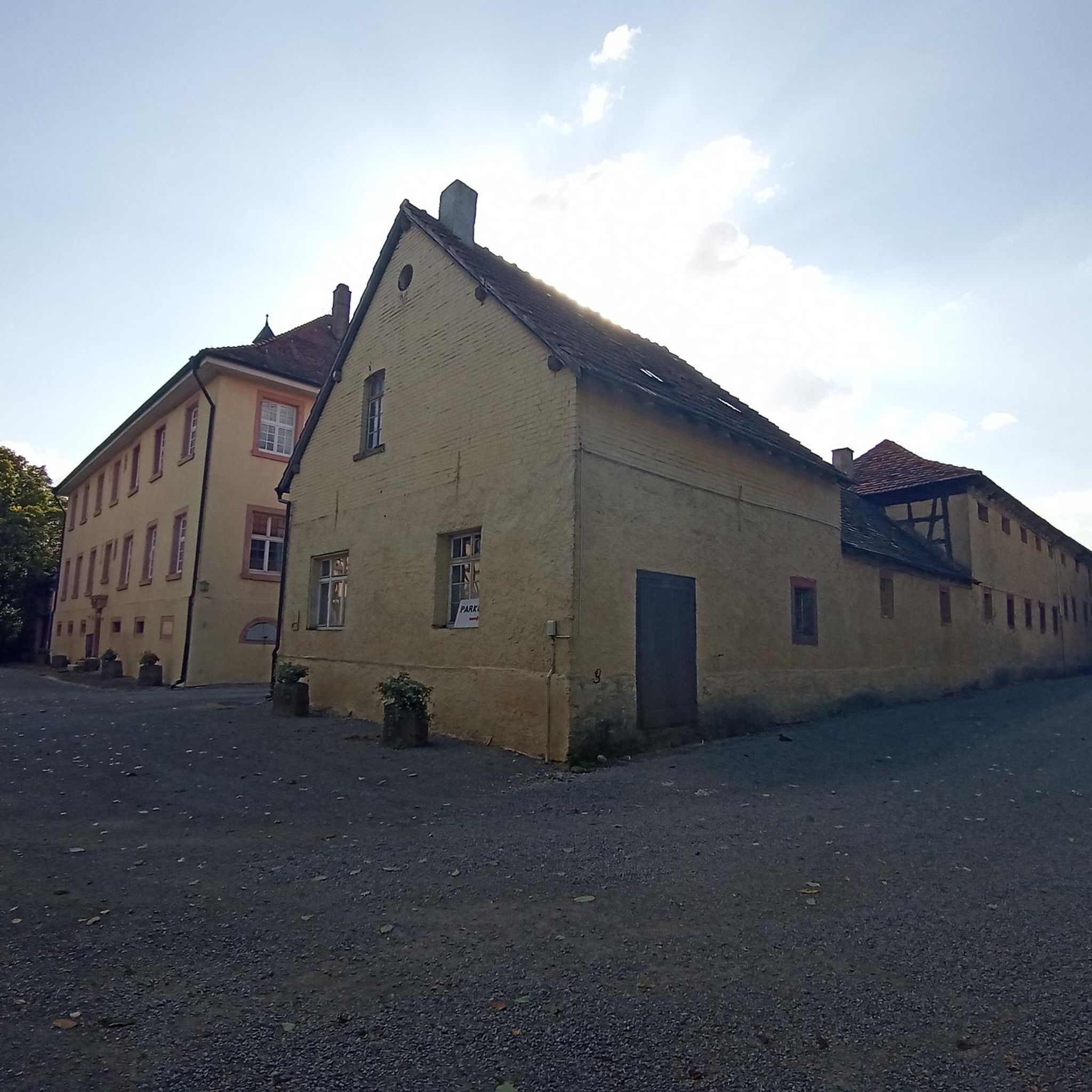
커뮤니티 팁

오래된 샤토-공티에(Château-Gontier)는 흥미롭지만 거리가 좁고 가파르기 때문에 자전거로 방문하기에는 꽤 복잡합니다. 특히 마옌 강이 보이는 강변과 천년 된 생장 바티스트 교회 및 그 지하 묘소를 즐겼습니다.
0
0
1885년에 지어진 옛 법원 건물입니다. 현재는 시청의 일부입니다.
0
0
1870년에 지어진 아름다운 교회입니다. 길 건너편 교회 입구 맞은편에 있는 매우 아름다운 건물을 주목할 만합니다.
0
0

Parish Church of Saints Peter and Paul. The parish was once part of the archdeaconry of Sablé and was under the jurisdiction of the bishopric of Le Mans. It is only mentioned in texts from the 12th century onwards. The construction of the building, however, predates these first mentions and dates back to the first half of the 11th century. Most of the nave survives from this early church, whose south wall features a narrow, semicircular bay, dressed in red sandstone. The north wall partially collapsed in 1558 and was rebuilt shortly after. To the south, at the junction of the nave and the choir, the bell tower was added in the 12th century. It is a massive tower supported at the corners by buttresses; it is quadrangular in plan and built outside the building. At its summit, this tower features two levels of openings on each side: first, a relatively wide, double-arched bay, surmounted by two narrower, semicircular openings. It is covered with a saddleback roof, a feature found in several surrounding churches. Its eastern face is flanked by an apse housing a chapel dedicated to Saint Louis. A doorway in the tower's west wall, with a lintel carved with an ogee (opened in the late 15th or early 16th century), provides access from the outside. The choir, whose drip walls are built in line with the nave walls, was built in the 13th century on the site of a more modest choir. It features a flat chevet pierced by two narrow pointed-arch windows (blocked during the construction of the altarpiece). The same type of openings are found on its side walls. As with the nave, the main structure is made of sandstone rubble, but for this part, the walls are supported by buttresses with dressed stone glacis. These are joined at their summit by a very crude modillioned cornice, which is particularly visible on the north face. Internally, the building forms an elongated volume, with the choir and nave separated by a thick wall pierced by a double-rolled pointed arch: the nave and choir occupy two-thirds and one-third of the space, respectively. Despite some modest later alterations, the church retains its ancient appearance. The furnishings were largely renewed in the second half of the 18th century. The three limestone altarpieces, built in 1766 at the initiative of the priest Jacques-René Guitton de l'Écluse, are the work of an architect from Précigné (Sarthe) named Lalande. The main altarpiece, placed against the apse wall, is concave in shape. It comprises three bays and retains its ancient statuary: Saint Peter and Saint Paul, patron saints of the church, in the side niches, and Saint Anne and the Virgin Mary in the upper one. The center is occupied by a painting depicting the Adoration of the Magi, a copy after Rubens. The side altars, located at the entrance to the choir, are dedicated to the Virgin and Saint Julian. A wrought iron arch serves as a beam of glory: it is the work of a local marshal, Château. A few years later, in 1785, a new baptismal font was installed, as was a pulpit (Perret, carpenter). In 2004, the Sauvegarde de l'Art français (French Art Protection Agency) granted €4,000 in aid for the repair of the roof and the installation of a lightning rod.
0
0
Church of Saint-Pierre. Auvers, a large village located 8 kilometers from Sablé and the Abbey of Solesmes, is mentioned as early as the 11th century as a priory dependent on the Abbey of La Couture in Mans. The texts seem to establish that its foundation was favored by Guy de Laval and later by his son, Hamon. The original chapel was replaced in the 12th century by a church consecrated by Guillaume Passavent, Bishop of Le Mans, which allows us to date its construction between 1154 and 1187. The priory, after a period of relative prosperity in the 13th century, no longer housed a prior from the 15th century onward. The church served as the parish church, while the priory under its control was transformed and enlarged: part of the 17th-century dwelling still survives in the extension of the south arm of the transept. From the 12th-century church Only the nave remains, as the transept and choir were rebuilt in 1866. The overall silhouette of the building is strongly marked by the contrast between the modest volume of the old nave and the substantial eastern block. The plan is that of a Latin cross with a single nave and transept. The 19th-century alterations consisted of building this transept on the site of the two former chapels of Saint Anne and Saint Michael, creating two apsidal chapels opening onto the arms of this transept, and rebuilding the choir and apse. As a reminder, the chapel of Saint Anne served as a burial place for the lords of Le Plessis, and that of Saint Michael for the lords of La Panne. The bell tower of the old building has been preserved to the north, as has the chapel of Saint Peter to the south, which, attached to the priory, was reserved for religious orders. In plan, the base of the bell tower and the chapel of Saint Peter form, with the new transept, a sort of double transept. The western facade is adorned with a portal that dates back to the early 19th century, surmounted by a window that is likely contemporary. The nave is relatively narrow and elongated, its masonry constructed of small, cubic rubble stones, with roussard sandstone quoins. It is lit to the south by three semicircular bays and two to the north, which were modified in the 19th century. Some of the upper Romanesque openings, which were blocked, are still recognizable on the exterior of the north wall. It is covered with a paneled vault with exposed tie beams. The base of the bell tower has a ribbed vault, with a rather heavy profile. The interest of this building lies in the large collection of mural paintings dating from the 16th century that cover the walls of the nave. These paintings were partially discovered as early as 1903 and the painter Yperman was then commissioned to make copies for the Museum of Comparative Sculpture. In 1948, they were the subject of a classification order, then, in 1973, a study by the Champs-sur-Marne Laboratory. Several cycles can be recognized, notably: on the south wall, the Nativity and the Flight into Egypt, as well as the life of Saint Martin; on the north wall, the Last Judgment and the Sacrifice of Abraham, as well as Saint James the Greater and the legend of Saint Hubert. They also feature numerous miracle-working saints: Saint Europa, who cured dropsy, Saint Apollonia for toothaches, Saint Avertinus of Tours, for headaches, Saint Generated, the object of a popular cult in the region. Some forty years ago, Saint Opportune, Saint Julian of Brioude, Saint Mammès, the "Tale of the Three Dead and the Three Living," and numerous other scenes were still being identified. The poor condition of the framework and roofing led to deterioration of the building's walls, particularly those of the nave: the Sauvegarde de l'Art Français (French Art Protection Agency) awarded a grant of 60,000 francs for this work in 1997.
0
0
자주 묻는 질문
Beaumont-Pied-De-Bœuf 주변에는 교통 없는 로드 사이클링 코스가 몇 개나 있나요?
Beaumont-Pied-De-Bœuf 주변에는 100개 이상의 전용 교통 없는 로드 사이클링 코스가 있어 모든 실력 수준에 맞는 다양한 옵션을 제공합니다. 탐험할 수 있는 쉬운 코스 18개, 보통 난이도 코스 83개, 어려운 코스 1개를 찾을 수 있습니다.
Beaumont-Pied-De-Bœuf의 교통 없는 로드 사이클링 코스에 대해 다른 사이클리스트들은 어떻게 말하나요?
komoot 커뮤니티는 이 지역의 교통 없는 로드 사이클링 코스를 높이 평가하며, 17개의 평가에서 평균 4.3점의 점수를 받았습니다. 사이클리스트들은 종종 평화롭고 경치 좋은 풍경과 차량 방해 없이 지역을 탐험할 수 있는 기회를 칭찬합니다.
이 교통 없는 로드 사이클링 코스에서 어떤 종류의 지형을 예상할 수 있나요?
Beaumont-Pied-De-Bœuf가 위치한 사르트 지역은 푸르고 완만한 지형을 특징으로 합니다. 베르세 숲(Forêt de Bercé)과 같은 광활한 숲과 에르브 계곡(Erve valley)과 같은 경치 좋은 계곡을 가로지르는 로드 사이클링에 이상적인 대부분 잘 포장된 노면을 예상할 수 있습니다. 일부 코스에는 완만한 오르막과 내리막이 포함되어 다양한 사이클링 경험을 제공할 수 있습니다.
초보자를 위한 쉬운 교통 없는 로드 사이클링 코스가 있나요?
네, 초보자나 편안한 라이딩을 원하는 분들에게 완벽한 여러 쉬운 교통 없는 로드 사이클링 코스가 있습니다. 예를 들어, 생브리스(Saint-Brice) 출발 노트르담 교회 – 솔렘 수도원 루프는 약 1시간 30분이 소요되는 34km의 쉬운 코스로, 보통 수준의 고도 변화가 있습니다.
더 도전적인 교통 없는 로드 사이클링을 위한 옵션은 무엇인가요?
더 큰 도전을 추구하는 분들을 위해 보통 난이도에서 어려운 코스가 있습니다. 생브리스(Saint-Brice) 출발 파르세 밀 – 솔렘 수도원 루프는 약 500미터의 고도 상승이 있는 76km의 보통 난이도 코스로, 그림 같은 시골을 통과하는 더 길고 힘든 라이딩을 제공합니다.
교통 없는 로드 사이클링 코스는 일반적으로 길이가 얼마나 되나요?
Beaumont-Pied-De-Bœuf 주변의 교통 없는 로드 사이클링 코스는 길이가 다양합니다. 약 30km의 부세(Bouessay) 출발 로드바이크 루프와 같은 짧고 쉬운 라이딩이나, 56km가 넘는 생브리스(Saint-Brice) 출발 노트르담 교회 – 성 베드로 교회 루프와 같은 더 길고 도전적인 옵션을 찾을 수 있습니다.
교통 없는 로드 사이클링을 위한 루프 코스가 있나요?
네, 이 지역의 많은 교통 없는 로드 사이클링 코스는 루프 형태로 설계되어 같은 지점에서 시작하고 끝낼 수 있습니다. 예로는 54km의 순환 코스인 생브리스(Saint-Brice) 출발 마옌 비아덕트 – 샤토-공티에 성 루프와 부세(Bouessay) 출발 로드바이크 루프가 있습니다.
Beaumont-Pied-De-Bœuf 주변의 교통 없는 로드 사이클링 코스가 가족에게 적합한가요?
특정 가족 친화적인 코스가 명시적으로 지정되어 있지는 않지만, 쉽고 잘 포장되어 있으며 교통이 없는 옵션이 많아 많은 코스가 가족에게 적합합니다. 45km가 이미 완성된 개발 중인 "Boulevard Nature" 네트워크는 가족 사이클링에 이상적인 완만한 이동 경로도 제공합니다.
이 코스를 따라 어떤 흥미로운 랜드마크나 자연 지형을 볼 수 있나요?
이 지역은 자연의 아름다움과 역사 유적지가 풍부합니다. 생물 다양성이 풍부한 에르브 계곡(Erve valley), 루아르 계곡(Loir Valley) 또는 바렌느 호수(Lac des Varennes)를 만날 수 있습니다. 역사적인 관심 장소로는 중세 시대의 살레스 요새(Fort des Salles), 고대 사울주 동굴 및 선사 박물관, 15세기 생 실뱅 예배당이 있습니다. 매력적인 Beaumont-Pied-De-Bœuf 마을 자체에는 고대 성탑과 로마네스크 양식의 교회가 있습니다.
Beaumont-Pied-De-Bœuf에서 교통 없는 로드 사이클링을 즐기기에 가장 좋은 계절은 언제인가요?
페이드라루아르(Pays de la Loire) 지역은 일반적으로 봄부터 가을까지 쾌적한 사이클링 조건을 제공합니다. 봄에는 풍경이 꽃피고, 여름에는 따뜻한 날씨를 제공합니다. 가을에는 아름다운 단풍을 즐길 수 있습니다. 날씨는 변동될 수 있으므로 항상 출발 전에 현지 일기 예보를 확인하십시오.
교통 없는 로드 사이클링 경로 근처에 카페나 레스토랑이 있나요?
교통 없는 경로 바로 옆에 있는 특정 카페는 나열되어 있지 않지만, Beaumont-Pied-De-Bœuf를 포함한 사르트 지역의 매력적인 마을과 도시에는 다양한 식음료 옵션이 있습니다. 이러한 마을을 통과하도록 경로를 계획하면 편리하게 들를 수 있습니다.
보몽 피드 뵈프 주변에서 가장 인기 있는 경로
보몽 피드 뵈프 주변에서 가장 인기 있는 명소


더 살펴보기
다른 지역의 최고의 로드 사이클링 경로를 살펴보세요.
