라 고브레티에르 주변 최고의 교통량 없는 자전거 라이딩 코스
4.3
(98)
2,948
자전거 타는 사람
77
라이딩
라 오브레티에르 주변의 교통량이 적은 로드 사이클링 코스는 다양하고 잘 보존된 자연 경관으로 유명한 오트-보카주 방데 지역 내에 있습니다. 이 지역은 초원, 숲, 습지를 가로질러 구불구불 이어지는 조용한 시골길과 그늘진 오솔길이 특징입니다. 근처의 삼프로뱅스 계곡은 다양한 경사도를 가진 더욱 험준하고 언덕이 많은 지형을 제공하며, 다양한 사이클링 선호도에 맞는 옵션을 제공합니다. 이 지형은 시골 풍경과 자연 명소를 연결하는 로드 사이클링에 적합한 환경을 제공합니다.
라 오브레티에르 주변의 교통량이 적은 로드 사이클링 코스
- 가장 인기 있는 교통량이 적은 로드 사이클링 코스는 샤토 드…
마지막 업데이트: 5월 7, 2026
4.0
(2)
8
자전거 타는 사람
73.3km
03:12
550m
550m
보통 도로 자전거 타기. 좋은 체력 필요. 지면 대부분이 잘 포장되어 있고 라이딩하기 쉬움.
11
자전거 타는 사람
75.6km
03:37
800m
800m
보통 도로 자전거 타기. 좋은 체력 필요. 지면 대부분이 잘 포장되어 있고 라이딩하기 쉬움.

무료 회원 가입
9
자전거 타는 사람
34.8km
01:32
280m
280m
보통 도로 자전거 타기. 모든 체력 수준에 적합. 투어 중 라이딩하기 어려운 비포장 구간이 있을 수 있음.
7
자전거 타는 사람
78.3km
03:12
350m
350m
보통 도로 자전거 타기. 좋은 체력 필요. 지면 대부분이 잘 포장되어 있고 라이딩하기 쉬움.
5.0
(1)
6
자전거 타는 사람
81.2km
03:32
620m
620m
보통 도로 자전거 타기. 좋은 체력 필요. 지면 대부분이 잘 포장되어 있고 라이딩하기 쉬움.
더 다양한 경로와 다른 탐험가들의 추천을 살펴보세요.
무료 회원 가입
이미 komoot 계정이 있나요?
투어 추천은 다른 사람들이 komoot에서 완료한 수천 개의 활동을 바탕으로 구성되어 있습니다.
오늘 무료 계정으로 시작하세요
다음 모험이 기다리고 있어요.
로그인 또는 가입하기
라 고브레티에르 주변 인기 장소
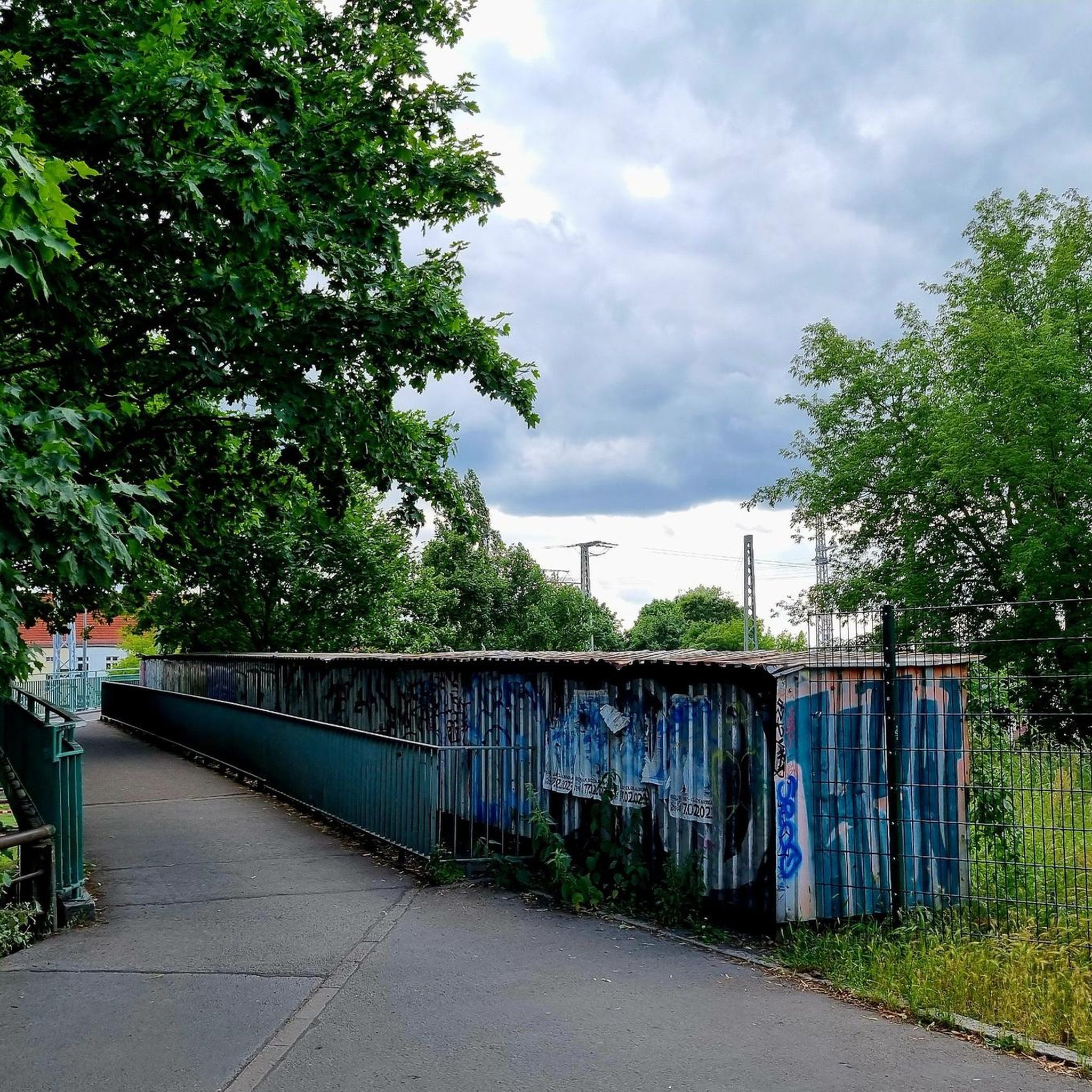

커뮤니티 팁

It's a shame the tree is dead, but the chapel is still as amazing as ever.
0
0
A charming little church built in 1633 and renovated in 1901 by Father Hilairet. You'll find a water fountain in the parking lot in front of the cemetery.
1
0

Clisson Castle has quite a story to tell: first an impregnable fortress overlooking the Sèvre, then a ducal residence, and finally a romantic ruin. In the 12th century, the powerful lordship of Clisson built this stone castle with highly elaborate defensive architectural systems: arrow slits, gun ports, and slits. A strategic point protecting the border of the Duchy of Brittany in the 15th century, it was abandoned by its owners from the second half of the 17th century onward before being burned down by Republican troops in 1793. But, beyond its grand history, this castle also has a more historic significance! In 1807, François-Frédéric Lemot, creator of the Garenne Lemot estate (a picturesque landscape located on the other side of the river), was captivated by these ruins and purchased it to turn it into an ornamental factory. The château was declared a historic monument in 1924, before being acquired by the Loire-Atlantique department in 1962. Today, visitors can visit it, take a guided tour, or simply experience its history. A stop on the Journey through the Vineyard, it's a stopover during the wine tourism tour of Nantes' wine country, featuring natural sites, heritage features, characterful villages, and unique cellars.
1
0
The Trinity Church is getting a makeover in the heart of Clisson Off-limits since 2018, the Trinity Church in Clisson is undergoing extensive restoration work until 2027, accompanied by reinforcement and safety work. The Trinity Church in Clisson has been off-limits since 2018 due to pieces of tufa stone found on the floor of the building, raising concerns about safety issues. The restoration has been decided upon, along with reinforcement and safety work. This work is expected to continue until 2027. The construction site will soon be explained to the residents of Clisson, using signs. The artwork and furnishings have been protected and stored, tarpaulins protect the building and the workers, the vaults and framework will be restored, and the wall plasterwork will be examined and redone where necessary. The work will concern the side aisles until next summer, the nave for the following twelve months. Then it will be the turn of the choir and transepts between January 2026 and spring 2027, then the sacristy, the bell tower and the outbuildings.
2
0
The Church of the Trinity was originally a Benedictine priory, with a parish, dependent on the abbeys of Saint-Martin-de-Vertou and Saint-Jouin-de-Marnes. In the 11th century, it was occupied by the canons regular of the Order of Saint Augustine. In 1645, Fontevrist nuns from La Regrippière en Vallet settled there. The convent burned down in 1794 by the infernal columns of the Republican armies. From the 11th century onwards, the church had a choir with an apse, side chapels, and a square bell tower. In the 17th century, the Benedictine nuns replaced the Romanesque choir with an elongated one, featuring a remarkable Baroque altarpiece. They demolished the southern part of the choir to build their oratory. During the French Revolution, the church returned to the parish. Around 1867/1868, work was undertaken. The façade was redone in a neo-Romanesque style, while the neo-Gothic style was preferred for the interior of the religious monument.
1
0
. Originally, there was an ovoid-shaped enclosure flanked by about ten towers and a gatehouse, located to the northeast. The fortified town was located to the north of the fortress and extended a little to the east. A dry moat separated the fortified town from the fortress. A barbican protected the gatehouse. A Romanesque keep of the Niort type, with its courtyard and small enclosure, was located in the castle courtyard, roughly in the middle in the north-south direction and located to the west. The fortified city extended from the rue de Gaulle, a gate was located at the level of the Carré de l'Europe (the porte de Nantes), then the ramparts continued along the rue de la Place du Champ de Foire, then went back down the Esplanade des Olivettes, where a gate was located towards the roundabout of the rue des Jardins (porte de Tiffauges) then the ramparts ran along the Asson to go up the rue du Pont Jarlet and around the barbican not far from the Presbytery The dry moats surrounding the city were 16 meters deep in the 15th century, today they are flowered and are the subject of different colored squares decorating this part of the ramparts.
0
0
In the 9th century, a castrum, a wooden castle built on a mound of earth, was built to counter the Viking raids that had previously sacked the city of Durivum (Saint-Georges-de-Montaigu). For strategic reasons, this fortress was built on a rocky spur at the junction between the Maine and Asson rivers. Maurice I of Montaigu, the first known lord, witnessed the consecration of the church of Saint-Nicolas de la Chaize-le-Vicomte in 1099. His successor until 1174 was Brient I of Commequiers, married to his daughter, Agathe de Montaigu. Later, his grandchildren, Brient II, Maurice II "the Younger," and Marguerite, succeeded him. It was perhaps this Brient II who had the Romanesque keep built in 1218, a large square tower with flat corner towers. He also removed the wooden palisade, replacing it with a wide moat extending to the Saint-Georges Gate. The Montagues (also known as Belleville by marriage around 1180) pledged allegiance to the Plantagenets, Henry II, Richard the Lionheart, and John Lackland. Margaret of Belleville-Montaigu, daughter of Brient de Montaigu and Agnes de Belleville, granddaughter of Maurice I de Montaigu, sister of Maurice II de Belleville-Montaigu, married Hugh of Thouars in 1203. In 1227, the couple submitted to Philip Augustus through the ceremony of homage. Hugh of Thouars died in 1229, and Margaret remarried in 1235 to the Duke of Brittany, Mauclerc, whose real name was Pierre de Dreux. Marguerite de Montaigu died in 1241, childless. The lordship of Montaigu fell to her nephew, Maurice III de Belleville-Montaigu (d. c. 1297; son of Maurice II). He became lord of Montaigu upon the death of Mauclerc in 1250[2], and his son Maurice IV (d. c. 1292) ensured the succession through his children Jeanne (d. 1284 Geoffroy II David de La Flocellière) and Maurice V de Belleville-Montaigu (he married 1° Sibylle, daughter of Geoffroy VI de Châteaubriant, then 2° Isabelle/Létice de Parthenay, daughter of Guillaume V Larchevêque de Parthenay). Jeanne de Belleville (c. 1300-c. 1359), daughter of Maurice V of Montaigu and Létice of Parthenay, married Olivier IV of Clisson for the second time in 1328. Olivier IV was executed by beheading after being suspected of "felony" against the English, during the Hundred Years' War. Jeanne became a privateer with her children Olivier V and Jeanne de Clisson, in revenge, and was banished from the kingdom of France. While she attacked French ships, the fortress of Montaigu was held by the English, according to the Treaty of Brétigny-Calais, a garrison of which engaged in pillaging the surrounding area. Jeanne lost her ship and withdrew with her children to England. Olivier V, having grown up, rallied to the king of France, recovered his property in 1362 and fought the English with Bertrand du Guesclin. In 1373, Olivier and Bertrand succeeded in driving the English out of Montaigu, and Olivier ceded the lordship to his sister Jeanne, who had married an English captain, Jean Harpedenne. The latter sided with the King of France in 1373 and became Jean de Belleville. His grandson, Jean III, married Charles VII's half-sister, Marguerite de Valois, in 1433. Louis I de Belleville succeeded Jean III. King Louis XI advised him to fortify the town between 1464 and 1468 to protect it from the Bretons.
0
0
Another beautiful site on the Sèvre Nantaise, with the unusual feature this time: it's not only at the crossroads of three departments (LA, Vendée, and M&L), a rather common occurrence, but also of three former provinces: Brittany, Poitou, and Anjou. The crossroads is formed by the Sèvre on one side and its tributary, the Bon Débit, on the other. The inn of the same name looks very nice; in any case, the setting is splendid.
0
0
자주 묻는 질문
라 가브리에르 주변에 교통량이 적은 로드 사이클링 코스가 얼마나 있나요?
라 가브리에르 주변에는 75개 이상의 교통량이 적은 로드 사이클링 코스가 있어 오트-보카주 방데 지역을 탐험할 수 있는 다양한 옵션을 제공합니다. 대부분의 코스는 보통 난이도로 평가되며, 좀 더 편안한 라이딩을 위한 쉬운 옵션도 몇 가지 있습니다.
이 교통량이 적은 로드 사이클링 코스에서 어떤 지형을 예상할 수 있나요?
이 지역은 다양한 풍경을 제공합니다. 방데 지역 대부분은 비교적 평탄한 지형으로 알려져 있지만, 라 가브리에르가 위치한 오트-보카주 방데는 다채로운 경관을 자랑합니다. 조용한 시골길과 그늘진 오솔길을 찾을 수 있으며, 특히 세 프로방스 계곡과 같이 경사도가 4%에서 9%에 달할 수 있는 도전적인 언덕 구간도 있습니다.
초보자나 쉬운 라이딩을 원하는 사람에게 적합한 코스가 있나요?
네, 많은 코스 중에서 로드 사이클링이 처음이거나 덜 힘든 경험을 원하는 사람들을 위해 최소 10개의 쉬운 옵션이 있습니다. 이 코스들은 일반적으로 고도 상승이 적고 거리가 짧아 좀 더 편안한 속도로 즐길 수 있습니다.
사이클링 중에 볼 수 있는 주목할 만한 자연 경관이나 명소가 있나요?
여러 아름다운 장소를 발견할 수 있습니다. 라크 드 라 뷜티에르는 주변을 도는 15km의 경치 좋은 길을 제공하며 물가 풍경을 즐기기에 완벽합니다. 세 프로방스 계곡은 뇌브 나르테스 강을 따라 멋진 자연 경관을 제공합니다. 또한, 역사적인 풍차와 예배당이 있는 몽 데 알루에트는 경치 좋은 아름다움과 지역의 유산에 대한 통찰력을 제공합니다.
장거리 교통량이 적은 로드 사이클링 코스가 있나요?
네, 이 지역에는 장거리를 위해 설계된 많은 코스가 있습니다. 예를 들어, 샤토 드 클리송 – 레 랑드-제뉘송 출발 아르세날 루프는 73km 이상을 커버하며, 물랭 뒤 부쇼 – 레 랑드-제뉘송 출발 푸이 생 보네 정상 루프는 86km 이상으로 이어져 조용한 시골을 가로지르는 상당한 거리를 제공합니다.
다른 로드 사이클리스트들이 라 가브리에르에서의 사이클링을 가장 즐기는 점은 무엇인가요?
코무트 커뮤니티는 이 지역의 로드 사이클링 경험에 대해 별점 5점 만점에 평균 4.39점을 부여하며 높이 평가합니다. 사이클리스트들은 종종 평화로운 환경, 광범위한 조용한 시골길 네트워크, 그리고 교통량이 없는 매력적인 라이딩을 만들어내는 다양한 풍경을 칭찬합니다.
라 가브리에르 주변에 순환형 교통량이 적은 로드 사이클링 코스를 찾을 수 있나요?
네, 라 가브리에르 주변의 교통량이 적은 로드 사이클링 코스 대부분은 출발점으로 돌아오는 순환형으로 설계되었습니다. 이를 통해 라이딩 계획이 편리해지며, 복귀 교통편을 마련할 필요가 없습니다.
로드 바이크로 접근할 수 있는 역사 유적지가 있나요?
물론입니다. 자연의 아름다움 외에도 역사적인 관심 지점으로 사이클링을 할 수 있습니다. 티포주 성은 근처의 중요한 명소이며, 물랭 드 라 사주스는 탐험할 또 다른 역사적인 랜드마크를 제공합니다. 라 가브리에르 자체에는 방데 전쟁의 증거인 샤토 드 랑드보디에르가 있습니다.
방데 보카주 지역에서 교통량이 적은 로드 사이클링을 즐기기에 가장 좋은 시기는 언제인가요?
방데 보카주 지역은 일반적으로 봄부터 가을까지 사이클링하기에 좋습니다. 봄에는 푸른 녹지와 온화한 기온을 즐길 수 있으며, 가을에는 아름다운 단풍을 볼 수 있습니다. 여름은 더울 수 있지만, 긴 낮 시간 덕분에 인기가 많습니다. 항상 출발 전에 현지 날씨 예보를 확인하세요.
경험 많은 로드 사이클리스트를 위한 도전적인 오르막 코스가 있나요?
네, 더 힘든 라이딩을 추구하는 사람들을 위해 이 지역에는 도전적인 구간이 있습니다. 세 프로방스 계곡은 언덕이 많고 경사진 지형으로 유명하며, 특정 오르막 구간은 4%에서 9%의 경사도를 가집니다. 브랭 베이커리 – 샹브레토 출발 생 마르탱 루프와 같은 코스는 75km 거리에 거의 800미터에 달하는 상당한 고도 상승을 특징으로 합니다.
이 교통량이 적은 로드 사이클링 코스를 위한 주차 공간은 어디에서 찾을 수 있나요?
모든 코스에 대한 특정 주차 공간이 자세히 설명되어 있지는 않지만, 대부분의 코스는 레 랑드-제뉘송, 샹브레토, 또는 샹베리 같은 마을이나 도시에서 시작하거나 통과합니다. 일반적으로 이 지역에서 공공 주차장을 찾을 수 있어 라이딩 시작 지점에 편리하게 접근할 수 있습니다.
라 고브레티에르 주변에서 가장 인기 있는 명소


더 살펴보기
다른 지역의 최고의 로드 사이클링 경로를 살펴보세요.
