퐁텐 도질락 주변 최고의 교통량 없는 자전거 라이딩 코스
4.1
(57)
317
자전거 타는 사람
22
라이딩
교통량이 적은 투어링 사이클링 코스는 프랑스 샤랑트마리팀(Charente-Maritime) 지역의 Fontaines-D'Ozillac 주변의 평화로운 시골 풍경을 가로지릅니다. 이 지역은 구불구불한 시골, 광활한 포도밭, 탁 트인 들판이 특징이며, 숲과 매력적인 마을들이 곳곳에 있습니다. 이 지역은 조용한 뒷길과 전용 자전거 도로 네트워크를 갖추고 있어 사이클리스트에게 다양한 지형을 제공합니다. 고도는 일반적으로 완만하며 산보다는 언덕이 있어 투어링에 적합합니다.
Fontaines-D'Ozillac 주변 최고의 교통량 적은 투어링 사이클링 코스
- 가장 인기 있는 교통량 적은 투어링 사이클링 코스는 Jonzac 출발 자전거 루프로, 34.3km(21.3마일)의 중간 난이도 코스로 2시간 28분이 소요되며 그림…
마지막 업데이트: 10월 7, 2026
3.3
(3)
23
자전거 타는 사람
34.4km
02:28
210m
210m
보통 자전거 타기. 좋은 체력 필요. 대부분 포장된 지면. 실력과 관계없이 누구나 갈 수 있음.
5.0
(1)
4
자전거 타는 사람
38.6km
02:20
280m
280m
보통 자전거 타기. 좋은 체력 필요. 대부분 포장된 지면. 실력과 관계없이 누구나 갈 수 있음.

4.5
(2)
3
자전거 타는 사람
42.1km
02:33
330m
330m
보통 자전거 타기. 좋은 체력 필요. 대부분 포장된 지면. 실력과 관계없이 누구나 갈 수 있음.
3.0
(3)
4
자전거 타는 사람
10.9km
00:42
70m
70m
초급용 자전거 라이딩. 모든 체력 수준에 적합. 대부분 포장된 지면. 실력과 관계없이 누구나 갈 수 있음.
4
자전거 타는 사람
36.4km
02:11
280m
280m
보통 자전거 타기. 좋은 체력 필요. 대부분 포장된 지면. 실력과 관계없이 누구나 갈 수 있음.
더 다양한 경로와 다른 탐험가들의 추천을 살펴보세요.
이미 komoot 계정이 있나요?
투어 추천은 다른 사람들이 komoot에서 완료한 수천 개의 활동을 바탕으로 구성되어 있습니다.
오늘 무료 계정으로 시작하세요
다음 모험이 기다리고 있어요.
퐁텐 도질락 주변 인기 장소
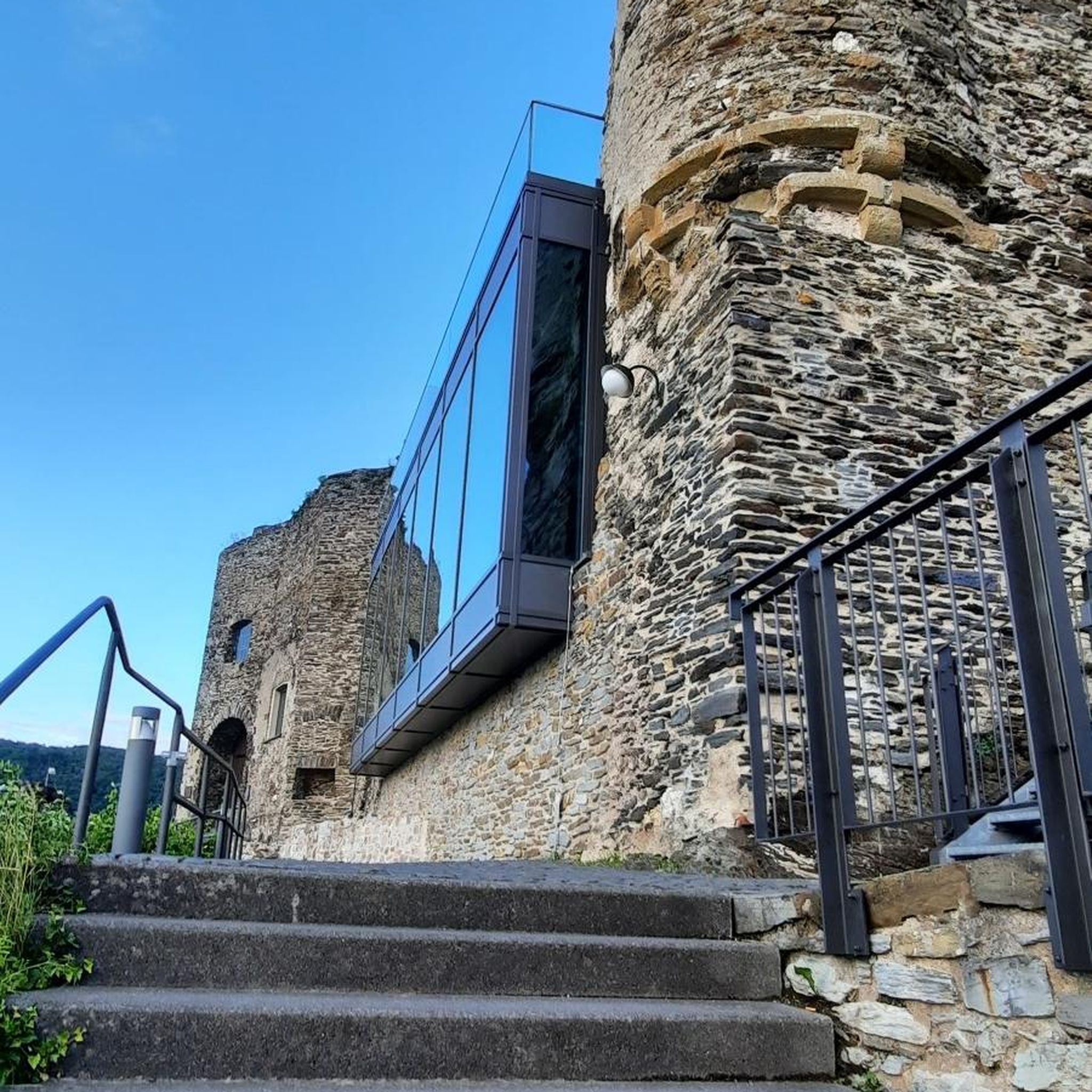
커뮤니티 팁

The high octagonal tower of the bell tower consists of two floors. The first is embellished on each side with two high blind bays. The second finished in the Gothic period is added by eight large windows. The inner curve of each is cut into small lobes reminiscent of the Moorish style. During the construction of the facade, the nave was shortened by one bay. In the 14th century ogival style, the arched portal with arches is accompanied by a trefoil window underlined by a checkered cornice. The square chevet has preserved in the masonry old parts of the semi-circular chevet of Romanesque origin: remains of arcades on columns with capitals, remains of cornices and windows. The old bay in front of the choir is remarkable for the quality of the sculptures of the Romanesque capitals. One represents a shrine on an altar guarded by two figures. According to C. Connoué, it is an original subject for Saintonge which would have its similar in the church of Notre-Dame-de-Soulac (Gironde). The shrine represents a church whose two-storey bell tower has a conical roof like that of the Abbaye aux Dames in Saintes or closer to Rouffignac, Nieul-Ie-Virouil. The scene is framed by two large chandeliers, furniture that is rarely represented in Saintonge sculpture. On another capital, Adam and Eve are represented after the original sin in silly niches drawn by small trees, including that of Good and Evil. Another shows birds in leaves, a subject that is also treated in the church of Grézac or in that of Jarnac-Champagne. Outside, the Romanesque chevet is punctuated by engaged columns of decreasing section.
0
0

There is a great children's park
0
0
The church of Saint-Pierre depended in the 14th century on the abbey of La Couronne (Charente). Of Romanesque origin (12th and 13th centuries), it has suffered numerous damages and many restorations have taken place. The gable facade is pierced in its central axis by an early 16th century portal with a grooved arch, framed by prismatic tori and flanked by two blind bays. The whole is surmounted by a rose window. The side walls are perforated with narrow openings, some of which are underlined with a diamond-point cord. The 12th century building has a single nave with a trefoil choir. The semi-circular chevet is decorated with a chamfered cornice decorated with zigzags on brackets engraved with various subjects. Many engraved names accompanied by dates from the 18th century are visible on the bedside wall. The interior of the nave is covered with a semi-circular barrel vault. On the south side, a 16th century crypt is occupied by a tomb decorated in the flamboyant style. The two apsidioles vaulted in cul-de-four give the church a trefoil plan. The square of the transept supported the old bell tower. All that remains are back-to-back columns adorned with claw bases and worked grooves. The sculptures accompanying the pilasters are modern. The bell tower was redone in concrete with an external staircase in place of the previous one, which itself replaced the original bell tower, which fell in the 1950s. Under the modern, octagonal bell tower, there is a mass of columns with ornate capitals and bases (foliage, animals, colorful characters). The choir is barrel-vaulted with a semi-circular arch. The chancel columns are also adorned with claw bases on the north side and flutes on the south side. The cul-de-four apse is openworked with three similar windows with small columns. Paintings of Saint-Pierre and Saint-Paul. Tomb with recumbent in the habit of an ecclesiastic whose head and hands have been destroyed. The Saint-Pierre church was classified as a historical monument in 1970.
0
0
The church, built in the shape of a Latin cross, the first construction elements of which date from the 11th and 12th centuries, with later additions and alterations (15th and 19th centuries to the beginning of the 13th century then modified in the 15th and 16th centuries, is dedicated to Saint Séverin, alias Seurin, bishop of Bordeaux in the 5th century, and whose feast day takes place on October 21. However, the solemn patronal feast is that of Saint Blaise, martyr bishop of the 4th century, fixed on February 3, and for which there is great veneration in the country. The main portal of the church, as well as the two false doors, are crowned by ogival arcades with a few rare ornaments borrowed from the Romanesque period, such as saw teeth, diamond points, etc. These gantries have been the subject of a subconstruction. The nave is made up of three recently vaulted bays in brick and plaster, without ribs; each span is separated by groups of four small columns, only two meters and fifty high, and appearing to date from the 14th century. The apse has two bays in the 15th century ogival style. The Saint-Joseph chapel, to the north, has kept its original Romanesque style; it is dominated by a semi-circular vault, and offers the example of an apsidion of which no advantage is currently being taken. It is adorned with a small apse which housed the baptismal font. The chapel of the Virgin, to the south, was remodeled in the 17th century; it has the character of a 15th century restorer; it was then lengthened, and consists of three spans. There is, it is said, an ossuary under the choir. The bell tower with a cone or "pine cone" spire, placed above the transept, and about 24 meters high (54 steps lead to its summit), is worthy of attention. This is the oldest part of the church. It is covered with a stone dome carved in tortoiseshell called the pine cone bell tower, similar examples of which can be found in Saintonge (Abbaye aux Dames de Saintes, Notre-Dame-de-l'Assomption church in Fenioux)3 but which recalls above all the domes of Byzantine inspiration observed in Poitou, Angoumois and Périgord (church of N.-D.-la-Grande in Poitiers, cathedral of Saint-Pierre in Angoulême, cathedral of Saint-Front in Périgueux). The foreground includes five Romanesque windows on each side, oriented as usual, on the upper level there are only two; the tower ends in a cut of stone, formed of small somewhat deformed cubes and forming a slightly rounded cone, but deformed by time. Inside, this bell tower offers a quadrangular vault, with cut sides, of very good taste. The bell, weighing 430 kilograms, was cast by Guillaume Besson, from Angers, and blessed in 1859, under the name of Marie. The godfather was Mr. Blanc Fontenille, former lawyer and notary, mayor of Nieul, and the godmother Mrs. Marie Belloteau, born Babin; parish priest M.Antoine Lanson.
1
0
Hilaire de Poitiers (in Latin Hilarius Pictaviensis) is the first bishop of Poitiers actually attested, born around 315 and died in 367. He is also one of the first Latin Christian writers. A fourth-century theologian, he was a great defender of Nicene orthodoxy against Arianism and Sabellianism. He was designated by the title of "Athanasius of the West" because of his energetic and pastoral action in the promotion of Christian orthodoxy. It is a pretty little church that bears his name, and which is in the heart of the village. It presents a most interesting example of a primitive novel. The facade is a tripartite composition with two superimposed registers, without any sculpture, except for the two herringbone cords which frame the second register. At ground level, the 2 blind side bays are narrow and higher than the gate. The upper arcade has five arches resting on columns with bare capitals. The central arch is pierced by a small bay. The simple nave leads to the square under the bell tower. Barrel vaulted, it has a most archaic Romanesque base. The side walls are composed of two levels of arcades of equal height. The lower register is made of two arches on columns, the upper register of three, of which the middle one is pierced by a bay. Some colonens have disappeared. The bell tower is supported on its north face by a staircase. Each side of the staircase is pierced with twin trilobed bays. The whole is topped with a slate spire. The flat chevet is surmounted by a very steep gable rebuilt in the 19th century. It includes an ogival bay, walled from the inside, underlined by a sculpted cordon. Its perimeter is highlighted by a cornice decorated with a frieze with geometric patterns reminiscent of the arches of Guitinières, a neighboring town. As for the modillions that accompany it, some are not lacking in originality, others are very refined. The choir, rebuilt in the Gothic period, occupies two bays with ogival vaults with formers and keys. The ribs fall on groups of small columns with capitals adorned with large ivy leaves. We will notice on the perimeter of the church some old stones engraved with escutcheons and a boat.
0
0
The parish church of Saint-Pierre in Mérignac, a former dependency of the cathedral chapter, is not dated by any text. It has been revised at various times. The old part of the church, with geometric decoration, was built during the third quarter of the 12th century. Various additions and restorations were carried out in 1578, 1644 and 1734. The nave is vaulted with three equal bays which would have been raised in 1733-1734. The fourth bay, much longer, has a vault of roughly the same date. Note the remains of two Romanesque columns and their sculpted capitals. The entire eastern part of the building dates from 1578. The bays of the nave have windows with columns and capitals in the shape of a telescope on both sides. The square choir, in warheads, is lit to the east by a window with a flamboyant network. To the south, a small barrel-vaulted chapel was built and to the north, the ground floor of the bell tower forms the transept arm. It is surmounted by a dome on pendentives. The facade is very deformed by two oblique buttresses applied to its corners in the 16th century. The apse is surmounted by a gable. The rectangular bell tower has a first floor whose Gothic bays have been blocked and a second with three twin bays, the center one of which is wider. This floor was added in the 18th century. The church has been listed as a historic monument since 1925.
0
0
The mills have played a major economic role in the history of the commune of Vibrac. According to the sources, in the 19th century there would have been a wheat mill and an oil mill or a plaster mill and two wheat mills. In the heart of the village of Vibrac, this former 19th century mill, located on the river, has been completely renovated with contemporary decoration. This spacious gîte, laid out on three levels, offers an unobstructed view of the Charente from the balcony or the living room. On the ground floor: entrance with the mill, its two paddle wheels and the old millstone, laundry area. On the 1st floor: entrance hall, wc, living room with lounge area, dining room with fitted kitchen with view of the paddle wheels and access to the covered terrace, bedroom with 160 bed and open bathroom (double shower and sink). On the 2nd floor: 2 bedrooms, each with 2 90x200 beds, a shower room with wc. Covered terrace of 12 m² on the 1st floor, with plancha and garden furniture. 2 canoes available. Wood pellet stove. TV, radio, bluetooth speaker, internet by box. Baby equipment: cot, high chair, bath. Public car park on site. Wine and beer cellar on site. In the heart of a green setting, you will be lulled by the sound of water. Ideal for a romantic weekend or a week's family vacation.
0
0
The mills have played a major economic role in the history of the commune of Vibrac. According to the sources, in the 19th century there would have been a wheat mill and an oil mill or a plaster mill and two wheat mills. In the heart of the village of Vibrac, this former 19th century mill, located on the river, has been completely renovated with contemporary industrial style decoration. This spacious gîte, laid out on three levels, offers an unobstructed view of the Charente from the balcony or the living room. On the ground floor: entrance with the mill, its two paddle wheels and the old millstone, laundry area. On the 1st floor: entrance hall, wc, living room with lounge area, dining room with fitted kitchen with view of the paddle wheels and access to the covered terrace, bedroom with 160 bed and open bathroom (double shower and sink). On the 2nd floor: 2 bedrooms, each with 2 90x200 beds, a shower room with wc. Covered terrace of 12 m² on the 1st floor, with plancha and garden furniture. 2 canoes available. Wood pellet stove. TV, radio, bluetooth speaker, internet by box. Baby equipment: cot, high chair, bath. Public car park on site. Wine and beer cellar on site. In the heart of a green setting, you will be lulled by the sound of water. Ideal for a romantic weekend or a week's vacation.
0
0
자주 묻는 질문
퐁텐-도질락 주변에는 교통량이 적은 투어링 사이클링 루트가 몇 개나 있나요?
퐁텐-도질락 지역에는 20개 이상의 전용 교통량 적은 투어링 사이클링 루트가 있습니다. 이 루트들은 다양한 난이도를 제공하며, 11개의 쉬운 코스, 10개의 보통 코스, 3개의 더 도전적인 코스가 있어 평화로운 샤랑트 시골 지역을 탐험할 수 있습니다.
이 교통량 없는 사이클링 루트에서 어떤 풍경을 기대할 수 있나요?
퐁텐-도질락 주변의 루트는 그림 같고 평화로운 시골 환경을 가로지릅니다. 해바라기 밭, 익어가는 밀, 포도밭이 점재한 구불구불한 시골을 자전거로 달리게 되며, 매력적인 마을과 인상적인 프랑스 건축물이 중간중간 나타납니다. 특히 코토 뒤 몽모렐리앙 지역에서는 숲과 초원의 모자이크를 기대할 수 있으며, 진정한 경치 좋은 경험을 선사합니다.
가족 친화적인 교통량 없는 사이클링 루트가 있나요?
네, 이 지역은 가족에게 훌륭합니다. "라 부아 베르트"(녹색 길)는 35km 길이의 포장된 사이클 경사로로, 차 없이 평화로운 사이클링 경험을 하기에 완벽합니다. 또한, 생-제르맹-드-뤼시냥에서 출발하는 자전거 루프와 같은 11개의 쉬운 루트 중 다수는 짧고 덜 힘든 라이딩을 찾는 가족에게 적합합니다.
교통량 없는 투어링 사이클링 루트를 따라 어떤 역사 유적지나 명소를 볼 수 있나요?
이 지역은 역사와 문화가 풍부합니다. 마을 자체에 있는 12세기 로마네스크 양식의 퐁텐-도질락의 생 마르탱 교회를 지나 자전거를 탈 수 있습니다. 근처의 온천 마을인 존작(8km 거리)에는 역사적인 존작 성과 존작의 옛 성문이 있습니다. 살리냐크-드-미람보에서 출발하는 존작 성 – 좋은 분위기 루프와 같은 많은 루트는 이러한 역사적인 보석을 발견할 기회를 제공합니다.
퐁텐-도질락에서 교통량 없는 사이클링을 즐기기에 가장 좋은 시기는 언제인가요?
샤랑트 지역은 프랑스에서 두 번째로 "햇볕이 잘 드는" 지역으로 알려져 있어 봄, 여름, 초가을이 이상적입니다. 봄에는 생기 넘치는 녹색과 만발한 야생화를 볼 수 있으며, 여름에는 해바라기 밭을 자전거로 달리기 완벽한 따뜻하고 화창한 날씨를 즐길 수 있습니다. 초가을에는 쾌적한 기온과 아름다운 가을 색을 즐길 수 있으며, 인파가 적습니다.
순환형 교통량 없는 자전거 루트가 있나요?
네, 많은 루트가 순환 루프로 설계되어 있어 같은 지점에서 시작하고 끝낼 수 있습니다. 예를 들어, 존작에서 출발하는 자전거 루프는 34km 길이의 보통 난이도 순환 루트로, 같은 길을 되돌아가지 않고 경치 좋은 시골을 통과합니다.
다른 투어링 사이클리스트들이 퐁텐-도질락에서의 사이클링에 대해 가장 좋아하는 점은 무엇인가요?
이 지역은 komoot 커뮤니티에서 평균 4.1점의 높은 평가를 받고 있습니다. 리뷰어들은 종종 이 지역의 평화롭고 차 없는 도로, 포도밭과 숲이 있는 아름다운 시골 풍경, 매력적인 마을을 칭찬합니다. 잘 관리된 길과 역사 유적지를 발견할 기회 또한 자주 언급됩니다.
경험 많은 사이클리스트를 위한 더 길고 도전적인 교통량 없는 루트가 있나요?
이 지역은 평화롭고 쉬운-보통 난이도의 루트로 유명하지만, 경험 많은 사이클리스트를 위한 옵션도 있습니다. 더 넓은 샤랑트 지역은 40-70km 범위의 "탐험 서킷"을 제공합니다. 저희 선택지 중에서 존작에서 출발하는 좋은 분위기 루프와 같은 루트는 거의 40km에 300미터 이상의 고도 상승이 있어, 대부분 교통량 없이도 좋은 도전을 제공합니다.
숲이나 자연 지역을 통과하는 루트를 찾을 수 있나요?
물론입니다. 이 지역은 풍부한 자연 환경을 자랑합니다. 많은 루트가 포레 드 라 랑드(Forêt de la Lande)와 포레 드 퐁(Forêt de Pons)과 같은 자연 지형을 통과하거나 근처를 지나가며, 그늘진 구간과 다른 종류의 풍경을 제공합니다. 예를 들어 "라 갈로프 쇼핀"(La Galope Chopine) 녹색 도로는 숲과 포도밭을 통과하는 그늘진 길로 유명합니다.
이 지역에 특정 녹색 도로 또는 전용 자전거 도로가 있나요?
네, 이 지역은 녹색 도로가 잘 갖춰져 있습니다. "라 부아 베르트"는 35km 길이의 포장된 주요 사이클 경사로이며, "라 갈로프 쇼핀"은 옛 철도 노선을 따라 건설된 21km 길이의 쉬운 녹색 도로로, 숲, 포도밭, 마을을 통과하는 그늘진 길을 제공합니다. 이들은 훌륭한 교통량 없는 사이클링 경험을 제공합니다.
다른 마을이나 관심 지점으로 연결되는 루트가 있나요?
많은 루트가 매력적인 마을과 관심 지점을 연결하도록 설계되었습니다. 예를 들어, 루피냐크 교회 – 오질락의 생 미셸 교회 루프는 여러 지역 교회와 마을을 연결하여 교통량 없는 라이딩을 즐기면서 지역의 문화적 구조를 탐험할 수 있게 합니다.
퐁텐 도질락 주변에서 가장 인기 있는 경로
퐁텐 도질락 주변에서 가장 인기 있는 명소


더 살펴보기
다른 지역의 최고의 자전거 경로를 살펴보세요.
