뮬산 주변 최고의 교통량 없는 자전거 라이딩 코스
4.3
(341)
8,528
자전거 타는 사람
618
라이딩
Mulsanne 주변의 교통량이 적은 로드 사이클링 코스는 프랑스 사르트(Sarthe) 주의 다양한 풍경으로 이어집니다. 이 지역은 완만한 언덕, 고요한 강 계곡, 광활한 국유림이 특징입니다. 사이클리스트들은 일 년 중 대부분 공공 도로로 개방되는 상징적인 사르트 서킷(Circuit de la Sarthe) 구간을 경험할 수 있습니다. 녹색 도로망과 잘 관리된 길은 로드 사이클링을 위한 다양한 지형을 제공합니다.
Mulsanne 주변 최고의 교통량 없는 로드 사이클링 코스
- 가장 인기 있는 교통량 없는 로드 사이클링 코스는 스타드 마리-마르뱅(Stade Marie-Marvingt) 출발 묄란 사르 섬 – 묄산 스트레이트 루프로,…
마지막 업데이트: 8월 26, 2026
41
자전거 타는 사람
134km
06:11
1,120m
1,120m
어려운 도로 자전거 타기. 우수한 체력 필요. 투어 중 라이딩하기 어려운 비포장 구간이 있을 수 있음.
40
자전거 타는 사람
46.7km
01:54
140m
140m
초급용 로드 라이딩. 모든 체력 수준에 적합. 지면 대부분이 잘 포장되어 있고 라이딩하기 쉬움.

무료 회원 가입
36
자전거 타는 사람
97.9km
04:07
580m
580m
보통 도로 자전거 타기. 좋은 체력 필요. 투어 중 라이딩하기 어려운 비포장 구간이 있을 수 있음.
23
자전거 타는 사람
81.6km
03:22
450m
450m
보통 도로 자전거 타기. 좋은 체력 필요. 투어 중 라이딩하기 어려운 비포장 구간이 있을 수 있음.
4.0
(3)
20
자전거 타는 사람
53.1km
02:21
280m
280m
보통 도로 자전거 타기. 좋은 체력 필요. 투어 중 라이딩하기 어려운 비포장 구간이 있을 수 있음.
더 다양한 경로와 다른 탐험가들의 추천을 살펴보세요.
무료 회원 가입
이미 komoot 계정이 있나요?
투어 추천은 다른 사람들이 komoot에서 완료한 수천 개의 활동을 바탕으로 구성되어 있습니다.
오늘 무료 계정으로 시작하세요
다음 모험이 기다리고 있어요.
로그인 또는 가입하기
뮬산 주변 인기 장소
커뮤니티 팁


Placed in a self-service distributor 7 days a week, 24 hours a day, if you have a craving for rillettes! Butcher, bakery and Spar right next door
0
0
Very pleasant for a moment of relaxation
0
0

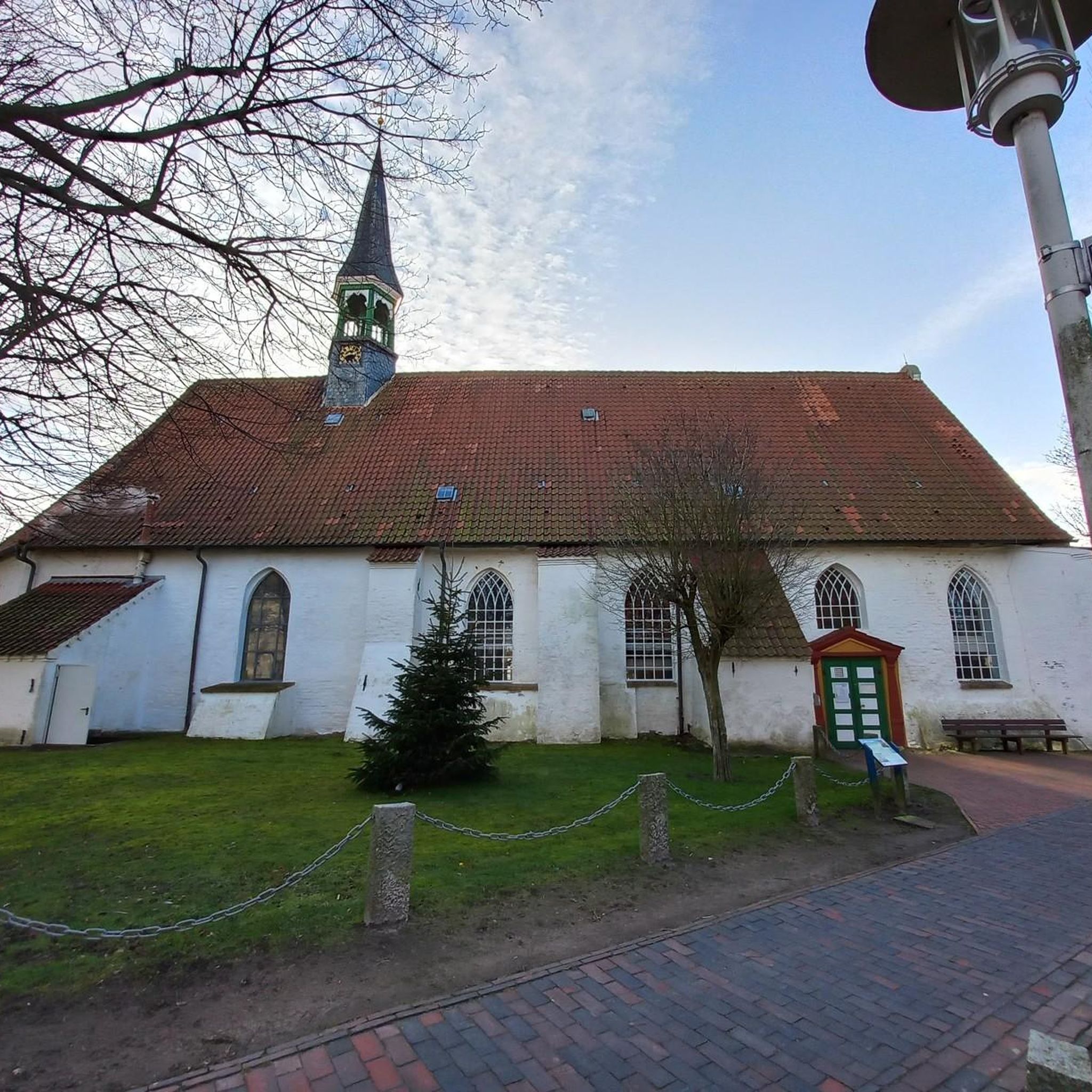
The first mentions of a place of worship in Tuffé refer to the Sainte-Marie church of the abbey and then the priory, from the 7th century. The creation of the parish of Tuffé is perhaps contemporary or later but currently not documented. Could the priory’s Sainte-Marie church, mentioned much earlier than the Saint-Pierre church, also have once been the parish church of Tuffé? Could the embryo of the current parish church be this private chapel that Hugues Doubleau gave to the abbey with the Sainte-Marie church at the beginning of the 11th century, according to the cartulary of the Saint-Vincent abbey in Le Mans ? In any case, the parish is only attested late by texts (beginning of the 12th century in the same cartulary), but the non-oriented plan of the church, as well as the term Saint-Pierre, argue for the age of the building. The addition of Saint-Paul to the term seems very late, even abusive, since the archival documents systematically refer to a Saint-Pierre church, as does the decoration of the building in the 19th century. If this is an error, it was perhaps induced by Julien-Rémy Pesche at the beginning of the 19th century. The oldest part of the current building is the nave, much remodeled subsequently but the base of the walls of which shows in places a structure made of small rubble stones from the Romanesque period at the latest. But above all, the north gable wall and the first bay of the gutter walls show traces of openings and corner chains made of bricks alternating with limestone cut stones. This formula, rare if not unique in Perche Sarthois, is debated as to its dating. Some historians see it as a testimony to Carolingian architecture. Others, more cautious, put forward an archaic dating of the 11th century, where the use of brick alternating with stone would be an economic choice rather than an aesthetic one: this would explain a certain irregularity in the implementation, particularly in the arch of the old door of the north gable wall. The same uncertainty hangs over the addition of the buttresses and the opening of the current north gate. The nave is covered with a new framework and a spire and the paneling was installed in 1604 as evidenced by the signature (repainted in 1885) “In 1604 this Church was labruchée – Tomas Mabile attorney of the Fabrique de Séans ". The dating of the other parts of the church is not much easier. The construction of the east chapel (presbytery side) is not in too much doubt, the Renaissance decoration of the door to the street and the cupboard, although crude, indicates the middle of the 16th century. This chapel, dedicated to the Virgin, belonged to the lords of Chéronne. Its western counterpart (square side), dedicated to the Sacré-Cœur and built by the lords of Ramée, is less easy to date due to lack of ancient decor. This chapel could have been built shortly before or shortly after that of Chéronne, but undoubtedly not simultaneously, as evidenced by the slight asymmetry of the roofs and the different profile of the structural members. The apse, generally considered to also date from the 16th century, could only be from the 3rd quarter of the 18th century, as a bundle of clues suggests: the axial wall left blind probably to accommodate an altarpiece, the plan burrow made between 1757 and 1759 which still shows a circular apse undoubtedly Romanesque, as well as a document from 1775, indicating that the priest "would have had the necessary and pleasant works done to the great altar of the said church caused by the demolition and construction that Mrs de Saint-Vincent would have had the gable of the said church made. The sacristy would be a 17th century addition.
0
0
The first mentions of the Saint-Germain church in Sceaux-sur-Huisne appear in the cartulary of the Saint-Vincent abbey in Le Mans: around 1050, Bouchard de Théligny gave the Sceaux church land and a meadow located at proximity. At this time, the building, then "in bad woods", was rebuilt in stone. The nave is considered to be the oldest part of the church and dates back to the 11th century, but it is in reality difficult to date due to multiple alterations and even reconstructions. The masonry shows several repetitions and a confused assembly of elements which could come from older buildings, such as the remains of the Gallo-Roman villa which was exhumed at the end of the 19th century in the valley (small regularly cut rubble stones, debris of roof tiles). There are also traces of old openings, such as a door opening onto the priory. Although it is probable, there is no element to formally identify the Romanesque construction. The current openings are later, such as the small Gothic bay in the western wall and perhaps the south door (15th century?) and the other openings probably made around the first half of the 18th century. Significant masonry and structural work is actually mentioned in the nave in 1709. The choir and the bell tower were probably built in the first half of the 16th century, in a late Gothic style. The factory accounts mention various works in the 1530s and 1540s: roofing, construction of a ballet, stained glass window of the "grant window"... The tower was perhaps built in several stages if we rely on the changes masonry nets in the elevation. It was visibly remodeled at the end of the 16th century or the beginning of the 17th century, as indicated by the semi-circular openings, one of which was walled up. From 1570, the du Bouchets were lords of Sceaux and had their coat of arms, "azure with three rings of sand", affixed to the keystone of the chapel under the bell tower (since replaced by a flower) and on the vault paneled nave and choir. As for the windows on the north wall of the choir, they were undoubtedly open in the 18th century like those in the nave. During the Revolution, the church was seized as national property and sold to a certain René Neveu in September 1796, excluding the furniture. The two bells installed in 1719 and the fittings were handed over to the administration to be melted down. The church was returned to the town after the death of Mr. Neveu in the 1810s. The church underwent some occasional maintenance work (mainly on the roof) in the 19th and 20th centuries, but not an overall restoration. In 1831, an estimate was drawn up to enlarge the church with a chapel, in order to better accommodate all parishioners: this project was not carried out. The same year, the flag which still covers the bell tower was put up. The current sacristy (Gambert architect) was added in 1862 to replace another very dilapidated one, blocking a window now only visible from the inside. The second half of the 19th century also saw the clearing of the surroundings of the church, cluttered with lean-tos and hidden by an imposing washhouse finally moved in 1870. The last work, concerning the roofing, was carried out in 1989. The church of Sceaux-sur-Huisne has been listed as a Historic Monument since 1926.
0
0
자주 묻는 질문
Mulsanne 주변에는 교통량이 적은 로드 사이클링 코스가 얼마나 있나요?
Mulsanne 주변에는 600개 이상의 전용 교통량이 적은 로드 사이클링 코스가 있어 모든 레벨의 라이더에게 다양한 선택지를 제공합니다. 탐험할 수 있는 쉬운 코스 119개, 보통 난이도 코스 473개, 어려운 코스 38개가 있습니다.
Mulsanne 근처에 초보자에게 친화적인 교통량이 적은 로드 바이크 코스가 있나요?
네, Mulsanne은 초보자나 편안한 라이딩을 원하는 분들에게 완벽한 쉬운 코스를 많이 제공합니다. 훌륭한 옵션 중 하나는 스타드 마리-마르뱅(Stade Marie-Marvingt)에서 출발하는 랑푸르네리 – 파리네-레베크(Parigné-l'Évêque) 릴레트 루프로, 약 45km 길이이며 고도 변화가 거의 없습니다.
Mulsanne 주변의 교통량이 적은 로드 사이클링 코스에서는 어떤 풍경을 기대할 수 있나요?
Mulsanne 주변의 코스는 다양한 풍경을 가로지릅니다. 고요한 강 계곡, 베르세 숲(Forêt de Bercé)과 같은 광대한 국립 숲, 그림 같은 보카주(작은 들판과 숲)를 찾을 수 있습니다. 일부 코스는 전설적인 라 사르트 서킷(Circuit de la Sarthe) 근처를 사이클링하는 독특한 경험도 제공합니다.
Mulsanne 지역에 순환형 교통량이 적은 로드 바이크 코스가 있나요?
Mulsanne 주변의 많은 교통량이 적은 로드 사이클링 코스는 루프로 설계되어 출발점과 도착점이 같습니다. 예를 들어, 스타드 마리-마르뱅(Stade Marie-Marvingt)에서 출발하는 물랭 사르 섬 – Mulsanne 직선 루프는 46.7km 길이의 쉬운 순환 코스입니다.
교통량이 적은 로드 사이클링 코스를 따라 어떤 명소나 관심 지점을 볼 수 있나요?
사이클링을 하면서 몇 가지 흥미로운 명소를 발견할 수 있습니다. L'Épau 수도원 방문, 자연의 아치(Arche de la Nature)의 자연의 아름다움 탐험, 또는 물랭사르 섬(Moulinsart Island)을 지나는 것을 고려해 보세요. 역사적인 도시 르망(Le Mans)도 근처에 있어 문화적 통찰력을 제공합니다.
Mulsanne에서 교통량이 적은 로드 바이크를 타기 가장 좋은 계절은 언제인가요?
이 지역은 일반적으로 봄부터 가을까지 사이클링하기 좋습니다. 봄에는 꽃이 만발한 풍경을 즐길 수 있고, 여름에는 긴 라이딩을 위한 따뜻한 날씨를 제공합니다. 가을에는 아름다운 단풍을 볼 수 있습니다. 겨울 사이클링도 가능하지만, 더 서늘한 기온과 잠재적으로 습한 날씨에 대비해야 합니다.
숙련된 라이더를 위한 더 길고 도전적인 교통량이 적은 로드 사이클링 코스가 있나요?
네, 도전을 추구하는 숙련된 사이클리스트를 위해 몇 가지 더 길고 까다로운 코스가 있습니다. 아르나주(Arnage)에서 출발하는 페르세-쉬르-사르트 다리 – 바주(Bazouges) 루프는 상당한 고도 상승이 있는 어려운 123.5km 코스로, 하루 종일의 모험에 완벽합니다.
다른 로드 사이클리스트들은 Mulsanne의 교통량이 적은 코스에 대해 가장 무엇을 즐기나요?
이 지역은 komoot 커뮤니티에서 69개의 리뷰에서 평균 4.2점의 높은 평가를 받고 있습니다. 사이클리스트들은 종종 조용한 도로, 역사적인 라 사르트 서킷(Circuit de la Sarthe) 근처를 달릴 수 있는 독특한 기회, 그리고 숲에서 강 계곡에 이르는 다양한 풍경을 칭찬합니다.
대중교통을 이용하여 Mulsanne 근처의 교통량이 적은 로드 사이클링 코스에 접근할 수 있나요?
Mulsanne 자체는 작은 코뮌이지만, 대중교통으로 잘 연결된 더 큰 도시인 르망(Le Mans)은 더 넓은 사르트(Sarthe) 지역의 많은 코스에 좋은 출발점이 됩니다. 르망에서 다양한 교통량이 적은 코스의 시작점까지 사이클링할 수 있습니다.
중급 라이더를 위한 보통 난이도의 교통량이 적은 로드 사이클링 코스가 있나요?
물론입니다. 중급 라이더는 많은 적합한 코스를 찾을 수 있습니다. 아르나주(Arnage)에서 출발하는 랑푸르네리 루프는 63.1km 길이의 보통 난이도 코스로, 거리와 고도의 좋은 균형을 제공하며 지나치게 힘들지 않으면서도 보람 있는 라이딩을 선사합니다.
라 사르트 서킷(Circuit de la Sarthe)의 일부 구간을 달릴 기회가 있나요?
네, Mulsanne 근처 사이클링의 독특한 측면 중 하나는 전설적인 라 사르트 서킷(Circuit de la Sarthe)의 일부 구간, 특히 물랑 스트레이트(Mulsanne Straight)의 일부를 달릴 수 있다는 것입니다. 이 구간들은 연중 대부분 공공 도로이므로 사이클리스트들은 이 역사적인 트랙을 직접 경험할 수 있습니다. 서킷에 대한 자세한 정보는 르망 관광청(Le Mans Tourisme)에서 확인할 수 있습니다.
뮬산 주변에서 가장 인기 있는 명소


더 살펴보기
다른 지역의 최고의 로드 사이클링 경로를 살펴보세요.
