이칭턴 주교 주변 최고의 버스 정류장 출발 하이킹 & 워킹 코스
4.6
(517)
3,981
등산객
261
하이킹
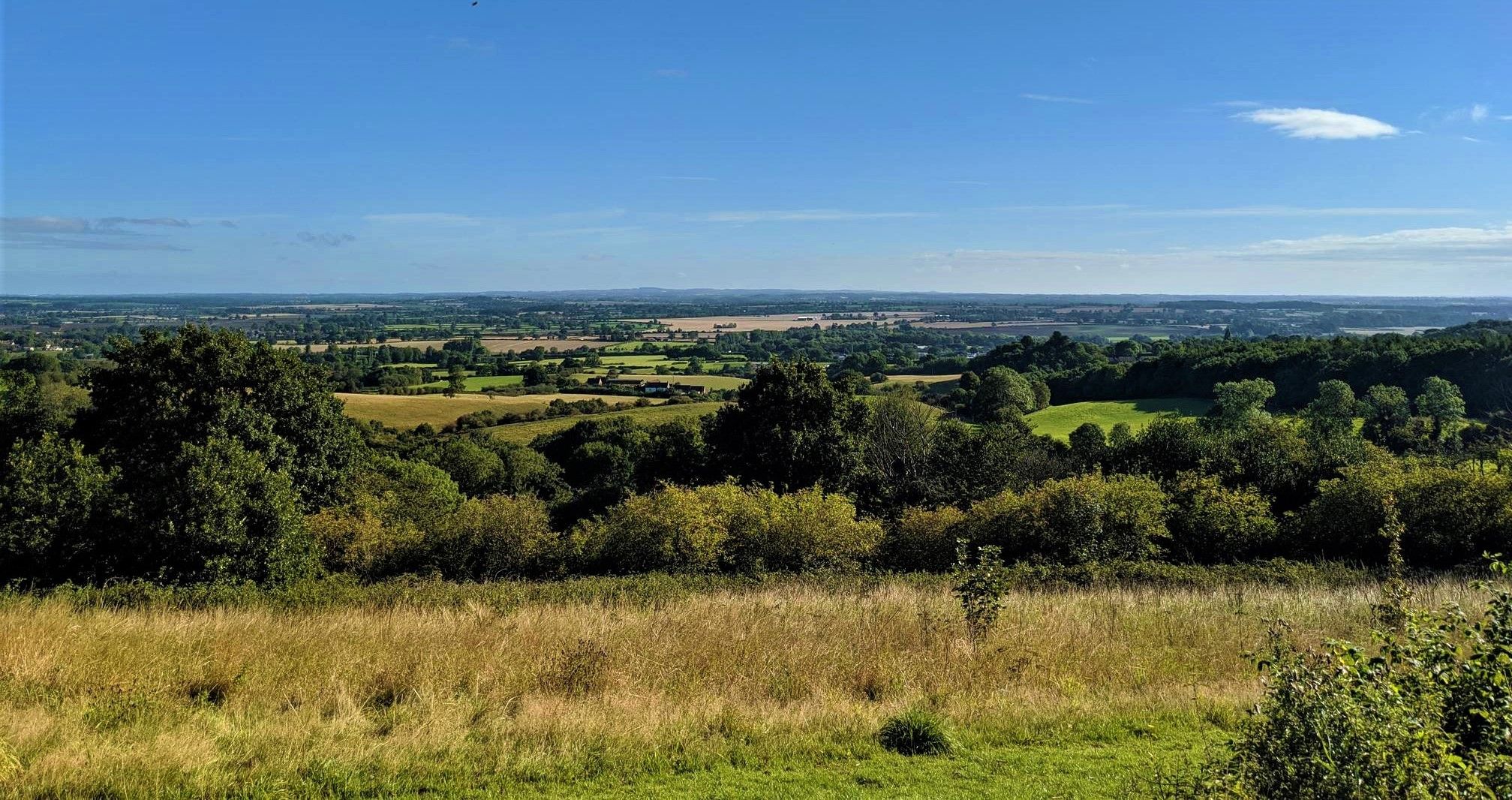
Bishops Itchington 주변의 버스 정류장 하이킹 트레일은 아웃도어 애호가들에게 다양한 풍경을 제공합니다. 이 지역은 오래된 석회석 채석장에서 형성된 고요한 호수, Yellow Land 및 Bishop's Hill과 같은 독특한 자연 보호 구역, 완만한 언덕을 특징으로 합니다. River Itchen을 포함한 강 계곡과 Grand Union Canal 구간도 다양한 경관에 기여합니다. 이 South Warwickshire 마을은 자연의 아름다움과 역사적으로 중요한 복원된 땅을 가로지르는 트레일 네트워크를 제공합니다.
Bishops Itchington 주변 최고의 버스 정류장 하이킹 트레일
- 가장 인기 있는 버스 정류장 하이킹 경로는 2시간 35분이 소요되는 6.1마일(9.9km) 길이의…
마지막 업데이트: 9월 7, 2026
5.0
(1)
8
등산객
보통 하이킹. 좋은 체력 필요. 실력과 관계없이 누구나 쉽게 갈 수 있는 길.
5.0
(2)
10
등산객
7.75km
02:01
60m
60m
보통 하이킹. 좋은 체력 필요. 실력과 관계없이 누구나 쉽게 갈 수 있는 길.

5.0
(1)
1
등산객
12.5km
03:14
80m
80m
보통 하이킹. 좋은 체력 필요. 실력과 관계없이 누구나 쉽게 갈 수 있는 길.
5
등산객
7.43km
01:57
60m
60m
초급용 하이킹. 모든 체력 수준에 적합. 실력과 관계없이 누구나 쉽게 갈 수 있는 길.
3.0
(1)
1
등산객
11.0km
02:52
70m
70m
보통 하이킹. 좋은 체력 필요. 실력과 관계없이 누구나 쉽게 갈 수 있는 길.
더 다양한 경로와 다른 탐험가들의 추천을 살펴보세요.
이미 komoot 계정이 있나요?
투어 추천은 다른 사람들이 komoot에서 완료한 수천 개의 활동을 바탕으로 구성되어 있습니다.
오늘 무료 계정으로 시작하세요
다음 모험이 기다리고 있어요.
이칭턴 주교 주변 인기 장소
이칭턴 주교 주변의 다른 모험

커뮤니티 팁

We had to double back on ourselves slightly to see the lakes, as they were hidden behind a hedge
0
1

Two wheatfields to cycle through, no problem. The final bit to the M40 crossing more overgrown so a bit of Hike A Bike. one point appeard closed off by barbed wire but overgrown willow on path leading to B'way gate to bridge over the Mway
0
0

The Peyto Gateway on the north side of St Giles Church, Chesterton, Warwickshire, England, used by the Peyto Family when their manor house was there. Gateway. Probably 1630's. For Sir Edward Peyto and copy of a design by Inigo Jones. English bond red brick with moulded, cut and rubbed brick. Classical style. Round arch with keyblock, pilasters, entablature and pediment. Pilasters, wall, and arch have intermittent rustication. It is likely that this gateway was built at about the same time as Chesterton Windmill (q.v.). It is a close copy, at about three-quarters scale, of one of the two churchyard gateways flanking Jones' St Paul, Covent Garden, of 1631, see Vitruvius Britannicus (ii, 1717, pl 21-2).
0
0
Kingston Pools has closed its doors to angling following the sale of the 360-acre arable farm for development. A fishery for more than 40 years, it is planned that the four pools will form part of a green amenity space once housing development has been completed on the site.
0
0
The parish church of All Saints, Harbury. It was first built in the Medieval period, but rebuilt and much altered in more recent times (Imperial period). The church is situated to the south east of Harbury Hall. Church. C13. Tower later C13, with top part possibly 1811. Restored and enlarged 1873: nave largely rebuilt, south aisle widened, north aisle and organ chamber/vestry added. Chancel, south aisle and tower of squared coursed limestone rubble. Chancel has some sandstone and sandstone dressings. South aisle has ironstone dressings. Upper part of tower of Flemish bond brick. Nave, north aisle and chapel of regular coursed limestone with ironstone dressings. Tile roofs have coped stone gable parapets with weatherings and kneelers and remains of cross finials. Stone stack. Aisled nave, chancel, north chapel and south-west tower. 2-bay chancel, 5-bay nave. Buttresses of 2 offsets throughout. Chancel has splayed plinth. Diagonal buttresses. C19 geometrical and bar tracery and hood moulds with block stops throughout. 3-light east window. Small studded plank south door in chamfered surround. 2 straight-headed 2-light traceried windows. Small C13 low-side chamfered lancet. C13 north lancet. South aisle has diagonal and south buttresses. 3-light east window. C19 Early English style double-leaf south door in angle abutting tower has inner continuous roll moulding and roll moulded arch on nook shafts. Two 3-light windows. Nave has shallow south-west and large north-west buttress. 4-light west window. Organ chamber/vestry has 3-light east window. Chamfered north doorway. Lateral stack with offsets. North aisle has east angle, west diagonal and north buttresses. Doorway in fourth bay, similar to south side, has moulded arch with nailhead. 3-light windows; second bay has reticulated tracery. 3-light west window. Tower of 3 stages has massive west setback buttresses of 4 offsets. South buttress has painted sundial. South east clasping buttress. South and west lancets. Second stage, partly of 1811, has south clock face of c.1835 set in lozenge panel. Small round-arched window, largely of brick, above. Small blocked west window. Moulded string course. Third stage has clasping buttresses. Small round-arched bell openings with wooden louvres and cut-out quatrefoils. Plain cornice. Crenellated parapet. Interior: chancel has C19 hammerbeam roof. Wide segmental-pointed arch of 2 chamfered orders to organ chamber and vestry. Wide chancel arch of 2 continuous chamfered orders. 3-bay south arcade of c.1300, of 2 chamfered orders with bar stops, and octagonal piers with moulded capitals. Similar 5-bay north arcade of 1873. Wide south tower arch of 3 chamfered orders, the outer segmental-pointed and the inner with moulded imposts. Nave, aisles and chapel have arched braced queen strut roofs of 1873, with wind braces to nave. Organ chamber has arch to aisle of 2 chamfered orders, the outer segmental-pointed. South aisle has timber internal porch. Renewed west arch to tower of 3 chamfered orders, the inner with moulded imposts, the outer segmental pointed. Fittings: mostly of c.1873. Carved stone reredos. Chancel has encaustic tiled floor. Octagonal font. Timber octagonal pulpit, north aisle screen and benches. Chancel and south aisle have mid C18 communion rails with column-on-vase balusters, those in aisle possibly imported from elsewhere. Early C17 carved chest. Stained glass: east and chancel north windows c.1873. Chancel south east 1890, centre 1899, south-west 1897. Tower south c.1873. Monuments: tower east: early C18. Wall monument with Corinthian pilasters. The work carried out in 1873 cost £4,000.
0
0
The windmill is a tower type built between 1802 and 1812, using derelict stone from Chesterton Manor. When built, the windmill had a stone lower part, while the upper part was a red brick tower with batter. It had an Iron sheeted boat shaped cap with wheel and lulling gear, windshaft with poll end and brake wheel, four sails with staging, three pairs of stones and machinery. It is a six storey building with a total height of 70 feet. 20th century history The windmill ceased working by sail in 1912 and was powered firstly by a steam engine, then by an oil engine and from the 1930s. Finally, it was powered by electricity until 1952 when it ceased milling. The stocks were removed in 1934. The boat shaped cap was removed in 1982 and replaced with a larger looking pitched roof. It became a Grade II listed building on 7th January 1952, and in 1988 the lower floors became part of a house.
0
0
The Church was founded by Richard the Forester in the 11th Century and presented in Richard II’s time to the Barons of Kenilworth, by William Croc. It later came under the Abbots of Worcester, but by 1693 was under the Cathedral Church of Lichfield. It is built of Limestone and Northampton stone, in the perpendicular style, but has been altered by successive generations. It was generally restored in 1862. The walls are three foot thick and have been buttressed up, externally. The most notable feature is the length of the embattlemented parapet, which runs the whole length of the Chancel. The square tower was built of old material in the 17th Century. The history of Chesterton Church is closely linked to that of the Peyto family who are said to have come over with William the Conqueror. Although they had previously owned land at Chesterton, it was not until the middle of the 14th Century that they came to live in the village. They built their big house to the north west of the church and established the fish ponds, over which they had to cross on their way to worship. Their later and more stylish Manor House built on the hill to the north of the church was pulled down in 1802. The Peyto’s were prominent men of their time. They included lawyers, soldiers and Members of Parliament. In the Civil War, Sir Edward Peyto supported Cromwell’s Parliamentarians, successfully leading the defence of Warwick Castle against the Royalists. The Peyto line ended in 1746 and the Manor and the Estate passed to the Verney family to whom they were linked by an earlier marriage. The Verneys are still the Patrons of Chesterton Church, through Lord Willoughby de Broke, 21st. Baron. In Victorian times heating was from three open fires in the central aisle with an under floor flue leading to a chimney within the Tower. For many years Chesterton was the Mother Church of the district, with coffins being carried from as far away as Bishop’s Itchington for burial. The registers date from 1538 and are now held in the County Archives.
0
0
자주 묻는 질문
Bishops Itchington 주변에는 버스 정류장에서 접근 가능한 하이킹 트레일이 몇 개나 있나요?
Bishops Itchington 주변 버스 정류장에서 접근 가능한 하이킹 루트는 10개 이상이며, 다양한 체력 수준에 맞는 여러 경험을 제공합니다. 현지 시골 풍경을 탐험할 수 있는 쉬운 루트 7개와 보통 난이도 루트 5개가 있습니다.
Bishops Itchington 버스 정류장에서 출발하는 쉽고 가족 친화적인 하이킹 코스가 있나요?
네, Bishops Itchington에는 가족에게 완벽한 여러 쉬운 코스가 있습니다. 예를 들어, 이 Bishops Itchington 출발 하이킹 루프는 약 1시간 안에 완료할 수 있는 3.7km의 쉬운 트레일로, 이 지역의 자연의 아름다움을 부드럽게 소개합니다. 독특한 석회암 초지로 알려진 Yellow Land Nature Reserve 또한 쉬운 하이킹 루트를 제공합니다.
Bishops Itchington 버스 정류장에서 시작하는 순환 산책로를 찾을 수 있나요?
Bishops Itchington 주변의 많은 트레일은 순환형이므로 버스 정류장에서 편리하게 하이킹을 시작하고 끝낼 수 있습니다. 인기 있는 옵션 중 하나는 다양한 풍경을 가로지르는 보통 난이도의 9.8km 루트인 Bishops Bowl Lakes – St. Giles Church, Chesterton 루프입니다.
버스 정류장 하이킹 트레일을 따라 어떤 자연 지형이나 랜드마크를 볼 수 있나요?
트레일은 종종 중요한 자연 및 역사 유적지를 지나갑니다. 오래된 석회암 채석장에서 형성된 고요한 Bishops Bowl Lakes를 탐험하거나 Yellow Land Nature Reserve의 독특한 생태계를 발견할 수 있습니다. 더 넓은 지역에는 구불구불한 언덕, 강 계곡, Grand Union Canal 구간도 있습니다.
Bishops Itchington 근처에 멋진 전망을 제공하는 하이킹 코스가 있나요?
네, 이 지역의 구불구불한 언덕은 멋진 경치를 감상할 수 있는 훌륭한 기회를 제공합니다. 예를 들어 Bishop's Hill Nature Reserve에서는 Leicestershire와 Northamptonshire까지 뻗어 있는 광대한 전망을 즐길 수 있습니다. Bishops Bowl Lakes – Harbury Windmill 루프와 같은 많은 루트는 Harbury Windmill과 같은 랜드마크를 향한 탁 트인 들판 전망을 제공합니다.
Bishops Itchington 주변의 트레일에 대해 다른 하이커들이 가장 즐기는 점은 무엇인가요?
이 지역은 komoot 커뮤니티에서 440개 이상의 평가에서 평균 4.59점이라는 높은 점수를 받았습니다. 리뷰어들은 종종 다양한 풍경, 호수의 고요함, 다양한 능력에 맞는 잘 관리된 보행자 도로망을 칭찬합니다.
Bishops Itchington에서 버스로 접근 가능한 길고 보통 난이도의 하이킹 코스가 있나요?
더 긴 도전을 원하는 분들을 위해 몇 가지 보통 난이도의 루트가 있습니다. Bishops Itchington 출발 하이킹 루프는 12.4km이며 약 3시간 15분이 소요되어 시골을 더 길게 탐험할 수 있습니다.
Bishops Itchington 버스 정류장에서 접근 가능한 자연 보호 구역이나 야생 동물 서식지가 있나요?
물론입니다. Yellow Land Nature Reserve는 마을 바로 옆에 있으며 독특한 석회암 초지 서식지와 곤충 생태를 관찰할 수 있는 쉬운 루트를 제공합니다. 근처에 있는 Leam Valley Local Nature Reserve는 River Leam을 따라 야생 동물의 안식처이며, 킹피셔나 수달을 볼 수도 있습니다.
Bishops Itchington 주변을 하이킹하기에 가장 좋은 시기는 언제인가요?
Bishops Itchington은 연중 즐거운 하이킹을 제공합니다. 봄에는 야생화와 새싹이 돋아나고, 가을에는 활기찬 단풍을 볼 수 있습니다. 여름은 낮이 길어 이상적이며, 추운 날씨에 대비한다면 겨울 산책도 특히 호수와 자연 보호 구역 주변에서 그림처럼 아름다울 수 있습니다.
버스 정류장 트레일을 따라 역사 유적지나 관심 지점이 있나요?
네, 이 지역은 역사적으로 풍부합니다. 하이킹을 하면서 Bishops Bowl Lakes를 형성하는 오래된 석회암 채석장과 같이 이 지역의 산업 과거의 역사적 흔적을 만날 수 있습니다. 더 멀리 떨어진 곳에서는 일부 긴 루트나 짧은 버스 노선을 통해 Battle of Edgehill Site 또는 역사적인 All Saints' Church, Burton Dassett를 방문할 수 있습니다.
Kingston Pools 지역을 포함하는 하이킹 코스를 찾을 수 있나요?
네, 이 지역을 통과하는 특정 루트가 있습니다. Bishops Itchington 출발 Kingston Pools 루프는 Kingston Pools를 포함한 지역 풍경을 통과하는 즐거운 여정을 제공하는 보통 난이도의 10.3km 하이킹 코스입니다.
이칭턴 주교 주변에서 가장 인기 있는 명소


더 살펴보기
다른 지역의 최고의 하이킹를 살펴보세요.
