4.6
(63)
4,253
자전거 타는 사람
144
라이딩
Keine verkehrsreichen Straßenradrouten rund um Diest profitieren von einer abwechslungsreichen Landschaft, die eine Mischung aus flachen Abschnitten und sanften Hügeln in der Region Hageland und den Diest Kempen bietet. Die Gegend zeichnet sich durch gut ausgebaute Wege und ein umfassendes Radknotennetz aus, das die Navigation erleichtert. Straßenradler können abwechslungsreiches Gelände erwarten, einschließlich sanfter Anstiege und Abfahrten, die für ansprechende Fahrten durch malerische Landschaften sorgen. Diese Infrastruktur unterstützt eine Reihe von Radfahrerlebnissen, von gemütlichen Fahrten bis hin zu anspruchsvolleren Unternehmungen.
마지막 업데이트: 5월 3, 2026
3.8
(4)
191
자전거 타는 사람
54.7km
02:26
130m
130m
보통 도로 자전거 타기. 좋은 체력 필요. 투어 중 라이딩하기 어려운 비포장 구간이 있을 수 있음.
138
자전거 타는 사람
77.0km
03:27
250m
250m
보통 도로 자전거 타기. 좋은 체력 필요. 투어 중 라이딩하기 어려운 비포장 구간이 있을 수 있음.
무료 회원 가입
5.0
(1)
114
자전거 타는 사람
71.6km
03:38
500m
500m
보통 도로 자전거 타기. 좋은 체력 필요. 투어 중 라이딩하기 어려운 비포장 구간이 있을 수 있음.
5.0
(3)
123
자전거 타는 사람
50.8km
02:15
140m
140m
보통 도로 자전거 타기. 좋은 체력 필요. 지면 대부분이 잘 포장되어 있고 라이딩하기 쉬움.
112
자전거 타는 사람
88.1km
04:18
480m
480m
보통 도로 자전거 타기. 좋은 체력 필요. 투어 중 라이딩하기 어려운 비포장 구간이 있을 수 있음.
더 다양한 경로와 다른 탐험가들의 추천을 살펴보세요.
무료 회원 가입
이미 komoot 계정이 있나요?
투어 추천은 다른 사람들이 komoot에서 완료한 수천 개의 활동을 바탕으로 구성되어 있습니다.
오늘 무료 계정으로 시작하세요
다음 모험이 기다리고 있어요.
로그인 또는 가입하기
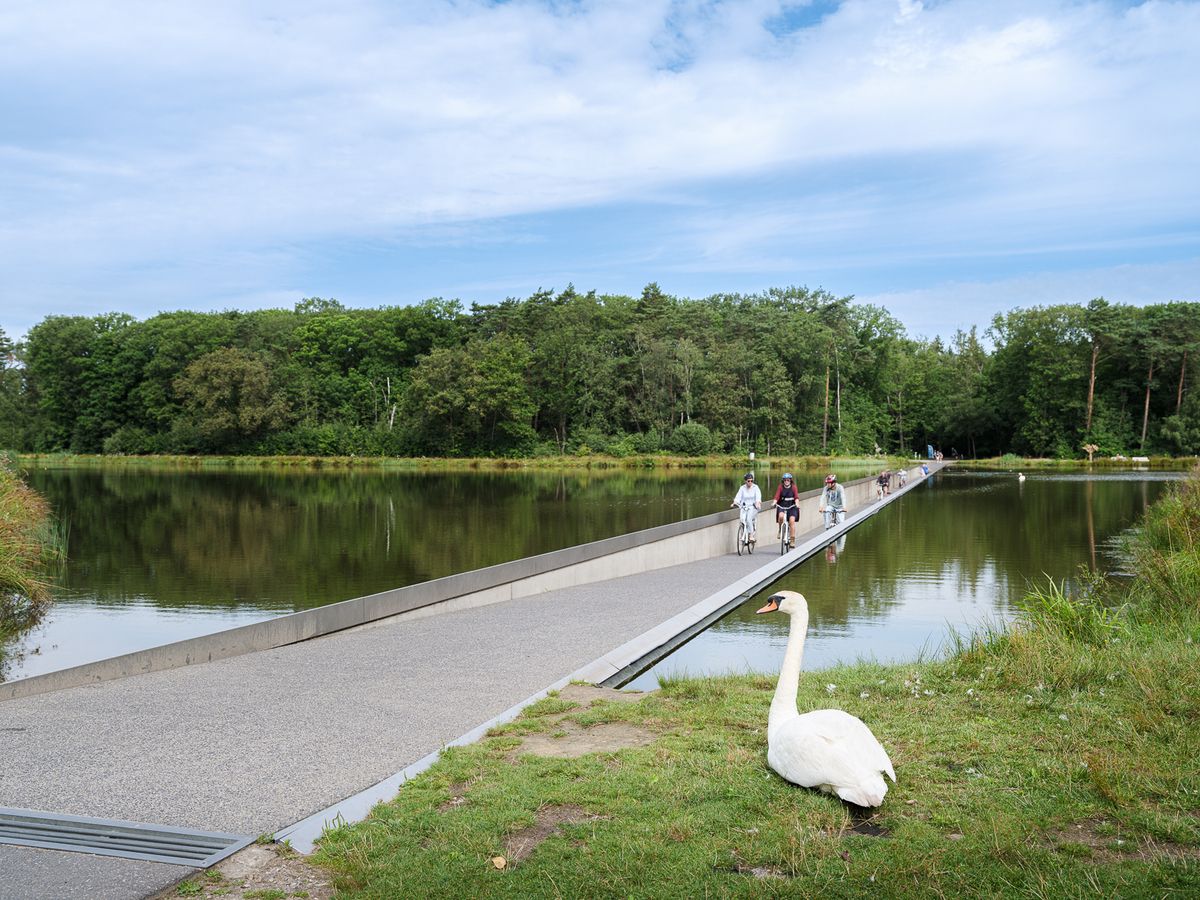
The Schulensmeer is the largest inland lake in Flanders. Numerous benches invite you to take a break.
5
0
Nice segment from the Gempe mill to blast up with the big gear.
0
0
For almost 900 years, the Grote Markt (main market square) in Diest has been the vibrant heart of the Demer city. Today, it's home to numerous cafés with inviting terraces offering excellent views of the town hall and St. Sulpitius Church. The market square is surrounded by beautiful, often centuries-old, guildhalls and other historic buildings. A visit to Diest isn't complete without a visit to the Grote Markt. Want to know more? Click through to the source: https://www.diest-online.be/grote-markt/
6
0
Steep climb that starts at the church of Molenbeek.
0
0
Vlierbeek Abbey is located northeast of Leuven. To the south, it borders the Negenbunders and the Molenbeek valley, which, until the first half of the 20th century, connected to the then-existing part of the Lovenarenbroek. The avenues, the abbey site, and the surrounding fields have largely been preserved over the past two centuries. The priory was founded by the Benedictines of Affligem in 1127. The first monastic buildings were erected from 1158 onwards, and the first church was built in 1170. During the Wars of Religion, the abbey was destroyed. Reconstruction did not begin until 1642. A second building campaign began in 1776, during which only the church and the abbot's quarters were completed. The ruins of the original church tower still exist. The abbey was dissolved in 1796, but thanks to the Concordat, the first monks were able to return in 1801. In 1829, Vlierbeek became an independent parish. The abbey church is a defining feature: a remarkably homogeneous building in the Classical style, a series of geometric volumes devoid of any ornamentation. Adjacent to the church is the cemetery, which is still in use. In the garden adjacent to the church, we still find remains of the cloister, rebuilt in the 17th century. The old abbot's quarters date from the 16th century but have been renovated several times. In the vegetable garden, a 17th-century gazebo with a rococo stucco ceiling still stands, used as a chapel since 1963. Several outbuildings adjacent to the western enclosure wall were converted into private residences in the 19th century. The 18th-century carriage house was also converted into a residence. Farmhouse buildings from the 17th century stand against the northern fence, which originally housed a bakery and brewery. The 17th-century northern gate was originally equipped with a drawbridge, the ironwork of which has been preserved. The western gate with the gatehouse dates from the 16th century. Behind the farm, traces of the Baroque garden and its associated canal system can still be seen. The plot of the former 17th-century parterre garden is still recognizable. Also worth mentioning are the garden belonging to the rectory and the garden near the former coach house, as well as remnants of the 18th-century moated island garden in the northeast corner, remnants of hedges, the old cloister, and the vegetable garden. Inventory of Immovable Heritage: Vlierbeek Abbey Domain, https://id.erfgoed.net/erfgoedobjecten/135101
4
0
Vlierbeek Abbey is located northeast of Leuven. To the south, it borders the Negenbunders and the Molenbeek valley, which, until the first half of the 20th century, connected to the then-existing part of the Lovenarenbroek. The avenues, the abbey site, and the surrounding fields have largely been preserved over the past two centuries. The priory was founded by the Benedictines of Affligem in 1127. The first monastic buildings were erected from 1158 onwards, and the first church was built in 1170. During the Wars of Religion, the abbey was destroyed. Reconstruction did not begin until 1642. A second building campaign began in 1776, during which only the church and the abbot's quarters were completed. The ruins of the original church tower still exist. The abbey was dissolved in 1796, but thanks to the Concordat, the first monks were able to return in 1801. In 1829, Vlierbeek became an independent parish. The abbey church is a defining feature: a remarkably homogeneous building in the Classical style, a series of geometric volumes devoid of any ornamentation. Adjacent to the church is the cemetery, which is still in use. In the garden adjacent to the church, we still find remains of the cloister, rebuilt in the 17th century. The old abbot's quarters date from the 16th century but have been renovated several times. In the vegetable garden, a 17th-century gazebo with a rococo stucco ceiling still stands, used as a chapel since 1963. Several outbuildings adjacent to the western enclosure wall were converted into private residences in the 19th century. The 18th-century carriage house was also converted into a residence. Farmhouse buildings from the 17th century stand against the northern fence, which originally housed a bakery and brewery. The 17th-century northern gate was originally equipped with a drawbridge, the ironwork of which has been preserved. The western gate with the gatehouse dates from the 16th century. Behind the farm, traces of the Baroque garden and its associated canal system can still be seen. The plot of the former 17th-century parterre garden is still recognizable. Also worth mentioning are the garden belonging to the rectory and the garden near the former coach house, as well as remnants of the 18th-century moated island garden in the northeast corner, remnants of hedges, the old cloister, and the vegetable garden. Inventory of Immovable Heritage: Vlierbeek Abbey Domain, https://id.erfgoed.net/erfgoedobjecten/135101
3
0
Northeast of the Sint-Jansberg monastery complex on Schomstraat lies the Oude Pastorij farm, a U-shaped farm dating from the first half of the 19th century, with the open side of the yard facing the street. The brick buildings under gable roofs (Flemish pantiles), hipped on the side wings, are situated around a rectangular yard separated from the street by a long wall and several recent service buildings. The house is located in the center of the central wing, a double house of four bays and two stories on a raised ground floor with a pitched plinth. The rectangular windows have wooden lintels and painted sills, and the rectangular door has a wooden lintel. The house is flanked on both sides by slightly projecting stables of three bays each, with a modified layout. Spacious transverse barns are housed in the perpendicular wings, each of three bays and equipped with an anchored brick basket-arch gate. These volumes feature arched windows and rectangular doors beneath a wooden lintel. Inventory of Immovable Heritage: Carthusian Monastery of Sint-Jansberg and its surroundings, https://id.erfgoed.net/erfgoedobjecten/302683
4
0
디에스트는 차량 통행이 거의 없는 다양한 로드 사이클링 코스를 제공합니다. 최소한의 교통량으로 로드 바이크에 맞춰 특별히 설계된 140개 이상의 코스를 찾을 수 있으며, 쉬운 코스부터 도전적인 코스까지 다양합니다.
디에스트 주변의 교통량이 적은 코스는 다양한 지형을 특징으로 합니다. 하겔란트 지역의 특징인 평지 구간과 완만한 언덕이 혼합되어 있습니다. Chartreuzenberg Climb – Vlierbeek Abbey loop from Diest와 같은 일부 코스에는 상당한 오르막이 포함되어 있으며, 다른 코스는 더 완만한 경사를 제공합니다.
네, 디에스트 주변에는 쉬운 교통량이 적은 로드 사이클링 코스가 여러 개 있습니다. 대부분의 코스는 보통 수준이지만, 편안한 라이딩이나 로드 사이클링을 처음 접하는 분들에게 완벽한 쉬움 등급의 코스 4개를 찾을 수 있습니다. 이 코스들은 잘 관리된 포장 도로를 따라가는 경우가 많습니다.
많은 코스가 그림 같은 풍경을 제공하며 자연 명소를 지나갑니다. Paalse Plas – Schulensmeer loop from Diest에서 볼 수 있는 고요한 Schulensmeer를 만나거나 디에스트 켐펜의 풍경을 즐길 수 있습니다. 이 지역은 연못과 De Kuilen bird hide와 같은 조류 관찰대를 포함한 다양한 자연의 아름다움으로 유명합니다.
물론입니다. 도전을 추구하는 숙련된 라이더를 위해 디에스트 주변에는 어려운 교통량이 적은 로드 사이클링 코스가 10개 있습니다. 이 코스들은 종종 상당한 고도 상승과 더 긴 거리를 특징으로 하며, 거의 88km에 달하는 상당한 오르막이 있는 Maagdentoren Zichem – Demer Towpath loop from Diest와 같은 코스가 있습니다.
사이클링은 연중 즐길 수 있지만, 디에스트에서는 유리한 날씨 조건 때문에 6월과 8월이 로드 사이클링에 특히 인기가 많습니다. 하지만 잘 관리된 길 덕분에 봄과 가을에도 많은 코스를 이용할 수 있으며 아름다운 계절 경관을 제공합니다.
네, 디에스트 주변의 교통량이 적은 로드 사이클링 코스 중 상당수는 루프로 설계되어 있어 같은 지점에서 시작하고 끝낼 수 있습니다. 예를 들어, 편리한 왕복 코스를 제공하는 Market Square, Diest – Schulensmeer loop from Diest와 같은 코스가 있습니다.
디에스트의 교통량이 적은 로드 사이클링 코스는 코무트 커뮤니티에서 높이 평가받고 있으며, 60개 이상의 리뷰에서 평균 별점 5점 만점에 4.55점을 받았습니다. 사이클리스트들은 조용한 도로, 다양한 풍경, 차량 방해 없이 지역의 자연의 아름다움을 탐험할 수 있는 기회를 자주 칭찬합니다.
네, 코스는 종종 역사와 문화가 풍부한 지역을 통과합니다. 예를 들어, Houterenberg Climb – Entrance Abbey Tongerlo loop from Diest는 역사적인 통에를로 수도원 근처로 안내합니다. 이 지역에는 매력적인 마을과 오래된 농장도 있어 지역 유산에 대한 통찰력을 제공합니다.
디에스트의 교통량이 적은 로드 사이클링 코스의 길이는 상당히 다양합니다. 짧고 쉬운 라이딩부터 길고 도전적인 투어까지 다양한 코스를 찾을 수 있습니다. 예를 들어, Paalse Plas – Schulensmeer loop from Diest와 같은 코스는 약 55km이며, 다른 코스는 거의 90km까지 확장될 수 있습니다.
다른 지역의 최고의 로드 사이클링 경로를 살펴보세요.
무료로 가입하기