베치턴에서 가장 멋진 7개의 천연기념물
천연기념물을 방문하여 베치턴의 아름다운 풍경을 만나보세요. 베치턴에 있는 7
개의 천연기념물과 상세 정보를 살펴본 후에 방문하고 싶은 천연기념물을 다음 모험 계획에 추가해보세요!
마지막 업데이트: 10월 15, 2026
그로토와 진의 무덤
하이라이트 • 구조물
팁에 의해

패럿스 드럼블 자연 보호구역
하이라이트 • 숲
Parrot's Drumble is one of the Trust’s finest ancient woodland nature reserves. Ancient woodland is a phrase used to describe woodlands that have been continuously covered by …
팁에 의해
이런 장소를 발견하려면 지금 가입하세요
최고의 싱글 트랙, 봉우리 및 다양한 흥미로운 야외 장소에 대한 추천을 받아보세요.
Knypersley 저수지 보호구역
하이라이트 • 자연 기념물
팁에 의해

달리아 워크, 비들프 그레인지 가든
하이라이트 • 자연
팁에 의해

무료로 가입하여 베치턴 주변의 더 많은 자연 기념물을 발견하세요.
이미 komoot 계정이 있나요?
오늘 무료 계정으로 시작하세요
다음 모험이 기다리고 있어요.
커뮤니티 팁

Dahlias are planted in tiers between huge buttressed yew hedging and provide a dazzling display of colour. Yew is used throughout the garden to create bays and 'rooms'. Biddulph Grange is thought to have been the first garden of its era to have used the concept of 'garden rooms'. Biddulph’s most spectacularly colourful showpiece The dahlias are planted out in June after the danger of early frosts is over and they flower spectacularly, reaching a peak in early Septemer. Many types of dahlia are planted, such as pompon or ball, which would have been available in the late 19th century but some more modern types such as collarette are included. Once the dahlias are lifted in late October, the beds are filled with a mixture of bulbs to provide a riot of colour in the spring. Shade at the south-east section of the Walk has proved too difficult for the sun-loving dahlia and here the borders have been planted with shade-tolerant perennials such as Ligularia przewalskii, Japanese anemones and Toad lilies. It is the powerful arrangement of dark yew hedges that defines this garden and to see it in winter is to appreciate just how dominant they are. Beside every change in gradient, stepped buttresses of hedging jut out to meet the path and appear to support the hedges that enclose the terrace gardens above. It is a massive green construction. The buttresses also serve another purpose, in winter they hide the prospect of end-to-end bare soil. The buttresses recede like wings of scenery in a theatre, focusing the view at the lower end on a bed of architectural planting, and at the upper end on the Shelter House with its inviting arched entrance and Venetian window above. In late October, after flowering, the tubers are lifted, turned upside down so that excess water drains out, cleaned and stored on newspaper in crates covered by sawdust. In February they are put into trays and covered in compost. When they start to shoot, cuttings are taken and potted on so they grow into healthy plants. James and Maria Bateman lived at an interesting time in the development of dahlias. They had been introduced to Europe in the late 18th century and by 1860–80 these flowers truly came of age, moving from being just an attractive garden flower to something highly-bred, sophisticated and the subject of serious competitions. The Batemans constructed the walk to house dahlias, the new tender exotics from Mexico. Sadly, in the 20th century the Dahlia Walk fared less well. During the hospital era, it was filled in completely when the new wards were being built, providing a less dangerous open space for the children. Excavating and reinstating the Walk has been one of the National Trust’s most important projects at Biddulph and its replanted yew hedges are now as substantial as ever they were in the Batemans’ day.
0
0

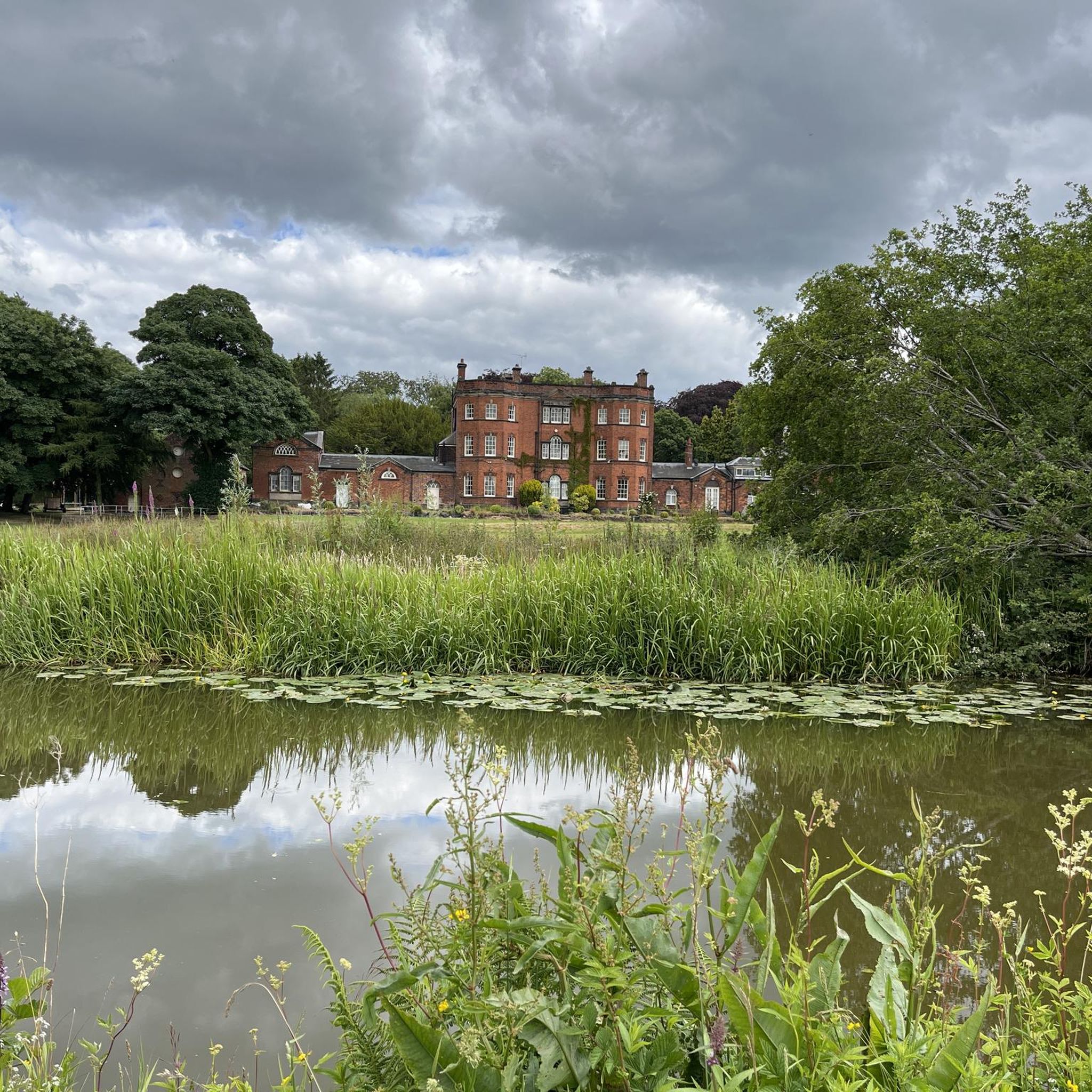
This area was once used for open cast mining, the history of which is detailed on the on-site information plaque. I am presuming the area was converted to a lake when the site was converted to a Country Park.
1
0

It's nice to reserve sections to the wildlife. The public still benefit as we are able to enjoy more species upon our visit.
2
1
An ancient place Parrot's Drumble is one of the Trust’s finest ancient woodland nature reserves. Ancient woodland is a phrase used to describe woodlands that have been continuously covered by trees since the 1600’s. That doesn’t mean the trees here are 400 years old (most of the trees here are significantly younger than that!), but it does mean that for the last 400 years there has always been woodland on this land. This has enabled special woodland plants to become established and thrive. As well as the carpets of bluebells In spring you will also see dog’s mercury, wood anemone, yellow archangel and wood sorrel. Moschatel, more commonly known as Town Hall Clock, can be easily overlooked – look carefully for its pale green ‘square’ flower heads. You won’t find many of these flowers in more recently planted woodlands. So, where are the Parrots? The reserve derives it’s unusual name from a combination of its previous owners, the Parrot family, and a local term for a stream running through a wooded valley, drumble. You may not see anything quite as colourful as a parrot but the woodland is a wonderful place for birds, particularly in spring when an early morning walk would reward you with the wonderful sounds of the dawn chorus. Listen out for blue tits, willow tits, wrens and willow warblers. Both greater and lesser spotted woodpeckers are found here – listen out for them pecking holes in the tree trunks as they look for insects. Nuthatches and tree creepers can often be seen spiralling up and down the trunks of the mature trees. Unwanted visitor There are many different types of trees within the reserve: oak, hazel, birch, rowan and ash, with willow and alder in the wetter areas along the stream. A number of additional tree species have been planted at some time in the past. You’ll easily notice the large beech trees as you enter the reserve and the row of poplars along the boundary. But you may not notice the Turkey oak. Easily mistaken for our native oak Turkey oak was introduced by the Victorians for it’s timber. Unfortunately the timber was found to be unsuitable for outdoor use – warping and splitting as it seasons! Once planted however Turkey oak spreads easily and crosses (hybrdisies) with our own native oak. It is also of less value to wildlife – over 400 species of insects and fungi use our native oak. As part of the management of the woodland we aim to prevent Turkey oak from hybridising and ensure that the native oaks regenerate to provide future mature trees. Naturally appealing (or not)? Don’t be alarmed by the colour of the stream! The Valley Brook is contaminated by iron-oxide leaching from historic mineworkings in the area. Despite its startling appearance there is still an abundance of bankside vegetation with marsh marigolds, golden saxifrage and horsetails. Source: staffs_wildlife
12
0
I have read that the 2 arches are tufa arches. That is, made of a soft, porous limestone.
4
0
A pretty little grave of a beloved cairn terrier.
3
0
You would have to clear the leaf debris first of course....
4
0
Fun little walk through to the nature reserve but the grotto itself has mystical notes to it too if you check out the floor design.
6
0
베치턴 주변에서 가장 인기 있는 명소


더 살펴보기
베치턴 주변의 최고의 동굴을 찾기 위해 이 가이드를 확인해보세요:
