첼레노에서 가장 멋진 7개의 동굴
성을 방문하는 건 언제나 특별한 일이에요. 하이킹을 하다가 잠깐 들를 때도, 가이드를 따라 제대로 둘러볼 때도 말이죠. 첼레노에 있는 아름다운 성 7
곳을 아래에서 살펴본 후에 마음에 드는 성을 다음 모험 때 만나보세요!
마지막 업데이트: 9월 7, 2026
오르시니 성과 시계탑, 첼레노 안티코
하이라이트 • 성
번역자 Google •
팁에 의해

비토르키아노의 포르타 로마나
하이라이트 • 역사적 장소
번역자 Google •
팁에 의해

이런 장소를 발견하려면 지금 가입하세요
최고의 싱글 트랙, 봉우리 및 다양한 흥미로운 야외 장소에 대한 추천을 받아보세요.
로카 데이 파피(교황의 요새)
하이라이트 • 성
From the thirteenth century onwards …
번역자 Google •
팁에 의해

Roccalvecce 마을과 Castello Costaguti 전망
하이라이트 • 전망대
번역자 Google •
팁에 의해
Castello Baglioni Santacroce
하이라이트 • 성
번역자 Google •
팁에 의해

무료로 가입하여 첼레노 주변의 더 많은 성을 발견하세요.
이미 komoot 계정이 있나요?
오늘 무료 계정으로 시작하세요
다음 모험이 기다리고 있어요.

커뮤니티 팁

13세기에 지어진 바글리오니 성은 높은 곳에 있지 않으며 그 규모는 웅장함으로만 두드러집니다. 이 마을은 원래 성의 수비대 가족들이 거주하도록 되어 있었으며 오랫동안 제한된 크기로 요새 안에 머물렀습니다. 19세기에도 지적도에 따르면 30채 이상의 집이 없었습니다. 더 알아보기 👇🏻 retedimorestorichelazio.it/dimora/vt/graffignano/castello-baglioni/ https://share.google/YpRf6kRfscjZSd4Ud
0
0

According to the classic Castrum system, the town of Graffignano developed following the construction of the Castle, built in a strategic position to protect supplies, not only food, between Viterbo and Umbria. In the 13th century, the castle was entrusted to the care of the Baglioni family, already owners of Castel di Piero, now San Michele in Teverina, without however experiencing significant periods of prolonged tranquility: it changed hands several times until it was conquered by Pandolfo degli Anguillara, mayor of Viterbo; whose objective was to weaken the hated Orvietani. The Baglioni family was therefore forced to submit to Viterbo to safeguard their safety. In the first half of the 16th century, Pope Clement VII confiscated the fiefdom due to the continuous internal struggles of the Baglioni family, only to return it to them after a short period. In the seventeenth century the entire fiefdom was acquired by the Borromeo family, but less than a century later, the entire Graffignano, recently transformed into a principality, was sold to Scipione Publicola di Santacroce. In the Republican era the castle became part of the assets of the Municipality of Graffignano, which takes care of it. (c) https://discovertuscia.it/luoghi/graffignano-2/castello-baglioni-santacroce/
0
0
The gate bears the coat of arms of Vitorchiano with the inscription SPQR (for which the village received permission from Rome). The gate is part of the old wall that extends for about two hundred and fifty metres on the south side of Vitorchiano. The tower above the gate dates from the 13th century. The old city walls (Le Mura Castellane) have several towers, each built of peperino stone and dovetail battlements with loopholes in between.
0
0

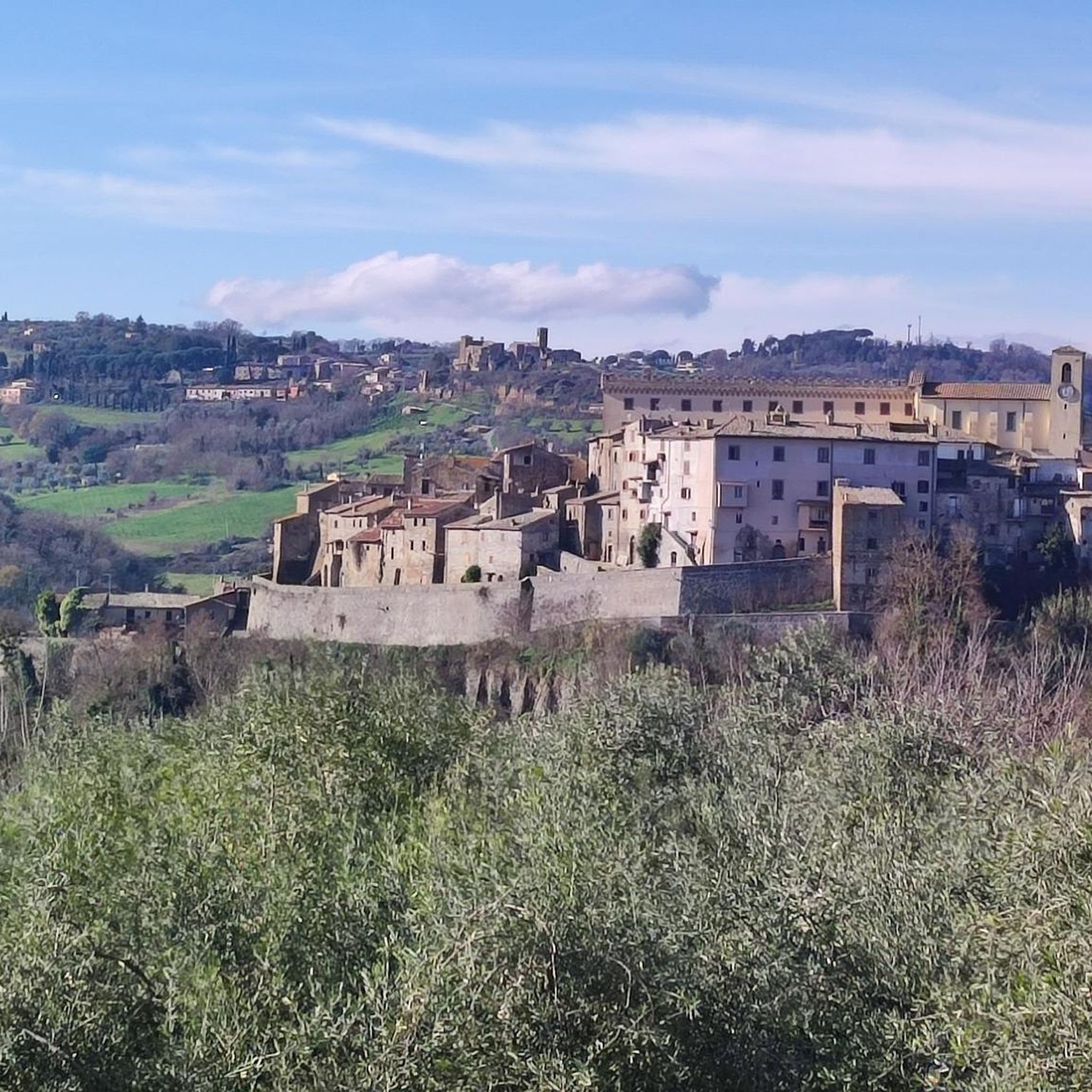
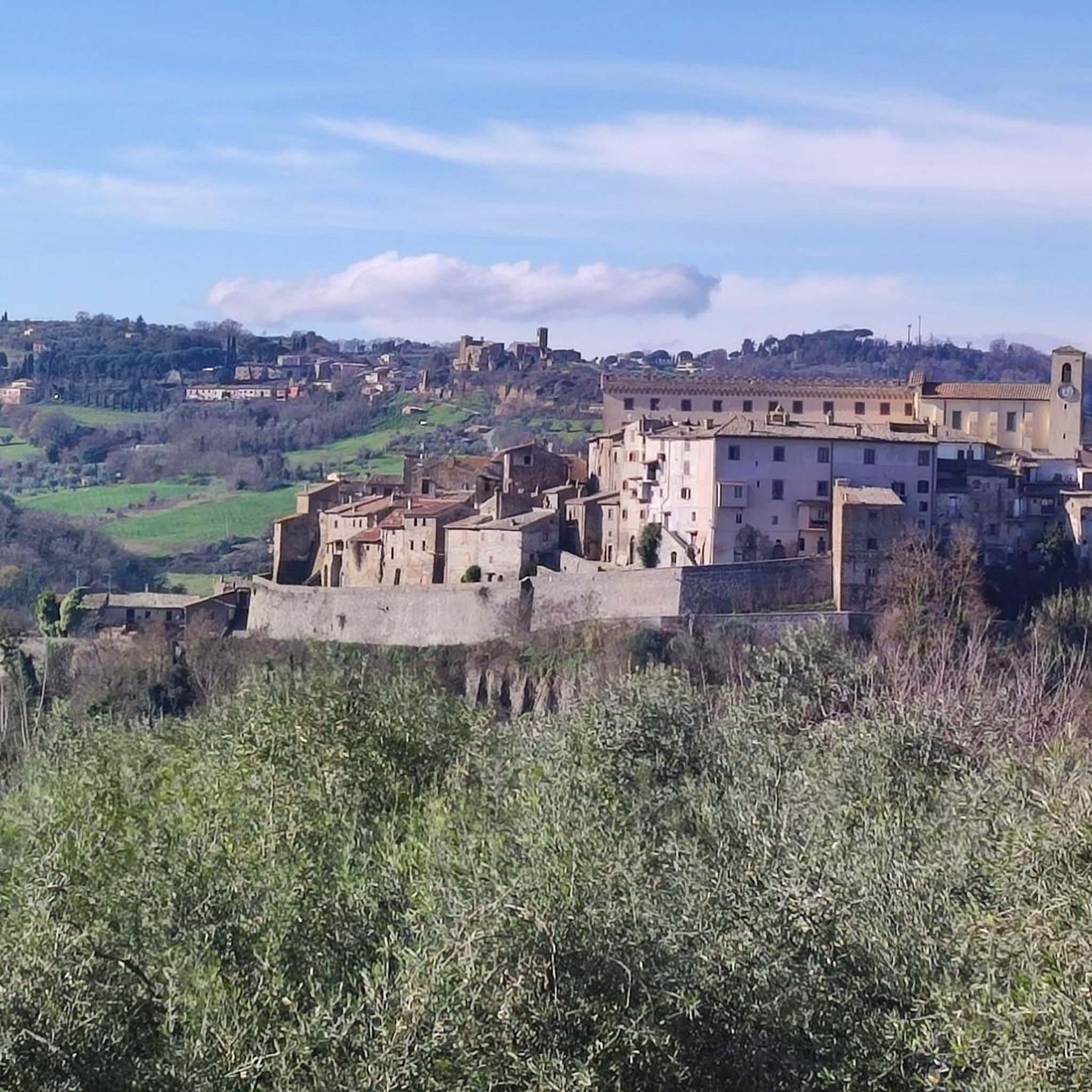
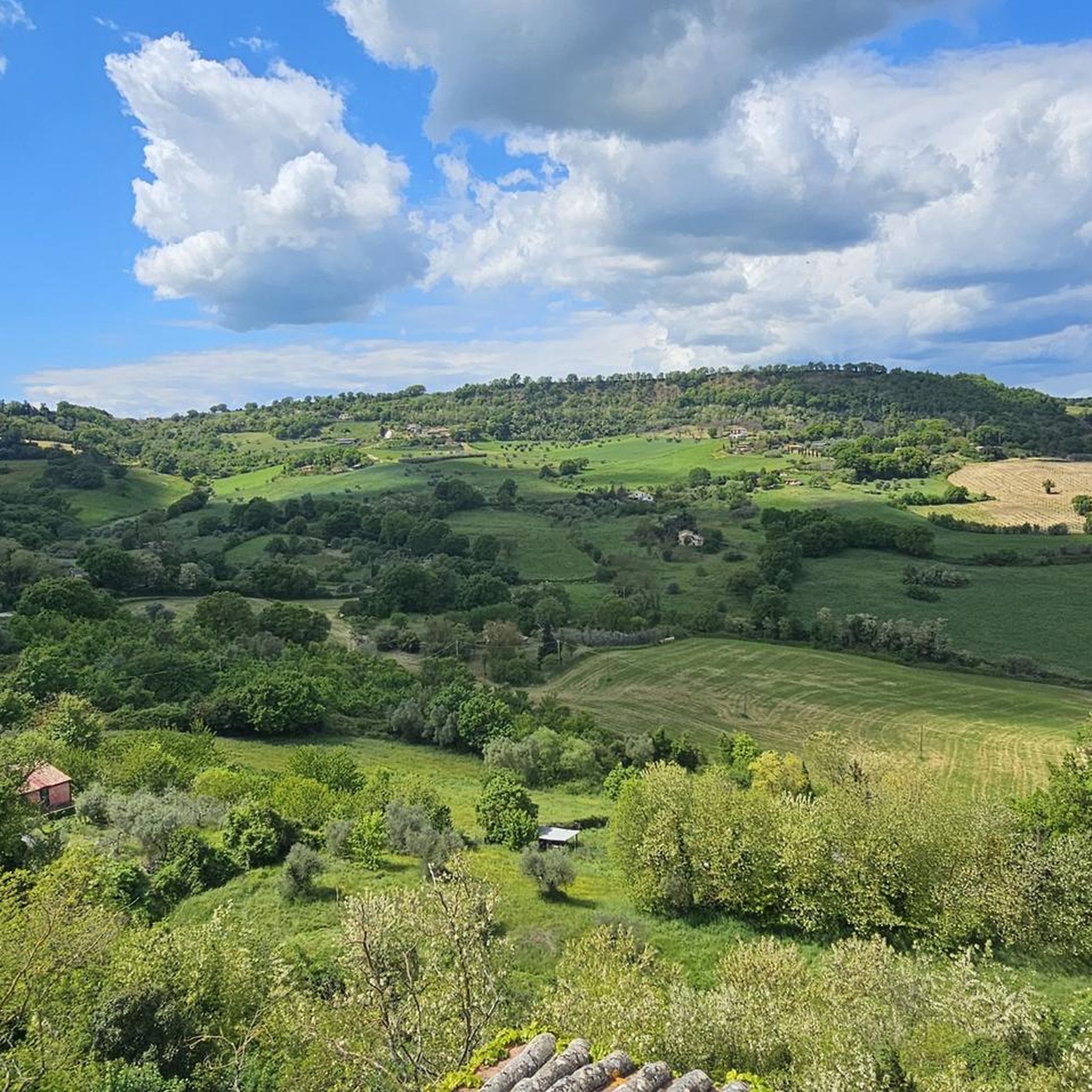
The small village of Roccalvecce has an enchanting location between fields, forests and rock faces. From far away you can see the dominant castle of Costaguti. The Marquis Giovangiorgio Afan de Rivera lives there, a young man in his thirties who now runs a B&B there. The village is originally Etruscan. A fortified castle was built there in the Middle Ages, which later came into the hands of various important families: Monaldeschi, Gatti, Colonna, Chigi. From the 17th century onwards, the Costaguti family became the owner. This family originally came from Genoa, and still owns the castle. Next to the castle there is a church that used to be the property of the castle, but has now been transferred to the curia. Outside the castle, the village is deserted. Many houses are no longer inhabited or are for sale. There are no shops anymore, only a post office that is only open half a day a week. Nevertheless, the village has many assets. The location is very central between Viterbo and Orvieto, from the village you have beautiful panoramic views.
0
0
Past the old monastery you will arrive at the old borgo. The elevated old village has been depopulated since the 19th century and has become a real ruin due to erosion and earthquakes. In 1951 it was completely abandoned. Only the old market square and the castle are accessible, the old houses are completely dilapidated and overgrown with plants over the years. The Orsini castle at the entrance of Celleno antico is the most beautiful building in the borgo. It has a large watchtower and the castle is surrounded by a deep moat. It was recently restored and inhabited by the artist Enrico Castellani. This artist was internationally known (he also studied in Brussels) and died on 1 December 2017. On the old market square you can see a beautiful rectangular bell tower, in 3 layers and made of tuff. Only the walls of the old church San Carlo (17th century), left of the castle, remain. Close to the market square is the church of San Donato from the year 1000 in Romanesque style, with a very beautiful portal in basalt stone.
0
0
Recent archaeological discoveries have confirmed the Etruscan origins (4th-3rd centuries BC) of Celleno Vecchio, a settlement that enjoyed a great position, i.e. the ancient communication route between Orvieto, Bagnoregio and Ferento. Ancient sources provide evidence that this medieval settlement is one of the fortified villages built by the Counts of Bagnoregio between the 10th and 11th centuries. At that time, the village must have consisted of a number of dwellings at the end of the tuff, protected by cliffs on three sides, surrounded by walls and a small fortress, which is now the Orsini Castle, to protect the only access route. At the end of the 12th century, after the destruction of Ferento, the municipality of Viterbo began a rapid expansion in the Tiber Valley, also acquiring Celleno, which in 1237 was one of the castles of the Viterbo area governed by a Podest (high official) appointed by the local government. At the end of the 14th century, the city center fell into the hands of the Gatti family, one of the most powerful families in Viterbo. During this period, the medieval fortress was completely renovated and converted into a fortified stately home that can still be seen today. The Gatti family ruled Celleno until the last heir, Giovanni Gatti, who was killed on the orders of Pope Alexander VI (Borgia) for refusing to return the castle. At the beginning of the 16th century, the municipality fell into the hands of the Orsini family. Interestingly, the castle still bears the name of this family. Only towards the end of the 16th century was the church able to incorporate Celleno into its possessions until the unification of Italy. In modern times, Celleno Vecchio was often affected by earthquakes and landslides, until it was finally abandoned in the 1930s. Today it is a small, charming and evocative ghost village, characterized by ruins and vegetation, with beautiful views of the surrounding landscape.
0
0

Beautiful perfectly preserved medieval village
0
0

The medieval town of Vitorchiano still has all the historical features of its birth which took place around the year one thousand. Walking inside means immersing yourself in a context full of charm and beauty.
1
0
첼레노 주변에서 가장 인기 있는 명소


더 살펴보기
다른 곳에서 최고의 성을 찾고 계신가요? 다른 가이드를 발견해보세요 첼레노 주변:
