랑코에서 가장 멋진 8개의 동굴
성을 방문하는 건 언제나 특별한 일이에요. 하이킹을 하다가 잠깐 들를 때도, 가이드를 따라 제대로 둘러볼 때도 말이죠. 랑코에 있는 아름다운 성 8
곳을 아래에서 살펴본 후에 마음에 드는 성을 다음 모험 때 만나보세요!
마지막 업데이트: 11월 13, 2026
이솔라 벨라의 정원과 궁전
하이라이트 • 역사적 장소
Today Isola Bella is one of the most important sights on Lake Maggiore, which can be reached by boat from Baveno or …
번역자 Google •
팁에 의해

로카 보로메아 디 아로나
하이라이트 • 성
번역자 Google •
팁에 의해

이런 장소를 발견하려면 지금 가입하세요
최고의 싱글 트랙, 봉우리 및 다양한 흥미로운 야외 장소에 대한 추천을 받아보세요.
산 비토의 비스콘티 성
하이라이트 • 성
번역자 Google •
팁에 의해

앙게라 요새의 사법 전당
하이라이트 • 역사적 장소
번역자 Google •
팁에 의해

로르탈로 탑과 산 그라토 교회
하이라이트 • 역사적 장소
번역자 Google •
팁에 의해

무료로 가입하여 랑코 주변의 더 많은 성을 발견하세요.
이미 komoot 계정이 있나요?
오늘 무료 계정으로 시작하세요
다음 모험이 기다리고 있어요.

커뮤니티 팁

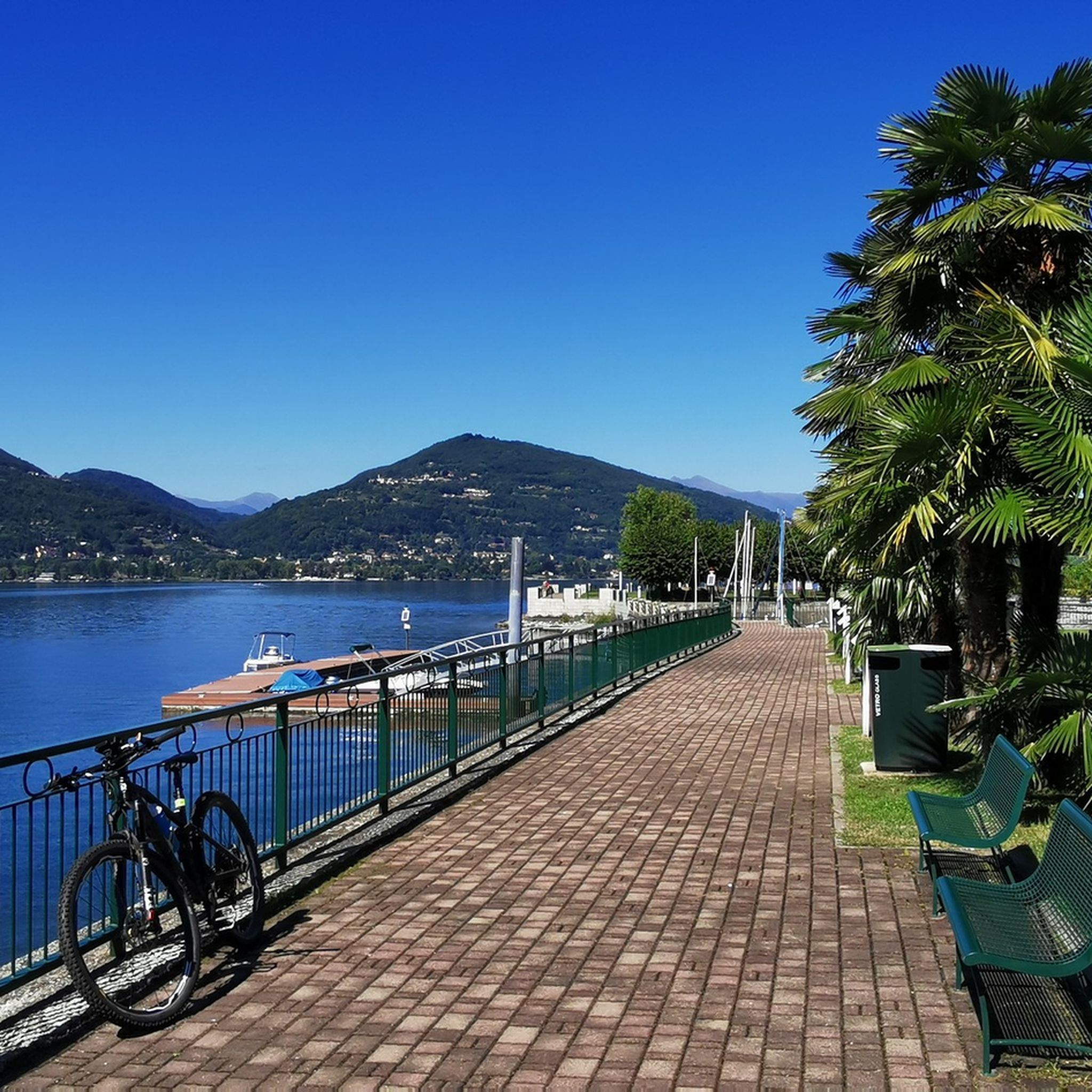
Spectacular view of the city of Arona and Lake Maggiore
0
0

Once you arrive in Arona, walk along the lakeside and have an ice cream, go up to visit the statue of S. Carlone but... don't forget to visit the Rocca too! Founded in a period shortly before the year 1000 under the control of the Lombards, for four centuries the Rocca remained in the hands of the Borromeo family, giving birth to Cardinal San Carlo Borromeo in 1538; the history of the Rocca di Arona ends in 1800 when the Napoleonic army received the order to destroy some fortifications occupied by the Austrians; from that moment on only a few ruins of the Rocca di Arona remain. From above you can also enjoy a spectacular view of Arona below, of Angera opposite and of this entire stretch of lake!
0
0

Ottone Visconti, elected archbishop of Milan by Pope Urban IV in 1262, but not by the Major Chapter of the cathedral, was not able to take possession of his seat until 1277, after the victory obtained in Desio over the enemies of the Tower. In 1280, as the owner of Angera – assigned to the Milanese Church since 1162 – he had a Hall of Justice built in the Rocca, where legal and economic matters were administered. With a masterly coup, his nephew and Lord of Milan Matteo Visconti had the archiepiscopal archives (kept in the monastery of S. Radegonda) burned, with the papers regarding the possession of Angera by the Milanese Church, and claimed the inheritance of the place as a personal domain of the Viscontis, by virtue of a legendary descent of their lineage from Angleria. Between 1314 and 1316, Matteo commissioned a local fresco painter, no better known than the Maestro di Angera, to decorate the Hall of Justice with episodes of the victory of Desio and the entry of Ottone Visconti into Milan, taken from an apologetic book written by Stefanardo da Vimercate. Above the stories is the Zodiac, now only partially preserved, but with an iconographic program that can still be reconstructed. When Matteo commissioned the frescoes, the lawyers and judges of the Ambrosian Church no longer met in the Hall, but the Rocca had by then become a private seat. Why did Matteo want to decorate it so expensively? The Hall of Justice is divided into two bays with cross vaults; it is accessed through a door on the south side, in front of which was originally the judge's chair. Each side of the span enclosed two zodiac signs with their respective governing planet in a lunette, framed by a polychrome decoration – which extended to the cordoning of the sails – among the best preserved of the Lombard fourteenth century. Another peculiarity are the monstrous or extravagant figures that surround only the lunette of the second western span, taken from illustrations of naturalistic texts, such as the De natura rerum by Thomas de Cantimpré. https://www.storiadimilano.it/arte/zodiaco_angera.htm
0
0
The Church of the Purification of the Virgin Mary is the parish church of Massino Visconti in the Province and Diocese of Novara. It is part of the Vergante pastoral unit. The first mention of a Catholic church in Massino dates back to 887. The new church was built in the second half of the 16th century with three naves and was given the title of parish church during the same period, after the Church of San Michele was severely damaged by a landslide. In the first half of the 19th century, the old Romanesque bell tower was demolished and replaced with a new tower. The church's striking, west-facing façade consists of three volumes interrupted by pilasters: the main body, characterized by the main portal, is preceded by a small portico opening into a serliana in the center, while the two side wings have secondary entrances. Attached to the parish church is the stone bell tower with a square floor plan. Its cell has a single-lancet window on each side, protected by a balustrade, and is crowned by a pyramidal spire resting on a drum with an octagonal base. The interior of the building is divided into three naves, overlooking which the side chapels face. Pillars and columns support round arches, above which runs the molded and projecting entablature, upon which the vaults rest. At the end of the hall is the presbytery, raised a few steps, bordered by balustrades and housing the main altar. Several valuable works have been preserved here, including the 16th-century frescoes depicting Saint Mary of the Assumption and the Coronation of Mary, as well as the paintings on the vaults depicting the Doctors of the Church and the symbols of the Evangelists. it.wikipedia.org/wiki/Chiesa_della_Purificazione_di_Maria_Vergine_(Massino_Visconti)
0
0

The hamlet of Lortallo was a very pleasant surprise for me. Leaving Ameno, I was attracted by the sight of the mighty tower, which I later discovered was built in the 13th century. It is in excellent condition. Next to the tower, there is the Church of San Grato, which dates back to the 18th century (the bell tower is dated 1758). To the side of the tower and the church (which unfortunately I found closed and which is rarely open), closing the pretty little square, there is one of the entrances to Palazzo Decio, which I could only see from the outside because it is privately owned. However, the palace is used as a location for weddings and other celebrations, so online it is possible to see the interior, which develops around a large garden with a splendid view of Lake Orta. But the surprises offered by Lortallo do not stop there. In fact, I read that archaeological research conducted in Lortallo between 1915 and 1938, brought to light one of the most important necropolises of the early First Iron Age. The necropolis complex features tombs dating from the 9th to the 5th century BC and the findings can be placed within the Golasecca Culture, a common expression of various Celtic tribal groups that lived in the early Iron Age in western Lombardy, the Novara area and the Canton of Ticino. In short, it seems that Lortallo has been inhabited since the dawn of time.
0
0


From the town, a somewhat steep footpath leads upwards. It is marked at the entrance with a red Rocco sign. At the top, in La Corte della Rocchetta, there is the opportunity to eat and drink.
1
0

In the ARD media library there is - as part of the well-known WDR series "Wunderschön" - a great travel report about Lake Maggiore; "The region around Italy's second largest lake is known as the 'Gateway to the South'. With Mediterranean vegetation and botanical gardens, Lake Maggiore is embedded in a breathtaking mountain world. Judith Rakers discovers a holiday paradise that combines water sports on the lake and hiking in the mountains," says the short description. This link takes you to the film: https://www.ardmediathek.de/video/wunderschoen/wunderschoen-lago-maggiore-dolce-vita-zwischen-see-und-bergen/wdr/Y3JpZDovL3dkci5kZS9CZWl0cmFnLTgxMTA2ZjBmLTc1MDMtNGJkYi1hY2Y1LWE5NWFhOGE2MjRkMg
7
0
랑코 주변에서 가장 인기 있는 명소


더 살펴보기
다른 곳에서 최고의 성을 찾고 계신가요? 다른 가이드를 발견해보세요 랑코 주변:
