사는 사람에서 가장 멋진 20개의 동굴
성을 방문하는 건 언제나 특별한 일이에요. 하이킹을 하다가 잠깐 들를 때도, 가이드를 따라 제대로 둘러볼 때도 말이죠. 사는 사람에 있는 아름다운 성 20
곳을 아래에서 살펴본 후에 마음에 드는 성을 다음 모험 때 만나보세요!
마지막 업데이트: 8월 30, 2026


이런 장소를 발견하려면 지금 가입하세요
최고의 싱글 트랙, 봉우리 및 다양한 흥미로운 야외 장소에 대한 추천을 받아보세요.
무료 회원 가입


누아르무티에-앙-릴
하이라이트 • 정착지
번역자 Google •
팁에 의해
오늘 무료 계정으로 시작하세요
다음 모험이 기다리고 있어요.
로그인 또는 가입하기
사는 사람 주변 인기 장소
사는 사람의 다른 모험


커뮤니티 팁


뇌르무티에 성은 프랑스 방데 데파르트망에 있는 뇌르무티에 섬에 있는 성입니다. 거의 20미터 높이(66피트)의 성채가 뇌르무티에-앙-릴 마을을 지배합니다. 이 성은 매우 잘 보존되어 있으며 12세기 중세 건축의 훌륭한 예입니다. 이 성의 첫 번째 흔적은 830년 생 필베르 수도원의 수도원장 힐볼드가 성채를 건설하면서 나타났습니다. 이는 수도사들과 섬 주민들을 바이킹으로부터 보호하는 데 사용되었습니다. 이 성은 12세기에 이 지역을 안정시키고 특히 노르만족의 약탈을 막으려 했던 봉건 세력에 의해 석조로 재건되었습니다. 당시 이 섬은 라 가르나슈 남작들의 통제하에 있었습니다. 성채는 라 가르나슈의 피에르 4세가 건설했으며, 그 후 저층 안뜰 주변에 탑이 갖춰진 성벽이 건설되었습니다. 16세기에는 이 성이 투아르 자작의 라 트레무아유 가문이 소유했습니다. 이 성은 수많은 공격을 견뎌냈습니다: 1342년과 1360년의 영국군, 그리고 1386년 아룬델 백작의 지휘하에 다시 한번 공격받았습니다. 1524년과 1588년의 스페인군 하지만 1674년, 네덜란드 함대 사령관 코르넬리스 트롬프의 군대에 함락되었습니다. 이 성은 1720년 루이 4세 앙리 드 부르봉-콩데에게 팔렸고, 그는 1767년 루이 15세에게 재매각했습니다. 프랑스 혁명 동안 이 성은 군사 감옥으로 사용되었습니다. 19세기에는 병영으로 사용되었습니다. 1871년 파리 코뮌 기간 동안 반란군이 이곳에 수감되었습니다. 이 성은 제1차 세계 대전 중 독일 국적자들을 수용하는 데 사용되었습니다. 1690년, 섬과 성의 총독이 성 부지 내에 저택을 지었습니다. 오늘날 성채에는 뇌르무티에 박물관이 있습니다. 성 중심부에 있는 성채는 견고하고 직사각형입니다. 잡석으로 지어졌으며 세 개의 층으로 되어 있고, 최상층에는 영주의 거주지가 있습니다. 성채에는 수많은 살인 구멍과 모서리에 방어용 터렛이 있습니다. 직사각형 요새는 두 개의 탑, 하나의 문, 그리고 네 모서리에 두 개의 감시 터렛으로 구성됩니다. 18세기 초, 탑이 재건되고 성채가 대포에 맞게 개조되었습니다. 이 성은 코뮌의 소유이며, 프랑스 문화부에서 역사 기념물로 지정되었습니다. https://en.wikipedia.org/wiki/Ch%C3%A2teau_de_Noirmoutier
0
0

Beaumarchais Castle was built in the 16th century by Vincent Bouhier de l'Écluse, on the foundations of an old manor house built around 1450 by the Mauclère family, a former local knighthood. The castle underwent significant alterations in the early 19th century. Notable for its Renaissance architecture, it notably retains a large fireplace on the ground floor, listed as a historical monument since 1962, as well as its protected facades and roofs. Now privately owned, this castle illustrates the history and heritage of the Pays de Brem, an ancient region linking Brétignolles to the Vendée coast. It bears witness to the wealth and maritime trade of its shipowners in the 16th century.
0
0
The Château de Beaumarchais in Brétignolles-sur-Mer is a Renaissance-style building constructed in the 16th century by Vincent Bouhier de L’Écluse, on the foundations of an old medieval manor house. A private property listed as a Historic Monument in 1962, it is remarkable for its facades, roofs, and a Renaissance fireplace on the ground floor. Henry IV stayed there, reinforcing the prestige of the estate and its wines. The current architecture includes characteristic wings and turrets added in the 16th century, and the framework was completed in the 17th century. The château has no connection with the writer Beaumarchais; its name comes from an old contraction linked to the site.
0
0

. Originally, there was an ovoid-shaped enclosure flanked by about ten towers and a gatehouse, located to the northeast. The fortified town was located to the north of the fortress and extended a little to the east. A dry moat separated the fortified town from the fortress. A barbican protected the gatehouse. A Romanesque keep of the Niort type, with its courtyard and small enclosure, was located in the castle courtyard, roughly in the middle in the north-south direction and located to the west. The fortified city extended from the rue de Gaulle, a gate was located at the level of the Carré de l'Europe (the porte de Nantes), then the ramparts continued along the rue de la Place du Champ de Foire, then went back down the Esplanade des Olivettes, where a gate was located towards the roundabout of the rue des Jardins (porte de Tiffauges) then the ramparts ran along the Asson to go up the rue du Pont Jarlet and around the barbican not far from the Presbytery The dry moats surrounding the city were 16 meters deep in the 15th century, today they are flowered and are the subject of different colored squares decorating this part of the ramparts.
0
0
In the 9th century, a castrum, a wooden castle built on a mound of earth, was built to counter the Viking raids that had previously sacked the city of Durivum (Saint-Georges-de-Montaigu). For strategic reasons, this fortress was built on a rocky spur at the junction between the Maine and Asson rivers. Maurice I of Montaigu, the first known lord, witnessed the consecration of the church of Saint-Nicolas de la Chaize-le-Vicomte in 1099. His successor until 1174 was Brient I of Commequiers, married to his daughter, Agathe de Montaigu. Later, his grandchildren, Brient II, Maurice II "the Younger," and Marguerite, succeeded him. It was perhaps this Brient II who had the Romanesque keep built in 1218, a large square tower with flat corner towers. He also removed the wooden palisade, replacing it with a wide moat extending to the Saint-Georges Gate. The Montagues (also known as Belleville by marriage around 1180) pledged allegiance to the Plantagenets, Henry II, Richard the Lionheart, and John Lackland. Margaret of Belleville-Montaigu, daughter of Brient de Montaigu and Agnes de Belleville, granddaughter of Maurice I de Montaigu, sister of Maurice II de Belleville-Montaigu, married Hugh of Thouars in 1203. In 1227, the couple submitted to Philip Augustus through the ceremony of homage. Hugh of Thouars died in 1229, and Margaret remarried in 1235 to the Duke of Brittany, Mauclerc, whose real name was Pierre de Dreux. Marguerite de Montaigu died in 1241, childless. The lordship of Montaigu fell to her nephew, Maurice III de Belleville-Montaigu (d. c. 1297; son of Maurice II). He became lord of Montaigu upon the death of Mauclerc in 1250[2], and his son Maurice IV (d. c. 1292) ensured the succession through his children Jeanne (d. 1284 Geoffroy II David de La Flocellière) and Maurice V de Belleville-Montaigu (he married 1° Sibylle, daughter of Geoffroy VI de Châteaubriant, then 2° Isabelle/Létice de Parthenay, daughter of Guillaume V Larchevêque de Parthenay). Jeanne de Belleville (c. 1300-c. 1359), daughter of Maurice V of Montaigu and Létice of Parthenay, married Olivier IV of Clisson for the second time in 1328. Olivier IV was executed by beheading after being suspected of "felony" against the English, during the Hundred Years' War. Jeanne became a privateer with her children Olivier V and Jeanne de Clisson, in revenge, and was banished from the kingdom of France. While she attacked French ships, the fortress of Montaigu was held by the English, according to the Treaty of Brétigny-Calais, a garrison of which engaged in pillaging the surrounding area. Jeanne lost her ship and withdrew with her children to England. Olivier V, having grown up, rallied to the king of France, recovered his property in 1362 and fought the English with Bertrand du Guesclin. In 1373, Olivier and Bertrand succeeded in driving the English out of Montaigu, and Olivier ceded the lordship to his sister Jeanne, who had married an English captain, Jean Harpedenne. The latter sided with the King of France in 1373 and became Jean de Belleville. His grandson, Jean III, married Charles VII's half-sister, Marguerite de Valois, in 1433. Louis I de Belleville succeeded Jean III. King Louis XI advised him to fortify the town between 1464 and 1468 to protect it from the Bretons.
0
0
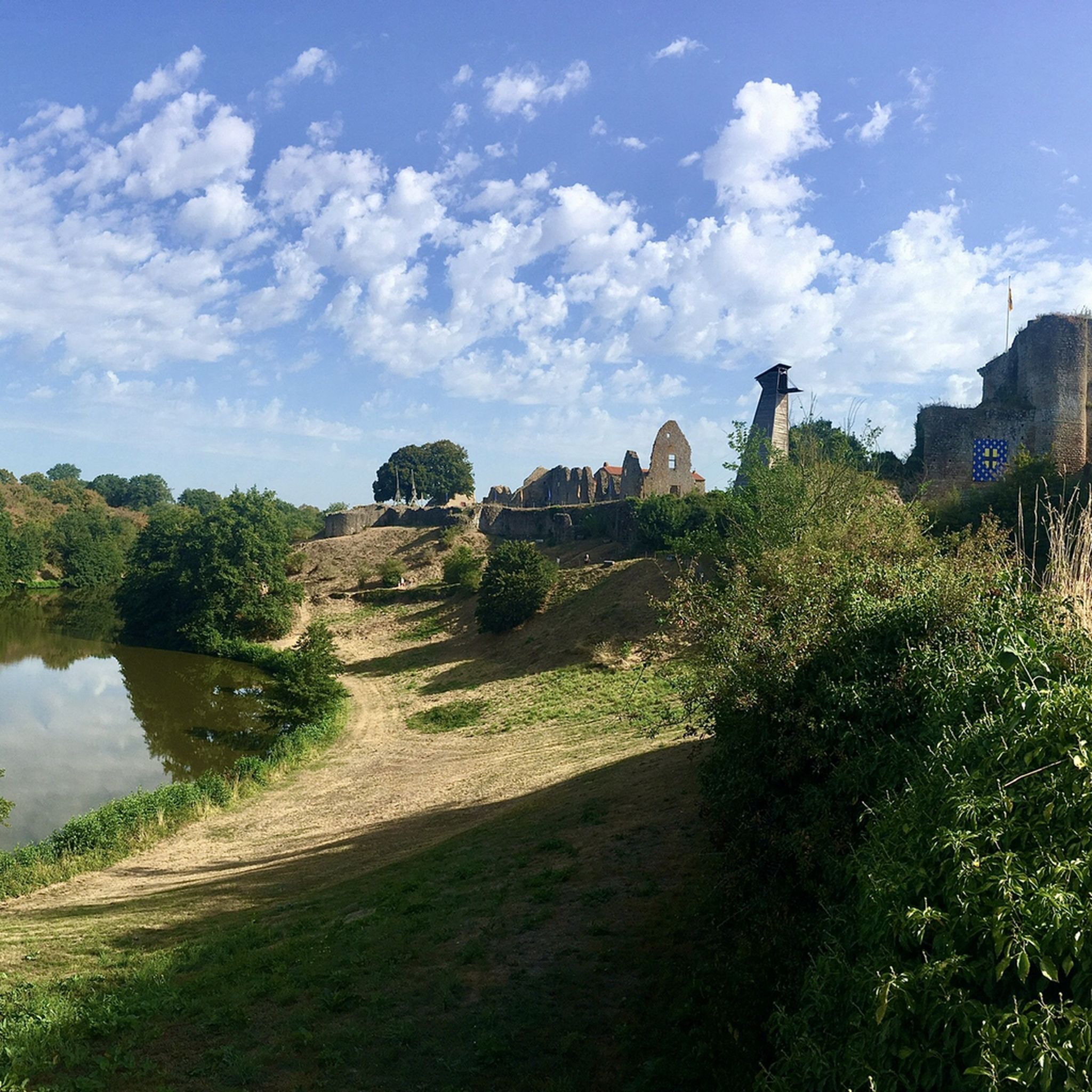
A large medieval castle. It features themed shows, including siege engine demonstrations.
2
0

Built in the second half of the 15th and in the 16th century by Louis de Beaumont, lord of Plessis-Macé in Anjou, the castle of Commequiers, now owned by the commune, was, like most of the castles of Bas Poitou, dismantled on the orders of Cardinal Richelieu in 1628, 6 years after the defeat of Soubise at Notre Dame de Riez and Saint Gilles. It was then the property of the La Trémoille, great Protestant lords. Throughout the Middle Ages, the lords of Commequiers exercised their administrative and jurisdictional influence over a vast territory. https://www.payssaintgilles-tourisme.fr/patrimoine-culturel/chateau-de-commequiers/
0
0
사는 사람에서 가장 인기 있는 명소


더 살펴보기
다른 곳에서 최고의 성을 찾고 계신가요? 다른 가이드를 발견해보세요 사는 사람:
