20의 부르두르가지 명소 & 주요 장소
부르두르에는 둘러볼 만한 장소가 많답니다. 하이킹 또는 사이클링을 좋아한다면 부르두르에 숨겨진 20
가지 보석을 만날 수 있을 거예요. 이 지역의 주요 명소를 살펴보면서 다음 모험을 계획해보세요.
마지막 업데이트: 10월 9, 2026
사갈라소스의 고대 극장 유적지
하이라이트 • 역사적 장소
번역자 Google •
팁에 의해

하드리아누스의 님페움
하이라이트 • 역사적 장소
번역자 Google •
팁에 의해
이런 장소를 발견하려면 지금 가입하세요
최고의 싱글 트랙, 봉우리 및 다양한 흥미로운 야외 장소에 대한 추천을 받아보세요.
사가라소스의 헤로온
하이라이트 • 역사적 장소
de.m.wikipedia.org ›wiki
번역자 Google •
팁에 의해

사갈라소스의 하부 아고라
하이라이트 • 역사적 장소
번역자 Google •
팁에 의해
사가라소스 경기장 바실리카
하이라이트 • 역사적 장소
The 'games' played an important part in Imperial propaganda. At Sagalassos, these games were mainly the 'Klareia', the games for Apollo Klarios, which consisted of running, wrestling and boxing competitions for both adults and children.
팁에 의해

불레우테리온(시의회당)
하이라이트 • 역사적 장소
A bouleuterion (council house) is one of the building types most commonly associated with an agora. Council houses were considered a quintessential element of cities in …
팁에 의해
로마 시대 목욕탕과 체육관
하이라이트 • 역사적 장소
The cultural tradition of public bathing originated in the Classical Greek world. In the cities of the Hellenistic kingdoms public baths became standard, catering to the mental and physical well-being of the population.
팁에 의해
무료로 가입하여 부르두르의 더 많은 명소를 발견하세요.
이미 komoot 계정이 있나요?
오늘 무료 계정으로 시작하세요
다음 모험이 기다리고 있어요.
부르두르 주변 인기 장소
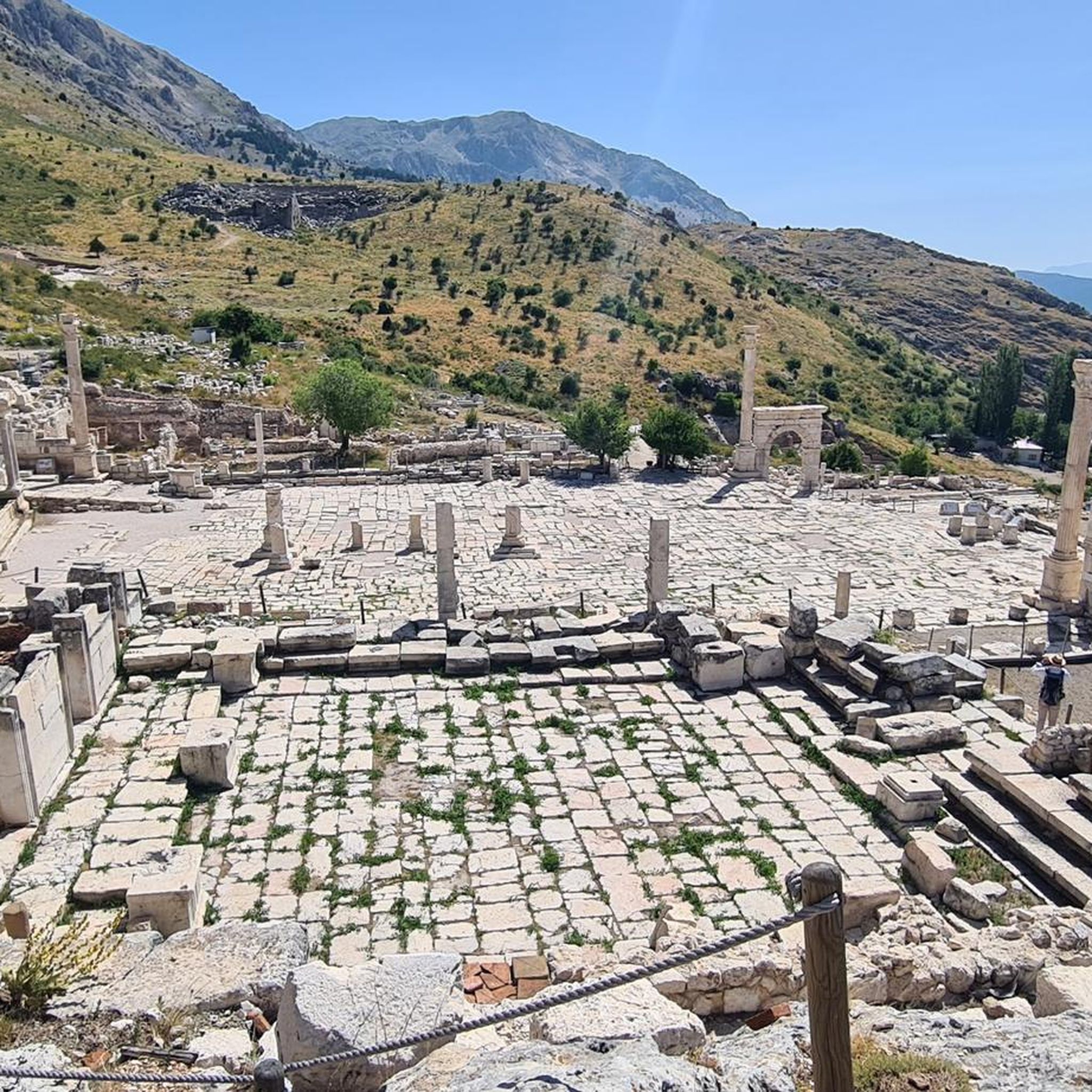
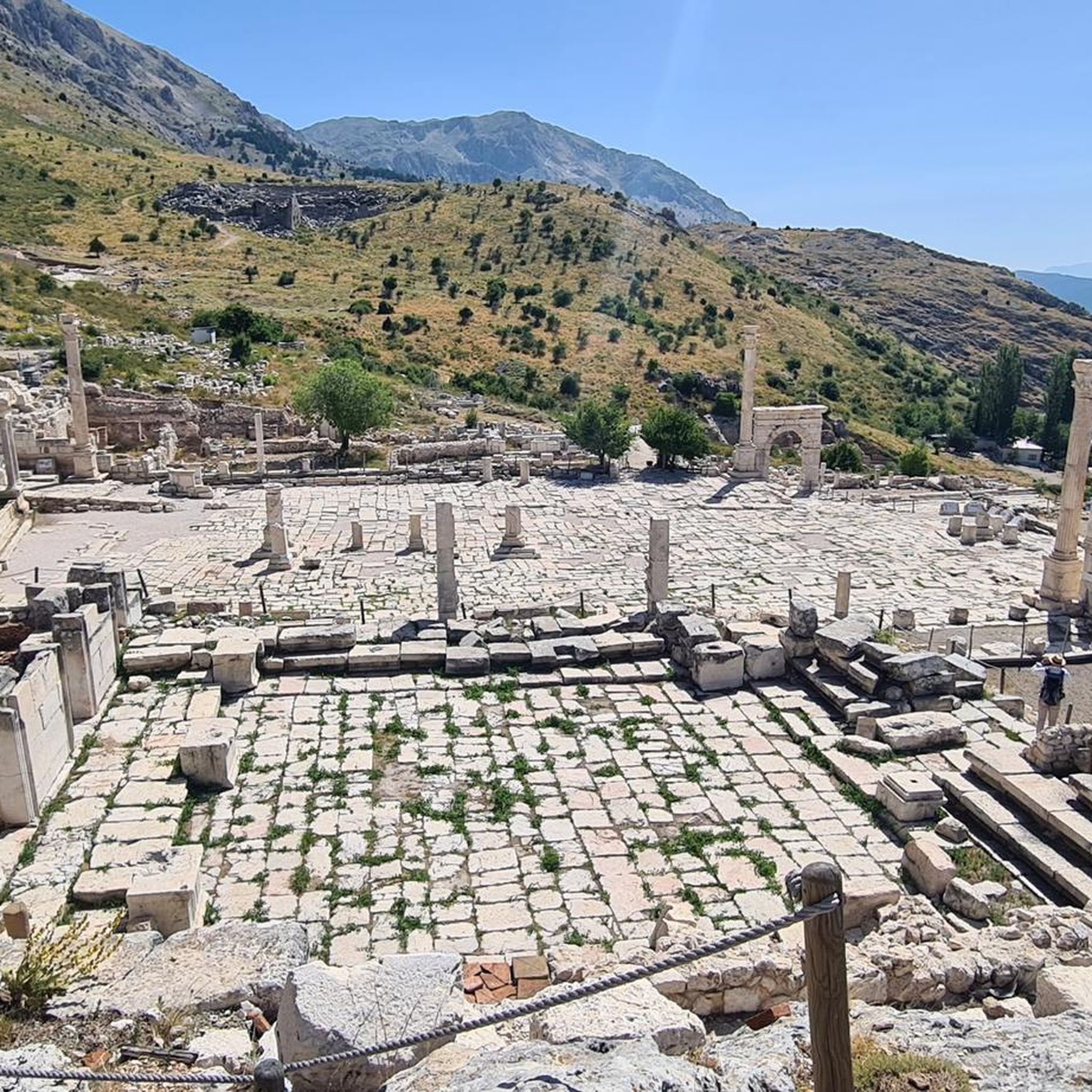
커뮤니티 팁

A Theatre with a View Roman culture was well-known for its popular spectacles. Politicians and emperors gave the masses what they wanted: bread and games. The quintessential Roman institutions were the amphitheatre for gladiatorial combat and circus for chariot racing. together with the theatre for plays and the stadium for athletic performances. In the historical region of Pisidia mainly the latter two were common. By and large, the theatre of Sagalassos remained faithful to the cultural and architectural traditions of the Greek world, providing a place for entertainment, assembly and religious events. The seats were arranged in a bowl-shaped cavea, partly built against a natural slope and partly supported by substructures, allowing efficient circulation of throngs of visitors. The stage building had a single-storey architecturally articulated backdrop. This setting exploited the dramatic panoramic setting, which was a trend in ancient Pisidia.
0
0
Restoration of the Antonine Nymphaeum An earthquake in the 7th century CE caused the Antonine nymphaeum to collapse. Its ruins were covered by soil and were only exposed again by archaeological excavations carried out in 1993-1995. Because most of the building elements were found back and the podium of the building was preserved in its original place, it was possible to repair and re-erect the monument. Restoration using the original architectural pieces (anastylosis) began in 1998, continued for 13 summers and was completed in 2010. First, about 3500 broken pieces of stone were re-assembled into approximately 400 blocks, using epoxy as adhesive and fibreglass bars as reinforcement. Their exact position on the building was defined through architectural research (restitution). Next, missing building fragments were carved to perfectly match the broken surface of the partially preserved blocks. This was applied only to the missing parts that were structurally necessary to make the building standing again. The monument was set-up without fixing the architectural elements to each other. to test whether the restitution was accurate. The trial construction was then dismantled and the final phase initiated, this time with structural connections joining the blocks. The new connections made of fibreglass bars were designed to be strong enough to resist stress but at the same time, slightly weaker than the original stone. Under heavy stress, these connections will break first, preventing damage to the ancient stone. To reduce earthquake damage, neoprene vibration isolation panels were placed in the upper parts of the nymphaeum. This isolation system separates the upper part of the structure, which contains the main load, from its more fragile lower part. To complete the restoration of the monument, water was brought to the nymphaeum from a source 230 meters far, restoring its ancient function as public fountain.
0
0
The Northwest Heroon Monument to an anonymous benefactor This heroon was built around the year 1 AD, during the reign of the Emperor Augustus. The monument was recently re-erected using its original stones. Architects could tell where each block belonged on the monument by looking at the original connection holes on the stones. Visible from afar, the monument stands on a square podium 7.80 by 8.50 meters and is 15 meters high.. A heroon is a small monument that honours a local benefactor. Sometimes heroa also served as graves for these individuals. Members of the local aristocracy of Sagalassos constructed such monuments in order to be remembered. Heroa were built within the inhabited areas of Sagalassos until Early Imperial times. The Northwest Heroon was a monument for a young aristocrat, whose name is unknown. Archaeologists have not found a dedicatory inscription. However, they did find parts of a 2.5-meter high statue of this person, including the marble.
0
0
The City Council House A bouleuterion (council house) is one of the building types most commonly associated with an agora. Council houses were considered a quintessential element of cities in the Greek and Roman worlds. These structures were built to house one of the oldest professions: politics. Now, who entered this political arena? Members were predominantly male and rich. In other words, the social elite dominated the city council, discussing matters of civic and legal importance. In most cities, council seats became legacy positions of wealthy families. Democracy by elected representation was not really happening in Antiquity. Nevertheless, the popular assembly (the People) held on to some power in Roman times. Their meetings were held on the Upper Agora. There is also mention of a Council of Elders at Sagalassos. The inhabitants of Sagalassos that had to work for a living, which was the majority of the population, did not have a lot of direct political influence. Organisations such as professional associations helped to give them a voice and as social prestige was very important in Antiquity, the social elite will have taken the wider population into account, to some degree, when making political decisions. The scale of the community at Sagalassos made council members approachable, especially during public events. Politics was wheeling and dealing in the past (as now).
0
0
From stadium to church The 'games' played an important part in Imperial propaganda. At Sagalassos, these games were mainly the 'Klareia', the games for Apollo Klarios, which consisted of running, wrestling and boxing competitions for both adults and children. The games probably took place for the most part in the Stadium. Private organizers of the games provided the prize money as well as the statues of the victors. However, the latter's names were only briefly mentioned, while the benefactors described their entire careers in detail on the statue bases for the victors. People from all over the region attended the games. The spectacle and its use of Imperial propaganda provided a shared cultural experience that must have given the citizens a feeling of belonging to the Roman Empire. Since under Vespasian (69-79 AD) the 'municipal' emperor cult was installed in the Temple of Apollo Klareios, the Klareia were also associated with the Imperial cult. It is not known exactly when the stadium of Sagalassos was constructed. We do know that by 117 AD, a public fountain stood at its entrance. in the 5th or 6th century AD, a church was built in the stadium. It was most likely dedicated to martyrs of the intense Christian persecution during the reign of Emperor Diocletianus (303-313 AD), Such churches were often built on the spot where martyrs were executed, for instance in the stadium. The church was constructed using carefully numbered and dismantled stones from a temple of Dionysos, an example of the transition Segalassos went through during the 4th and 5th centuries as it gradually became an Christian city. However, despite the demolition of many temples, pagan decorations were preserved in this church and in other places around the city.
0
0
This monumental fountain, dating to 129-132 AD, was built on a terrace above the Lower Agora and dedicated to Emperor Hadrian. A flight of eight steps leads you to the basin of the fountain; behind it you can see the remaining part of the monument's back wall. Originally 17m high, this was the only two-storey fountain at Sagalassos. Functional and prestigious at the same time, the monument was aligned with the south Colonnaded Street so that visitors could see its upper storey as they entered the city. The fountain was commissioned by the first Roman knight of Sagalassos, Tiberius Claudius Piso, who ordered its construction in his will. He dedicated the monument to Emperor Hadrian. It was common in Roman provincial towns for local aristocrats and benefactors to dedicate monuments to the emperors. This helped them display their connections with Rome.
0
0
The pictures from Sabine show the Antonine Nympheum which is located in the upper agora. The Hadrian Nympheum is in the lower agora and looks completely different!
0
0
This monumental fountain, dating to 129-132 AD, was built on a terrace above the Lower Agora and dedicated to Emperor Hadrian. A flight of eight steps leads you to the basin of the fountain; behind it you can see the remaining part of the monument's back wall. Originally 17m high, this was the only two-storey fountain at Sagalassos. Functional and prestigious at the same time, the monument was aligned with the south Colonnaded Street so that visitors could see its upper storey as they entered the city. The fountain was commissioned by the first Roman knight of Sagalassos, Tiberius Claudius Piso, who ordered its construction in his will. He dedicated the monument to Emperor Hadrian. It was common in Roman provincial towns for local aristocrats and benefactors to dedicate monuments to the emperors. This helped them display their connections with Rome.
0
0
부르두르에서 가장 인기 있는 경로


더 살펴보기
찾고 있는 하이라이트를 아직 못 찾으셨나요? 다른 지역의 주요 명소 가이드를 확인해보세요:
