오라니엔바움-뵈를리츠에서 가장 멋진 20개의 동굴
성을 방문하는 건 언제나 특별한 일이에요. 하이킹을 하다가 잠깐 들를 때도, 가이드를 따라 제대로 둘러볼 때도 말이죠. 오라니엔바움-뵈를리츠에 있는 아름다운 성 20
곳을 아래에서 살펴본 후에 마음에 드는 성을 다음 모험 때 만나보세요!
마지막 업데이트: 9월 27, 2026
지글리처 베르크의 네오고딕 성문
하이라이트 • 기념물
번역자 Google •
팁에 의해

비텐베르크의 성(城)교회(슈로스키르헤)
하이라이트 • 종교적 장소
번역자 Google •
팁에 의해

이런 장소를 발견하려면 지금 가입하세요
최고의 싱글 트랙, 봉우리 및 다양한 흥미로운 야외 장소에 대한 추천을 받아보세요.

데사우 게오르기움 궁전
하이라이트 • 성
번역자 Google •
팁에 의해

요한바우(데사우 시립 궁전)
하이라이트 • 성
번역자 Google •
팁에 의해

무료로 가입하여 오라니엔바움-뵈를리츠 주변의 더 많은 성을 발견하세요.
이미 komoot 계정이 있나요?



커뮤니티 팁

More information about the history can be found at https://de.wikipedia.org/wiki/Residenzschloss_Dessau
4
0
Dessau Palace was originally built in 1341 using stones from Waldeser Castle, also known as Waldersee Castle, which had been destroyed by flooding of the Mulde River.[3][4] The palace burned down in 1405 and again in 1467.[2] It was rebuilt by the Dessau princely brothers Johann IV, Georg III, and Joachim. Doubts have arisen regarding the previously assumed construction period of "around 1530/31" to 1533, following the discovery of letters from the princely brothers proving that building materials were ordered in Saxony as early as 1528 and 1529 and transported by raft on the Elbe River in 1529. This suggests that construction of the Johann Building must have begun as early as 1528.[5] The construction period for the stair tower, built at the same time, is confirmed to be between 1531 and 1533.[1] The palace wing was named after Prince Johann IV of Anhalt. [2][3][4][5][6][7][7][8][9][1] For a long time, Ludwig Binder (1512–1556), who demonstrably worked as a stonemason for the princes in Anhalt between 1531 and 1554, was considered the architect of the Johannbau. His stonemason's mark was found in six prominent locations in and on the stair tower of this building. Today we know that Ludwig Binder was only 17 years old at the start of construction, and thus too young to be the architect. According to the latest research, it is therefore assumed that the Johannbau was a joint project of Bastian Binder and his son (?) Ludwig.[6] Bastian Binder served, among others, as archbishop's master builder and architect under Cardinal Albrecht of Brandenburg. According to records, he stayed in Dessau several times in 1531/32.[7] [6] Stylistically, the Johannbau is classified as belonging to the Early Renaissance, as the architectural ornamentation on the round-arched gables, windows, portals, as well as in the balcony and the spiral staircase above it, exhibits characteristic features such as spheres and fleur-de-lis tracery friezes. The formal language corresponds to the transitional period from Late Gothic to Renaissance,[8] as can also be found in other early buildings of the Saxon Renaissance. Source: https://de.wikipedia.org/wiki/Residenzschloss_Dessau
4
0
Dessau Palace, also known as Dessau City Palace, is a partially preserved palace complex located in the former old town of Dessau. It served as the residence of the Princes and Dukes of Anhalt-Dessau. Of the multi-winged palace, only the so-called Johannbau, the former west wing and oldest part of the palace, remains today. It was one of the first Renaissance buildings in Central Germany.[1][2] Source: https://de.wikipedia.org/wiki/Residenzschloss_Dessau
5
0

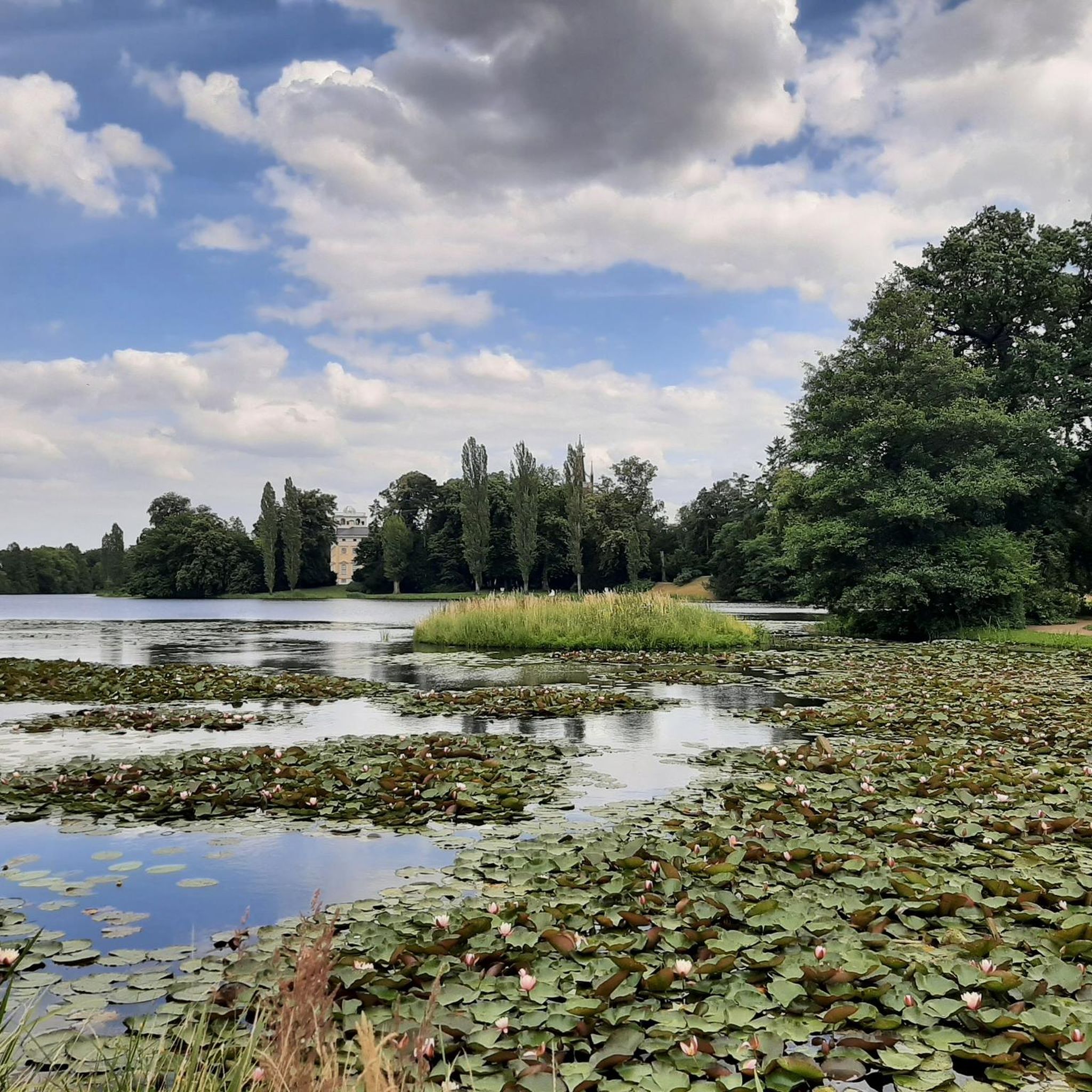
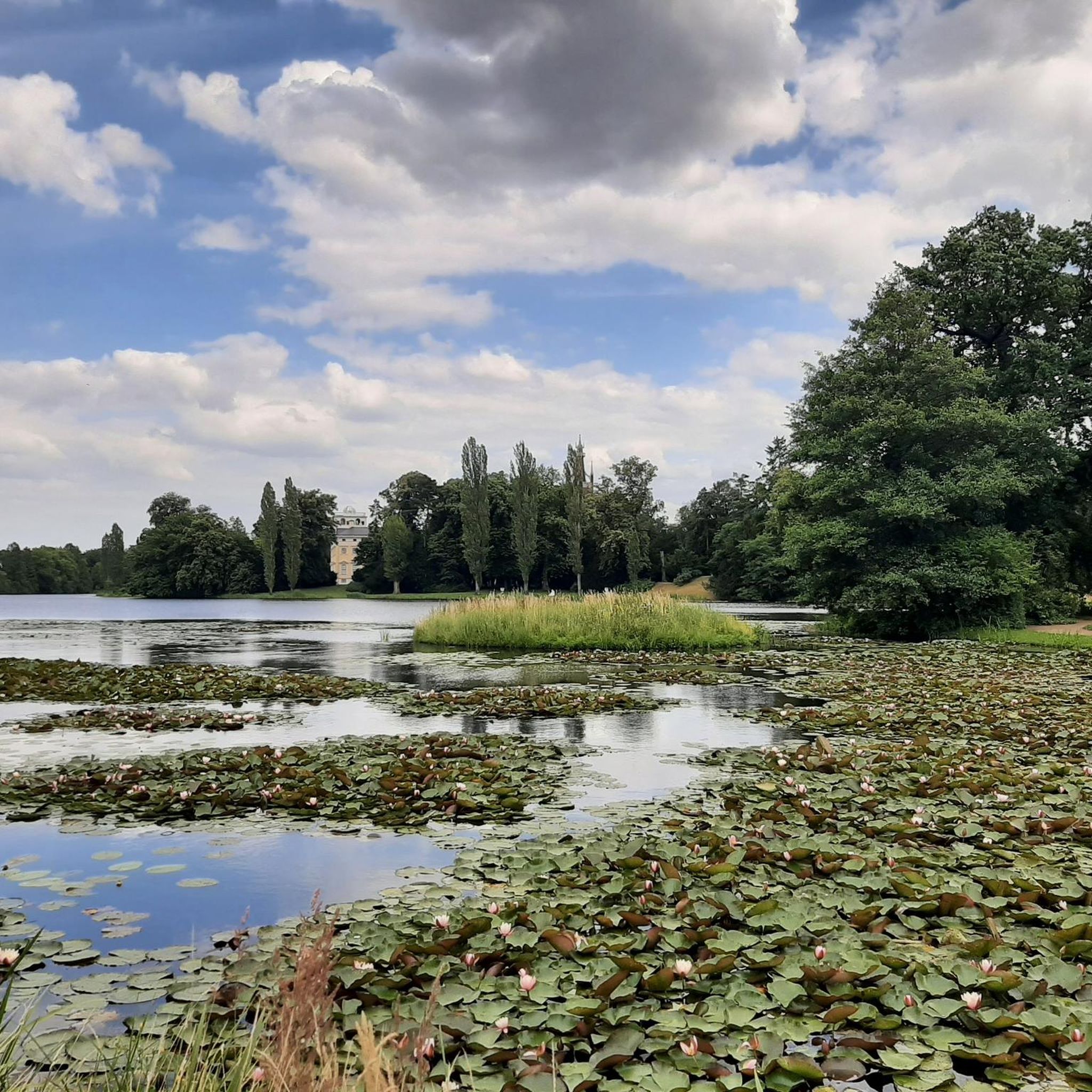
The Wörlitzer 🏰 was built between 1769 and 1773 by Friedrich Wilhelm von Erdmannsdorff. In the region, it is often referred to as the "Little White House."
21
0
Along with Wörlitz Park, Georgium is the largest and most historically significant landscape park in the English-style Dessau-Wörlitz Garden Kingdom. It was created by and named after Prince Johann Georg, the younger brother of Prince Leopold III Friedrich Franz of Anhalt-Dessau. Georgium Palace and several other garden buildings now house the Anhaltische Gemäldegalerie Dessau, one of the most important collections of Old Masters in Central Germany. Originally located just outside the royal city of Dessau, the park and palace are now located in the Ziebigk district of Dessau-Roßlau. They have been a UNESCO World Heritage Site since November 2000. Source: https://de.wikipedia.org/wiki/Georgium
5
0
The Johannbau was first expanded between 1571 and 1580. The north wing, which was first mentioned in 1571, was demolished in 1708 by Prince Leopold, turning the palace into a three-wing complex.[9] Between 1748 and 1753, the building was redesigned and expanded according to designs by Georg Wenzeslaus von Knobelsdorff. The west wing was retained, contrary to what was planned in the design.[8] For a long time, the old Johannbau had only long halls on all floors, in which the cavalry and the mounted entourage of the court's guests were housed. It was not until later that it was divided into smaller rooms. The east wing, with a view of the Mulde and the Tiergarten, a floodplain forest on the other side of the river, housed the chambers of the princely family. In the south wing, above the court kitchen, was the magnificent ballroom.[10] Source https://de.wikipedia.org/wiki/Residenzschloss_Dessau
3
0
The Dessau Residence Palace was originally built in 1341 from the stones of the Waldeser Castle, also known as Waldersee Castle, which had been destroyed by the Mulde flood.[3][4] The castle burned down in 1405 and 1467.[2] A new building was built by the Dessau princely brothers Johann IV, Georg III and Joachim. Doubts arose about the previously assumed construction period of "around 1530/31" to 1533 when letters from the princely brothers were found which prove that building materials had already been ordered in Saxony in 1528 and 1529 and brought in by raft on the Elbe in 1529. This means that construction of the Johann building can be dated to 1528.[5] For the stair tower, which was built at the same time, a construction period of 1531 to 1533 is certain.[1] The palace wing was named after Prince Johann IV of Anhalt. For a long time, Ludwig Binder (1512–1556), who was verifiably employed as a stonemason for the princes in Anhalt between 1531 and 1554, was considered the master builder of the Johannbau. His stonemason's mark was located in six prominent places in and on the stair tower of this building. Today we know that Ludwig Binder was only 17 years old when construction began, so he was still too young to be the architect who designed it. According to the latest research, it is therefore assumed that the Johannbau was a joint work of Bastian Binder and his son(?) Ludwig.[6] Bastian Binder was, among other things, the archbishop's architect and master builder in the service of Cardinal Albrecht of Brandenburg. According to evidence, he stayed in Dessau several times in 1531/32.[7] Stylistically, the Johannbau is classified as early Renaissance, as the architectural decoration on the round-arch gables, windows, portals, as well as in the balcony and the spiral stone rising above it, has characteristic features such as balls and lily tracery friezes. The formal language corresponds to the transition period from the late Gothic to the Renaissance,[8] as can also be found in other early buildings of the Saxon Renaissance. Source https://de.wikipedia.org/wiki/Residenzschloss_Dessau
4
0
More information at https://www.gartenreich.de/de/schloesser-u-gaerten/georgium
5
1
오라니엔바움-뵈를리츠 주변에서 가장 인기 있는 명소


더 살펴보기
다른 곳에서 최고의 성을 찾고 계신가요? 다른 가이드를 발견해보세요 오라니엔바움-뵈를리츠 주변:
