율리히에서 가장 멋진 20개의 동굴
성을 방문하는 건 언제나 특별한 일이에요. 하이킹을 하다가 잠깐 들를 때도, 가이드를 따라 제대로 둘러볼 때도 말이죠. 율리히에 있는 아름다운 성 20
곳을 아래에서 살펴본 후에 마음에 드는 성을 다음 모험 때 만나보세요!
마지막 업데이트: 8월 30, 2026
알트-카스터 역사적 구시가지
하이라이트 • 역사적 장소
번역자 Google •
팁에 의해


이런 장소를 발견하려면 지금 가입하세요
최고의 싱글 트랙, 봉우리 및 다양한 흥미로운 야외 장소에 대한 추천을 받아보세요.
무료 회원 가입

율리히의 헥센투름(루어토어)
하이라이트 • 역사적 장소
번역자 Google •
팁에 의해

율리히 시타델
하이라이트 • 역사적 장소
Source and more info: de.wikipedia.org/wiki/Zitadelle_J%C3%BClich
번역자 Google •
팁에 의해

무료로 가입하여 율리히 주변의 더 많은 성을 발견하세요.
무료 회원 가입
이미 komoot 계정이 있나요?
오늘 무료 계정으로 시작하세요
다음 모험이 기다리고 있어요.
로그인 또는 가입하기
율리히 주변의 다른 모험


커뮤니티 팁

Beautiful medieval gate of the city of Jülich. Beginning of the pedestrian zone in the city of Jülich. From here you can stroll to the "Schlossplatz" or turn 180° and go to the bridgehead (Napoleonic fortress component) and visit it. The State Garden Show was held here in 1998.
6
0

one of the few pieces in Jülich that survived the 2nd World War (but is plundered from building sins in the 70s)
6
0

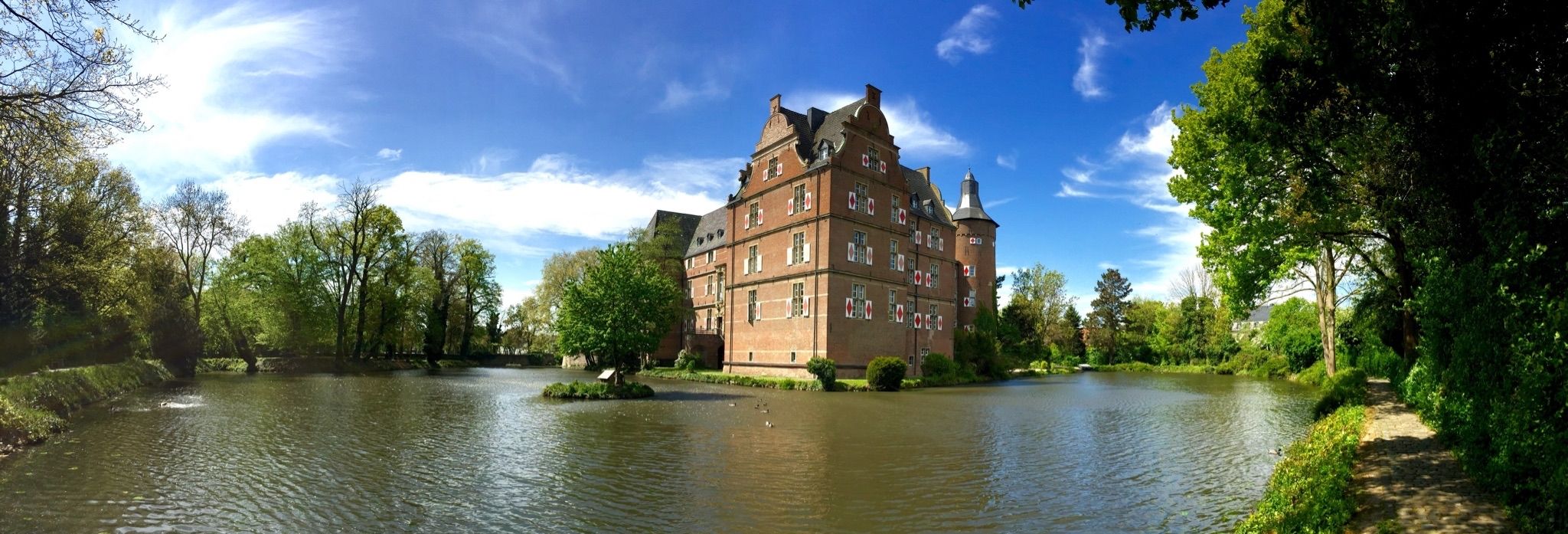
The former castle was surrounded by the Erft and two moats. It already existed before the old town of Kaster was surrounded by a castle wall. Its location was favorable because one of the few crossings over the Erft was possible there. The Erft also often demarcated the area of Cologne from that of Jülich. For a time, Kaster also served as a customs post. In front of the main castle, the current ruin, was a bailey. It is believed that this is where the urban development of Kaster came from. In Welser's drawing you can still see the rectangle of the outer bailey. The Eulenturm, which is still standing today, was one of these four corner towers. In the outer bailey was the waiter's shop with storage buildings and handicraft workshops, even a mouse catcher from Maastricht was employed there. From there the waiters (cellarius) administered the payments in kind and money to the feudal lords. The lords of Caster (known from 1148) were the feudal lords of the place and probably owned the castle. After their extinction, Kaster went back to the Counts of Jülich, who now expanded Kaster into a Jülich office. The castle was first mentioned in writing in 1273 when it was sold by the Count of Jülich to King Rudolph of Habsburg. He gave it back to Count Wilhelm IV of Jülich as a fief. Source: geschichtsverein-bedburg.de/permanent/KasterBurg.html
12
0
The former castle was surrounded by the Erft and two moats. It was already there before the old town of Kaster was surrounded by a castle wall. Its location was convenient because it was one of the few places where people could cross the Erft. The Erft also marked the boundary between the Cologne area and the Jülich area in many places. Kaster also served as a customs station for a time. In front of the main castle, which is now a ruin, there was an outer bailey. It is assumed that the development of Kaster's town started from there. The rectangle of the outer bailey can still be seen on Welser's drawing. The Owl Tower, which still stands today, was one of these four corner towers. The outer bailey housed the waiter's shop with storage buildings and craft workshops; even a mouse catcher from Maastricht was employed there. From there, the waiters (cellarius) managed the payments in kind and money to the feudal lords. The Lords of Caster (known from 1148) were the feudal lords of the town and probably owned the castle. After their extinction, Kaster went back to the Counts of Jülich, who then expanded Kaster into a Jülich office. The castle was first mentioned in writing in 1273, when it was sold by the Count of Jülich to King Rudolph of Habsburg. He gave it back to Count Wilhelm IV of Jülich as a fief. Source: https://www.geschichtsverein-bedburg.de/permanent/KasterBurg.html
8
0

The Jülich Citadel was once part of the Jülich Fortress and is the city's most important surviving architectural monument and one of the best-preserved fortresses in the bastion system in Germany. It was built in the years after 1545 as part of an ideal Renaissance city and is the oldest citadel north of the Alps.
7
0

The citadel is also interesting to look at from the outside.
5
0

The Rurtor, the so-called Witch's Tower, is one of three or four city gates in the medieval city wall of the city of Jülich. The arrow slits, the portcullis and the door openings to the battlement still indicate the former defensive function. The witch's tower was built at the beginning of the 14th century. The Witch's Tower had many names back then. From “Porta Rurae” (Latin for “Rurtor”), “Rurtor”, “Gefangenenthürn”, “Gefängnußthurm”, “Hessenturm” until the current name “Hexenturm” was used since the 18th century. The latter name came about at the time when the name Hessenturm was used and the building was used as a prison for the main and criminal court of the Duchy of Jülich. It is misleading in that only a few individual cases against so-called witches have been recorded from Jülich. After Jülich was almost completely destroyed in the Second World War, the first security measures were taken at the Hexenturm in 1949/1952, which was followed by a further restoration phase from 1961 to 1964. The onion domes from the 17th century were also restored true to the original. Flat conical helmets were also discussed for the roof reconstruction, with which the rectangular building on the city side with the pointed tent roof would have towered over the towers. Witch tower with light installation at night Since October 29, 2005, the Witch Tower has been illuminated in the evening and, in winter, in the morning with a light installation of 22 lights on both sides through the donation-financed “LIGHT(!) project”. The Witch's Tower forms the beginning of a planned “path of lights” through the city center to the citadel.
9
0

Worth seeing the citadel. Museum doesn't open until 2 p.m.
8
0
율리히 주변에서 가장 인기 있는 명소


더 살펴보기
다른 곳에서 최고의 성을 찾고 계신가요? 다른 가이드를 발견해보세요 율리히 주변:
