론스에서 가장 멋진 12개의 동굴
성을 방문하는 건 언제나 특별한 일이에요. 하이킹을 하다가 잠깐 들를 때도, 가이드를 따라 제대로 둘러볼 때도 말이죠. 론스에 있는 아름다운 성 12
곳을 아래에서 살펴본 후에 마음에 드는 성을 다음 모험 때 만나보세요!
마지막 업데이트: 8월 23, 2026

토스터스 성 유적지
하이라이트 • 성
There is a very interesting assumption about Tostner Castle that it was a large, unfinished castle complex, of which only the ring wall, dating …
번역자 Google •
팁에 의해
이런 장소를 발견하려면 지금 가입하세요
최고의 싱글 트랙, 봉우리 및 다양한 흥미로운 야외 장소에 대한 추천을 받아보세요.
무료 회원 가입
Burgruine Welsch-Ramschwag
하이라이트 • 성
Welsch-Ramschwag Castle was built between 1270 and 1290 by the Knights of Ramschwag, a noble family from the canton of St. Gallen (CH). Their family castle …
번역자 Google •
팁에 의해
지그베르크 성 유적
하이라이트 • 성
From the initially few remains of the wall, which were hardly to be found hidden by trees and bushes, a mighty castle complex developed through four renovations …
번역자 Google •
팁에 의해
마르가레텐 예배당(블라젠베르크), 펠트키르히
하이라이트 • 종교적 장소
Until 1897/98 the Margarethenkapf on the Blendenberg belonged to Tisis in terms of community politics and parish; only with the incorporation of the Heilig-Kreuz parcel did …
번역자 Google •
팁에 의해
무료로 가입하여 론스 주변의 더 많은 성을 발견하세요.
무료 회원 가입
이미 komoot 계정이 있나요?
오늘 무료 계정으로 시작하세요
다음 모험이 기다리고 있어요.
로그인 또는 가입하기


커뮤니티 팁

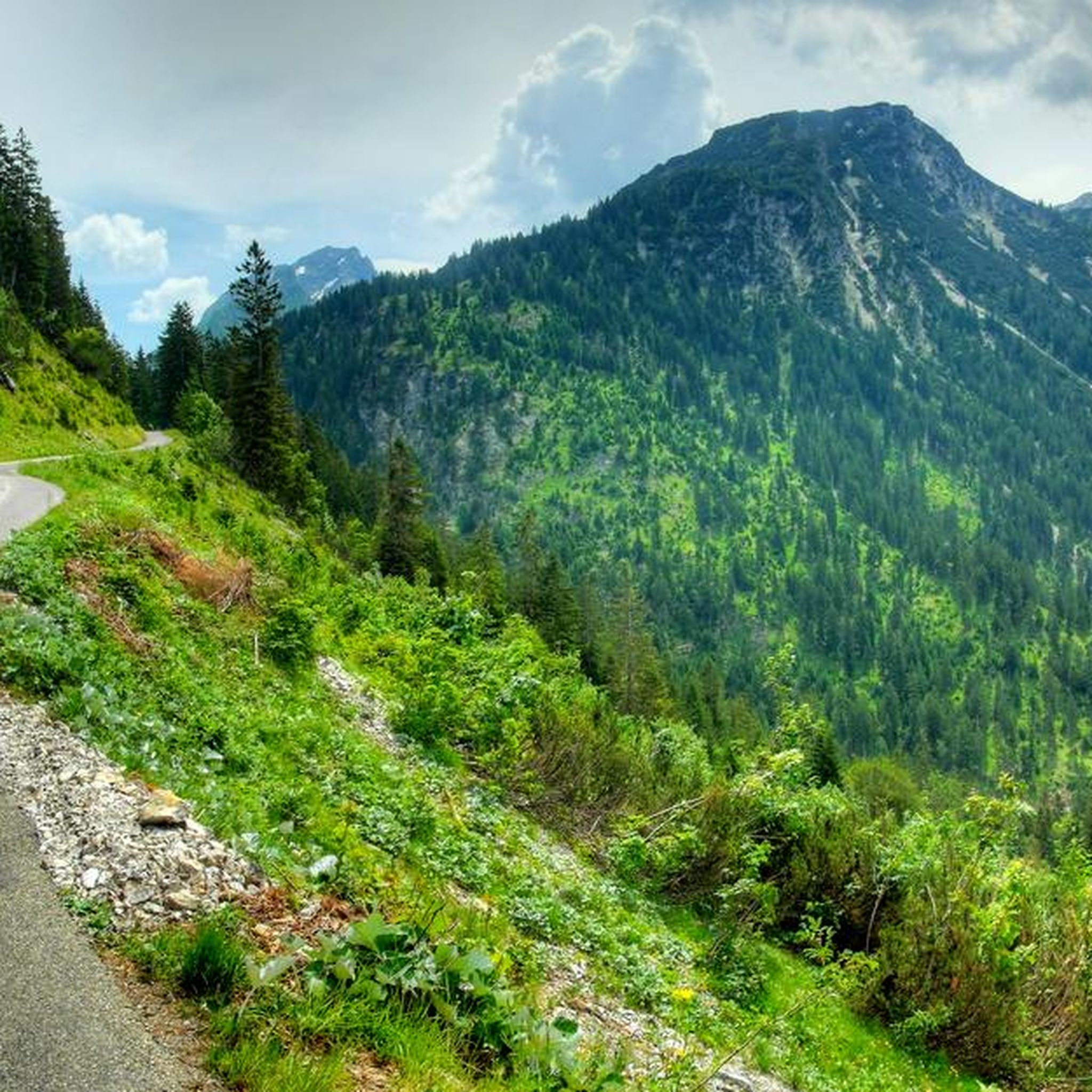
The Construction History of Tostner Castle There is a very interesting assumption about Tostner Castle that it was a large, unfinished castle complex, of which only the ring wall, dating from the end of the 12th century/beginning of the 13th century, was built. The present keep, gatehouse, and palace (possibly also outbuildings) were built into these in the second half of the 13th century. This theory is supported primarily by the truly remarkable placement of the palace, which was placed right above the ring wall and occupies a remarkable position within the castle complex. During the Appenzell Wars, which raged heavily in this region, Tostner Castle was also severely damaged in 1405, but was rebuilt after 1408. The very spacious, yet sparsely built castle complex, was abandoned before 1616 and has since fallen into disrepair. The keep was restored in 1938/39, and extensive renovations followed in 1974 and 1980. Text / Source: Tosters Castle Ruins Tourist Information, Schlossergasse 8, A-6800 Feldkirch http://www.burgenkunde.at/vorarlberg/vbg_Burgruine_Tosters/vbg_Burgruine_Tosters.htm
13
0


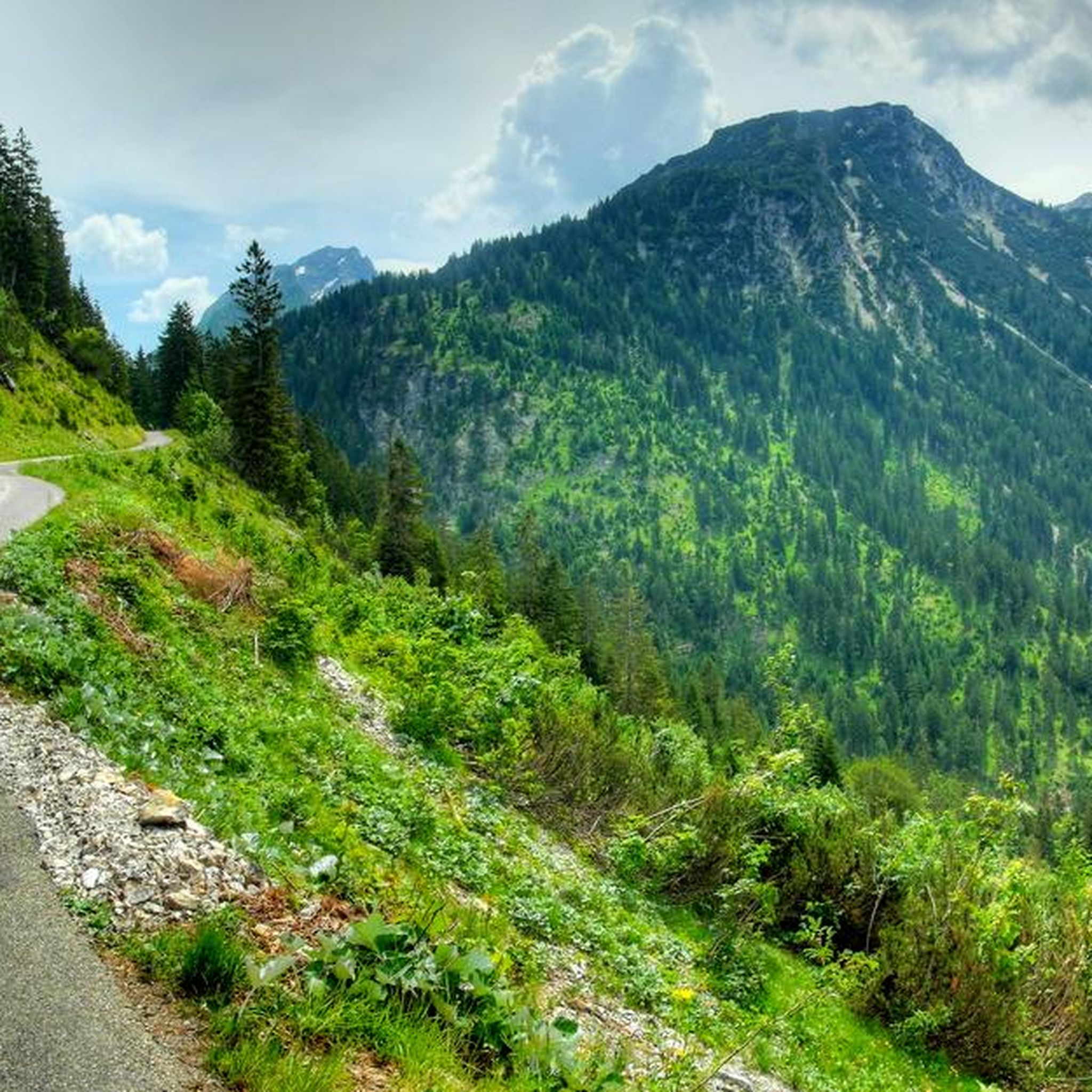
The Margarethenkapf on the Blasenberg belonged to Tisis in terms of local politics and parish until 1897/98; it only became part of Feldkirch when the Heilig-Kreuz parcel was incorporated. It has a number of peculiarities and highlights: right at the top, as a lookout point, is the popular Feldkirch "Rädle", below it to the northeast is the stately summer villa of the former Feldkirch mayor Josef Andreas Ritter v. Tschavoll, to the northwest is the residential tower of the so-called Tschitscherschlößchen and, exposed on the steep rock face of the Kapf, the Margarethen Chapel.
2
3

Tschitscher Castle with chapel (Margarethenkapf) Above the Ill breakthrough, on a narrow rocky hilltop, residential tower with chapel, three storeys, with steep gable and gable roof; the chapel, consecrated in 1522, with wall paintings and roof turrets. The name "Kapf" comes from the Latin caput and means "rock head". The castle was built in 1620 by the foreman Paul Tschitscher, later came into the possession of the Clessin family (in 1799, during the French era, various battles took place here), and from 1860 into the property of the Tschavoll family. Around 1870, Ritter von Tschavoll (mayor of Feldkirch) built a villa with a park on the upper terrace of the "Kapf". Owner: Frieda Vogt Text / Source: Austria Forum https://austria-forum.org/af/Wissenssammlungen/Burgen_und_Schl%C3%B6sser/Vorarlberg/Tschitscher-Schloss
16
1
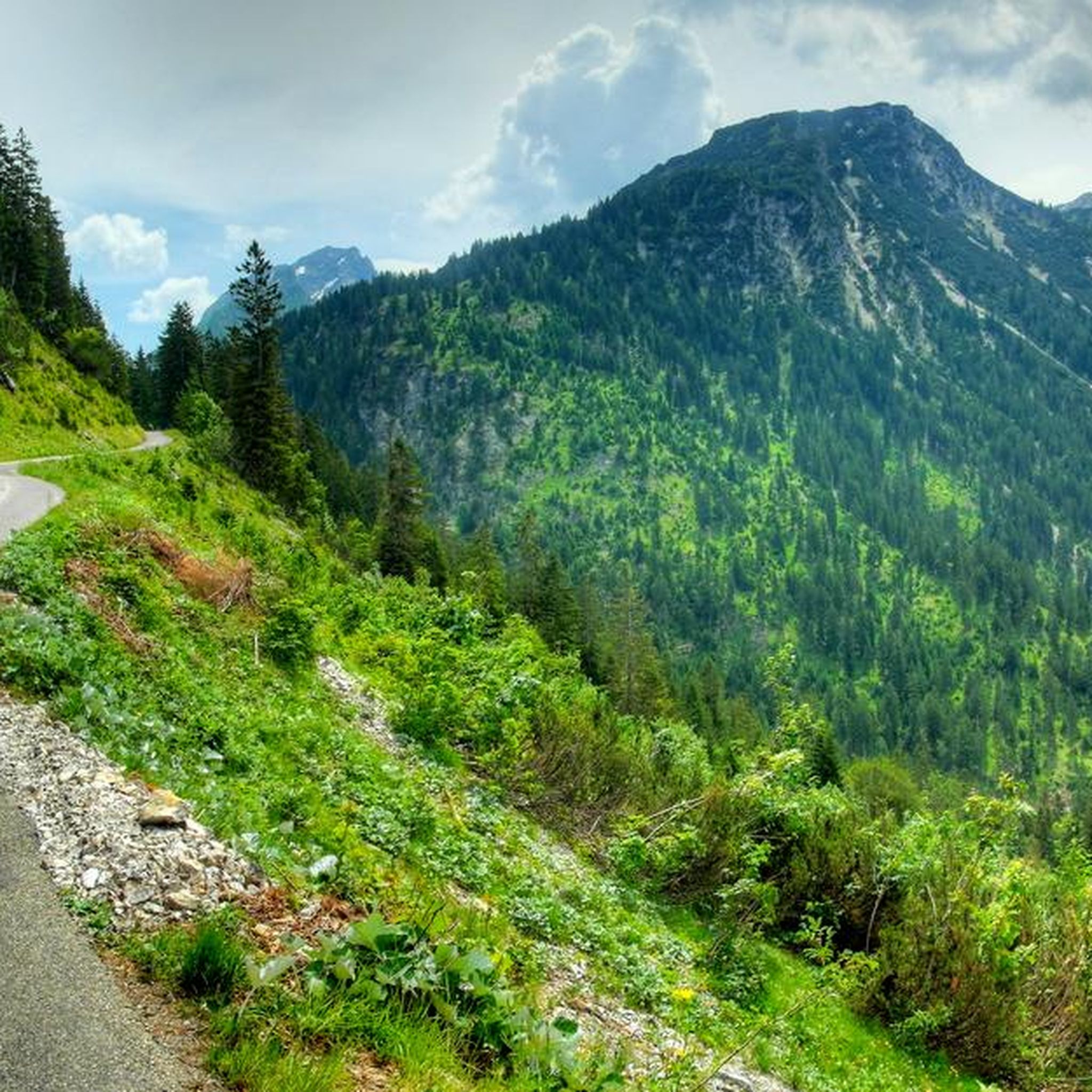
Castle ruins (Welsch-)Ramschwag, Nenzing Welsch-Ramschwag Castle was built between 1270 and 1290 by the Knights of Ramschwag, a noble family from the canton of St. Gallen (CH). Their family castle is in Häggenschwil, Canton St. Gallen. Before 1352 the castle came into the possession of the lords of Landenberg-Greifensee. In 1352 it was sold to Count Rudolf von Montfort-Feldkirch. When the Werdenbergs attacked the castle in 1360 as a result of a feud with the Montfort family, Hartmann von Prasberg from an Allgäu noble family was castellan. He defended the keep for many hours until help came from Feldkirch and the attackers were successfully driven away. In the same year, Welsch-Ramschwag Castle came to the Habsburgs. The castle did not last long, because angry Walgau farmers destroyed it on the evening of September 28, 1405 during the Appenzell War and it has been a ruin ever since. At the same time, other castles in the Walgau (Jagdberg, Blumenegg and Rosenegg) also went up in flames. The almost square complex had an elevated, central residential tower with simple light slits and a surrounding curtain wall. This was 1.20 meters thick and included the courtyard with an area of about 42 x 38 meters. In the west, two artificial wall-ditch systems were built as obstacles to the approach. As is the case today, the entrance to the main gate was in the east. The first attempts at restoration date back to 1912. Another attempt failed in 1925/26 due to a lack of funds. In 1947, parts of the ring wall were destroyed by the construction of a ski jump, which is now closed again. From 1997 to 2000 the ruins were restored in several stages by the market town of Nenzing in cooperation with the Federal Monuments Office and volunteers. The Castle Committee of the State Museum Association carried out the graphic reconstruction of the keep and the floor plan. Text / source: Vorarlberg Tourismus GmbH, Poststraße 11, 6850 Dornbirn https://www.vorarlberg.travel/poi/nenzing-burgruine-welsch-ramschwag/
15
0

Very beautiful old town
0
2
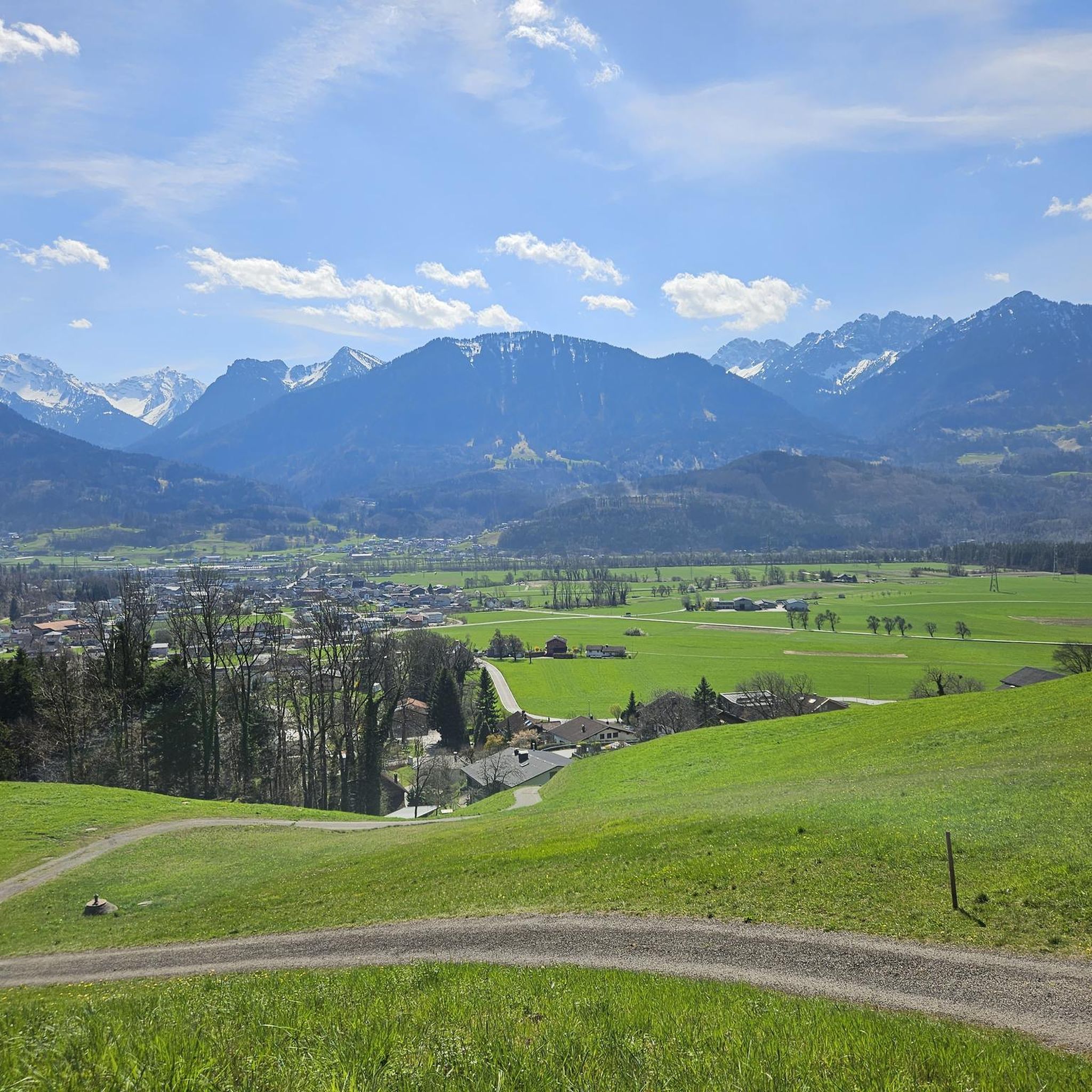
Margarethen Chapel (Blasenberg), Feldkirch Until 1897/98 the Margarethenkapf on the Blendenberg belonged to Tisis in terms of community politics and parish; only with the incorporation of the Heilig-Kreuz parcel did it become Feldkirch. It shows (e) some curiosities and highlights: at the top as a vantage point is the popular Feldkirch "Rädle", below it to the north-east the stately summer villa of the former Feldkirch mayor Josef Andreas Ritter v. Tschavoll, to the north-west the residential tower of the so-called Tschitscherschlößchen and exposed on the steep rock fall of the Kapf the Margarethen chapel. The "Tschavollvilla" was built in 1867, the "Tschitscherschlößchen" around 1620; the Margarethen chapel is mentioned in documents as early as 1483 and as early as 1500 it was called "chapel on Kapfen". In 1502 it was said that there was a "newly built Capell Sant Margarethe uf dem Kapff", but it was not until 1522 that the Margarethen chapel was consecrated by the church. In 1610 the entire "Captain property" including the chapel was transferred to the Reich Abbey in Weingarten, in 1696 to the Imperial Abbey in Ottobeuren and in the course of secularization in 1802/1803 into state ownership - the Austrian era. Although the "Bavarian interlude" interrupts these ownership structures for 12 years, state ownership remains intact. Around the middle of the 19th century the industrialist family Getzner/Ganahl acquires the entire area (without Tschitscherschlößchen); Andreas Tschavoll - Christian Getzner's nephew - took over the property in 1859 and acquired the Margarethen chapel in 1875, which he "had exemplary and tastefully decorated" from 1862 to 1869 (even before he had acquired it). After his death, the entire reality complex remained in Tschavoll's possession until 1949/50. The Tschavollvilla became the private property of a Feldkirch family and was renovated in an exemplary manner; Tschitscherschlößchen and Margarethenkapelle also came into (other) private ownership. The Tschitscherschlößchen was defaced in the second half of the 20th century by an unfinished new addition and is now falling into disrepair. In 1992 Rainer Lins from Tisis also said: "The current condition of the chapel is scandalous. It is to be hoped that a speedy restoration will restore the dignity of the sacred building!" DEHIO describes the Margarethenkapelle as a rectangular building with a choir under a gable roof, a bell turret, a gable facade with a pointed arch window and a high, barrel-vaulted passageway under the western part. (This passage arch is probably the unique characteristic of this chapel) On the south side of the archway there is a round arch niche with Gothic frescoes, in the left reveal a Christopher (beginning of the 16th century). On the north side of the archway, a pointed arch window with a niche and a baroque stone figure of St. Johannes Nepomuk. The prayer room has cross vaults, the chancel has lunette vaults; the north wall shows a round arch portal. DEHIO names a bell from 1522, Getzner reports "earlier two little bells, one of them from the year 1502". However, the facility described by Getzner is no longer "on site"; the church is empty. DEHIO simply calls it: "Equipment deposited". Text / source: wiki.imwalgau.at https://wiki.imwalgau.at/Margarethen-Kapelle_(Blasenberg)
17
1


더 살펴보기
다른 곳에서 최고의 성을 찾고 계신가요? 다른 가이드를 발견해보세요 론스 주변:
