20의 아조프린가지 명소 & 주요 장소
아조프린에는 둘러볼 만한 장소가 많답니다. 하이킹 또는 사이클링을 좋아한다면 아조프린에 숨겨진 20
가지 보석을 만날 수 있을 거예요. 이 지역의 주요 명소를 살펴보면서 다음 모험을 계획해보세요.
마지막 업데이트: 7월 20, 2026
오르가스 백작의 성
하이라이트 • 성
번역자 Google •
팁에 의해

이런 장소를 발견하려면 지금 가입하세요
최고의 싱글 트랙, 봉우리 및 다양한 흥미로운 야외 장소에 대한 추천을 받아보세요.
무료 회원 가입
Plaza de la Concordia, Cobisa
하이라이트 • 정착지
번역자 Google •
팁에 의해

Burguillos de Toledo
하이라이트 • 정착지
번역자 Google •
팁에 의해
산타 마리아 마그달레나 - 플라사 산 페드로
하이라이트 • 종교적 장소
It is a parish church with medieval origins, built in the 13th …
번역자 Google •
팁에 의해
무료로 가입하여 아조프린 주변의 더 많은 명소를 발견하세요.
무료 회원 가입
이미 komoot 계정이 있나요?
오늘 무료 계정으로 시작하세요
다음 모험이 기다리고 있어요.
로그인 또는 가입하기

커뮤니티 팁

Currently, it is not possible to climb to the castle because a tower has collapsed.
0
1

It is located next to the Tourist Information office.
7
0
It is located next to the Tourist Information office, where they provide information about guided tours.
4
0
The Plaza de la Concordia in Cobisa (Toledo) is a central and very active space in the municipality, ideal for strolling, enjoying local events, and exploring the surrounding area.
13
3
The Church of Santa María Magdalena in Burguillos de Toledo is located in the Plaza de San Pedro. It is a parish church with medieval origins, built in the 13th century. Its architectural style is Gothic, with decorative details that reflect centuries of history. Inside, there are altarpieces, carvings, and religious paintings. It has been a key element in the spiritual and social life of the town.
11
3

A single-nave, rectangular Baroque church with a Latin cross floor plan, with a flat apse and a choir stall at the foot. It is built with brick and masonry walls typical of the Toledo construction. The nave is covered with a barrel vault, and the transept has a half-orange dome. At its foot is a two-story granite doorway with a niche containing a stone image of Saint Mary Magdalene, the church's patron saint. The façade is topped with a large triangular pediment and a small bell gable. The bell tower, located on the left side and set back from the main façade, stands out for the height and slenderness of the spire that covers it. The building was rebuilt in the 17th century due to its state of ruin, but its exact origins are unknown, and are sometimes confused with those of the Hermitage of Our Lady of Burguillos. The sad events of 1936 led to the destruction of all the altarpieces and ornaments in the church. The church was dominated by a large canvas (8.60 x 4.31 meters), painted in oil by Francisco Rizi in 1675, depicting Saint Mary Magdalene, the parish's patron saint, surrounded by angels, clouds, and glory. The painting was housed in a large, gilded, Baroque-style altarpiece that served as a gigantic frame. The people of Burgos celebrate festivals in honor of the Virgin of the Rosary, the Christ of Faith, and the Virgin of Magdalene. It is a place of friendly people, where you can enjoy its streets and surroundings, where the traveler discovers the Parish Church of Santa María Magdalena, the Hermitage of San Blas, the jurisdictional roll... A historical anecdote about Burguillos de Toledo is the visit to this town by the first American in orbit and companion of the first man to walk on the moon, Neil Armstrong. This visit took place in 1965 due to his relationship with a local resident who worked as a secretary at the U.S. Embassy in Spain.
6
4

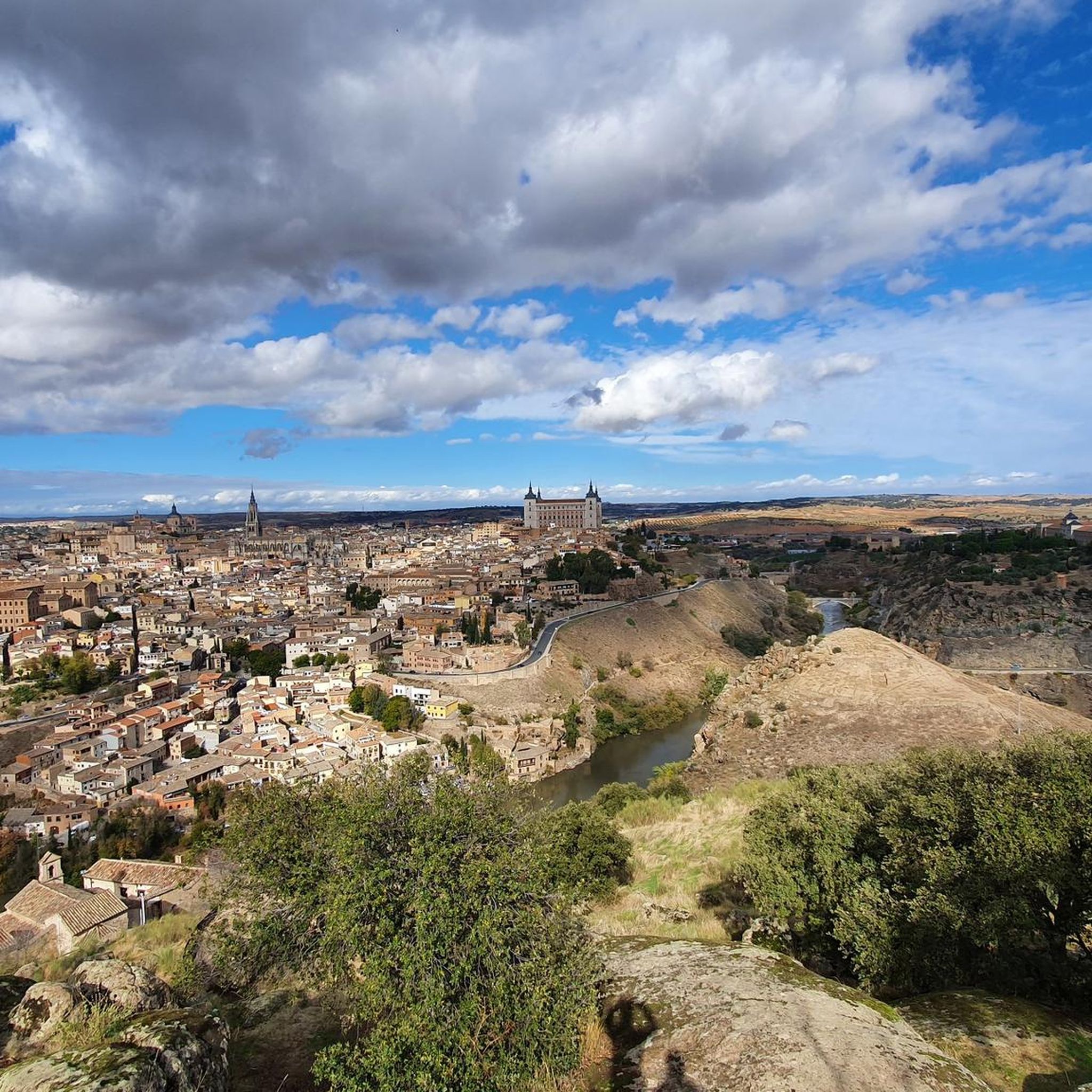
Built during the Middle Ages next to the western entrance gate to the town of Orgaz, it was for years a key element in the settlement's defense and surveillance functions. Although we now know it as the Castle of the Counts of Orgaz, when it was built, the castle belonged to the Lords of Orgaz. The Lordship of Orgaz was established in 1220 when Ferdinand III granted Ferdinand Juan de Alfariella, who had purchased the town of Orgaz from the Church of Santo Tomé, the title of Lord. Orgaz did not become a County until 1520 when the title of Count of Orgaz was granted to Álvaro Pérez de Guzmán by King Charles I.
0
2
The Almonacid Castle in Toledo is a Muslim building that was donated by Alfonso VI to the Toledo Cathedral. Its current configuration is due to the reforms carried out by Archbishop D. Pedro Tenorio in the 14th century and later it served as a prison for D. Alfonso de Gijón y Noreña, bastard son of Enrique II. In the 16th century, D. Pedro Gumiel commented that the fortress needed urgent repairs. In the 18th century it passed into the hands of the counts of Mora and during the War of Independence, in the 19th century (1809), it was a refuge for the troops of General Venegas, with the Battle of Almonacid taking place at its feet, which ended with the capture of the castle by the French. In 1839 the mayor of Almonacid allowed the residents of the town to use the material from which it was made for private use, further accentuating its ruin. Today the castle is property of the City Council and access is free.
1
0


