4.7
(42)
656
자전거 타는 사람
42
라이딩
베넬레스 최고의 사이클링 경로를 따라 지역을 둘러볼까요? 베넬레스에서 가장 멋진 자전거 라이딩 장소 중에서 가장 마음에 드는 라이딩을 선택해보세요.
마지막 업데이트: 5월 18, 2026
5.0
(3)
51
자전거 타는 사람
31.2km
02:05
490m
490m
어려운 자전거 타기. 우수한 체력 필요. 대부분 포장된 지면. 실력과 관계없이 누구나 갈 수 있음.
5.0
(5)
87
자전거 타는 사람
37.3km
03:34
670m
670m
어려운 자전거 타기. 우수한 체력 필요. 대부분 포장된 지면. 실력과 관계없이 누구나 갈 수 있음.

무료 회원 가입
5.0
(1)
45
자전거 타는 사람
33.2km
02:57
530m
530m
어려운 자전거 타기. 우수한 체력 필요. 대부분 포장된 지면. 실력과 관계없이 누구나 갈 수 있음.
4.5
(2)
48
자전거 타는 사람
25.4km
01:46
310m
310m
보통 자전거 타기. 좋은 체력 필요. 대부분 포장된 지면. 실력과 관계없이 누구나 갈 수 있음.
4.0
(6)
30
자전거 타는 사람
35.9km
02:17
400m
400m
보통 자전거 타기. 좋은 체력 필요. 대부분 포장된 지면. 실력과 관계없이 누구나 갈 수 있음.
더 다양한 경로와 다른 탐험가들의 추천을 살펴보세요.
무료 회원 가입
이미 komoot 계정이 있나요?
투어 추천은 다른 사람들이 komoot에서 완료한 수천 개의 활동을 바탕으로 구성되어 있습니다.
오늘 무료 계정으로 시작하세요
다음 모험이 기다리고 있어요.
로그인 또는 가입하기
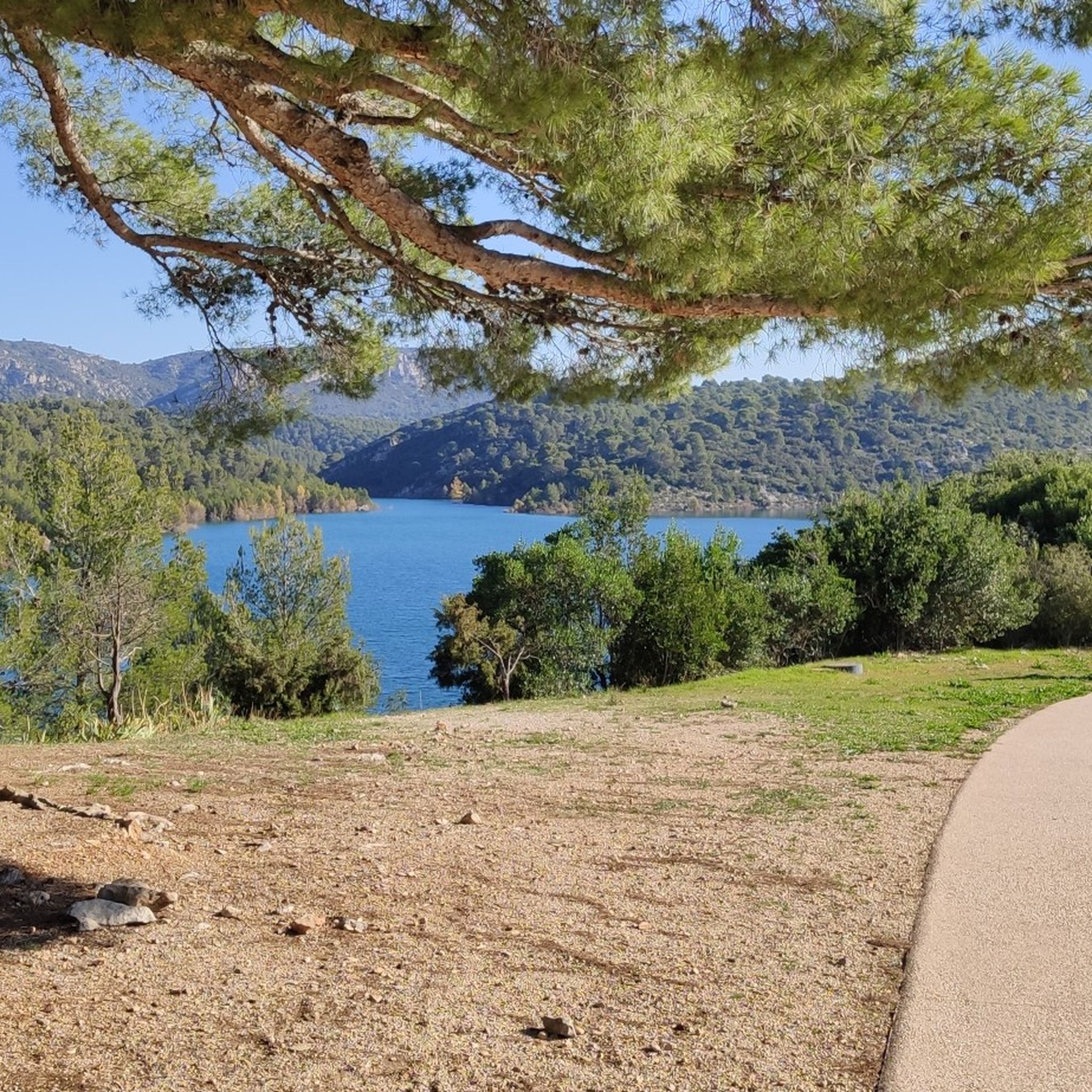
The dam of Lake Zola can be reached via beautiful trails. It was built between 1847 and 1854 and is one of the first arch dams in the world; according to Wikipedia, it may even be the very first. The lake served to supply Aix-en-Provence with drinking water, which was piped there via an aqueduct. A beautiful destination directly from Aix, or from Le Tholonet.
0
0
A great walk to do early in the morning because the heat rises quickly!
0
0
15세기에 왕립 건물 관리인 건축가 Jean de Paris는 규칙적인 원근감과 질서를 고려하여 도시 동쪽의 Villeneuve 지역을 설계했습니다. "Rue du boulevard" (rue Emeric David)는 새로운 지역의 강력한 축입니다. Ledoux는 그의 새로운 궁전의 정면을 이 거리에 집중시킬 것입니다. 옛 백작 궁전 부지에 지어진 법원 궁전은 1787년, 동시에 지역 재구성을 구상했던 Claude-Nicolas Ledoux에게 의뢰되었습니다. 이 새로운 건물을 만들기 위해 200채 이상의 집이 철거되었습니다. 혁명이 발발하고 작업이 중단되었으며, 감옥 건축가 Michel Penchaud가 약간 수정하여 1822년에야 재개되었습니다. 1831년에 완공된 법원은 1832년 11월 13일에 이곳으로 이전했습니다. 궁전 앞에는 Siméon과 Portalis*의 영광을 기리는 기념비가 1842년에 세워졌으며, 이는 Aix 출신 Ramus의 작품으로 1847년 11월 8일에 개관했습니다. 마르세유 법원 궁전과 같이 계획되었던 신고전주의 박공은 결코 실현되지 않았습니다. Jean-Etienne-Marie Portalis (1778-1807)는 Aix에서 오랫동안 변호사로 활동했으며 1789년 시의회 의원을 지낸 뛰어난 프로방스 법률가입니다. 나폴레옹은 민법전 편찬을 그와 다른 사람들에게 맡겼습니다. 장관이 된 그는 프랑스 교회와의 협약(Concordat) 편찬으로 시대를 mark했습니다.
0
0
Originally, the church was in the shape of a Latin cross and consisted only of the nave, transept, bell tower, and watchtowers to the north and south of the choir, as well as the Hélion de Villeneuve chapel (14th century) with its beautiful ribbed vault featuring liernes and tiercerons. Outside, the twenty or so stepped buttresses topped with pinnacles are hidden on Rue Cardinale by the unimpressive buildings attached to the monument in the 17th century. The 67-meter-high bell tower was completed in 1376. The priory, now the Granet Museum, served both as the residence of the knights and as a hospice where pilgrims were welcomed and the sick cared for. The church and the priory were built in the fields, outside the city walls. They were set into the central vista of the Mazarin Quarter in the 17th century, built by Michel de Mazarin, brother of Louis XIV's minister. The building was remodeled during the 17th century by Prior Jean-Claude Viany, who had six chapels built within the buttresses and, for symmetry, added the south turret similar to the one on the north side that provides access to the bell tower. In 2018, after 225 years, the church received three new bells for its carillon, out of the four that comprise it. The three previous bells had been cast in 1793 during Napoleon's Italian campaign.
1
0
In its current form, the Church of Saint-Jean-de-Malte is the first entirely Gothic church in Provence. It was built between 1270 and 1280 by the Knights Hospitaller of Saint John of Jerusalem, replacing an older building whose dedication is known to have been celebrated by Cardinal Pierre de Colmieu on May 3, 1251. The lightness and elegance of the Gothic rib vaults, which support the pillars, give the nave a dynamic and rhythmic quality that earned it the nickname "Sainte-Chapelle of the South." The side windows are less open than those in churches in the Île-de-France region, but the apse window is exceptionally large for Provence. The overall effect was restored during the recent restoration work carried out in 1996, by highlighting the two-tone effect of the ochre wall surfaces and the white architectural elements, restoring to the space its luminosity, simplicity, elegance, and dynamism. The current building was constructed as the mausoleum of the Counts of Provence: – the tomb of Raymond Berenger V and his wife Beatrice of Savoy in the north transept – the tombs of Beatrice of Provence and her husband Charles I of Anjou, King of Naples, which were destroyed during the French Revolution. This church can be considered a kind of ‘Provençal Saint-Denis’.
1
0
In front of the Palais de Justice stretches the Place des Prêcheurs, created in the 15th century, the center of public and social life before the creation of the Cours Mirabeau. Around 1640, the architect Jean Lombard continued the work begun by Jean de Paris during the expansion of the city with the Villeneuve district, by establishing the layout of the eastern bank of the Place des Prêcheurs with large buttresses of angled splays. The Fontaine des Prêcheurs was decorated in 1748 by Jean Pancrace Chastel with four medallions, destroyed in 1793 then reestablished in 1833, restored largely thanks to American patronage.
2
0
다른 지역의 최고의 자전거 경로를 살펴보세요.