뵈엔 최고의 워킹 & 하이킹 경로
4.5
(4585)
19,681
등산객
948
하이킹
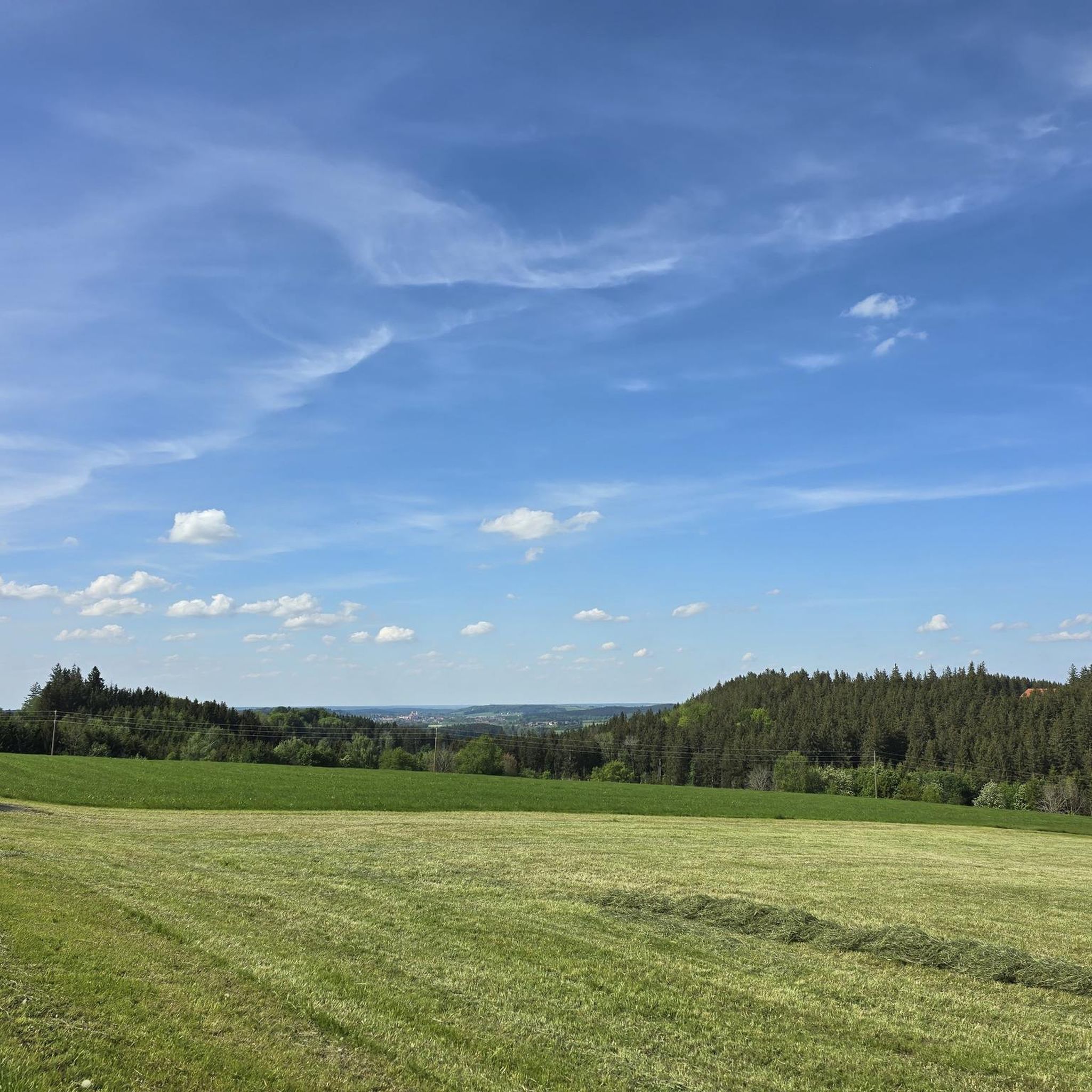
Böhen 주변 하이킹은 독일 알가우 지역에 위치하며 다양한 야외 경험을 제공합니다. 이 지역은 구불구불한 언덕, 넓은 녹색 초원, 그림 같은 호수로 특징지어지며 하이커들에게 다채로운 풍경을 선사합니다. Unterallgäu에서 가장 높은 마을인 Böhen에서는 남쪽 산들의 파노라마 전망을 즐길 수 있습니다. 지형은 고요한 연못, 강변 길, 독특한 지질학적 지형을 포함합니다.
Böhen 주변 최고의 하이킹 트레일
- 가장 인기 있는 하이킹 경로는 볼퍼츠슈텐덴에서 시작하는 독일 레바다 루프 – 모차바흐 강변 트레일로, 9.9마일(15.9km) 길이이며 완료하는 데 4시간 27분이 소요됩니다. 이 적당한 난이도의 경로는 다양한 지형을…
마지막 업데이트: 9월 28, 2026
4.6
(75)
303
등산객
15.9km
04:27
310m
310m
보통 하이킹. 좋은 체력 필요. 실력과 관계없이 누구나 쉽게 갈 수 있는 길.
4.7
(25)
76
등산객
6.96km
01:57
130m
140m
초급용 하이킹. 모든 체력 수준에 적합. 실력과 관계없이 누구나 쉽게 갈 수 있는 길.

4.3
(7)
34
등산객
8.75km
02:24
140m
140m
보통 하이킹. 좋은 체력 필요. 실력과 관계없이 누구나 쉽게 갈 수 있는 길.
4.7
(3)
19
등산객
2.80km
00:47
50m
50m
초급용 하이킹. 모든 체력 수준에 적합. 실력과 관계없이 누구나 쉽게 갈 수 있는 길.
4.8
(5)
28
등산객
6.15km
01:43
110m
110m
초급용 하이킹. 모든 체력 수준에 적합. 실력과 관계없이 누구나 쉽게 갈 수 있는 길.
더 다양한 경로와 다른 탐험가들의 추천을 살펴보세요.
이미 komoot 계정이 있나요?
투어 추천은 다른 사람들이 komoot에서 완료한 수천 개의 활동을 바탕으로 구성되어 있습니다.
오늘 무료 계정으로 시작하세요
다음 모험이 기다리고 있어요.
커뮤니티 팁


Beautiful Kneipp facility
0
0

There are various hiking trails, but the one along the water is especially great for children.
0
0

The "Geological Organs" are conglomerate rocks where carbonic acid seepage water has gradually eroded the limestone over millennia. The resulting stone tubes are up to 15 meters high.
1
0

The stroller-friendly hiking trail is easy to walk. A highlight for families with children, as the Motzabach stream runs along the entire length of the trail. Children can play in it or float boats.
1
0

Ottobeuren Benedictine Abbey The Benedictine abbey was founded in 764. In 972, Bishop Ulrich of Augsburg obtained from Emperor Otto I the exemption from all imperial burdens and the free election of an abbot. From 1102 to 1145, under Abbot Rupert I, the Hirsau Reform was adopted for Ottobeuren, and a new monastery and church were completed. In 1365, the abbey lost its independence to Augsburg. During the Peasants' War and the Schmalkaldic War in the mid-16th century, the church was severely damaged and subsequently rebuilt in the Renaissance style. From 1630 to 1635, during the Thirty Years' War, the monastery buildings were misused and plundered. In 1710, Abbot Rupert II Neß succeeded in regaining imperial immediacy and began construction in 1711, which was largely completed in 1766. In 1802, the church and monastery became Bavarian state property as part of the secularization process. In 1805, the church became the parish church of Ottobeuren. In 1834/35, the monastery first came under the Augsburg Priory and then became an independent abbey again in 1918. In 1926, Pope Pius IX declared the church a minor basilica. Today, the complex is a monastery with a school (grammar school and secondary school) and serves as an educational institution. In 1964, the complex was stylishly renovated for the 1200th anniversary celebrations. Text / Source: https://dcsy.de/B_Ottobeuren/ott_klostergeschichte.htm#:~:text=In%20year%20764%20%20the%20Benedictine abbey%20was founded.%20972, and%20a%20new building%20of%20monastery%20and%20church%20was completed.
14
0
Basilica of St. Alexander and St. Theodore, Ottobeuren The magnificent basilica, dedicated to the two Roman martyrs Alexander (162) and Theodore (306), is certainly one of the most beautiful Baroque churches in southern Germany. With its two 82-meter-high onion domes, it stands on a gently rising ridge west of the market square, visible from afar above the valley of the western Günz River. Due to its dominant, free position within the entire building complex, the basilica plays an undeniable presiding role. This concept of placing the church in front of the monastery was not, however, an Ottobeuren invention. Rather, it can be traced back to the famous Swabian architectural theorist Joseph Furtenbach, who published it in 1628 in his work "Architectura Civilis" as the ideal form for a women's monastery. Other monasteries were also built according to this pattern: Kempten in 1651, Seedorf/CH in 1682, Obermarchtal in 1686, Holzen in 1696, Klosterwald in 1714, Sießen in 1716, and Fiecht/Tyrol in 1707. The foundation stone was laid on September 27, 1737, at the present main portal. During the reigns of Abbots Rupert Neß and Anselm Erb, it was built as a monastery church from 1737 to 1766 by Simpert Kraemer (until 1748) and Johann Michael Fischer. The very rich late-Bavarian furnishings include dome and ceiling frescoes and altarpieces by Johann Jakob and Franz Anton Zeiller from Tyrol, stucco figures by Johann Joseph Christian, and stucco work by Johann Michael Feuchtmayer the Younger. It boasts two widely renowned Baroque choir organs by Karl Joseph Riepp: the four-manual Trinity Organ with 47 stops and the two-manual Holy Spirit Organ with 27 stops, both with a French sound. The choir stalls are by Martin Hermann (carpentry) and Johann Joseph Christian (reliefs). The focal point of the church is the Romanesque crucifix (ca. 1220). The church's unusual north-south orientation is due to its location within the overall complex, whose floor plan is in the shape of a cross. In 1926, the monastery church was elevated to a Papal Basilica/Basilica Minor by Pope Pius XI. Text / Source: Benedictine Abbey of Ottobeuren, Sebastian-Kneipp-Str. 1, Ottobeuren https://www.abtei-ottobeuren.de/content/klosteranlage/die-basilika/
14
0
Beautiful path and bridge over the Motzabach to Ottobeuren
1
0
뵈엔 주변에서 가장 인기 있는 명소


더 살펴보기
다른 지역의 최고의 하이킹를 살펴보세요.
