로크포르 최고의 워킹 & 하이킹 경로
4.4
(152)
1,120
등산객
95
하이킹
정확한 경로를 찾는 것이 때로는 어렵지만 로크포르에서 하이킹을 하면 다양한 경치를 마음껏 감상할 수 있답니다. 로크포르에서 가장 멋진 하이킹과 워킹 중에서 마음에 드는 활동을 시작해보세요.
마지막 업데이트: 9월 1, 2026
4.8
(4)
43
등산객
8.67km
02:15
50m
50m
보통 하이킹. 좋은 체력 필요. 실력과 관계없이 누구나 쉽게 갈 수 있는 길.
3.0
(2)
26
등산객
12.0km
03:22
240m
240m
보통 하이킹. 좋은 체력 필요. 실력과 관계없이 누구나 쉽게 갈 수 있는 길.

무료 회원 가입
5.0
(2)
25
등산객
15.9km
04:38
420m
420m
보통 하이킹. 좋은 체력 필요. 실력과 관계없이 누구나 쉽게 갈 수 있는 길.
4.8
(4)
16
등산객
15.8km
04:31
370m
370m
보통 하이킹. 좋은 체력 필요. 실력과 관계없이 누구나 쉽게 갈 수 있는 길.
5.0
(1)
17
등산객
5.55km
01:26
30m
30m
초급용 하이킹. 모든 체력 수준에 적합. 실력과 관계없이 누구나 쉽게 갈 수 있는 길.
더 다양한 경로와 다른 탐험가들의 추천을 살펴보세요.
무료 회원 가입
이미 komoot 계정이 있나요?
투어 추천은 다른 사람들이 komoot에서 완료한 수천 개의 활동을 바탕으로 구성되어 있습니다.
오늘 무료 계정으로 시작하세요
다음 모험이 기다리고 있어요.
로그인 또는 가입하기
로크포르 주변 인기 장소



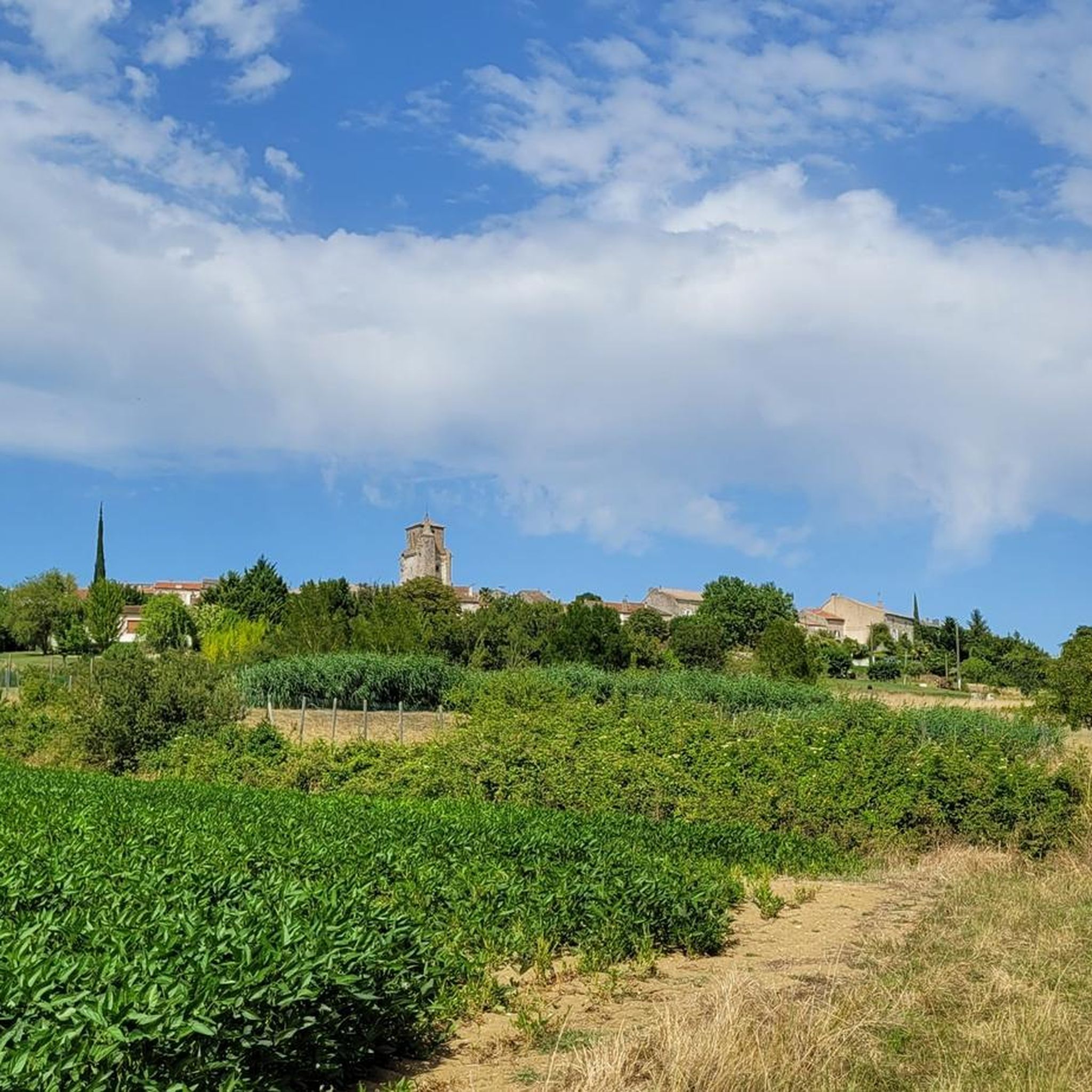
커뮤니티 팁

모이라 성모 마리아 교회는 11세기에 설립된 옛 클루니 수도원의 가장 주목할 만한 유적입니다. 역사 기념물로 분류된 이 교회는 조각된 문, 섬세하게 조각된 기둥, 웅장한 네이브를 갖춘 훌륭한 로마네스크 건축 양식을 보존하고 있습니다.
0
0
모이라크는 로트-에-가론에서 가장 아름다운 마을 중 하나입니다. 가론 계곡을 내려다보는 언덕 위에 자리 잡고 있으며, 11세기에 설립된 주목할 만한 클루니 수도원으로 가장 잘 알려져 있습니다. 돌집으로 늘어선 좁은 거리, 아제네 지역의 언덕을 조망할 수 있는 전망, 수도원 주변의 평화로운 분위기가 매력적인 휴식처를 만들어냅니다.
0
0


At the time of Saint Francis of Assisi's death in 1226, the Order of Friars Minor had 240 convents, 60 of which were located throughout Aquitaine. Since some of the documents of the Cordeliers convent in Agen were destroyed during the Protestant occupation of the city, the exact date of the first convent's founding is unknown. Father B. Villate wrote in 1715 to the Bishop of Agen, François Hébert, that it was founded in 1291. But elsewhere, we know that the Cordeliers convent was founded after that of the Jacobins and before that of the Carmelites, that is, between 1240 and 1272. Bishop Pierre Jerlandi was buried in the Cordeliers church in 1271. In his will dated July 25, 1262, Amanieu d'Albret bequeathed "als frais Menors d'Agen, dus cens sols." We can therefore assume that the Cordeliers had settled in Agen before 1262. [1] Their first convent was established outside the city walls, near the Saint-Michel gate, probably in front of the Saint-Louis gate, in the enclosure of the Discalced Carmelites where tombs were found by the Discalced Carmelite Fathers, that is to say, between the streets Palissy, Mascaron, Lamouroux and the Garonne. The donations received led to the Cordeliers' convent being called the Golden Convent. For Abbot Barrère, the nickname Doré would not come from the wealth of the convent but from an alteration of the name Dovère which was given by the archbishops of Bourges to several of their houses and monasteries. This would be due to a chapel founded in the 9th century nearby by a Randulphe de Bourges. The church must have been as large as the Jacobin Church because it was here that homage was paid by the nobility and communities of the Agenais to King Edward I of England in 1286. In 1336, Philip VI of Valois, considering that the Cordeliers convent, leaning against the city walls, could be a danger in the event of a conflict with the King of England, decided to seize it and build a fortress there. He obtained permission from Pope Benedict XII on the condition that a new convent be established within the walls. Demolition of the convent began in 1338. The Friars Minor initially settled near the Church of Notre-Dame-du-Bourg but encountered hostility from the canons of Saint-Étienne Cathedral. No longer having premises in Agen, the Friars Minor appealed to the King of France. His son, Prince Jean, while in Guyenne at the time, had the destroyed convent appraised and ordered them to be paid the estimated value of 5,000 livres tournois. This sum, supplemented by other gifts, allowed them to initially settle in the Saint-Georges Hospital. However, a conflict with the Augustinians, who found them too close to their convent, forced them to move away and settle in 1345 in the Saint-Hilaire district, near the Saint-Georges Gate. To appease the criticism of the canons of Saint-Étienne, the Friars Minor gave them the marble from their first cloister. The construction of their church was completed in 1348, as on that date the Cordeliers obtained permission from the Bishop of Agen, Amanieu de Fargis, to have their cemetery blessed by Brother Philippe (Filippo de Ursone), Bishop of Ajaccio. The church follows the traditional plan of southern Gothic churches. It has a wide, single nave without a transept and is lined with shallow side chapels. It is built in half stone and half brick. It comprises three bays with ribbed vaults. The apse has seven sides. Its most interesting and remarkable feature is the inverted hull-shaped roof structure of a boat.[5] The old Cordeliers church had only a small square bell tower. The church's large windows were fitted with stained-glass windows. They are dated 1869. One of the windows bears the signature of Bordeaux master glassmaker Joseph Villiet.
0
0
The Martrou Chapel was built in the Romanesque period. The presence of these different sanctuaries made Agen a stop on a pilgrimage route to Santiago de Compostela. A Martyr's Hospital[ was built next to the Martrou Chapel, which became its chapel, near the Saint-Caprais collegiate church. A Saint-Jacques Hospital was founded in the second half of the 14th century and not in the 12th century[. In 1562, the different hospitals of Agen, Saint-Antoine, Saint-Georges, Saint-Michel and Saint-Jacques, were united at the Martyr's Hospital[]. The whole was called the Saint-Jacques-du-Martyre Hospital. This hospital was closed in 1819 after its merger with the General Hospital for the Poor, which then took the name Saint-Jacques Hospital, before becoming the Hôtel du Département de Lot-et-Garonne in 1992. The Martrou Chapel was part of the Saint-Caprais collegiate church. It currently belongs to the Sainte-Foy church. It has undergone numerous alterations, from the Romanesque period to the 20th century. It was restored after the merger of the various hospitals of Agen, after 1563. A room was built above the nave, which served as a meeting place for the Grey Penitents. The choir fresco was painted in 1934 by Giovanni Masutti, an Italian-born painter who had worked in other churches in the department. The Diocesan Association of Agen undertook the renovation of the Martrou Church (enhancement of the bell tower, improvement of the acoustics, heating, paving of the crypt, restoration of the façade, painting of the choir, lighting, and whitewashing of the interior walls) in 2007. It was given a non-religious, but rather cultural, purpose. The current chapel consists of a rectangular, paneled nave and a choir with a semi-domed vault. Below is a crypt built in the 4th century by the first Christians of Agen, on the site where the bodies of the first martyrs were buried. The building was listed as a historic monument on November 29, 1995.
0
0
A chapel was built near a Christian cemetery outside the first city wall. The current chapel was built at the end of the 13th century when it became a parish church under the name of Notre-Dame du Bourg. It was included in the second city wall of Agen. In the 15th century, the initially square chevet was replaced by a polygonal apse. On the night of December 1, 1561, the Protestant rulers of the city looted and burned Saint-Étienne Cathedral, the Saint-Caprais collegiate church, and Notre-Dame du Bourg. A report on the condition of the churches was then drawn up by the city authorities. The church was restored and enlarged by piercing the south wall to build a side aisle. The Bishop of Agen, Jules Mascaron, made it a place of devotion, which led to its second name, Notre-Dame de Grâce. Following a decree from Napoleon I, the cemetery was abolished in 1809. The church was decorated with stained-glass windows created by Bordeaux master glassmaker Henri Feur in 1884. The building was listed as a historic monument on February 22, 1926.
0
0
Construction of the Agen canal bridge was almost halted permanently due to competition from waterways and the railway. Its history is, of course, closely linked to that of the entire Canal Lateral. On August 25, 1839, the foundation stone was laid by the Duke of Orléans, eldest son of Louis-Philippe, and Princess Helene of Mecklenburg, his wife. In 1841, work was halted. The bridge would be used for a time by farmers' carts to avoid a detour via the old stone bridge. On May 5, 1846, a law mandated the resumption of work, and the bridge was completed in 1847. But that wasn't the end of the worries. This bridge could perhaps have become a railway bridge: In 1850, those who exclusively supported the railway raised the question of filling in the canal cut (in its entirety) to lay the tracks. It wasn't until March 1856 that the entire Garonne lateral canal was completed. This bridge itself is 539 meters long, 12.48 meters wide, 2.70 meters deep, and has 23 arches. The waterway is 8.80 meters wide, which prevents crossings. Holding basins were built on either side of the aqueduct. The civil engineers Jean-Baptiste de Baudre and Jean Gratien de Job were responsible for its construction. It is made entirely of freestone from Quercy.
0
0
Saint-Caprais Cathedral in Agen features several architectural peculiarities: its Romanesque apse is extended by a single-nave Gothic nave. Replacing an earlier wooden campanile, the current bell tower was built in 1835 at the initiative of Bishop Jean-Aimé de Levezou de Vezins and is unusual in that it consists of three Gothic stylistic elements (lancet Gothic, radiant Gothic, and flamboyant Gothic) curiously presented in reverse chronological order. A corbel composed according to this principle can still be seen in a corner of the north transept of Agen Cathedral. This corbel, in itself, is a small monument containing two large formerets and a long-span pointed arch. The paintings on the walls and ceilings depict the history of the arrival of Christianity in the region. A central role is given to the first martyrs of Agen. Other paintings are presented in series: the Evangelists, the Apostles, the patriarchs of the Jewish people (Abraham, Noah, etc.), the great kings of Israel, etc. The cathedral is much shorter than one might expect, judging by the size of the choir; indeed, political and financial difficulties greatly influenced the cathedral's final form. The painted decoration was entrusted to Jean-Louis Bézard, a painter from Toulouse who won the Prix de Rome in 1829. He completed the decoration of the chapel of the Hospice Saint-Jacques d'Agen, now the departmental hotel, in 1845, which has since disappeared. At the same time, he began painting the Chapel of the Virgin Mary in the cathedral. He continued decorating the cathedral until 1869. The choice of themes was made by the cathedral clergy and was the subject of debate between the painter and Abbé Deyche. For the decoration of the apse, the choice was made to depict the martyrdom of the saints of Agen. For the rest of the decoration, the paintings blend local themes and Marian iconography, the great figures of the Bible, the Old Testament, and the New Testament. Jean-Louis Bézard drew inspiration from the decoration of the Sicilian churches of Palermo and Montereale for the medallions of the arches of the transept crossing. The altar decoration: an altar cross and six candlesticks are listed as historical monuments. On the counter-façade, two statues: on the right, Saint Caprais, and on the left, Saint Stephen, by Louis Rochet. The main organ, built by organ builder Jean-Baptiste Stoltz, was featured at the 1855 World's Fair in Paris. According to legend, it was donated by Empress Eugenie in 1858 to Agen Cathedral, which until then had no instrument. It is the largest instrument in the Lot-et-Garonne department, with 45 stops spread over three manuals and a pedalboard. It has mechanical action. It is listed as a historic monument. The choir organ was built by organ builder Jules Magen in 1885 (15 stops over two manuals/pedalboard). It has been listed as a historic monument. Concert pianist and organist Jérôme Chabert has been its organist since 2002. He founded the Heures d'Orgue, an international festival held every summer in July and August on the cathedral's two organs.
0
0
로크포르 주변에서 가장 인기 있는 명소


더 살펴보기
다른 지역의 최고의 하이킹를 살펴보세요.
