솔지 최고의 라이딩 경로
4.5
(6)
151
자전거 타는 사람
57
라이딩
사울쥬 주변의 로드 사이클링 코스는 프랑스 마옌 지역에 위치하며, 푸른 언덕, 에르브 계곡, 석회암 절벽이 특징입니다. 이 지역은 완만한 강변 길부터 쾨브롱 언덕을 통과하는 더욱 도전적인 오르막길까지 다양한 경험을 제공합니다. 코스는 종종 조용한 지방 도로를 따라 이어지며, 로드 바이크에 적합한 포장된 노면을 제공합니다. 이 풍경은 다양한 체력 수준의 라이더들에게 매력적인 라이딩을 선사합니다.
사울쥬 주변 최고의 로드 사이클링 코스
- 가장 인기 있는 로드 사이클링 코스는 사울쥬 출발 노트르담 교회 – 솔렘 수도원 루프로, 57.8km(35.9마일) 길이이며 완료하는 데 2시간 36분이 소요됩니다.…
마지막 업데이트: 10월 21, 2026
5
자전거 타는 사람
51.9km
02:27
520m
520m
보통 도로 자전거 타기. 좋은 체력 필요. 투어 중 라이딩하기 어려운 비포장 구간이 있을 수 있음.
6
자전거 타는 사람
55.9km
02:30
400m
400m
보통 도로 자전거 타기. 좋은 체력 필요. 지면 대부분이 잘 포장되어 있고 라이딩하기 쉬움.

5.0
(1)
5
자전거 타는 사람
27.7km
01:11
130m
130m
초급용 로드 라이딩. 모든 체력 수준에 적합. 지면 대부분이 잘 포장되어 있고 라이딩하기 쉬움.
3
자전거 타는 사람
63.8km
02:44
490m
500m
보통 도로 자전거 타기. 좋은 체력 필요. 지면 대부분이 잘 포장되어 있고 라이딩하기 쉬움.
5
자전거 타는 사람
37.2km
01:33
270m
270m
초급용 로드 라이딩. 모든 체력 수준에 적합. 지면 대부분이 잘 포장되어 있고 라이딩하기 쉬움.
더 다양한 경로와 다른 탐험가들의 추천을 살펴보세요.
이미 komoot 계정이 있나요?
투어 추천은 다른 사람들이 komoot에서 완료한 수천 개의 활동을 바탕으로 구성되어 있습니다.
오늘 무료 계정으로 시작하세요
다음 모험이 기다리고 있어요.
솔지 주변 인기 장소
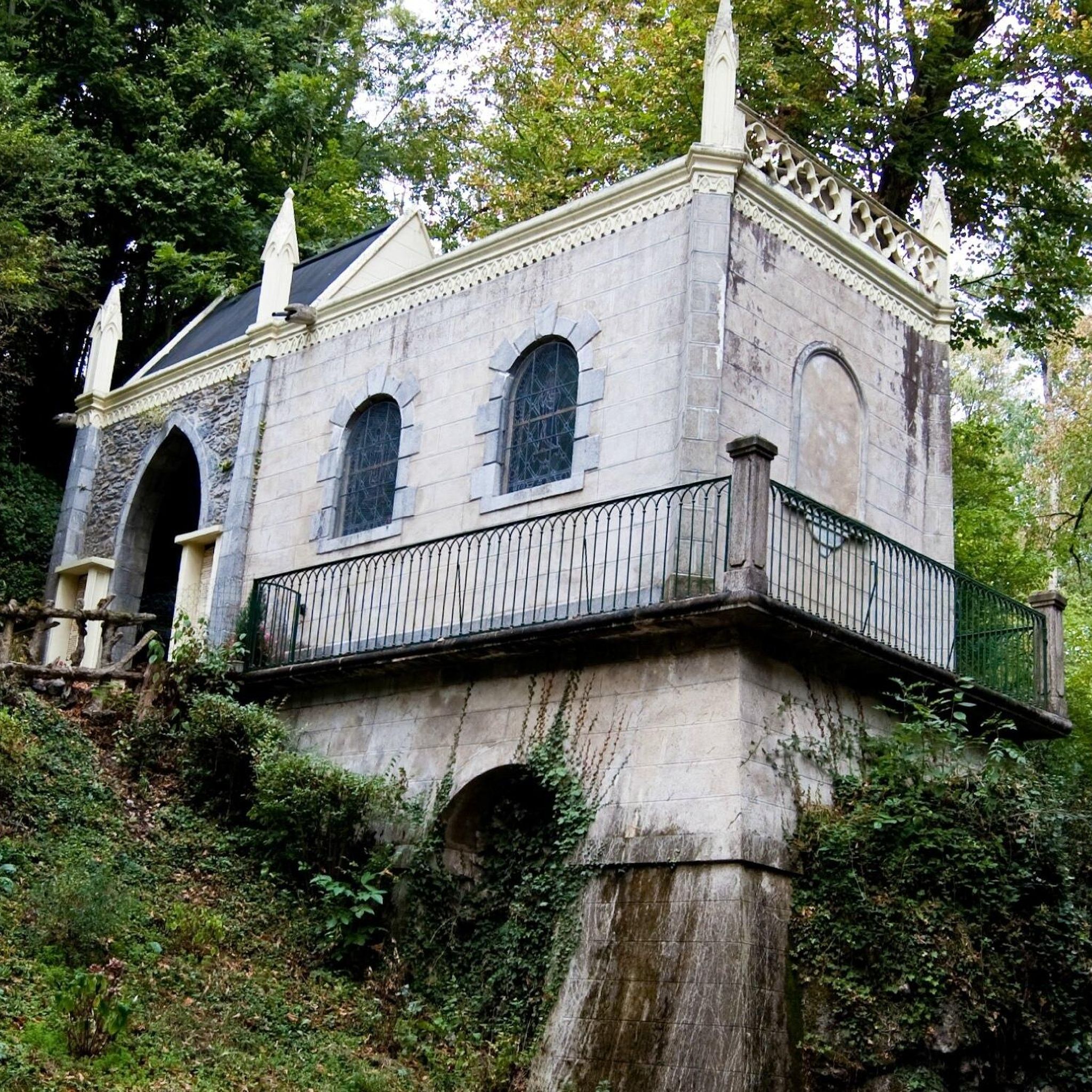


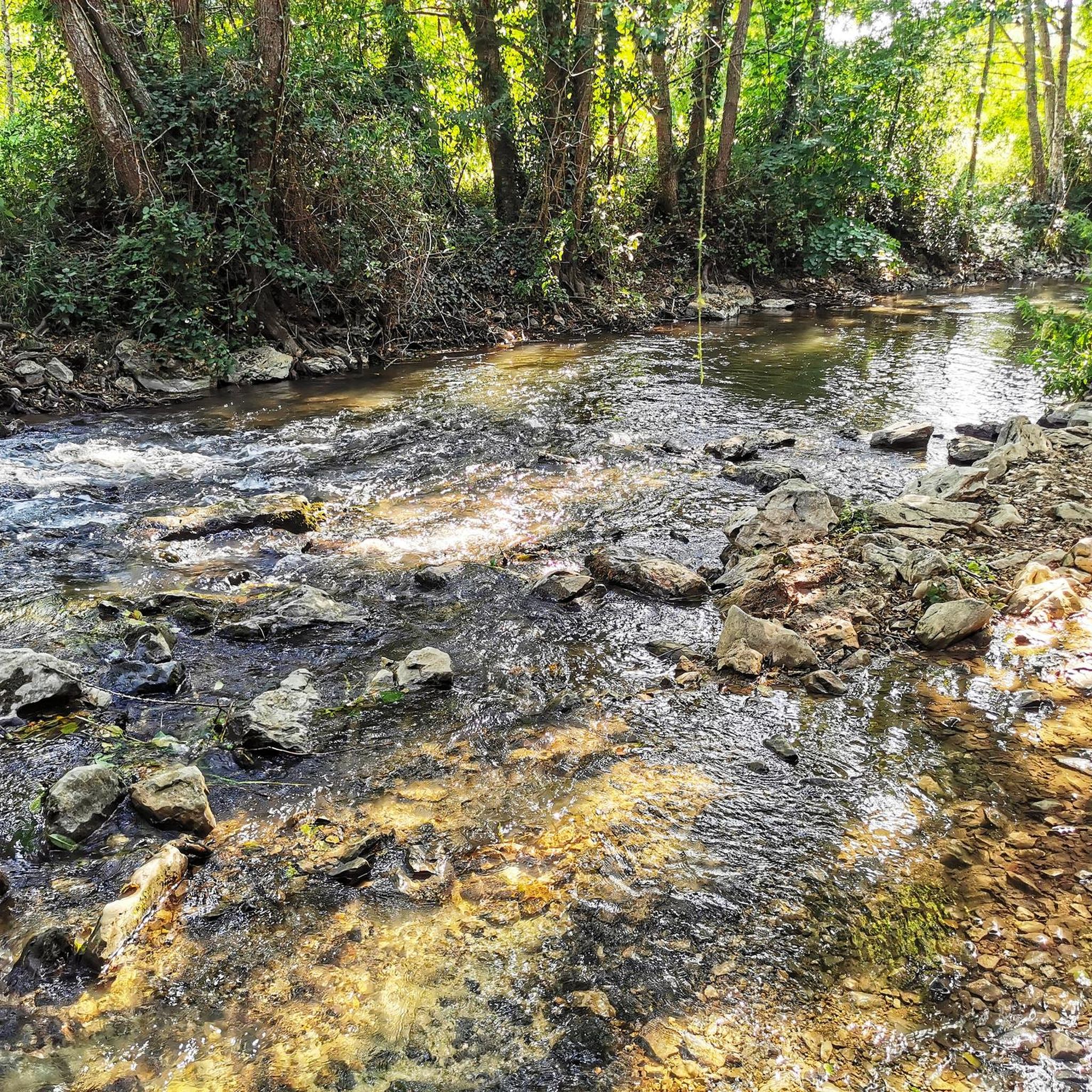
커뮤니티 팁

Parish Church of Saints Peter and Paul. The parish was once part of the archdeaconry of Sablé and was under the jurisdiction of the bishopric of Le Mans. It is only mentioned in texts from the 12th century onwards. The construction of the building, however, predates these first mentions and dates back to the first half of the 11th century. Most of the nave survives from this early church, whose south wall features a narrow, semicircular bay, dressed in red sandstone. The north wall partially collapsed in 1558 and was rebuilt shortly after. To the south, at the junction of the nave and the choir, the bell tower was added in the 12th century. It is a massive tower supported at the corners by buttresses; it is quadrangular in plan and built outside the building. At its summit, this tower features two levels of openings on each side: first, a relatively wide, double-arched bay, surmounted by two narrower, semicircular openings. It is covered with a saddleback roof, a feature found in several surrounding churches. Its eastern face is flanked by an apse housing a chapel dedicated to Saint Louis. A doorway in the tower's west wall, with a lintel carved with an ogee (opened in the late 15th or early 16th century), provides access from the outside. The choir, whose drip walls are built in line with the nave walls, was built in the 13th century on the site of a more modest choir. It features a flat chevet pierced by two narrow pointed-arch windows (blocked during the construction of the altarpiece). The same type of openings are found on its side walls. As with the nave, the main structure is made of sandstone rubble, but for this part, the walls are supported by buttresses with dressed stone glacis. These are joined at their summit by a very crude modillioned cornice, which is particularly visible on the north face. Internally, the building forms an elongated volume, with the choir and nave separated by a thick wall pierced by a double-rolled pointed arch: the nave and choir occupy two-thirds and one-third of the space, respectively. Despite some modest later alterations, the church retains its ancient appearance. The furnishings were largely renewed in the second half of the 18th century. The three limestone altarpieces, built in 1766 at the initiative of the priest Jacques-René Guitton de l'Écluse, are the work of an architect from Précigné (Sarthe) named Lalande. The main altarpiece, placed against the apse wall, is concave in shape. It comprises three bays and retains its ancient statuary: Saint Peter and Saint Paul, patron saints of the church, in the side niches, and Saint Anne and the Virgin Mary in the upper one. The center is occupied by a painting depicting the Adoration of the Magi, a copy after Rubens. The side altars, located at the entrance to the choir, are dedicated to the Virgin and Saint Julian. A wrought iron arch serves as a beam of glory: it is the work of a local marshal, Château. A few years later, in 1785, a new baptismal font was installed, as was a pulpit (Perret, carpenter). In 2004, the Sauvegarde de l'Art français (French Art Protection Agency) granted €4,000 in aid for the repair of the roof and the installation of a lightning rod.
0
0
Church of Saint-Pierre. Auvers, a large village located 8 kilometers from Sablé and the Abbey of Solesmes, is mentioned as early as the 11th century as a priory dependent on the Abbey of La Couture in Mans. The texts seem to establish that its foundation was favored by Guy de Laval and later by his son, Hamon. The original chapel was replaced in the 12th century by a church consecrated by Guillaume Passavent, Bishop of Le Mans, which allows us to date its construction between 1154 and 1187. The priory, after a period of relative prosperity in the 13th century, no longer housed a prior from the 15th century onward. The church served as the parish church, while the priory under its control was transformed and enlarged: part of the 17th-century dwelling still survives in the extension of the south arm of the transept. From the 12th-century church Only the nave remains, as the transept and choir were rebuilt in 1866. The overall silhouette of the building is strongly marked by the contrast between the modest volume of the old nave and the substantial eastern block. The plan is that of a Latin cross with a single nave and transept. The 19th-century alterations consisted of building this transept on the site of the two former chapels of Saint Anne and Saint Michael, creating two apsidal chapels opening onto the arms of this transept, and rebuilding the choir and apse. As a reminder, the chapel of Saint Anne served as a burial place for the lords of Le Plessis, and that of Saint Michael for the lords of La Panne. The bell tower of the old building has been preserved to the north, as has the chapel of Saint Peter to the south, which, attached to the priory, was reserved for religious orders. In plan, the base of the bell tower and the chapel of Saint Peter form, with the new transept, a sort of double transept. The western facade is adorned with a portal that dates back to the early 19th century, surmounted by a window that is likely contemporary. The nave is relatively narrow and elongated, its masonry constructed of small, cubic rubble stones, with roussard sandstone quoins. It is lit to the south by three semicircular bays and two to the north, which were modified in the 19th century. Some of the upper Romanesque openings, which were blocked, are still recognizable on the exterior of the north wall. It is covered with a paneled vault with exposed tie beams. The base of the bell tower has a ribbed vault, with a rather heavy profile. The interest of this building lies in the large collection of mural paintings dating from the 16th century that cover the walls of the nave. These paintings were partially discovered as early as 1903 and the painter Yperman was then commissioned to make copies for the Museum of Comparative Sculpture. In 1948, they were the subject of a classification order, then, in 1973, a study by the Champs-sur-Marne Laboratory. Several cycles can be recognized, notably: on the south wall, the Nativity and the Flight into Egypt, as well as the life of Saint Martin; on the north wall, the Last Judgment and the Sacrifice of Abraham, as well as Saint James the Greater and the legend of Saint Hubert. They also feature numerous miracle-working saints: Saint Europa, who cured dropsy, Saint Apollonia for toothaches, Saint Avertinus of Tours, for headaches, Saint Generated, the object of a popular cult in the region. Some forty years ago, Saint Opportune, Saint Julian of Brioude, Saint Mammès, the "Tale of the Three Dead and the Three Living," and numerous other scenes were still being identified. The poor condition of the framework and roofing led to deterioration of the building's walls, particularly those of the nave: the Sauvegarde de l'Art Français (French Art Protection Agency) awarded a grant of 60,000 francs for this work in 1997.
0
0
The Church of Our Lady of Sablé-sur-Sarthe is believed to have been built in the 15th century. Extensively restored over the centuries, it now boasts a late 18th-century neo-Gothic style, which has helped to highlight its medieval architecture. During the third quarter of the 17th century, the church's high altar was restored, and at the end of the first quarter of the 18th century, three new bells were cast by workshops in Le Mans. Finally, in the mid-18th century, the bell tower was rebuilt, as we can still see it today.
0
0

very serious and if necessary they come to your home.
3
0

Superb cycling break. Refreshments, bike rental, canoe, bike repair! Great welcome!
3
0

If you are looking for a hike combining nature, history and art, you can visit the Caves of Saulges and the prehistory museum. This site offers a unique opportunity to explore the caves and shelters that were occupied by humans around 25,000 years ago, during the Paleolithic period. Some caves are decorated with rock art, such as paintings, carvings and graffiti. You can also visit the Prehistory Museum, which features archaeological collections and interactive exhibits related to prehistoric life in Mayenne. The site is located in the Erve valley, which is a protected natural area with rich biodiversity. The hiking trails allow you to admire the landscapes of the valley and the limestone cliffs. The site is open from April to November. You can check opening hours and prices on the website. Don't forget to bring comfortable shoes, a flashlight and a camera to immortalize your experience.
3
0
The Saint-Cénéré church is a Romanesque church built on a rocky promontory in the village of Saint-Cénéré, in the department of Mayenne. The church dates from the 12th century and has remarkable frescoes from the 12th and 14th centuries. From the church, you can admire the view of the Erve valley and the surrounding countryside. The village of Saint-Céneré is also one of the most beautiful villages in France, with this plan of stone houses, its flower gardens and its bridges over the river. You can wander the streets and learn about local history and culture.
3
0

솔지 주변에서 가장 인기 있는 경로
솔지 주변에서 가장 인기 있는 명소


더 살펴보기
다른 지역의 최고의 로드 사이클링 경로를 살펴보세요.
