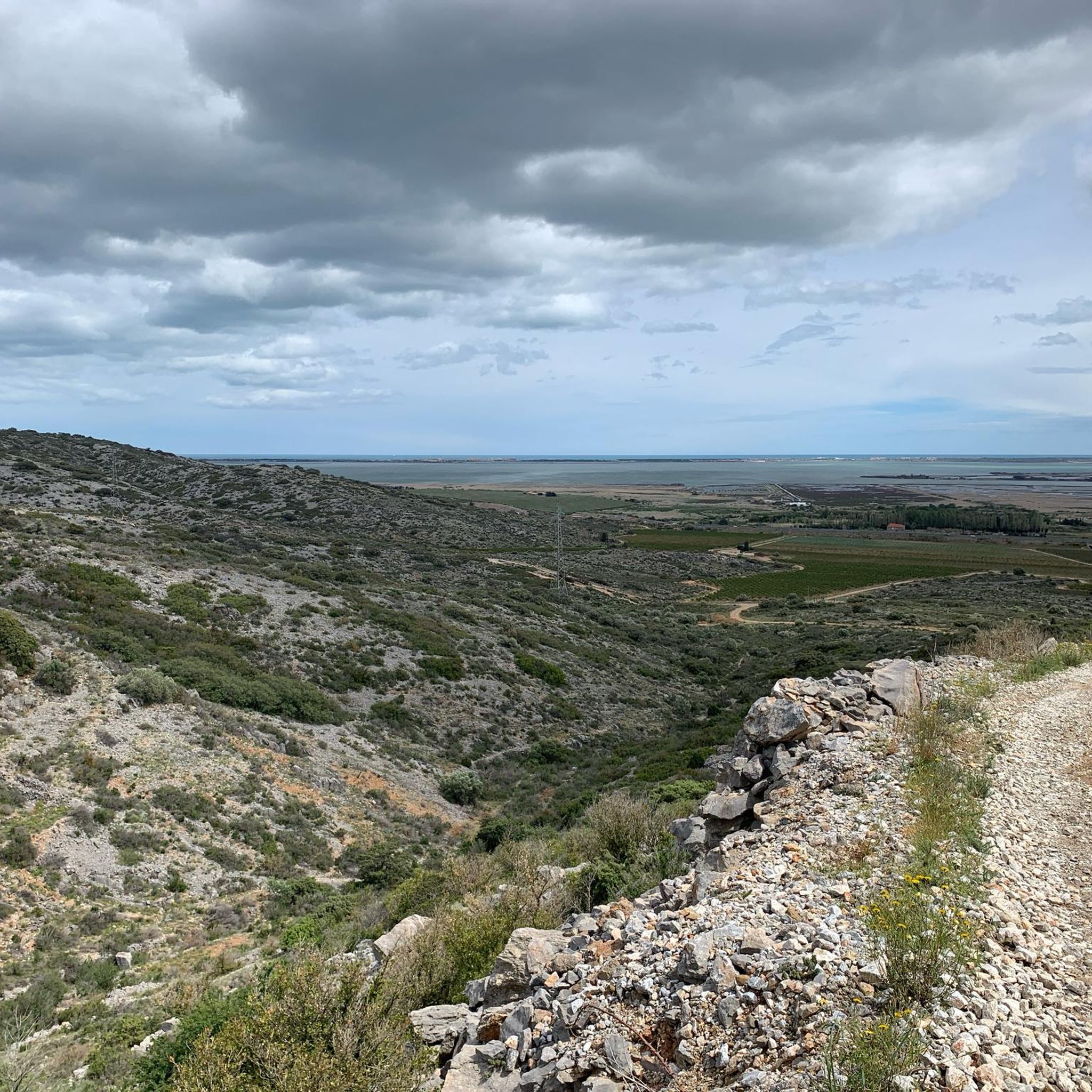
Salses-Le-Château 주변 최고의 성들은 Salses-Leucate 호수와 Corbières 사이의 전략적 위치로 유명한 지역에서 찾아볼 수 있습니다. 이 지역은 특히 프랑스-스페인 국경에서의 역할로 역사적으로 중요하며, Fort de Salses가 이를 잘 보여줍니다. 이 인상적인 요새는 중세 성의 요소와 현대적인 요새화된 성의 혁신을 결합한 전환기 군사 건축을 보여줍니다. 이 지역은 독특한 역사와 건축 양식을 가진 다양한 성들을 볼 수 있고 탐험할 수 있습니다.
마지막 업데이트: 5월 17, 2026
이런 장소를 발견하려면 지금 가입하세요
최고의 싱글 트랙, 봉우리 및 다양한 흥미로운 야외 장소에 대한 추천을 받아보세요.
무료 회원 가입
하이라이트 • 성
번역자 Google •
팁에 의해
오늘 무료 계정으로 시작하세요
다음 모험이 기다리고 있어요.

로그인 또는 가입하기
The history of the fort dates back to the Middle Ages, when Leucate became a border town, bordering two kingdoms. This castle was the counterpart to that of Salses, on the Spanish side. Numerous events punctuated its history, including repeated episodes of war and several memorable sieges. The most famous is undoubtedly that of 1590, during which Françoise de Cézelly earned her heroic status thanks to her heroic resistance. The fort's architecture has undergone several variations. The first, from the Middle Ages (12th and 13th centuries), was very rudimentary, with a keep originally made of wood, then quickly rebuilt in stone, and a simple manor house, which were more or less sufficient to withstand the weapons of the time. A second stone wall was built during the 13th century, taking into account the growing strategic importance of the place. It was during the Renaissance (early 16th century) that Leucate Castle underwent its greatest evolution. This was partly necessitated by the damage caused by the siege of 1590. It employed a concept that was avant-garde for the time: bastioned enclosures, devised by a handful of Italian architects, including Leonardo da Vinci. The goal was to adapt fortresses to advances in artillery. This technique would reach its peak some 150 years later with the "Vauban-style" fortresses, characterized by their star-shaped shape. It has recently been revealed that Leucate Castle was the first prototype built in Europe using this principle. The signing of the Treaty of the Pyrenees in 1659 by King Louis XIV definitively put an end to the border problems with Spain. At the same time, the castle's strategic value disappeared. As it was costly to maintain, first to the Province and then to the Crown, it was decided to destroy it outright. The concept of heritage was obviously nonexistent at the time. The project was awarded to a mason from Narbonne, who was given access to the gunpowder stored in the fortress's casemates. By 1665, the project was completed, and Leucate Castle had taken on the appearance it has today. The building was listed as a historic monument in 2006 (Wikipedia)
0
0
Interesting remains of an ancient fortification, recently completely restored
1
1
Superb fortress whose history is little-known and interesting. The included guided tour is a must!
1
1
A building worth seeing, there is an entrance fee.
1
0
From Tautavel you can enjoy a good mountain hike in half an hour. The surroundings are beautiful, so walking further is the obvious choice
8
0
Little is left of Tautavel Castle. It was a medieval castle from the 11th century, it was destroyed with explosives in the 17th century. The castle is on the route to Torre del Far.
2
0
Former 17th century fort used to monitor the Mediterranean. The building also served as a beacon (a sort of lighthouse).
3
1
Former 17th century fort used for surveillance of the Mediterranean. The building also served as a beacon (kind of beacon).
0
0
다른 곳에서 최고의 성을 찾고 계신가요? 다른 가이드를 발견해보세요 살세스 르 샤토 주변: