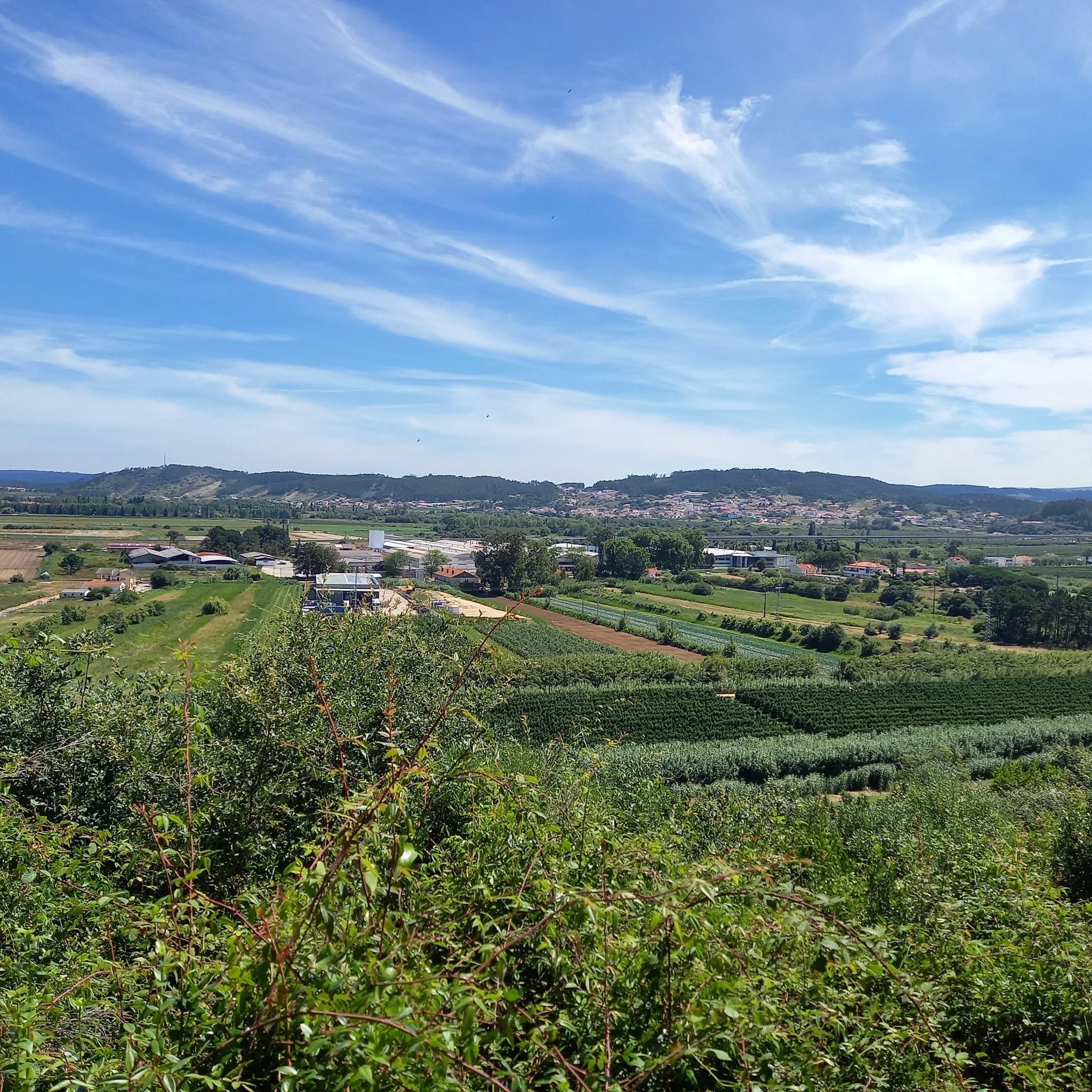
アルコバサには必見のスポットがたくさんあります。ハイキング愛好家やサイクリング愛好家の方は、ぜひアルコバサを探索してこのエリアにある20
の隠れたスポットを訪れてみてください。このエリアの必見スポットを確認し、次の冒険に出かける計画を立てましょう。
最終更新日: 5月 25, 2026
ハイライト • ビーチ
翻訳者 Google •
役立つ情報 は
ハイライト • ビーチ
翻訳者 Google •
役立つ情報 は
今すぐサインアップして、こんな場所を発見しよう
最高のシングルトラック、ピーク、その他のエキサイティングなアウトドアスポットのおすすめを受け取ろう。
無料新規登録
ハイライト • 記念碑
翻訳者 Google •
役立つ情報 は
ハイライト • ビーチ
翻訳者 Google •
役立つ情報 は
無料アカウントで今日から始めよう
次の冒険が待っています。
ログインまたは登録
The lighthouse is managed by the National Maritime Authority. Public visits are generally permitted on specific days and at limited times. Opening hours: Traditionally, the lighthouse is open for free visits on Wednesdays in the afternoon (between 2:00 pm and 5:00 pm, local time).
2
0
Function: It is a coastal lighthouse, with a luminous range of 30 nautical miles (approximately 55 km). Landscape: The location is a natural viewpoint of great beauty, much sought after for enjoying the ocean view and the sunset. The surrounding area has pedestrian and cycle paths that connect to other beaches in the region.
1
0
Location: Parish of São Pedro de Moel, Marinha Grande, Portugal. Establishment: Began operating on February 15, 1912. Structure: It has a quadrangular stone tower 32 meters high and an attached building. The exterior and interior are covered with reddish-brown tiles, a unique feature.
1
0
The Penedo da Saudade Lighthouse is an emblematic Portuguese lighthouse located in São Pedro de Moel, in the municipality of Marinha Grande, district of Leiria. It stands imposingly on a cliff, offering spectacular views of the Atlantic coast.
1
0
"Lighthouse and Fisherman's Bay" can refer to several locations, such as the Lighthouse of Traição Bay and the local fishing community in Paraíba, Fisherman's Beach in Itanhaém, where boats gather and seafood is sold, or Fisherman's Bay in China, also known as the Penghu Islands. Lighthouse of Traição Bay (PB): The installation of the lighthouse in 1923 was requested by the local fishing community, then presided over by Manoel Ignácio, who traveled to Rio de Janeiro to request the equipment. Fisherman's Beach (Itanhaém, SP): This beach is characterized by the concentration of fishing boats and stalls selling fresh seafood. The area has a restaurant and is also a departure point for boat trips. Fisherman's Islands (Penghu, China): This is an archipelago off the west coast of Taiwan, in the Asian continent. The archipelago is composed of 90 small islands and covers an area of 141 km². Other locations: There are other places that combine "lighthouse" and fishing activities, such as the underwater fishing area near the Barra Lighthouse in Salvador, Bahia.
2
0
From the chapter house on the ground floor, a staircase leads up to the dormitory. This staircase was rediscovered during renovations beginning in 1930. Located on the first floor, the dormitory extends 66.5 meters in length and 21.5 to 17.5 meters in width along the entire east side of the medieval part of the abbey, thus covering an area of almost 1,300 square meters. In its current form, restored through renovation, it presents itself in its original medieval state. At the southern end, the dormitory opens with a large round-arched doorway to the northern transept of the church. A staircase formerly led down from there, as the Cistercian rule required two separate entrances to the communal sleeping quarters. At the northern end of the dormitory were the latrines, which—again according to a general rule of the order—had to be separated from the sleeping quarters by a separate room. The wastewater flowed into the abbey's garden on the north side. The monks slept together in the dormitory, fully clothed, separated from their neighbors only by a movable partition. The abbot alone had his own cell, located on the south side facing the church. This arrangement is typical of most Cistercian monasteries of this period. A narrow door in the center of the western side leads to a narrow spiral staircase, which today provides access to the kitchen, but in the Middle Ages led to the calefactory (warming room, see below). This staircase also provided access to the upper cloister. https://de.wikipedia.org/wiki/Kloster_Alcoba%C3%A7a
2
0
The entrance to the chapter house features a particularly striking facade with staggered columns. The chapter house served as the meeting place for the monks and was, after the church, the most important room in the monastery. It bears this name because the chapters of the Rule of St. Benedict were read aloud there daily. Elections and similar communal ceremonies of the monks also took place there. In the entrance area to the chapter house is the gravestone of an abbot whose identity is no longer known. The floor of the chapter house was formerly completely covered with such gravestones, as a Cistercian rule from 1180 stipulated that abbots had to be buried in the chapter house, meaning that the monks made their decisions on the graves of their deceased abbots. This type of burial was a significant exception to the general Cistercian rule, which forbade the burial of monks within the monastery. That's why you'll find a door leading south in the southern transept called the Porta da Morte (Door of Death), because deceased monks were carried out through it for burial. https://de.wikipedia.org/wiki/Kloster_Alcoba%C3%A7a
1
0
To the west of the new kitchen lies the refectory, the dining hall for the monks, a three-aisled hall measuring approximately 620 square meters (29 x 21.5 meters). Above its entrance, in medieval Latin, is the difficult-to-interpret inscription: "respicte quia peccata populi comeditis," meaning: "Remember that you are eating the sins of the people." The room impresses with its beautiful proportions. It has windows facing north and east, overlooking the new kitchen. On the west side, a stone staircase leads to the pulpit of the lector, who read from monastic texts during meals. The monks sat facing the walls and ate their meals in silence. The abbot sat with his back to the north wall, observing the proceedings. At the southern end of the west side, the refectory opens into the former medieval kitchen, now a side room leading to the cloister of the Cathedral of Afonso VI. A few meters further along, another opening can be found in the same wall, two meters high and 32 cm wide. It leads to the aforementioned side room, and there is no scientifically sound explanation for it. A long-standing legend claims that this opening served to monitor the monks' weight. They were supposed to pass through this door once a month, which is only possible by leaning sideways. If they were too heavy, they were put on a diet. The damage caused by the conversion of the refectory into a theater in 1840 (with 301 seats, 120 of which were in the galleries, and 5 boxes) was largely repaired during the restoration. https://de.wikipedia.org/wiki/Kloster_Alcoba%C3%A7a
1
0


まだ探しているハイライトが見つかりませんか?他の地域のトップアトラクションのガイドを見てみましょう: