ホルスベーク周辺のアトラクション&必見スポット - トップ20
ホルスベークには必見のスポットがたくさんあります。ハイキング愛好家やサイクリング愛好家の方は、ぜひホルスベークを探索してこのエリアにある20
の隠れたスポットを訪れてみてください。このエリアの必見スポットを確認し、次の冒険に出かける計画を立てましょう。
最終更新日: 9月 12, 2026
ルーヴェン市庁舎
ハイライト • 歴史的な場所
The plans for the …
翻訳者 Google •
役立つ情報 は

デメール川沿いのヤーグパッド
ハイライト • サイクリングロード
翻訳者 Google •
役立つ情報 は

今すぐサインアップして、こんな場所を発見しよう
最高のシングルトラック、ピーク、その他のエキサイティングなアウトドアスポットのおすすめを受け取ろう。
ホルスト城
ハイライト • 城
翻訳者 Google •
役立つ情報 は

Wijngaardbergのブドウ畑
ハイライト • 構造物
翻訳者 Google •
役立つ情報 は

ダミアン橋とダミアン神父像
ハイライト • 橋
It is an interesting place on your walk. Several hiking nodes come together here. Ideal opportunity to change your route and make the crossing.
翻訳者 Google •
役立つ情報 は

無料でサインアップして、さらに多くの観光スポットを発見しましょう ホルスベークでの。
すでにアカウントをお持ちですか?


コミュニティからのヒント

Here you can also take a break on the benches...
6
0

Ann Van Dessel (born December 26, 1961) from Mortsel is a poet and writing instructor. Her poetry debut, "Een kei in duren" (A Rock in Duration), was published in 2012. This was followed by "Toverstroming" (Magic Flood) in 2017, and "Als de lucht valt" (As the Sky Falls) in 2021. At the end of May 2011, she was appointed Haacht's first village poet. During her tenure in that role, she wrote this poem, "van grenzen gezwijt" (Silence of Borders), for the ceremonial inauguration of the new Damien Bridge (in 2012). She also wrote three poems commissioned by Natuurpunt for Haacht's three nature reserves. And that's far from all. Here you can read more about Ann's writings and work during her time as Haacht's village poet (including the work featured here): https://annvandessel.com/dorpsdichter-haacht And here you can learn all about Ann and her publications: https://annvandessel.com/
8
0
高さ2メートルの木製のダミアン神父の像は、2013年8月22日にダミアン橋の西側に設置され、ハハトのLizette Cresensから寄贈されました。 この像はWolfsdonkの芸術家によって制作されました。出典:https://www.tremelo.be/product/2172/15-standbeeld-damiaan-damiaanbrug 自転車歩行者用の橋自体は2012年に供用が開始され、ダミアン博物館の近く(道の終点)にあります。この橋が結ぶ2つのディール川の堤防は、パテル・ダミアンダイク(ニンデ側)とスキップストレッカーダイク(ハハト側)と呼ばれています。 橋の近くで、Grote Laak川がディール川に合流します。これはアールショット近郊でデメル川から分岐する川で、Laak川としても知られ、以前はMeetshovense Laak川と呼ばれていました。
8
0
The information board about the Zegbroek nature reserve disappeared (at least during my visit) and is now located at the birthplace (and museum) of Father Damien, a bit further along. Currently, there's a welcome sign from the municipality of Tremelo, along with a poem. It makes sense, actually, because the Zegbroek is not related to the Dyle River, nor to its banks, but to the Demer River. And that's on the other side from the Damien Museum. The Zegbroek is even called "a damp, peat-covered, old meander of the Demer, located in the Demer Valley on the border with Keerbergen." The Laak and the Dyle River do form its border. And, of course, it can get wet there. Zegbroek is part of the designated "Blaasberg" landscape, and in addition to the information board at the Damien Museum, there's also online information on the website of the nature reserve manager, Natuurpunt: https://www.natuurpunt.be/natuurgebieden/zegbroek You can also find information in the nature reserve itself.
8
0
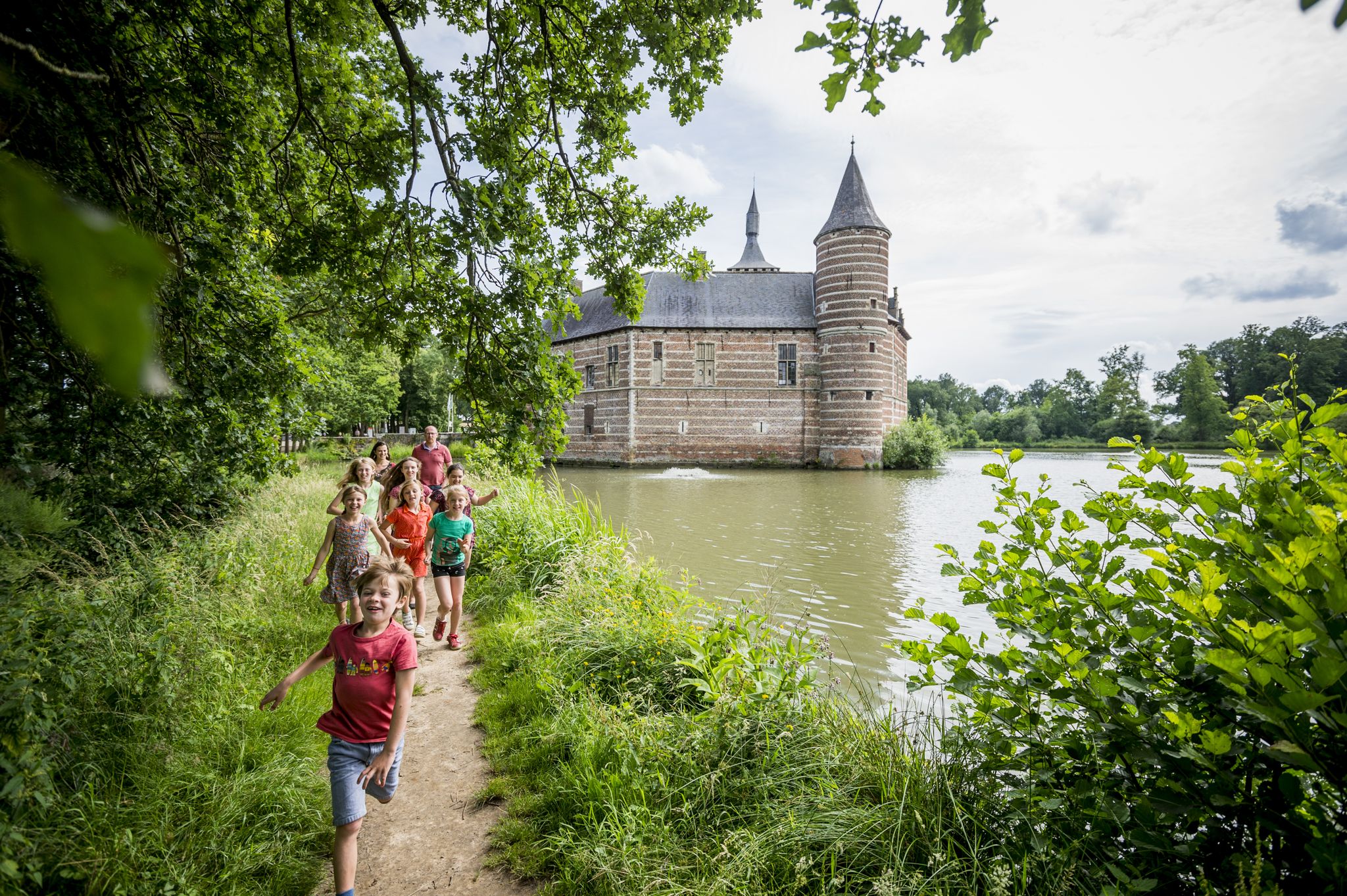
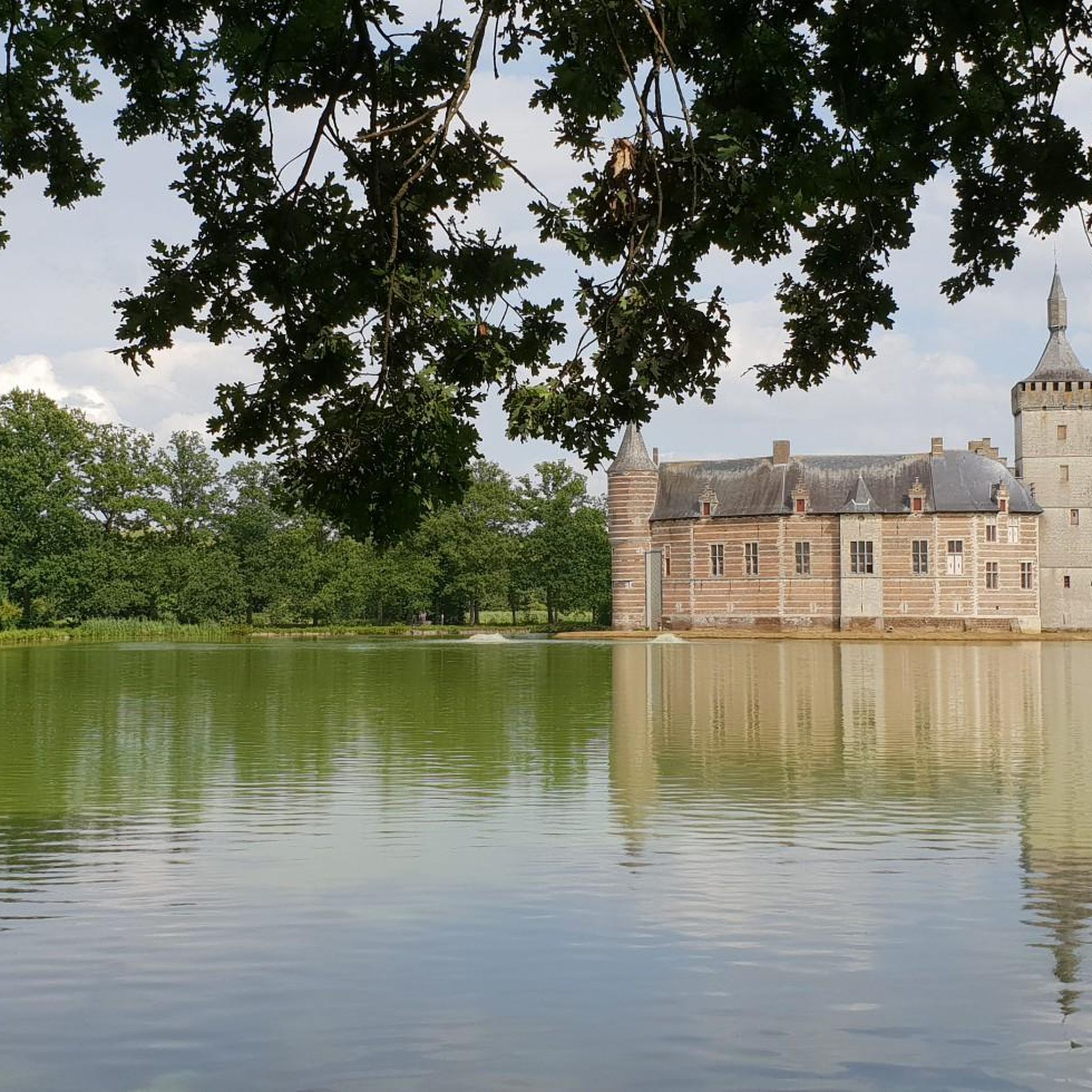
The core of Horst Castle probably dates back to the 13th century and is characterised by a square keep. The keep probably belonged to the oldest core that was further expanded into a fortified castle in the 15th century. During the troubles under Maximilian of Austria in 1489, the castle of Horst was taken by the people of Leuven and set on fire. According to literary sources, only the keep, part of the entrance gate and a defensive wall remained standing. The residential and east wing were renovated and expanded in the 16th century. The round tower also dates from this period. The outer wall was provided with a rectangular bay window. The castle lost its military character and became more of a pleasant residential area with a view of the moat, the ponds and the inner courtyard. Brick construction with sandstone layers characterise these buildings. In 1587, however, the castle was set on fire again during the raids of the Geuzen. It was not until the beginning of the 17th century that restoration work began. It is difficult to deduce from the available sources to what extent this involved restoration or an embellishing conversion of the castle complex. Presumably nothing changed in the internal structure, but only after the structurally necessary repairs were the interiors completely refinished. Maria-Anna Van den Tympel had a new chapel built against the keep in the 17th century. At the beginning of the 19th century, the complex must have been damaged by plundering and neglect, and it is possible that it also suffered from plundering during the Brabant Revolution of 1830. Around 1850, the castle must have been habitable again, but the castle buildings only served as a farm. In the land registry, the site around the castle is called "De Notelaren Boomgaerd". Around that time, the most dilapidated part must have been demolished, namely the southern part and the superstructure of the gate. The rest of the complex was probably restored with reused demolition material and in traditional style. The castle was divided in 1880, with one part being registered as a school house. In 1897, a further division followed, with two plots being designated as houses. Several restoration campaigns followed in the 20th century. Inventory of Immovable Heritage: Horst Castle, https://id.erfgoed.net/erfgoedobjecten/43619
6
0
Since December, there has been a spire on the castle again after the unstable spire was removed more than four years ago and could be viewed on a wooden platform in the pond. Now it is back. And the other works are also progressing quickly. More about the replaced spire on https://www.vrt.be/vrtnws/nl/2024/12/10/torenspits-staat-weer-op-kasteel-van-horst-holsbeek/
6
0

ホルスベークでのの人気観光スポット

komootモバイルアプリでインスピレーションを得よう


さらに探索
まだ探しているハイライトが見つかりませんか?他の地域のトップアトラクションのガイドを見てみましょう:
