4.5
(557)
2,374
ハイカー
86
ハイキング
サビーナのトリチェッラ周辺でのハイキングは、景色を満喫するのに最適な手段のひとつですが、適切なハイキングルートを見つけることは簡単ではありません。 サビーナのトリチェッラ周辺の人気ハイキング&ウォーキングコースを参考にすれば、行きたいルートをすぐに見つけられます。
最終更新日: 5月 24, 2026
1.5
(2)
7
ハイカー
8.75km
02:30
210m
210m
中程度のハイキング. ある程度のフィットネスレベルが必要です。 進みやすいルートです。あらゆるスキルレベルに適しています。
4.4
(7)
34
ハイカー
29.1km
07:53
380m
380m
難しいハイキング. 標準以上のフィットネスレベルが必要です。 進みやすいルートです。あらゆるスキルレベルに適しています。

無料新規登録
4.5
(2)
4
ハイカー
26.9km
08:18
940m
930m
難しいハイキング. 標準以上のフィットネスレベルが必要です。 進みやすいルートです。あらゆるスキルレベルに適しています。
4.3
(3)
12
ハイカー
11.8km
03:56
520m
520m
中程度のハイキング. ある程度のフィットネスレベルが必要です。 進みやすいルートです。あらゆるスキルレベルに適しています。
3.6
(5)
6
ハイカー
7.05km
02:05
200m
200m
中程度のハイキング. ある程度のフィットネスレベルが必要です。 進みやすいルートです。あらゆるスキルレベルに適しています。
さらに多くのルートや他のユーザーのおすすめ情報を確認できます。
無料新規登録
すでにアカウントをお持ちですか?
おすすめのツアーは他のkomootユーザーが実際に経験した何千ものアクティビティに基づいています。
無料アカウントで今日から始めよう
次の冒険が待っています。
ログインまたは登録
Top of Mount Pelato, little shade since it's bald!
0
0
Going down via Roma you reach the Velino bridge, known however by the same name as the one demolished in the thirties and placed, a little below, on the river bed: Roman bridge.
0
0
Rocca Sinibalda dominates the lush Turano Valley from above, the second most important river in Sabina after the Velino. The village is dominated by a castle founded around 1060. It was rebuilt as a fortress and noble residence in the 1630s by Cardinal Alessandro Cesarini who hired the famous Sienese architect Baldassarre Peruzzi for the occasion. It can only be visited on certain days. It is therefore advisable to inform yourself before departure.
0
0
Poggio Moiano is a beautiful village of medieval origin, built on a hill overlooking the surrounding woods of the Monti Lucretili regional park. In the surrounding area there are various testimonies from the Roman era even if the first news of the town is later and dates back to the year 1000 AD. Here every year, during the last week of June for the feast of the Sacred Heart, the flower display takes place with the streets of the village transformed into enormous canvases for works made with flower petals.
0
0
The Romanesque bridge dates back to the 11th century, but was probably built on a pre-existing building of an unspecified period, of rare beauty, still usable but which requires urgent and significant restoration. In the two pillars it is possible to notice the three "holes" used to insert wooden poles horizontally, capable of supporting the "centre" for closing the stone arch. As you pass the bridge on the left, going up towards Posticciola, there is still a clear trace of "Garitta Muraria" where the border point with the Papal State and Kingdom of the Two Sicilies was made, and with the "horizontal transhumance" the duty for the ride. Transhumance has an ancient history which most likely coincides with the history of breeding itself and was regulated and disciplined since Roman times by a set of laws of taxes to be paid in the various customs. Transhumance derives from the Latin "trans" (beyond) and "humus" (earth) = pastoralism transmigrating with the seasons, along the sheep tracks (from the Latin "tractoria" = the shepherds' roads). In southern Italy transhumance was divided into "vertical" and "horizontal". The first concerned the Kingdom of the Two Sicilies, with several sheep tracks that connected from Abruzzo to Puglia (the most important was the famous "Tratturo Magno"). Horizontal transhumance, however, also of ancient origins, descended into the Roman countryside and increased considerably in 1477, when Pope Sixtus IV forced all the shepherds of the "Kingdom of the Church" to take their animals to winter in the Agro Romano. Transhumance in Lazio reached its peak starting from 1800, when the "vertical" one entered into crisis. This was usually in provincial sections from Umbria towards Civitavecchia, from the Marche towards Polo and Maccarese, from Abruzzo towards the Roman countryside, from Ciociaria towards Anzio and Terracina. http://www.magiadelturano.it/index.php/posticciola/ponte-romanico
0
0
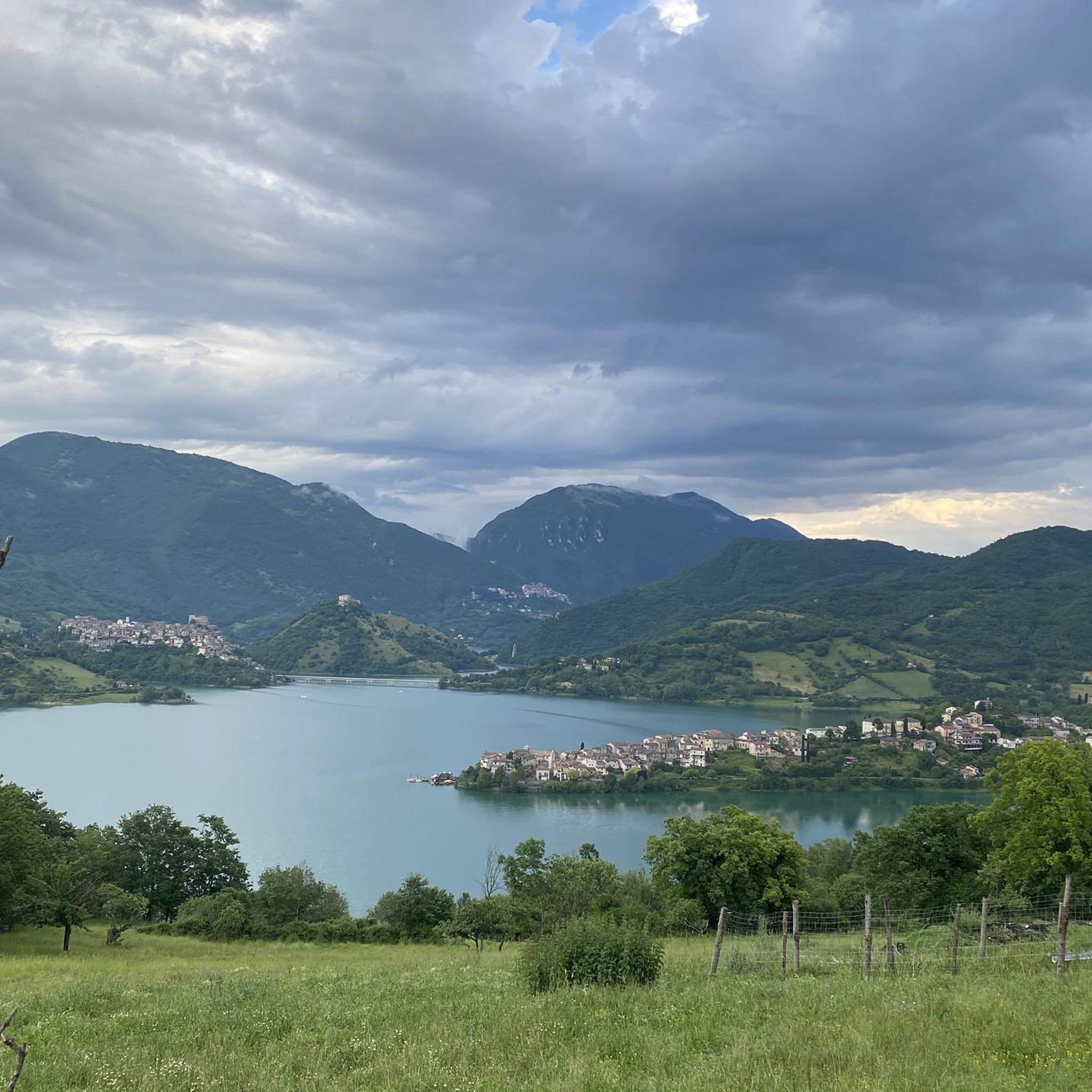
The village of Castel di Tora is among the most beautiful and evocative of the Rieti area and Sabina. It is completely perched on a promontory and for this reason it offers a special view of the Turano lake, without having to climb the peaks of the nearby Navegna and Cervia mountains. In winter it is almost completely unpopulated, while in summer it welcomes the numerous Roman holidaymakers who seek refreshment along the lake shores.
3
0
The small and spartan church of San Rocco can be reached with a short detour at the entrance to the bridge over the Turano lake. This chapel is the miniature reconstruction of the largest church submerged by the waters of the Turano river when the dam was built.
2
0
Yes, after the bridge, an uphill stretch on a dirt road can then be climbed with prohibitive slopes between 14% and 19%.
0
0


他の地域の最高のハイキングを見てみましょう。