バギントン周辺のおすすめバス停からハイキング&ウォーキング
4.5
(933)
8,068
ハイカー
455
ハイキング
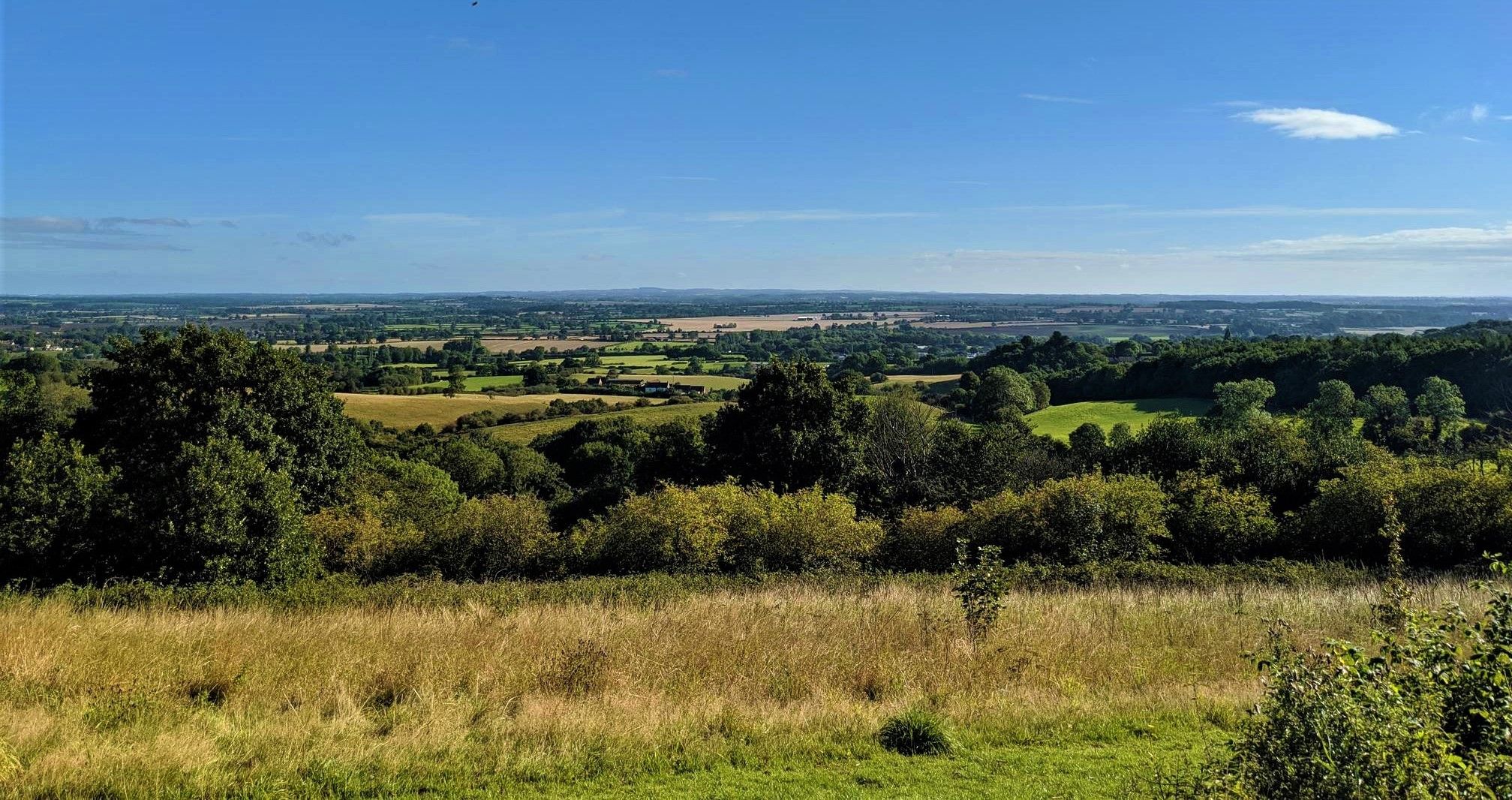
バス停周辺のハイキングコースは、蛇行するソーウィー川、開けた野原、そして様々な樹木地帯を特徴とする景観の中を、アクセスしやすいルートで提供しています。地形は概して平坦で標高の変化は最小限であり、様々な能力のハイカーに適しています。ハイカーは、バギントン城の遺構やラント・ローマン・フォートを含む、自然の美しさと史跡の融合を探索できます。この地域は、川沿いの道や田園地帯を横切る小道が多く、アウトドア探索のための静かな環境を提供しています。
バギントン周辺の最高のバス停ハイキングコース
- 最も人気のあるバス停ハイキングルートは、コベントリー空港発、ソーウィー川~バゴッツ城ループです。これは5.2マイル(8.4 km)のコースで、所要時間は2時間9分です。ソーウィー川と歴史的なバゴッツ城の景色を楽しめます。
- 地元のハイカーに人気のもう一つのコースは、コベントリー空港発、オールド・ミル~ソーウィー川沿いの眺めループです。これは2.8マイル(4.5 km)の簡単なコースです。このルートは、心地よい川沿いの小道をたどり、歴史的なオールド・ミルを通過します。
- 地元のハイカーに愛されているのは、コベントリー空港発、ストーネリー・コミュニティ・オーチャード~セント・ジャイルズ教会、バベンホールループです。これは9.8マイル(15.8 km)のコースで、田園地帯を抜け、地元のランドマークを通り過ぎます。所要時間は約4時間5分です。
- バギントン周辺のハイキングは、ソーウィー川沿いの川沿いの道、開けた野原を歩く道、そしてアクセスしやすい樹木地帯によって特徴づけられます。このネットワークは、簡単な散歩からより長い中程度のルートまで、さまざまなレベルの能力に対応するオプションを提供しています。
- バギントンのルートは、komootコミュニティから高く評価されており、900件以上のレビューで平均4.5つ星を獲得しています。8,000人以上のハイカーがkomootを利用して、バギントンの多様な地形を探索しています。
最終更新日: 5月 30, 2026
5.0
(2)
11
ハイカー
8.36km
02:10
50m
50m
中程度のハイキング. ある程度のフィットネスレベルが必要です。 進みやすいルートです。あらゆるスキルレベルに適しています。
6
ハイカー
4.53km
01:10
20m
30m
初級者向けハイキング. あらゆるフィットネスレベルに適しています。 進みやすいルートです。あらゆるスキルレベルに適しています。
1
ハイカー
中程度のハイキング. ある程度のフィットネスレベルが必要です。 進みやすいルートです。あらゆるスキルレベルに適しています。
さらに多くのルートや他のユーザーのおすすめ情報を確認できます。
無料新規登録
すでにアカウントをお持ちですか?
おすすめのツアーは他のkomootユーザーが実際に経験した何千ものアクティビティに基づいています。
無料アカウントで今日から始めよう
次の冒険が待っています。
ログインまたは登録
バギントン周辺で人気

コミュニティからのヒント


If you have an interest in old churches you will like it very much.
0
0
Should have gone anticlockwise so as to get the streets out of the way first. The detour around HS2 site was a pain as not clearly sign posted. Apart from that a good walk.
0
0

The primary structure of St. Giles Parish Church dates back to the 13th and 14th centuries, while the chapel's origins can be traced back to a period prior to 1153. In the church, you'll come across a pair of "green men" that hail from the 13th century, a Norman font, and stained glass created by Kempe. Additionally, the medieval tower houses a set of six bells.
1
0
St John the Baptist Church stands on a plateau 30m above the River Sowe. It is first mentioned in the reign of Henry II (1154-1189) as a chapel attached to the church at Stoneleigh. Nothing of this chapel remains and the present church was built in the 13th century. In 1285 the first parish priest, Thomas de Dunton, was appointed by the Prior of Kenilworth. The story of the church revolves around 3 families, who held the manor (Ensors, Herthills and Bagots), plus the Bromleys of Baginton Hall. The church is now part of a combined benefice with patrons the Bishop of Coventry and Lord Leigh.
1
0
The Norman Church of St Mary the Virgin across Stoneleigh Meadows was created by the villagers into a Trust for the public in 1982. The Domesday Book of 1086 mentions two priests at Stoneleigh, but nothing about the church. Any building was probably of wood and rebuilt in red sandstone during the 12th century, representing over 800 years of births, marriages and deaths. Many of the old village names are on the headstones in the churchyard and have been researched by the Stoneleigh History Society.
1
0

The church of ST. GILES is situated in a cul-de-sac at the western end of the village on the north side of the LeamingtonWolston road. It has a small churchyard. The church consists of chancel, nave, west tower, vestry, and south porch. The church was built late in the 13th century, when it consisted of chancel and nave. The tower was added early in the 14th century and the top stage late in the same century. The only evidence of an earlier church is the 12th-century font in the tower. A modern vestry and boiler-house have been built on the north side. The 13th-century church is built with a dark red sandstone in roughly coursed rubble with ashlar dressings; for the later work a lighter coloured stone was used. The roofs are modern, covered with tiles. The east gable wall of the chancel has been completely rebuilt, with twin buttresses, in a light-coloured sandstone. It has a three-light tracery window with a hood-moulding. The south side has three late-13thcentury single-light windows with pointed arches of two splayed orders; a splayed string-course runs at sill level, and below the westernmost window is a blocked low-side chamfered window with a flat head, the sill 1 ft. 9 in. above ground. (fn. 42) The north side is similar but with only two windows; a third has probably been built up. It has a tiled roof finishing on a splayed eavescourse, and a plinth of one splay. The south wall of the nave has two single-light windows with pointed arches of two splayed orders, and towards the east another with two orders of wave-mouldings and a hood-mould. The string-course continues from the chancel and is carried round twin buttresses at its west end; the east buttress is modern. The 13th-century south door has a richly moulded pointed arch, the moulding continued down the jambs to a square stop of modern cement. It has a label-moulding with both stops broken off. Outside this door is a modern brick porch with a tiled roof; the roof timbers are re-used from elsewhere and have the initials IB: PA: C: W and the date 1616. On the north side the string-and eaves-courses carry on from the chancel, and the string is taken across a large buttress with a gabled head and twin buttresses at the west end There are two single-light windows corresponding in detail with the western on the south side. The early14th-century north doorway has a pointed arch with a single wave-moulding continued down the jambs and a hood-moulding with mask stops. Above, there is a modern triangular window enclosing a cusped circle. At the east end, overlapping the chancel, is a modern vestry built of sandstone ashlar. The tower rises in four stages, unmarked by string-courses, but with a splayed offset for the later top stage. There are twin buttresses in three stages at the north-east and south-west angles, which only reach to the top of the first stage. On the west side a battered brick base has been built between the buttresses, and it extends to the height of the second stage of the buttresses. There are single lights with pointed arches of two splayed orders to the second and third stages, except on the north side, which has one to the third stage only. On the south side there is a similar modern window to the lower stage. The wall is built of light-coloured sandstone ashlar, patched with red bricks, and the upper stages of the buttresses at the south-west angle are rebuilt with red brick. The top stage is built of a mixture of red and light-coloured sandstone ashlar, with a plain parapet and crocketed pinnacles at the angles. On each face is a tracery window of two trefoil lights, of two splayed orders, with four-centred arches and hood-mouldings with grotesque head stops. On the east face there is a roof line of steep pitch with a clock-face above. The chancel (25 ft. 6 in. by 18 ft. 3 in.) has a modern hammer-beam roof resting on stone corbels, and a modern tiled floor. The window recesses have widesplayed reveals and pointed arches with stopped hollow splays, and at the sill level there is a large continuous roll-moulding which is carried on round the nave. The splayed window-recess at the west end of the south wall is carried down to the floor to embrace the blocked lowside window, the sill moulding being stopped against its moulded arris. The nave (43 ft. by 20 ft.) has a modern roof similar to that over the chancel, and a modern tiled floor. The window recesses are splayed and have segmentalpointed arches with stop-chamfers; the arches over both the north and south doorways are similar. The large roll-moulding at sill level in the chancel is continued on both sides of the nave. The chancel arch is tall and narrow with a pointed arch of two hollow splays supported on moulded corbels decorated with carved knots, and on either side are similar arches, but lower, which appear to be modern. The centre arch has been rebuilt 2 ft. east of its original position, and the wall now overlaps the splay of the low-side window recess. The tower (9 ft. 3 in. by 9 ft. 3 in.) has no staircase, and access is now by a ladder from a modern boiler-house to a door broken through the wall on the north side of the tower. The pointed tower arch has two orders, the inner a wave-moulding, the other a splay on the nave side, and two chamfers towards the tower. It rests on moulded corbels with grotesque masks. The modern window recess has a segmentalpointed arch. The font dates from the 12th century and has a tapered circular basin, supported by a central shaft and eight detached columns with moulded capitals and bases on a modern step. The seating is modern varnished pitch-pine. The pulpit is a large modern one of stone and coloured marbles, and is placed on the south side of the chancel arch. Opposite is a reading-desk of similar materials. There are three bells: (fn. 43) one (c. 1600) by Newcombe, the second by Henry Bagley, 1670, and the third by T. Mears, 1803. The registers begin in 1698, but the first volume is imperfect.
0
0
よくある質問
バギントンにはバス停からアクセスできるハイキングコースはいくつありますか?
バギントン周辺には、バス停からアクセス可能なハイキングコースが450以上あり、探索のための多様な選択肢を提供しています。
バギントンではバスでアクセスできる簡単なハイキングオプションは多いですか?
はい、バギントンは簡単なウォーキングに適しています。バス停からアクセス可能なルートの290以上が「簡単」に分類されており、初心者やリラックスした散歩を楽しみたい方に最適です。
バギントン周辺のバス停からのハイキングでは、どのような景観が期待できますか?
バギントン周辺のバス停からアクセスできるハイキングでは、通常、さまざまな景観が楽しめます。曲がりくねったソーウェ川沿いの小道、静かな森の中、広大な景色を提供する開けた野原などを通ることがよくあります。地形は一般的に平坦で、標高の変化はほとんどありません。
バギントン周辺のバス停からのハイキングでは、どのような史跡を見ることができますか?
バギントンでは、バス停からアクセスできる多くのハイキングで、この地域の豊かな歴史を垣間見ることができます。バゴッツ城の遺構や、バギントン城とその中世の土塁の跡地に出会うかもしれません。復元されたラント・ローマン・フォートもこの地域にある重要な歴史的ランドマークです。
バギントンではバス停から出発する周回ルートはありますか?
はい、バギントンではバス停からアクセス可能なルートの多くが周回ルートになっており、同じ地点からハイキングを開始して終了することができます。例えば、コベントリー空港発の「ソーウェ川 – バゴッツ城ループ」は中程度の難易度の周回ハイキングであり、「コベントリー空港発のオールドミル – ソーウェ川沿いの眺めループ」は簡単な周回オプションを提供しています。
バギントンでバス停からハイキングする際に、他のハイカーが最も楽しんでいる点は何ですか?
この地域はkomootコミュニティから高く評価されており、900件以上の評価で平均4.5つ星を獲得しています。レビューでは、静かな川沿いの小道、バゴッツ城のような史跡へのアクセスの良さ、公共交通機関の停留所から直接楽しめる整備されたトレイルがよく称賛されています。
バギントンでのバス停発着ハイキングは家族連れに適していますか?
もちろんです。バギントンでは、バス停からアクセスできる多くの簡単で周回ルートが、家族連れに最適です。一般的に平坦な地形と、川沿いの道や広々とした野原を含む変化に富んだ景色は、あらゆる年齢層に楽しい体験を提供します。家族向けの設備がある場所として、ライトン・プールズ・カントリー・パークのようなエリアを通るルートを検討してみてください。
これらのバス停からアクセスできるトレイルに犬を連れて行けますか?
バギントン周辺のほとんどのトレイルは犬同伴可能ですが、特に農地やリーム・バレー自然保護区のような自然保護区を通過する際は、野生生物や家畜を保護するためにリードにつないでおくのが最善です。特定の制限については、必ず現地の標識をご確認ください。
バス停発着ハイキングトレイルの近くにパブや飲食店はありますか?
はい、軽食を楽しめる場所があります。ソー川の近くにある改装された製粉所「オールド・ミル」は、現在レストラン兼ホテルとして営業しており、一部のルート沿いで便利な休憩場所となっています。バギントンや近隣の村には、バス停からアクセスできる様々なパブやカフェもあります。
バギントンでバス停からハイキングに出かけるのに最適な時期はいつですか?
バギントンでは、一年を通してハイキングを楽しめます。春と夏は緑豊かで野花が咲き誇り、秋は美しい紅葉が見られます。冬でも、平坦な地形のためトレイルは一般的にアクセス可能ですが、適切な履物は常に推奨されます。川沿いの道は、暖かい季節には特に快適です。
これらのルートには自然保護区や野生生物観察の機会はありますか?
はい、この地域は豊かな自然に恵まれています。一部のバス路線からアクセスできるリーム・バレー自然保護区は、カワセミ、ラッコ、様々な鳥類が見られる野生生物の宝庫です。ライトン・プールズ・カントリー・パークやバギントン・フィールズ自然保護区でも、多様な生息地と野生生物を楽しむ機会があります。
バギントンでのの人気観光スポット

komootモバイルアプリでインスピレーションを得よう


さらに探索
他の地域の最高のハイキングを見てみましょう。
