シグナの天然記念物・トップ20
シグナが誇る美しい風景を見てみたいなら、シグナの素晴らしい天然記念物・トップ20
に行ってみましょう。あなたにぴったりの場所が見つかるよう、素晴らしい天然記念物を探索するために必要なすべての情報を集めました。次のアウトドアの冒険に出かける計画の参考にしましょう。
最終更新日: 10月 15, 2026
悪魔の巨石(ピエトラマリーナ)
ハイライト • 自然記念物
翻訳者 Google •
役立つ情報 は

ファルトニャーノのレッチョ
ハイライト • 自然記念物
翻訳者 Google •
役立つ情報 は

今すぐサインアップして、こんな場所を発見しよう
最高のシングルトラック、ピーク、その他のエキサイティングなアウトドアスポットのおすすめを受け取ろう。
カッシーネ・ディ・ターヴォラ公園
ハイライト • 森
翻訳者 Google •
役立つ情報 は

ピエトラマリーナ考古学地域
ハイライト • 歴史的な場所
翻訳者 Google •
役立つ情報 は
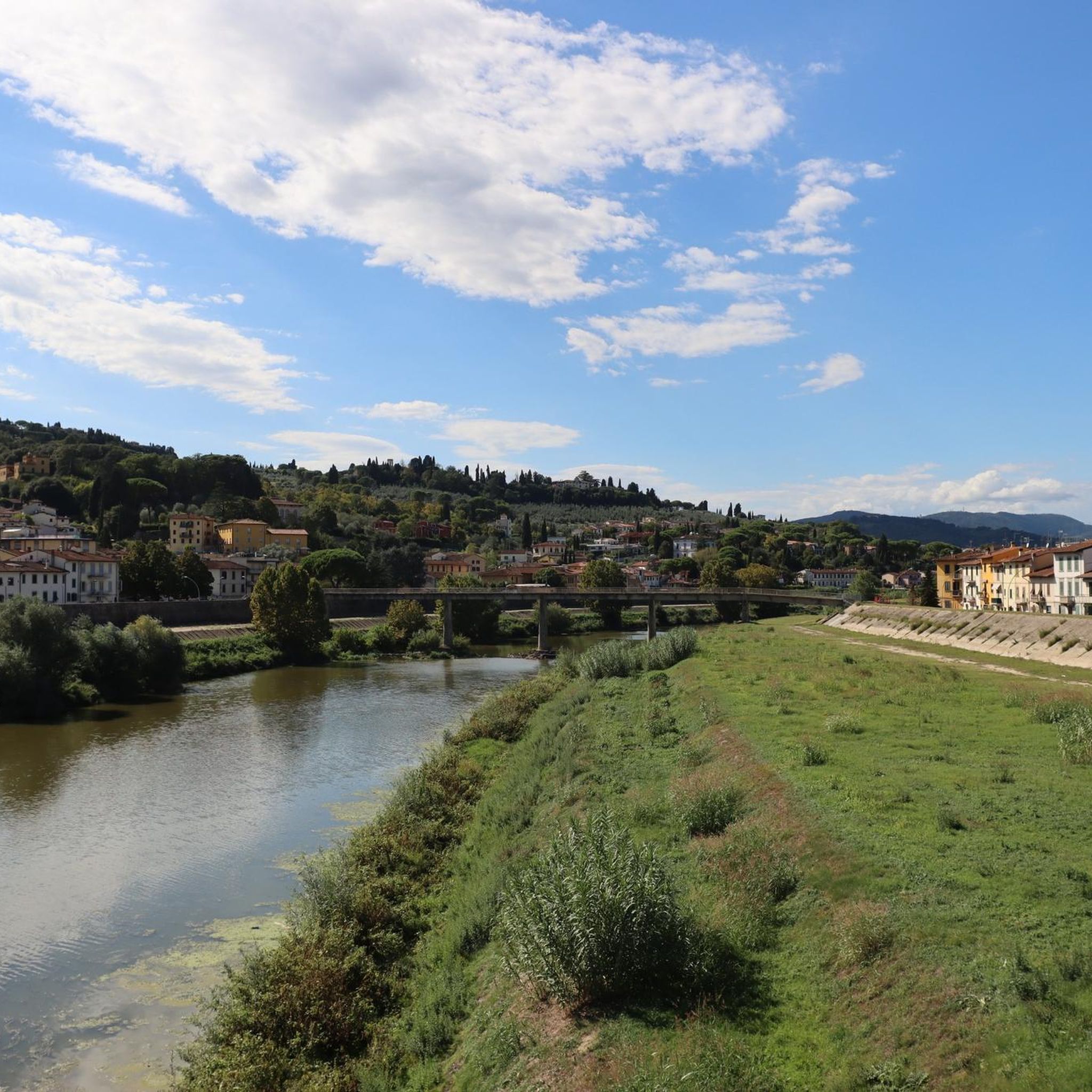
アルノヴェッキオ自然保護区
ハイライト • 自然記念物
役立つ情報 は

無料でサインアップして、さらに多くの自然記念物を発見しましょう シグナでの。
すでにアカウントをお持ちですか?
無料アカウントで今日から始めよう
次の冒険が待っています。

コミュニティからのヒント

カッシーネ・ディ・タヴォラ公園は、プラート市の南部にある約300ヘクタールの保護された自然地域であり、公共公園です。15世紀にロレンツォ・デ・メディチの命により創設され、この街の主要な緑地帯であり、歴史的、景観的、農業的な大きな価値を兼ね備えています。 Storia e Origini Medicee 15世紀に近くのポッジョ・ア・カイアーノのメディチ荘とともに構想されました。 沼地の干拓のための密な運河網を備えたモデル農場として設立されました。 メディチ農場:1477年から1479年の間にジュリアーノ・ダ・サンガッロによって家畜の飼育とフィレンツェ向けのチーズ生産のために建てられた、水堀のある四角い planta の建物。
0
0

The holm oak of Faltognano is a monumental tree that is over a century old and is located near the church of Santa Maria Assunta in Faltognano, in the municipality of Vinci in the province of Florence. It is a specimen of holm oak (Quercus ilex) that has a trunk circumference of 4.60 m, is 11 m tall and dates back to before 1750 according to the inventory of monumental trees of Tuscany (progressive n°47). Over time it has undergone numerous prunings and interventions that have partially reduced its size and grandeur and altered its shape, which was once more dome-shaped. The plant has suffered from fungal attacks in recent decades and requires periodic care; at the moment various safety systems have been installed such as ropes, supports and a railing around the trunk to prevent branches from falling and limit access. In 2007 it received the Touring Club Award, an award announced by the TCI consuls of Tuscany for monumental trees. It is the symbol of the community of Faltognano and is located a short distance from the birthplace of Leonardo Da Vinci and the center of the city of Vinci; a center that can be seen inside the wonderful panoramic view that can be enjoyed from the foot of the tree.
1
0

Devil's Boulder. It is a particular monolith located on the edge of a plateau surrounded by centenary holm oaks, similar - with smaller dimensions - to the so-called Etruscan Pyramid of Bomarzo. On the boulder there are writings that probably date back to a couple of centuries ago and indecipherable signs but what is most striking are the deep grooves perhaps due to uses and rituals that are lost in the mists of time. It is called "The Devil's Boulder" and is surrounded by centuries-old holm oaks in the Pietramarina woods, one of the most mysterious environments of Montalbano. The boulder is located near an area occupied by an Etruscan settlement, perhaps a sacrificial altar renamed "of the devil" by Christians to exorcise its pagan affiliation or, as a legend has it, "of the devil" because the devil left the the imprint of his hoof. However, the “Masso di Pietramarina” makes this corner of Montalbano suggestive and mysterious. It was also in a strategic position, given that from the top it is possible to see the sea.
0
0


The Parco delle Cascine di Tavola is a beautiful park that extends over about 300 hectares, just a few minutes from the city center, taking its name from the neighborhood of the same name in which it is located. In the fifteenth century, the farmhouses were created on the initiative of Lorenzo di Piero de' Medici, better known as the Magnificent. At the time, the livestock breeding and the production of cheeses originating in this locality satisfied the demand of all of Florence. Today, the park offers several opportunities to enjoy the spaces: walking, running, on one of the many benches or relaxing on the grass. It is not uncommon to spot wild animals. The park, usually quiet, offers panoramas and colors that strike the eyes and cheer up the spirit.
1
0

The Pietramarina site is located on the top of the southern offshoot of Montalbano, at 585 meters above sea level, in one of the most fascinating places in Montalbano. The elevated and strategic position, on the western border of the territory of Artimino, allowed to control a vast territory and constituted a reference for those who used the paths of the plains or came from the Apennine passes. Reconstruction of Pietramarina Reconstruction of Pietramarina Facing Artimino, Fiesole and Volterra, it made it possible to put these large centers in communication with each other through a visual triangulation, as well as the territory behind the middle-Valdarno with the Livorno coast, visible today in optimal atmospheric conditions. We must also assume that Pietramarina was inserted within a wider range of communications system, which had to cross the Apennines. Probably due to this strategic position, the site - a fortified sanctuary area - was occupied for a long period of time, which at the present time is documented at least from the 7th to the 1st century BC. Systematic research in the area was initiated by the Superintendence of Archaeological Heritage of Tuscany in the years 1991-1996; from 1999 to 2015 they were taken over by the Municipality of Carmignano, under the concession scheme. The top of the hill is enclosed by a wall that has an approximately calculable linear development of about 360 meters, now visible for a stretch on the west and south sides. It is about 2.90 meters wide, has an external and an internal facing in polygonal work with a small device and, in various points of the stretch under investigation, it is preserved for about 2 meters in height. Its construction is located in a post-archaic horizon.
0
0
Near the top of Pietramarina, one of the most fascinating places in Montalbano, lies a strange rock formation, a single large sandstone monolith, which stands isolated in the holm oak forest. They call it the Devil's Boulder, because someone recognized the imprint of the Evil One's goat's paw in an ancient engraving at the foot of the rock. A series of steps dug directly into the stone help you climb to the top of the boulder and once upon a time, when the forest was less developed, from up there the view could extend to the sea and the distant island of Gorgona There are those who recognize the boulder as an Etruscan altar, but most likely the staircase was dug in the recent past by the inhabitants of Bacchereto with the aim of helping the first tourists to go up and admire the landscape. There can be no doubt, however, that that wonderfully isolated boulder did not remain indifferent to the Etruscans who inhabited the citadel for six hundred years, whose excavations are visible today just a few meters away. Indeed, it is probable that the boulder was actually frequented in remote times: on its surface, among the engravings and writings left from the early twentieth century to today, some deeper and more rounded grooves seem to belong to peoples and uses lost in the mists of time.
6
1

Magic, the stone and the clearing !!!
0
0
シグナでのの人気観光スポット

komootモバイルアプリでインスピレーションを得よう


さらに探索
これらのガイドで、最高の洞窟を探す範囲を広げましょうシグナでの:
