ボスキュー周辺のアトラクション&必見スポット - トップ20
ボスキューには必見のスポットがたくさんあります。ハイキング愛好家やサイクリング愛好家の方は、ぜひボスキューを探索してこのエリアにある20
の隠れたスポットを訪れてみてください。このエリアの必見スポットを確認し、次の冒険に出かける計画を立てましょう。
最終更新日: 10月 24, 2026
レヴェルの洗濯場
ハイライト • 構造物
翻訳者 Google •
役立つ情報 は

ルイ11世城
ハイライト • 城
翻訳者 Google •
役立つ情報 は

今すぐサインアップして、こんな場所を発見しよう
最高のシングルトラック、ピーク、その他のエキサイティングなアウトドアスポットのおすすめを受け取ろう。
ノートル=ダム=デュ=モン礼拝堂
ハイライト • 宗教的な場所
翻訳者 Google •
役立つ情報 は

シャトー・ド・モンゴンティエ
ハイライト • 城
Located on the GR 65, facing south, Espace Montgontier dominates the plain of Bièvre.
A large …
翻訳者 Google •
役立つ情報 は

シャトー・ド・ボヌヴォー
ハイライト • その他
翻訳者 Google •
役立つ情報 は
無料でサインアップして、さらに多くの観光スポットを発見しましょう ボスキューでの。
すでにアカウントをお持ちですか?
無料アカウントで今日から始めよう
次の冒険が待っています。

コミュニティからのヒント

The faithful trust in the help of the Mother of God – who in France is always venerated under the title “Notre-Dame” (which corresponds to the German name “Our Lady”) – was expressed by the French nun, mystic and Doctor of the Church, Saint Thérèse of Lisieux (religious name Thérèse of the Child Jesus and the Holy Face, 1873 to 1897) as follows: “In trials or difficulties I turn to Mother Mary, whose gaze alone is enough to dispel all fear.”
0
0

In 1869, the Marist Brothers purchased the castle and its grounds. They raised the body of the central building by one floor. The castle was then acquired by the city in 1906. In 1914, it became a military hospital and from 1940 to 1960, a modern college. The castle now houses a music school and meeting rooms. Many areas are vacant. The Ministry and the public agency for cultural cooperation (aida) conducted a feasibility study for the establishment of a European Cultural Exchange Center in the building. If you take a walk in the park in the afternoon, you can hear the musicians practicing.
6
0
In this area the villages are rather deserted, here you can still find an Aubergers and a bakery, the village has beautifully decorated its places of interest.
6
0
At guests' disposal: reception rooms for 20 to 170 people, accommodation for up to 102 beds and a shared kitchen, a 500 m2 terrace equipped with tables, arbors and parasols with an exceptional view of the Bièvre plain and a large park of approximately 4000 m2 for an outdoor reception.
9
0


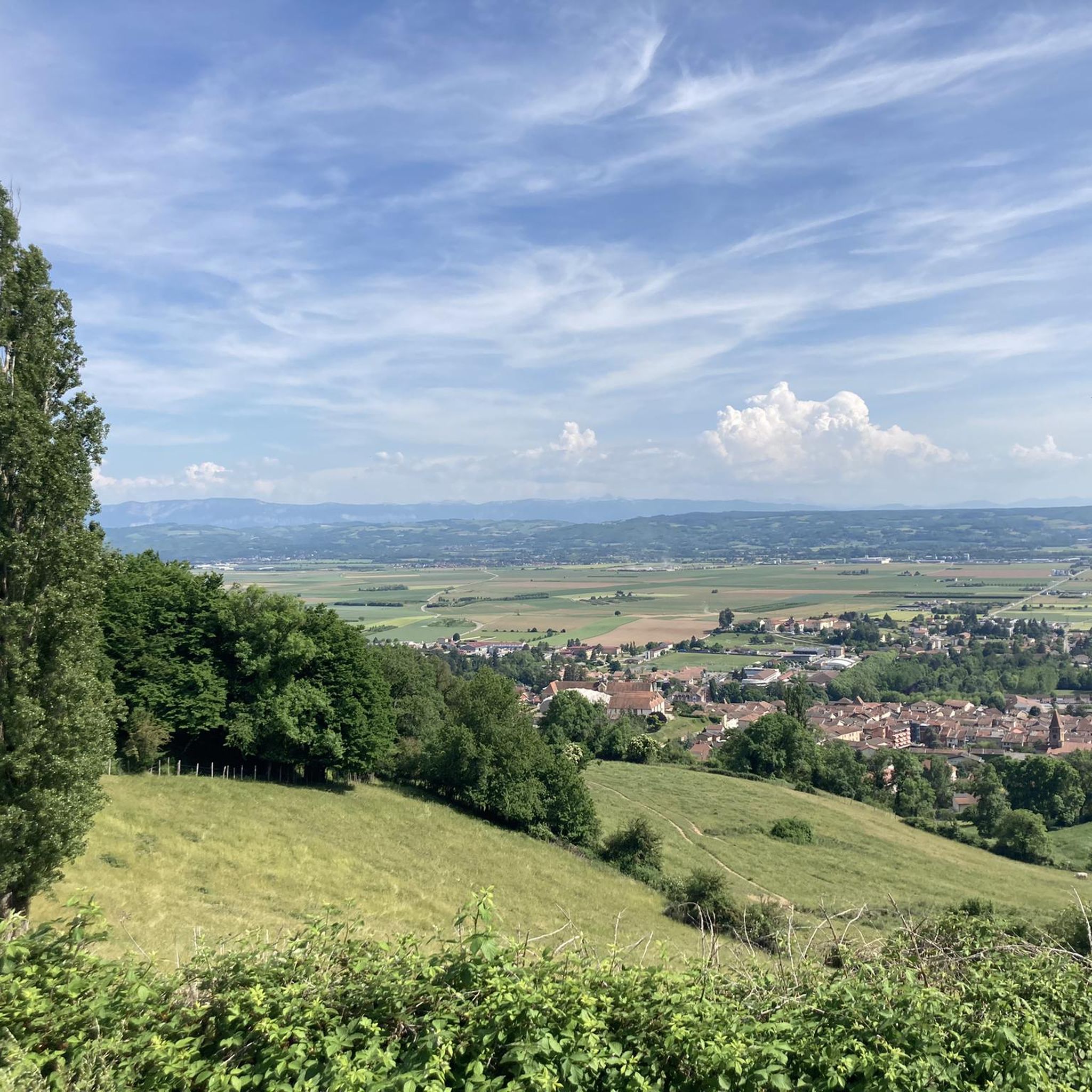
Magnificent place with views of the Chartreuse and the Vercors, several picnic tables, and a charming little chapel accessible to the public.
2
0
Discover the Notre-Dame-du-Mont Chapel and its breathtaking view of Vercors and Chartreuse, with the small chapel you can enter, numerous picnic tables, large green space... A perfect place! ---------- This chapel was built in the 13th century on the hill overlooking the Bièvre plain, an exceptional panorama of the Alps and the Chambaran plateau. With an orientation table. According to legend, the chapel was founded by a Lord of Bressieux, who, returning from a crusade, was surprised at sea by a violent storm. He made a vow if he survived to build a chapel to the Saint Virgin on the hillside, opposite his castle, which is also located just opposite the castle of Bressieux to the north of the Bièvre plain. Source: Terres de Berlioz
0
0
The municipal castle of La Côte-Saint-André, also called "Louis XI castle", is an old medieval castle dating from the 13th century, transformed into a pleasure castle for a religious congregation during the 19th century. Source: Wikipedia
0
0

komootモバイルアプリでインスピレーションを得よう


さらに探索
まだ探しているハイライトが見つかりませんか?他の地域のトップアトラクションのガイドを見てみましょう:
