ロンヴォーのおすすめツーリングルート
4.2
(16)
209
ライダー
36
ライド
ロンヴォー周辺でのおすすめのサイクリングルートを参考にして、このエリアを最大限に楽しみましょう。ここでご紹介するのは、ロンヴォー周辺の人気バイクライドです。ぜひ、自分に合ったルートを見つけてください。
最終更新日: 8月 29, 2026
5.0
(1)
61
ライダー
38.8km
03:44
740m
740m
難しい自転車ライド. 標準以上のフィットネスレベルが必要です。 ツアーの一部で自転車を押して歩く必要があるかもしれません。
17
ライダー
47.5km
04:05
630m
630m
難しい自転車ライド. 標準以上のフィットネスレベルが必要です。 ツアーの一部で自転車を押して歩く必要があるかもしれません。

無料新規登録
4.3
(3)
16
ライダー
41.7km
04:00
690m
690m
難しい自転車ライド. 標準以上のフィットネスレベルが必要です。 ツアーの一部で自転車を押して歩く必要があるかもしれません。
13
ライダー
43.0km
04:02
760m
760m
難しい自転車ライド. 標準以上のフィットネスレベルが必要です。 全般的に舗装された状態です。あらゆるスキルレベルに適しています。
7
ライダー
49.5km
03:04
420m
420m
中程度の自転車ライド. ある程度のフィットネスレベルが必要です。 全般的に舗装された状態です。あらゆるスキルレベルに適しています。
さらに多くのルートや他のユーザーのおすすめ情報を確認できます。
無料新規登録
すでにアカウントをお持ちですか?
おすすめのツアーは他のkomootユーザーが実際に経験した何千ものアクティビティに基づいています。
無料アカウントで今日から始めよう
次の冒険が待っています。
ログインまたは登録

コミュニティからのヒント

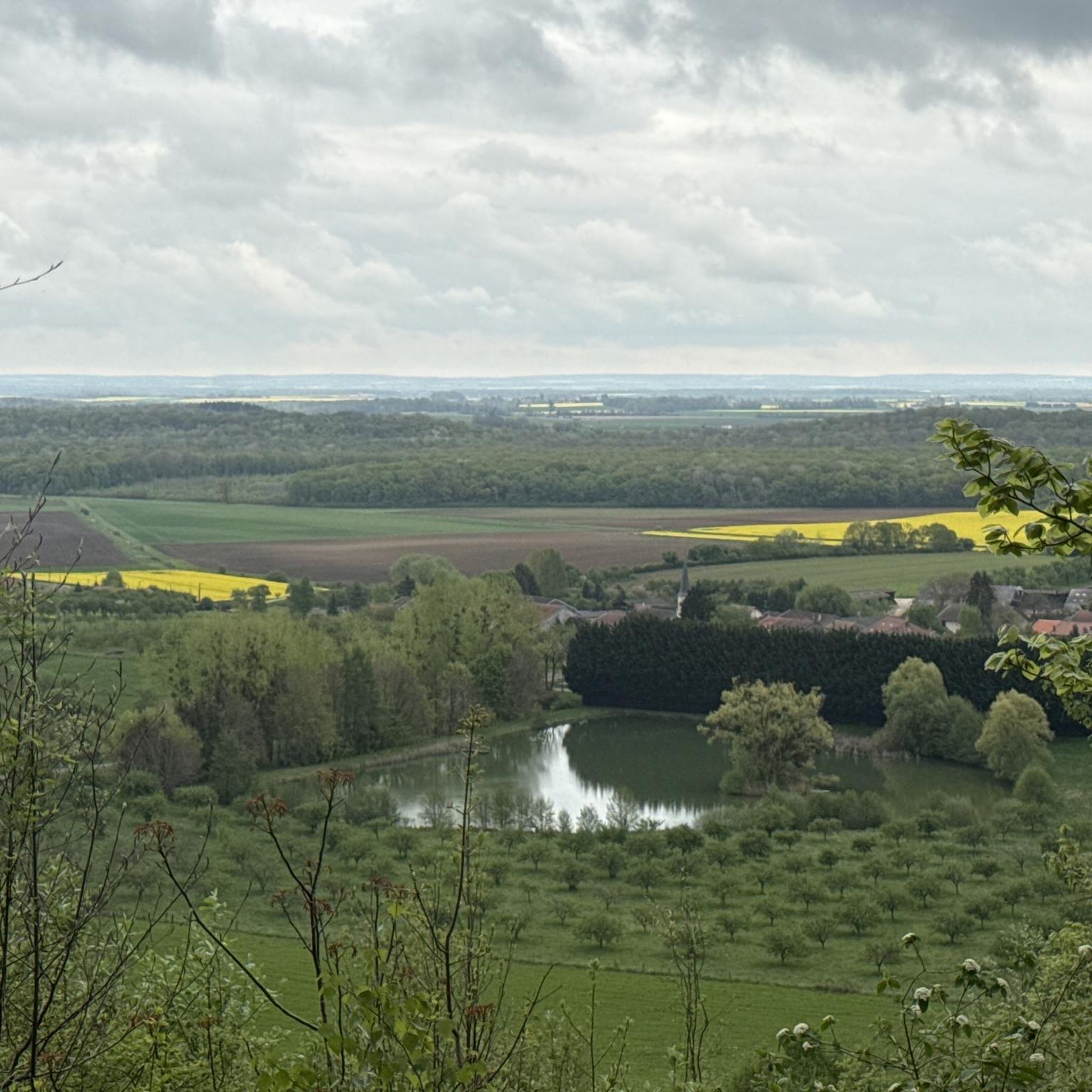
A great place to get a great view over the entire landscape around Verdun.
1
0

This granite memorial is part of a series of 118 monuments erected in the 1920s by artist and veteran Paul Moreau-Vauthier. They mark the exact front line of 18 July 1918, the start of the Allied counter-attack during the Second Battle of the Marne. The Haudiomont memorial recalls the fierce fighting in this region and is a tangible milestone on the route of remembrance of WWI.
8
0
Casemate Pamart – Fort de Souville This concrete machine gun bunker was built in 1917 to reinforce the defences of Fort de Souville. Designed by Commandant Pamart, the Casemate offered an easy-to-install alternative to traditional gun turrets. Equipped with two Hotchkiss machine guns, it has a field of fire of 160°, with 14 cm of armour thickness. Its compact size and robustness made it particularly suitable for use in the heavily damaged terrain around Verdun.
6
0
Built in 1881 above the Tunnel de Tavannes to reinforce the inner defensive belt of Verdun. The battery had three firing platforms and a traverse shelter, and was originally armed with two 220 mm mortars and one 22 cm smoothbore mortar. In 1900 it was disarmed and reused during the Battle of Verdun (1916) as an ammunition depot and shelter for troops. The traverse shelter is the best preserved element visible today.
9
0
Built in 1881 as part of the inner defensive belt of Verdun, between Fort de Souville and Fort de Tavannes. The battery consisted of six 120 mm and two 95 mm guns, aimed at strategic targets such as Douaumont and the Bois d’Hardaumont. Due to the crisis of the shell-torpille type, it was disarmed in 1900 and served as a shelter for troops and ammunition during the Battle of Verdun (1916). The masonry construction, covered with earth, offered limited protection against modern artillery.
7
1
Inaugurated in 1928, this war memorial in Verdun honours the city’s inhabitants who died for France in both world wars. It was built on the remains of a military butcher’s shop, on the crescent of the Chaussée, a 17th-century fortification. The sculpture depicts five soldiers – a cavalier, an engineer, an infantryman (poilu), an artilleryman and a territorial – forming a symbolic wall under the motto of Verdun: “On ne passe pas”.
8
0


This spot is the perfect place to travel back in time. From the beginning of the Battle of Verdun, Fort de Vaux was one of the priority targets of the German offensive. In early March 1916, the Germans came within a few hundred metres of the fort and began a siege that lasted 100 days. Inside the fort, under a barrage of artillery fire, resistance was organised despite the lack of food and water. On 1 June 1916, the Germans reached the fort: the French garrison, isolated and without outside support, fought a week of heroic fighting inside the fort before being defeated by exhaustion. Triggered? Buy a combined ticket and immerse yourself in the history of this episode in the war of 14-18 with a visit to Fort de Vaux. The tour gives an insight into the daily living conditions of the besieged soldiers in the heart of the fort. A must-see for any history buff.
4
0
ロンヴォーでのの人気観光スポット

komootモバイルアプリでインスピレーションを得よう


さらに探索
他の地域の最高のサイクリングルートを見てみましょう。
