ヴォルファーンのおすすめツーリングルート
4.4
(857)
6,023
ライダー
27
ライド
ヴォルファーンでおすすめのサイクリングルートをお探しですか?行きたいルートを簡単に決められるように、このページではヴォルファーン周辺の人気バイクライドをご紹介します。 ぜひ、お気に入りのルートを見つけてください。
最終更新日: 11月 17, 2026
4.5
(4)
9
ライダー
18.9km
01:10
200m
200m
中程度の自転車ライド. ある程度のフィットネスレベルが必要です。 ほとんどが舗装路です。
3.0
(1)
7
ライダー
16.5km
01:00
140m
130m
初級者向けバイクライド. ほとんどが舗装路です。

7
ライダー
18.9km
01:15
260m
260m
中程度の自転車ライド. ある程度のフィットネスレベルが必要です。 ほとんどが舗装路です。
5
ライダー
中程度の自転車ライド. ある程度のフィットネスレベルが必要です。 ほとんどが舗装路です。
6
ライダー
9.88km
00:42
150m
150m
中程度の自転車ライド. ある程度のフィットネスレベルが必要です。 ほとんどが舗装路です。
さらに多くのルートや他のユーザーのおすすめ情報を確認できます。
すでにアカウントをお持ちですか?
おすすめのツアーは他のkomootユーザーが実際に経験した何千ものアクティビティに基づいています。
無料アカウントで今日から始めよう
次の冒険が待っています。


コミュニティからのヒント


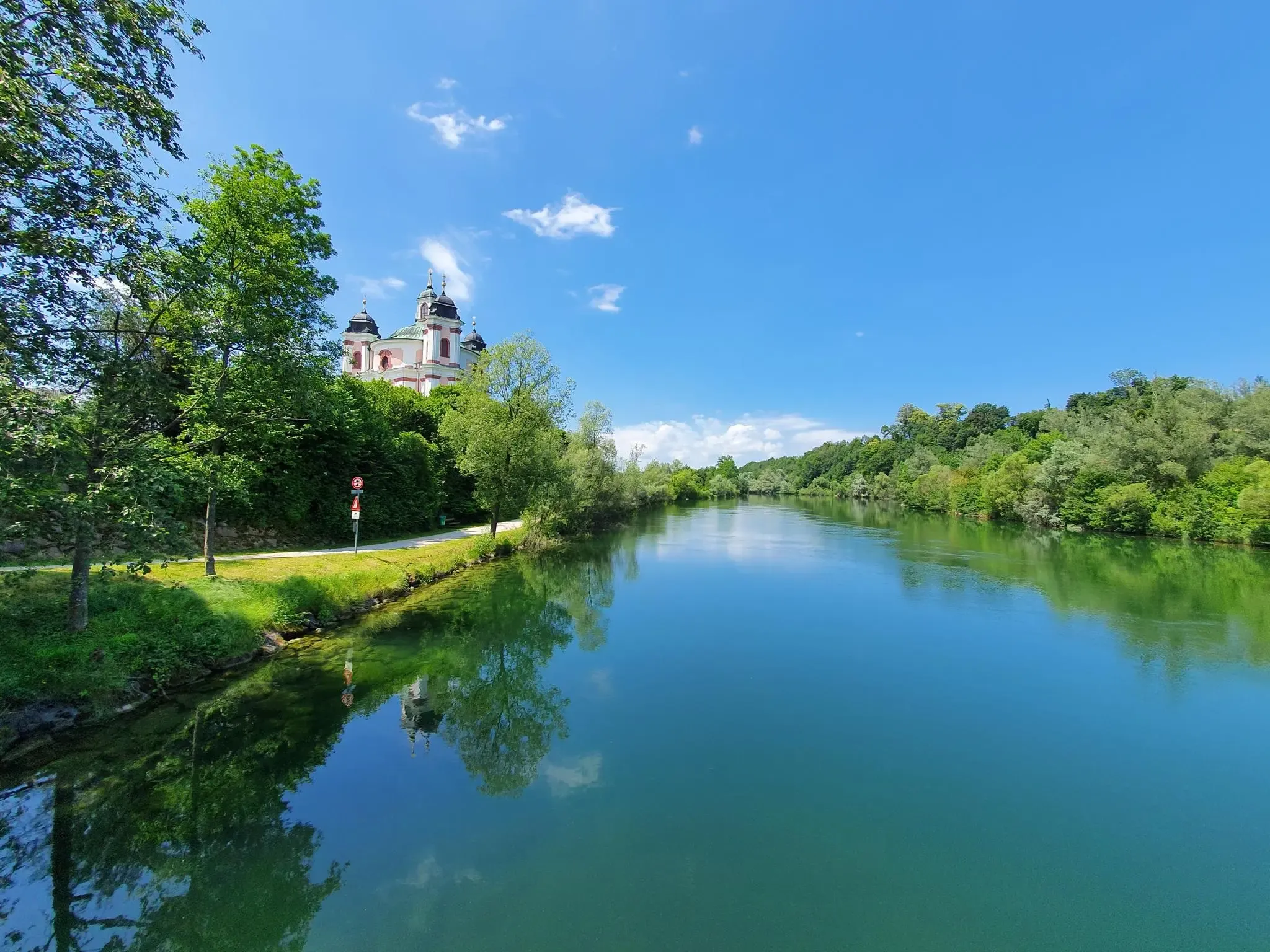
Shortly after the founding of Garsten Abbey, in the first quarter of the 12th century, the Benedictine Abbey of Gleink emerged from the Bamberg fiefdom of Glunich. The founders, Arnhalm I and his son Bruno, from the ministerial Gleink-Volkersdorf family, whose employers, the Styrian Otakars, co-founded the abbey, had the fortress converted into a monastery. The monastery complex, dedicated to the Apostle Andrew, already existed around 1120. The Romanesque monastery building was damaged by fire in the 13th century. In the first half of the 17th century, primarily due to looting during the Peasants' War of 1626, the monastery fell into dire straits. Under the following abbots, the great Baroque building period also began for Gleink. As part of the church reforms, Gleink was secularized on May 21, 1784. Parish pastoral care in Gleink was taken over by secular priests, and the monastery buildings were temporarily used as barracks. The bishops of the Diocese of Linz then happily used Gleink as a summer residence. In 1832, the Salesian Sisters came to Gleink from Vienna. At its peak, their monastery numbered up to 70 sisters. From around 1950 onwards, there were no new enrollments, and in 1977, it was finally dissolved. In 1950, the Order of the Missionaries of the Sacred Heart took over parish pastoral care and, until 1990, also operated a Caritas home, a feared reformatory for boys. Since 2022, the monastery building has served as the "cultural GUT storage" of the Diocese of Linz. The external depot of the Diocesan Archives houses archival materials from the parishes as well as the art and furniture depot with over 2,000 works of art and furniture.
0
0

Townscape fair in Wolfern 8.9.24
0
0

The Bründl is located on the north side of the building opposite the church
2
0

Bernhard von Losenstein had the current castle built in 1515 and gave it the name "Losensteinleiten". When a Turkish army under Kassim Pasha made the area unsafe in 1532, the castle suffered greatly. It is said that a hunter defended himself with many guns and shot a Turkish leader. This heroic act frightened the Turks and they fled. Between 1550 and 1570, the castle was enlarged by Georg Achaz von Losenstein. His wife was called Christina von Bergheim. The family died out with Franz Anton von Losenstein in 1692. The property passed to the Princes of Auersperg and their successors until 1950. From 1955 to 1993, Losensteinleiten Castle was owned by the Camillian Order, which ran a private high school with public rights until 1976. From 1978 to 1983, the Upper Austrian state government housed an agricultural college for girls. From 1985 to 1993, the Camillians ran the St. Kamillus retreat and education center in Losensteinleiten Castle, with a focus on the training and further education of people working in the service of the sick, especially in the denominational hospitals in Austria.
1
0
The exact start of construction of St. Martin's Church is not known, but the first documented mentions of the "Wolfarer Pharr" date back to 1318(?) and 1339. This period was marked by battles between the Catholics and the Waldensians. In the course of these unrests, the rectory was set on fire twice (1396 and 1397). After the tensions had calmed down, the parish church was extensively built. The beautiful Gothic main portal bears the year 1523. By this time, construction was completed - apart from minor additions. The church originally had a wooden tower, which was demolished in 1833 and a sacristy was built in its place in 1834. The current tower was built from Kremsmünster conglomerate stone in just six months. A new sacristy was finally added in 1880. In 1891 two new side altars in neo-Gothic style were added.
0
0
Because of its great distance, the Gleinkersee was temporarily given to the Spital am Pyhrn monastery in 1589 for a payment of 200 guilders. In 1608, the lake was finally ceded by Gleink for another 200 guilders.
0
0
The Benedictine monastery of Gleink was founded in the first quarter of the 12th century, soon after the founding of the Garsten monastery, from the Bamberg fiefdom of Glunich. The monastery complex dedicated to the Apostle Andrew already existed around 1120. Gleink was a daughter settlement of Garsten monastery, from which the first abbot Ulrich came. Ulrich was a relative of Saint Berthold of Garsten, the first abbot of Garsten monastery. The Romanesque monastery building was damaged by fires in 1220, 1275 and 1313. After the turbulent times, the monastery experienced a heyday under Abbot Gregor Grand (1504–1520) before the schism. His successor Thomas Amfeldt (1520–1539) had to watch as Turkish cavalry from Kasimsbeg's raiding corps devastated the area around Gleink and Dietach in September 1532. Due to the political, economic and religious conditions in the first half of the 17th century, especially the plundering during the Peasants' War in 1626, the monastery fell into great distress, from which it was only rescued by the abbots Cölestin Pestaluz (1658–1678) and Rupert I of Kimpflern (1678–1708). Under these abbots, the great Baroque building period began for Gleink, which ended under Abbot Rupert II Freysauf of Neudegg (1709–1735). Andreas von Schwandtner (1735–1762) was the penultimate abbot. In 1762, Wolfgang Holmayr, a professor from the University of Salzburg who was born in Steyr and famous as a preacher, was elected abbot. He led the monastery as Wolfgang III until it was dissolved. As part of the church reforms of Emperor Joseph II, Gleink was secularized on May 21, 1784. Soon after the dissolution, the monastery buildings were used as barracks. In 1791, Gleink was endowed to the Bishop of Linz. The bishops of Linz liked to use Gleink as a summer residence. After the dissolution of the monastery, parish pastoral care in Gleink was carried out by secular priests, and since 1950 by the Order of the Sacred Heart Missionaries. Since then, the order also ran a Caritas home (until 1990), a feared reformatory for boys.
0
0
ヴォルファーンでのの人気観光スポット

komootモバイルアプリでインスピレーションを得よう


さらに探索
他の地域の最高のサイクリングルートを見てみましょう。
