モンテブルーノ周辺のアトラクション&必見スポット - トップ20
モンテブルーノには必見のスポットがたくさんあります。ハイキング愛好家やサイクリング愛好家の方は、ぜひモンテブルーノを探索してこのエリアにある20
の隠れたスポットを訪れてみてください。このエリアの必見スポットを確認し、次の冒険に出かける計画を立てましょう。
最終更新日: 10月 10, 2026
モンテ・アントラ
ハイライト • 山頂
翻訳者 Google •
役立つ情報 は

フォルチェッラ峠
ハイライト • 山道
翻訳者 Google •
役立つ情報 は

今すぐサインアップして、こんな場所を発見しよう
最高のシングルトラック、ピーク、その他のエキサイティングなアウトドアスポットのおすすめを受け取ろう。
カーザ・デル・ロマーノ
ハイライト • 山道
翻訳者 Google •
役立つ情報 は

ラマチェート山
ハイライト • 山頂
翻訳者 Google •
役立つ情報 は
モンテ・カルモ山頂の十字架
ハイライト • 山頂
between the municipalities of Gorreto (Liguria), Carrega Ligure (Piedmont) and Ottone (Emilia Romagna). It is …
翻訳者 Google •
役立つ情報 は

無料でサインアップして、さらに多くの観光スポットを発見しましょう モンテブルーノでの。
すでにアカウントをお持ちですか?
無料アカウントで今日から始めよう
次の冒険が待っています。

コミュニティからのヒント


The small sacred monument we encounter on Monte Carmo is perhaps the perfect place for a brief moment of reflection. A few years ago, Christiane Völkel commented on the wonderfully fitting sentence by the Italian poet Francesco Petrarch (who lived in the 14th century), "Everywhere one has heaven above oneself," as follows: "What is the use of prayer? This question moves me (...) I have found for myself the answer and the certainty that when I pray I am with the Lord, or rather, that when I pray he is often noticeably closer to me than usual. Thus, I retain the possibility of pouring out my heart to him (...) This intimacy with him makes me believe in him."
0
0


The most famous crucifix in Italy is not found on the tops of the mountains, although of course there are many summit crosses all over the country, such as here on Monte CARMO, but in literature: The author Giovanni Guareschi, spiritual father of the protagonists 'Don Camillo' and 'Peppone', has included another main character in his stories - which are well-known and popular far beyond the country's borders: the crucified Christ, who speaks to Don Camillo from the high altar. The author himself makes the following comment on this: "So you have to explain: if the priests feel insulted by Don Camillo, they can smash a candlestick on my skull for all I care; if the communists are insulted by Peppone, they can break a club in two on my back; but if someone feels insulted by Christ's speeches, there's nothing you can do. Whoever speaks in my stories... is my Christ, that is, the voice of my conscience. My personal business, my affair. And therefore: each for himself and God for all.” (G. Guareschi)
2
0

February 15, 1945, La Squazza Massacre: On February 14, 1945, an Alpine soldier from Monterosa, a certain Mantovani, was in the La Squazza area (municipality of Borzonasca), heading towards the Forcella pass, where a contingent of Alpine soldiers was stationed. Some partisans recognized him as the one who had seen the mine system being laid around the Forcella stronghold. They then decided to capture him to get him to reveal the operation and exact location of the minefield and organized an ambush. But, while they were ordering him to “put your hands up!”, a group of German soldiers appeared on the road and a firefight ensued, during which Mantovani (probably shot by a Nazi) and a German were fatally shot. The partisans suffered no losses. The Nazi-fascist retaliation was immediate and ferocious and on February 15, ten partisans were taken from the prisons of Chiavari and transported on a truck to La Squazza, where they were murdered. The then deputy commissioner of the “Coduri”, “Miro” recounts that the ten partisans who were shot were left for three days in full view of everyone, with no one being allowed to attend to the funeral. The owner of the hotel in La Squazza, however, had approached the martyrs to try to bring them some, vain, help. "Miro" himself, when the news reached him, was charged, together with "Baffo", sent by the Area Command, to go to the site of the massacre to proceed with the identification of the bodies. Having arrived near La Squazza by chance, after having been targeted by mortar fire from the Alpine troops of Forcella, the two partisans took advantage of the guidance of an elderly local lady and her daughter, whom they met on the path, who collaborated with them until they got closer to the site of the massacre.
0
0

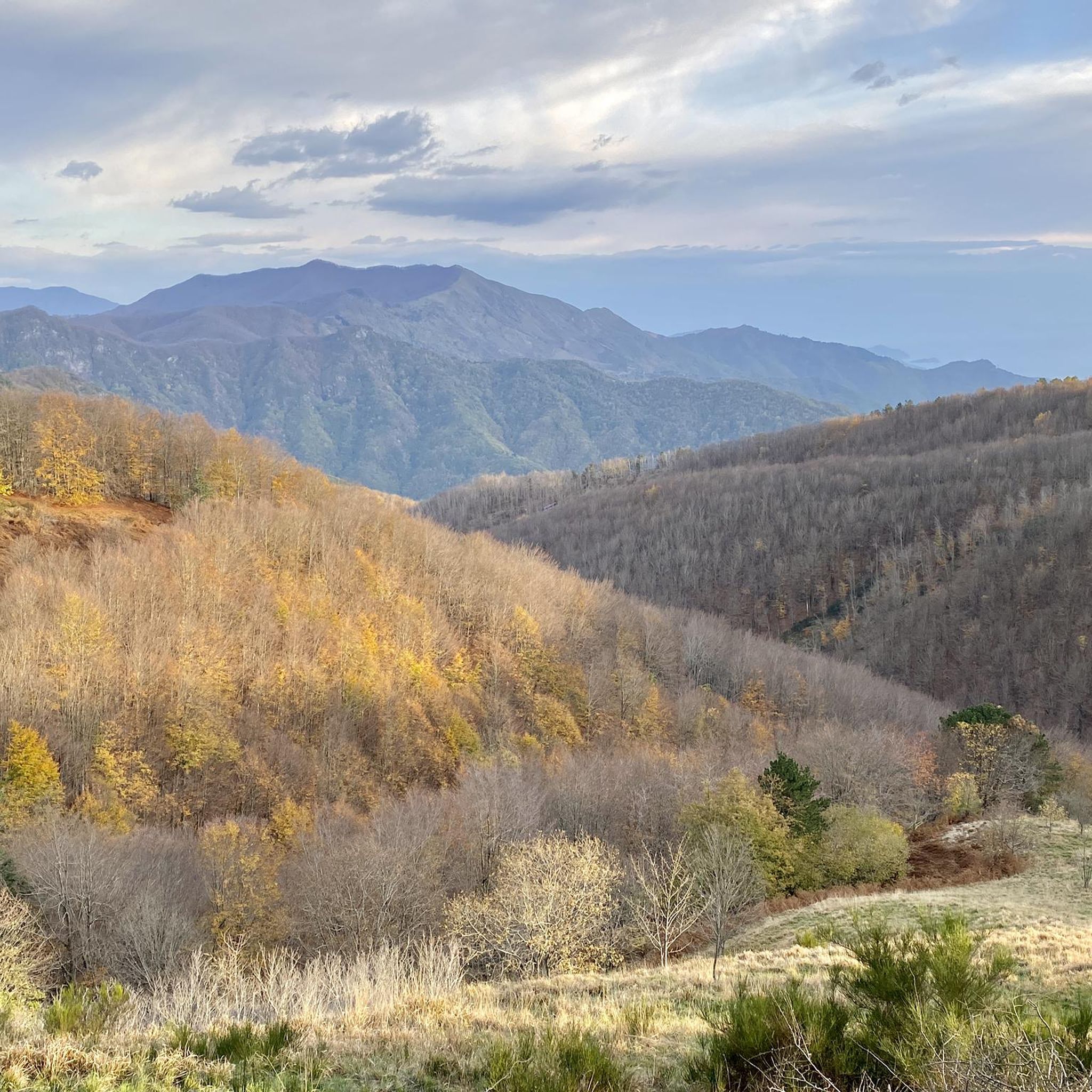
Monte loved by the Genoese in summer and winter
0
0
モンテブルーノでのの人気観光スポット

komootモバイルアプリでインスピレーションを得よう


さらに探索
まだ探しているハイライトが見つかりませんか?他の地域のトップアトラクションのガイドを見てみましょう:
