サンマルチェッロのおすすめランニングルート
3.9
(95)
1,672
ランナー
159
ランニング
サン・マルチェッロ周辺のジョギングは、山岳地帯と広大な森林を特徴とする多様な景観を提供します。この地域はかなりの標高変化があり、挑戦的な登りからより穏やかなコースまで、様々なルートが楽しめます。澄んだ小川が谷を横切り、風光明媚なルートをさらに引き立てています。このエリア、特にトスカーナ州のサン・マルチェッロ・ピテリオは、アルパイン環境と、様々な体力レベルに適したトレイルネットワークで知られています。
サン・マルチェッロ周辺のベストジョギングルート
- 最も人気のあるジョギングルートは、モッロ・ダルバ発、モッロ・ダルバ歴史地区ループ(丘の上の町)です。この5.3マイル(8.5 km)のトレイルは、1時間1分で完了でき、歴史的な丘の上の町を巡る旅を提供します。
- 地元のランナーに人気のもう一つのルートは、パルッツェット・デッロ・スポーツ「エツィオ・トリッコリ」発、クレメンタイン・アーチ~フェデリコ2世広場、イェージループです。これは、都市や歴史的ランドマークを巡る、中程度の4.4マイル(7.0 km)のコースです。
- 地元のランナーに愛されているもう一つのルートは、モンスァーノ発ランニングループです。この9.7マイル(15.6 km)のトレイルは、変化に富んだ地形を通り抜け、所要時間は約1時間41分です。
- サン・マルチェッロ周辺のジョギングは、山岳地帯、鬱蒼とした森林、澄んだ小川が特徴です。このネットワークは、簡単なジョギングからより難しいランニングルートまで、様々なレベルのオプションを提供します。
- サン・マルチェッロのルートは、komootコミュニティから高く評価されており、80件以上のレビューで平均4.0つ星を獲得しています。1,400人以上のランナーがkomootを利用して、サン・マルチェッロの多様な地形を探索しています。
最終更新日: 10月 11, 2026
23
ランナー
8.49km
01:01
230m
230m
中程度のジョギング. ある程度のフィットネスレベルが必要です。 全般的に舗装された状態です。あらゆるスキルレベルに適しています。
3.0
(1)
33
ランナー
14.9km
01:37
280m
280m
中程度のジョギング. ある程度のフィットネスレベルが必要です。 全般的に舗装された状態です。あらゆるスキルレベルに適しています。

9
ランナー
7.10km
00:46
130m
120m
中程度のジョギング. ある程度のフィットネスレベルが必要です。 全般的に舗装された状態です。あらゆるスキルレベルに適しています。
9
ランナー
6.15km
00:38
30m
30m
中程度のジョギング. ある程度のフィットネスレベルが必要です。 全般的に舗装された状態です。あらゆるスキルレベルに適しています。
4.3
(3)
6
ランナー
9.59km
01:02
170m
170m
中程度のジョギング. ある程度のフィットネスレベルが必要です。 全般的に舗装された状態です。あらゆるスキルレベルに適しています。
さらに多くのルートや他のユーザーのおすすめ情報を確認できます。
すでにアカウントをお持ちですか?
おすすめのツアーは他のkomootユーザーが実際に経験した何千ものアクティビティに基づいています。
無料アカウントで今日から始めよう
次の冒険が待っています。

コミュニティからのヒント

The expansion of the Monumental Cemetery of Jesi represents one of the boldest projects by architect Leonardo Ricci, one of the most emblematic representatives of Italian "Brutalism," who also designed the Palaces of Justice in Florence and Savona. It was completed between 1984 and 2001 in collaboration with colleagues Franco Luminari and Silvano Rossini. The project encompasses a rectangular courtyard area, with various types of tombs arranged along the perimeter. The center, largely landscaped, houses a covered chapel and a series of elevated walkways. Beyond the individual elements, the complex is characterized as an urban project in which paths, stairways, views, suspended plazas, and volumes of varying shapes and textures punctuate the space, creating resting places and observation points that allow contemplation of both the interior of the complex and the surrounding landscape, transforming this project into a sort of "city of the dead in relation to the surrounding territory and the city of the living." The funerary blocks are connected by intersecting stairways and ramps, and thus the planimetric organization emphasizes the absence of hierarchies: there are no viewpoints or main paths; however, in one of the highest areas of the cemetery, Ricci erected a pyramid whose sharp form serves as a landmark and a panoramic point over the city of Jesi. The project fully embodies the Brutalist poetics, celebrating the raw material of reinforced concrete, which Ricci had already explored since the 1950s. Here, in a place of memory, the rough marks of the concrete accentuate the sense of authenticity and monumentality. Today, forty years later, the project continues to elicit mixed reactions. Some find it cold and inhospitable, while others consider it a masterpiece.
1
0

The structure of Castello Mancini stands out on the small eminence that dominates the Montecappone district, recalling an ancient period through a building that is not a true historic villa. Although it represents a characteristic element of the territory, Castello Mancini was built from a project by Eng. Ernesto Galeazzi only in the 1920s. Intended for the Mancini family, already owners of the first silk mill in the Fontedamo district and the homonymous paper mill in Jesi, it is a reproduction that followed the medieval taste in vogue in the early 1900s. Castello Mancini represents the desire to recall an idea of the Middle Ages that was very common at the time, with a fortified medieval construction, equipped with a crenellated crown, turrets, Gothic arch openings with mullioned windows, exposed bricks and a small private chapel annexed to the structure. The building is in terracotta, with stone decorations, with the façade dominated by a coat of arms created for the Mancini family
1
0
The structure of Castello Mancini stands out on the small eminence that dominates the Montecappone district, recalling an ancient period through a building that is not a true historic villa. Although it represents a characteristic element of the territory, Castello Mancini was built from a project by Eng. Ernesto Galeazzi only in the 1920s. Intended for the Mancini family, already owners of the first silk mill in the Fontedamo district and the homonymous paper mill in Jesi, it is a reproduction that followed the medieval taste in vogue in the early 1900s. Castello Mancini represents the desire to recall an idea of the Middle Ages that was very common at the time, with a fortified medieval construction, equipped with crenellated crowning, turrets, Gothic arch openings with mullioned windows, exposed bricks and a small private chapel annexed to the structure. The building is made of terracotta, with stone decorations, with a facade dominated by a coat of arms created for the Mancini family, the first owner of the property. Before reaching it, you are greeted by a 50-meter tree-lined avenue, surrounded by tall, century-old trees that crown the evocative structure of the building.
0
0

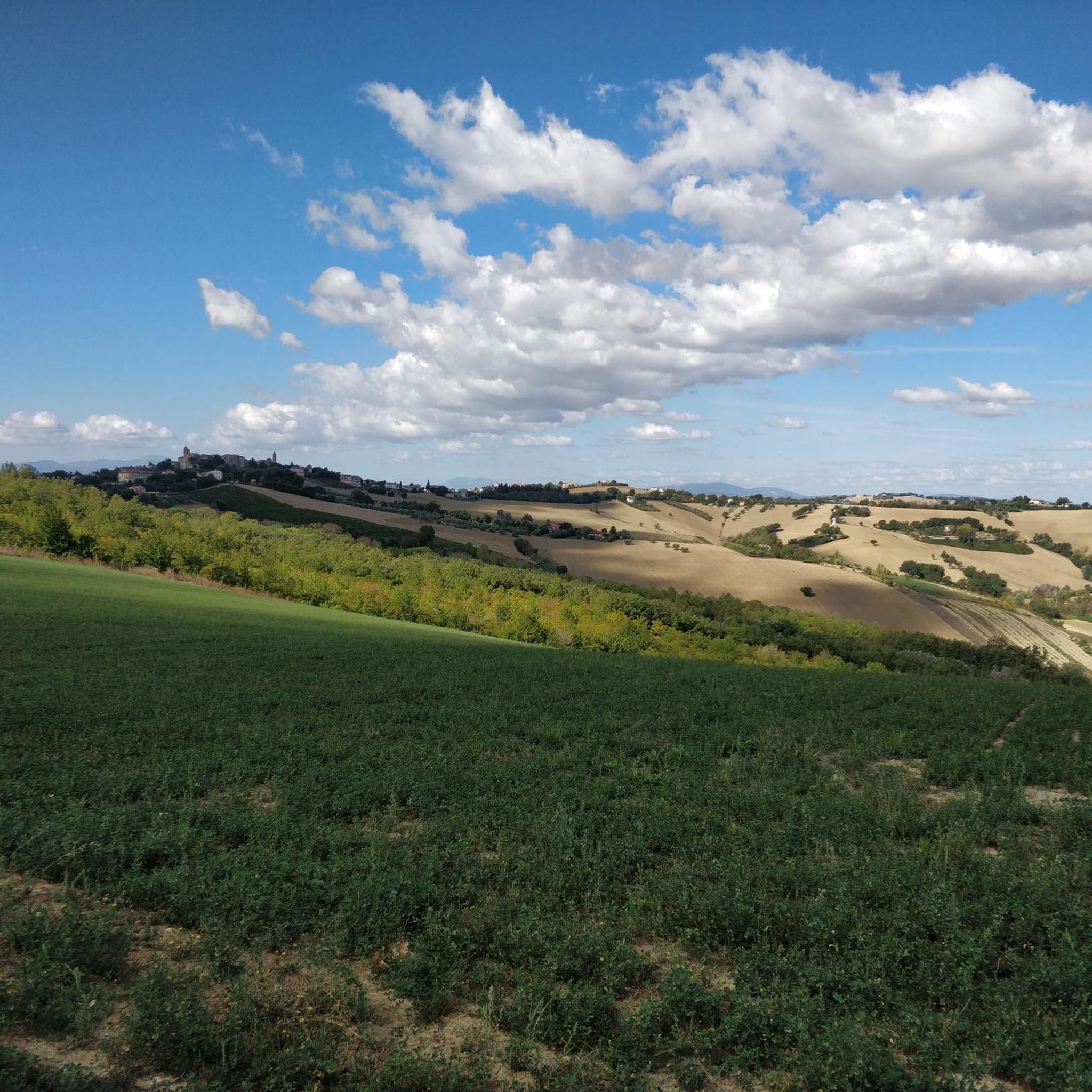
Small medieval village whose peculiarity is the "La Scarpa" walkway. In August 2024 it is being restored, when complete it will offer very interesting views.
1
0

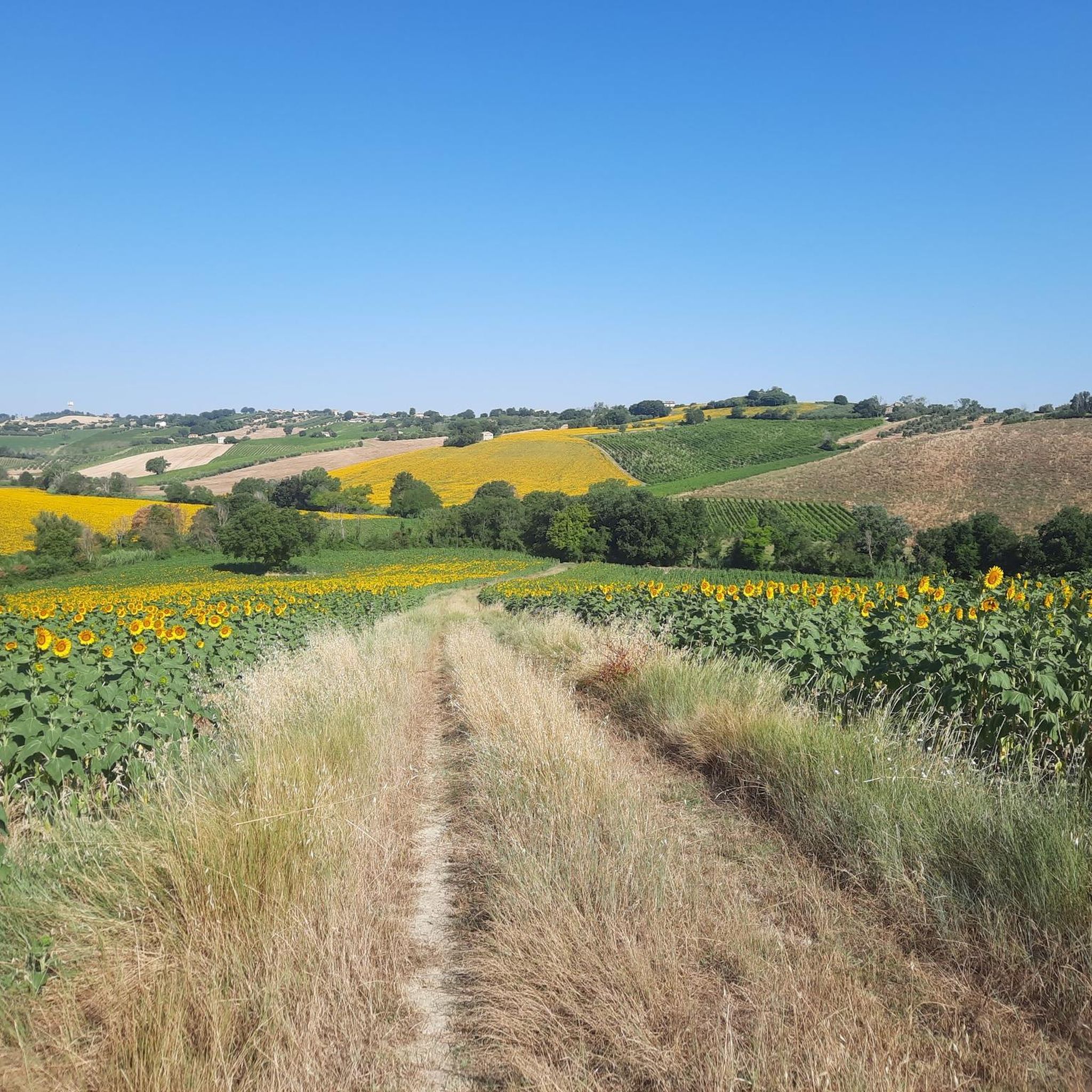
small tour in the ditches of the Lacrima hills
1
0
サンマルチェッロでのの人気観光スポット

komootモバイルアプリでインスピレーションを得よう


さらに探索
他の地域の最高のランニングトレイル & ルートを見てみましょう。
