ラ・ベルナルディエール周辺のおすすめ交通量の少ないサイクリングルート
4.4
(355)
2,191
ライダー
226
ライド
Des itinéraires cyclables de tourisme sans circulation autour de La Bernardière traversent un paysage varié caractérisé par le bocage vendéen, une mosaïque de bois, de haies et de champs agricoles. La région bénéficie de sa proximité avec la rivière Sèvre Nantaise, offrant des itinéraires qui suivent souvent les vallées fluviales ou les routes de campagne tranquilles. Cette région offre un mélange de chemins relativement plats et de terrain doucement vallonné, adaptés à diverses préférences de cyclotourisme.
Meilleurs itinéraires cyclables de tourisme sans circulation autour de La Bernardière
- L'itinéraire cyclable de tourisme sans circulation le plus populaire est la boucle Pont de la Vallée – Église Notre-Dame, Clisson depuis Cugand-la-Bernardière, un parcours de 34,6 km (21,5 miles) qui prend 2 heures et 46 minutes à réaliser. Cet itinéraire modéré offre des vues panoramiques tout en reliant Cugand-la-Bernardière à la ville historique de Clisson.
- Un autre favori parmi les cyclotouristes locaux est la boucle Le Moulin Cassé depuis Cugand, un chemin modéré de 40,8 km (25,4 miles). Cet itinéraire serpente à travers le paysage caractéristique du bocage, offrant un mélange de champs ouverts et de sections ombragées.
- Les cyclotouristes locaux apprécient également la boucle Moulin du Nid d'Oie – Pont de la Vallée depuis Cugand, un parcours de 52,8 km (32,8 miles) traversant une campagne variée et reliant des points d'intérêt locaux, souvent complété en environ 3 heures et 48 minutes.
- Le cyclotourisme autour de La Bernardière se définit par son paysage bocager, les vallées de la Sèvre Nantaise et une campagne variée avec des bois et des haies. Le réseau offre des options d'itinéraires faciles, modérés et plus difficiles, répondant à différents niveaux de compétence.
- Les itinéraires à La Bernardière sont très bien notés par la communauté komoot avec une note moyenne de 4,3 étoiles sur plus de 280 avis. Plus de 1900 cyclotouristes ont utilisé komoot pour explorer le terrain varié de La Bernardière.
最終更新日: 10月 21, 2026
5.0
(1)
24
ライダー
31.2km
02:26
260m
260m
中程度の自転車ライド. ある程度のフィットネスレベルが必要です。 全般的に舗装された状態です。あらゆるスキルレベルに適しています。
15
ライダー
38.9km
02:51
300m
300m
中程度の自転車ライド. ある程度のフィットネスレベルが必要です。 全般的に舗装された状態です。あらゆるスキルレベルに適しています。

5.0
(4)
13
ライダー
40.9km
03:10
330m
330m
中程度の自転車ライド. ある程度のフィットネスレベルが必要です。 全般的に舗装された状態です。あらゆるスキルレベルに適しています。
5.0
(1)
19
ライダー
37.8km
02:43
310m
310m
中程度の自転車ライド. ある程度のフィットネスレベルが必要です。 全般的に舗装された状態です。あらゆるスキルレベルに適しています。
4.6
(7)
12
ライダー
30.4km
02:01
190m
190m
中程度の自転車ライド. ある程度のフィットネスレベルが必要です。 全般的に舗装された状態です。あらゆるスキルレベルに適しています。
さらに多くのルートや他のユーザーのおすすめ情報を確認できます。
すでにアカウントをお持ちですか?
おすすめのツアーは他のkomootユーザーが実際に経験した何千ものアクティビティに基づいています。
無料アカウントで今日から始めよう
次の冒険が待っています。
ラ・ベルナルディエール周辺で人気

コミュニティからのヒント

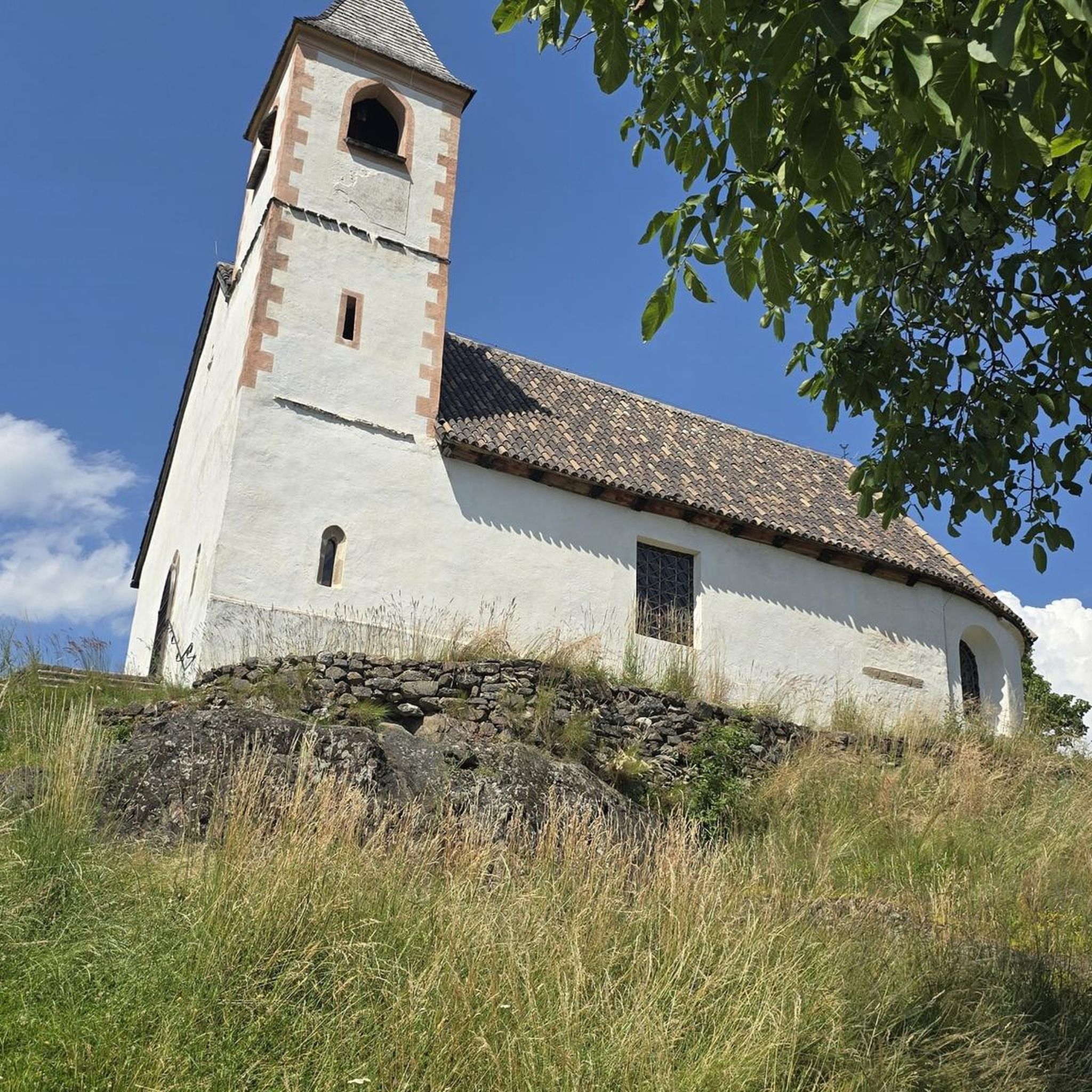
From 1805 to 1827, the sculptor François-Frédéric Lemot (winner of the Prix de Rome in 1790) transformed a former hunting forest belonging to the lords of Clisson into an idealized landscape. Influenced by the gardens of Ermenonville and Méréville, guided by his classical education and the memory of Tivoli, Lemot freely designed his garden whenever his official duties in Paris allowed. It is now a park managed by the department, freely accessible for a relaxing break with a beautiful view of the château.
0
0


This temple, built on the Saint-Gilles hillside, has been listed as a Historic Monument since March 14, 1988. It owes its name to the friendship between the Cacault brothers and the sculptor François-Frédéric Lemot, initiators and creators of Clisson's Italianate architecture in the early 19th century. Pierre Cacault wanted to build a mausoleum in memory of his brother François, who died in Clisson on October 10, 1805, but he lacked sufficient financial means. ➢ It was François-Frédéric Lemot who helped his friend carry out his project. He purchased the former Saint-Gilles-et-Saint-Brice chapel and its outbuildings at the end of 1808. The buildings are part of the cemetery, which has long been used for the burial of parishioners from all over Clisson, except for La Trinité. ➢ Paul de Berthou states in his work "Clisson and its Monuments" that "...the church of St. Gilles and St. Brice had been large and beautiful, but a lord of Clisson had its proportions reduced because it overlooked the castle too closely and posed a danger to him in the event of a siege." ➢ The remodeled church includes two chapels forming arms of the cross, one dedicated to the Blessed Virgin and the other to St. John the Evangelist, whose brotherhood once sat on this site. A small bell tower, containing two bells, stands at the crossing of the transept. ➢ Pierre Cacault died on January 29, 1810. François-Frédéric Lemot took over the project and decided that the monument would be dedicated to the memory of the two brothers. In 1811, he acquired land on the Saint-Gilles hillside and commissioned the architect Mathurin Crucy to draw up the plans. ➢ The first project was inspired by Greek temples. Mr. Crucy proposed a plan representing a peripteral temple of the Doric order, without a base, with six columns on the façade, surmounted by a pediment. F.F. Lemot simplified the plan, retaining a "cella" and four Doric columns surmounted by a triangular pediment on the façade. This choice recalls the Temple of the Sybil in Tivoli and is found in other contemporary monuments (the Temple of Friendship in Belz, the memorial monument to the victims of Quiberon in Auray). ➢ The Temple of Friendship was built between 1812 and 1824 on the former foundations of the parish church of Saint Gilles. The side chapels were razed, their foundations later serving to build a small, asymmetrical transept. The old nave was demolished and the walls rebuilt in line with those of the choir, with the entrance door on the side of the current cemetery. ➢ It took several years before the roof was laid and the plastering completed (1824). ➢ This temple was to house the tombs of the Cacaults. Antoine Peccot (1766-1814), a friend of Mr. Crucy, the Cacaults, and F.F. Lemot, had proposed, before 1814, that a dedication be inscribed to the Cacault brothers. The poem invited passersby to remember the talents, virtues, and prodigal benefits of these two brothers. The inscription was never engraved. The tombs were never built because the heirs of the Cacault brothers did not authorize the transfer of the ashes of Pierre and François (buried in Nantes). .➢ On May 6, 1827, François-Frédéric Lemot died in Paris. His body, repatriated to Clisson on May 18, was buried in the Temple of Friendship. ➢ On September 17, 1829, this tomb was blessed by the vicar of Notre-Dame. From then on, the site was designated: "Lemot Chapel" or "Chapel of the Blessed Virgin." Permission was granted to sing the station mass there on St. Mark's Day, as well as on Rogation Day, and to say devotional low masses. ➢ The monument underwent restoration in 1995.
0
0
Clisson Castle has quite a story to tell: first an impregnable fortress overlooking the Sèvre, then a ducal residence, and finally a romantic ruin. In the 12th century, the powerful lordship of Clisson built this stone castle with highly elaborate defensive architectural systems: arrow slits, gun ports, and slits. A strategic point protecting the border of the Duchy of Brittany in the 15th century, it was abandoned by its owners from the second half of the 17th century onward before being burned down by Republican troops in 1793. But, beyond its grand history, this castle also has a more historic significance! In 1807, François-Frédéric Lemot, creator of the Garenne Lemot estate (a picturesque landscape located on the other side of the river), was captivated by these ruins and purchased it to turn it into an ornamental factory. The château was declared a historic monument in 1924, before being acquired by the Loire-Atlantique department in 1962. Today, visitors can visit it, take a guided tour, or simply experience its history. A stop on the Journey through the Vineyard, it's a stopover during the wine tourism tour of Nantes' wine country, featuring natural sites, heritage features, characterful villages, and unique cellars.
1
0
The last remaining witness to the region's papermaking industry, the association "Pour les arts graphiques en Vallée de Clisson" (For Graphic Arts in the Clisson Valley) has been working with local authorities since 1998 to revive the 19th-century papermaking industry at Le Liveau in Gorges. The Moulin du Liveau is a superb example of the region's Italianate architecture. With the active support of local authorities, the mill, owned by the municipality of Gorges, was restored to its original purpose as a paper mill. This magnificent site on the Sèvre Nantaise River in the Clisson Valley opened to the public in spring 2015. MORE THAN A MUSEUM, IT'S A LIVING WORKSHOP The association "Pour les arts graphiques en Vallée de Clisson" offers activities centered around the history and manufacture of paper. Children and adults alike can discover the mechanisms of the paper mill, handcraft their own sheets of paper, and learn about printing. An informative journey through history, accompanied by the ever-present pleasure of playfully recreating the gestures of the past. Inside, a hammer mill powered by a paddle wheel driven by the Sèvre River evokes the preparation of paper pulp from rags. Visitors can also practice calligraphy, participate in writing workshops, take bookbinding courses, and enjoy many other activities.
1
0
The Liveau Paper Mill in Gorges in the Clisson Valley (Loire Atlantique, 44) offers guided tours, educational outings, group visits to the paper mill, papermaking workshops, events, and exhibitions. The mill welcomes you south of Nantes and also offers a shop with a wide selection of paper, stationery, and books. The Liveau Paper Mill is located in Loire-Atlantique, in Gorges on the banks of the Sèvre Nantaise. Two flour mills, one on the right bank, the other on the left bank, made up the Liveau hydraulic site, first mentioned in 1407. Until 1561, it was owned by the lords of Clisson. • 1826, transformation of the right bank mill into a paper mill, a more prosperous activity at that time, and construction of the drying rack (drying rack), marked in its architecture by the strong Italian influence prevalent at that time in the canton of Clisson. • 1827: Papermaking begins at the mill. It produces "large gray paper" or "envelope paper" (wrapping paper) sold to the sugar refineries of Nantes. • 1850: Papermaking ends. • 1851 to 1952: Milling resumes. • 2001: The municipality of Gorges acquires the abandoned mill. • 2004: The "Pour les arts graphiques en vallée de Clisson" association wins first prize from the Fondation du Patrimoine for its project to rehabilitate and promote the Moulin du Liveau, with the support of Gorges elected officials and the Clisson Valley community of municipalities. • 2006: The Fondation du Patrimoine approves the project and brings in financial partners. • 2008-2009: Airtight and watertight construction of the buildings (mill and dryer), half of which was financed by the Total Foundation. Additional funding was provided by the Fondation du Patrimoine, the Crédit Agricole Foundation, parliamentary funds, the Pays de Loire Regional Council, the Loire-Atlantique General Council, the Clisson Valley Community of Communes, the municipality of Gorges, and various private funds. . 2014: Rehabilitation work in preparation for an artisanal papermaking activity, for cultural and tourist purposes. • April 2015: The Liveau paper mill in Gorges welcomes its first visitors.
1
0
The Trinity Church is getting a makeover in the heart of Clisson Off-limits since 2018, the Trinity Church in Clisson is undergoing extensive restoration work until 2027, accompanied by reinforcement and safety work. The Trinity Church in Clisson has been off-limits since 2018 due to pieces of tufa stone found on the floor of the building, raising concerns about safety issues. The restoration has been decided upon, along with reinforcement and safety work. This work is expected to continue until 2027. The construction site will soon be explained to the residents of Clisson, using signs. The artwork and furnishings have been protected and stored, tarpaulins protect the building and the workers, the vaults and framework will be restored, and the wall plasterwork will be examined and redone where necessary. The work will concern the side aisles until next summer, the nave for the following twelve months. Then it will be the turn of the choir and transepts between January 2026 and spring 2027, then the sacristy, the bell tower and the outbuildings.
2
0
The Church of the Trinity was originally a Benedictine priory, with a parish, dependent on the abbeys of Saint-Martin-de-Vertou and Saint-Jouin-de-Marnes. In the 11th century, it was occupied by the canons regular of the Order of Saint Augustine. In 1645, Fontevrist nuns from La Regrippière en Vallet settled there. The convent burned down in 1794 by the infernal columns of the Republican armies. From the 11th century onwards, the church had a choir with an apse, side chapels, and a square bell tower. In the 17th century, the Benedictine nuns replaced the Romanesque choir with an elongated one, featuring a remarkable Baroque altarpiece. They demolished the southern part of the choir to build their oratory. During the French Revolution, the church returned to the parish. Around 1867/1868, work was undertaken. The façade was redone in a neo-Romanesque style, while the neo-Gothic style was preferred for the interior of the religious monument.
1
0
よくある質問
La Bernardière周辺には、交通量の少ないサイクリングルートがいくつありますか?
La Bernardière周辺には、交通量の少ない専用サイクリングルートが200以上あり、あらゆるスキルレベルに対応する幅広い選択肢を提供しています。これには、100以上のイージーコース、90の中級コース、そしてより挑戦的なコースが含まれます。
これらの交通量の少ないルートでは、どのような景観が期待できますか?
La Bernardière周辺の交通量の少ないルートは、主に絵のように美しいヴァンデのボカージュ(生垣に囲まれた田園地帯)を横断しており、森、生垣、農地が魅力的に組み合わさっています。また、セーヴル・ナンテーズ川近くのような川沿いのルートもあり、景観が良く、比較的平坦な地形を楽しめます。
家族向けの、イージーな交通量の少ないサイクリングルートはありますか?
はい、La Bernardièreには家族に適した、イージーで交通量の少ないルートが数多くあります。素晴らしい選択肢の一つは、クーガン発の「Bank – Beau Soleil自然保護区ループ」で、これは21.7kmのイージーコースで、リラックスした外出に最適です。この地域のグリーンウェイや専用サイクリングパスは、一般的に家族連れに非常に適しています。
ルート沿いには、どのような注目すべきランドマークやアトラクションがありますか?
多くのルートは、重要なアトラクションの近くを通っています。歴史的なクリソン城へサイクリングしたり、ユニークな「三つの州の谷」を探検したり、静かな「Beau Soleil自然保護区」を発見したりできます。この地域には、「The Arsenal」のような魅力的な橋や、「テンプル騎士団の礼拝堂」のような歴史的な礼拝堂もあります。
交通量の少ない周回ルートはありますか?
はい、La Bernardière周辺の交通量の少ないルートの多くは周回コースとして設計されており、同じ場所からスタートして終了できます。例えば、クーガン発の「Le Moulin Casséループ」は、40.8kmの中級周回ルートで、地元の風景を楽しめます。
La Bernardièreでサイクリングツアーを楽しむのに最適な時期はいつですか?
La Bernardièreでサイクリングツアーを楽しむのに最も快適な時期は、一般的に春(4月~6月)と秋(9月~10月)です。これらの季節は天候が穏やかで、自然の風景が最も鮮やかになり、夏のピーク時よりも混雑が少なくなります。夏も楽しめますが、気温が高くなることに備えてください。
経験豊富なサイクリスト向けの、より長い交通量の少ないルートはありますか?
はい、長距離ライドを求める方のために、いくつかの中級の交通量の少ないルートがあります。クーガン発の「Moulin du Nid d'Oie – Valley Bridgeループ」は、52.7kmのしっかりとしたルートで、交通を避けながら良い挑戦を提供します。
La Bernardièreの交通量の少ないルートについて、他のサイクリストが最も楽しんでいる点は何ですか?
komootコミュニティはLa Bernardièreでのサイクリング体験を高く評価しており、280件以上のレビューで平均4.3つ星を獲得しています。サイクリストは、ルートの静けさ、美しいボカージュの風景、そして車両交通の妨げなしに、魅力的な地元の村や歴史的な場所を探索できる機会をしばしば称賛しています。
異なる町や村を結ぶルートは見つけられますか?
はい、交通量の少ないルートのネットワークは、La Bernardièreをクーガン、ジェティニー、クリソンなどの周辺の町や村と結ぶように設計されています。これにより、地元の文化やアメニティを体験でき、しばしば絵のように美しい田園地帯を通過します。クーガン発の「Valley Bridge – Notre-Dame Church, Clissonループ」は、これらの地域を結ぶルートの良い例です。
自然のモニュメントやユニークな地質学的特徴を持つルートはありますか?
はい、この地域には興味深い自然の特徴へ続くルートがあります。「Rue de la Collégialeの傾いた松」や、興味深い「The bowl stone」のような自然のモニュメントに出会うかもしれません。これらの自然のモニュメントは、サイクリングの冒険に発見の層を加えてくれます。
これらの交通量の少ないルートの典型的な地形と標高はどのようなものですか?
La Bernardière周辺の地形は様々ですが、多くの交通量の少ないルートは、舗装路と整備されたトレイルが組み合わさっています。この地域は山岳地帯ではありませんが、ボカージュの風景に典型的な緩やかな起伏のある丘を期待できます。例えば、クーガン発の「Boussay – La Doucinièreループ」のようなルートは、適度な標高変化があり、過度にきつくなく良い運動になります。
ラ・ベルナルディエールでのの人気観光スポット

komootモバイルアプリでインスピレーションを得よう


さらに探索
他の地域の最高のサイクリングルートを見てみましょう。
