カルミニャーノの天然記念物・トップ20
カルミニャーノが誇る美しい風景を見てみたいなら、カルミニャーノの素晴らしい天然記念物・トップ20
に行ってみましょう。あなたにぴったりの場所が見つかるよう、素晴らしい天然記念物を探索するために必要なすべての情報を集めました。次のアウトドアの冒険に出かける計画の参考にしましょう。
最終更新日: 8月 22, 2026
悪魔の巨石(ピエトラマリーナ)
ハイライト • 自然記念物
翻訳者 Google •
役立つ情報 は

ファルトニャーノのレッチョ
ハイライト • 自然記念物
翻訳者 Google •
役立つ情報 は

今すぐサインアップして、こんな場所を発見しよう
最高のシングルトラック、ピーク、その他のエキサイティングなアウトドアスポットのおすすめを受け取ろう。
無料新規登録
カッシーネ・ディ・ターヴォラ公園
ハイライト • 森
翻訳者 Google •
役立つ情報 は

ピエトラマリーナ考古学地域
ハイライト • 歴史的な場所
翻訳者 Google •
役立つ情報 は
グロッタ・マラパルテ
ハイライト • 洞窟
Where did Dante go from to go to hell? But from Prato of course! Curzio Malaparte …
翻訳者 Google •
役立つ情報 は

無料でサインアップして、さらに多くの自然記念物を発見しましょう カルミニャーノでの。
無料新規登録
すでにアカウントをお持ちですか?
無料アカウントで今日から始めよう
次の冒険が待っています。
ログインまたは登録


コミュニティからのヒント

カッシーネ・ディ・タヴォラ公園は、プラート市の南部にある約300ヘクタールの保護された自然地域であり、公共公園です。15世紀にロレンツォ・デ・メディチの命により創設され、この街の主要な緑地帯であり、歴史的、景観的、農業的な大きな価値を兼ね備えています。 Storia e Origini Medicee 15世紀に近くのポッジョ・ア・カイアーノのメディチ荘とともに構想されました。 沼地の干拓のための密な運河網を備えたモデル農場として設立されました。 メディチ農場:1477年から1479年の間にジュリアーノ・ダ・サンガッロによって家畜の飼育とフィレンツェ向けのチーズ生産のために建てられた、水堀のある四角い planta の建物。
0
0


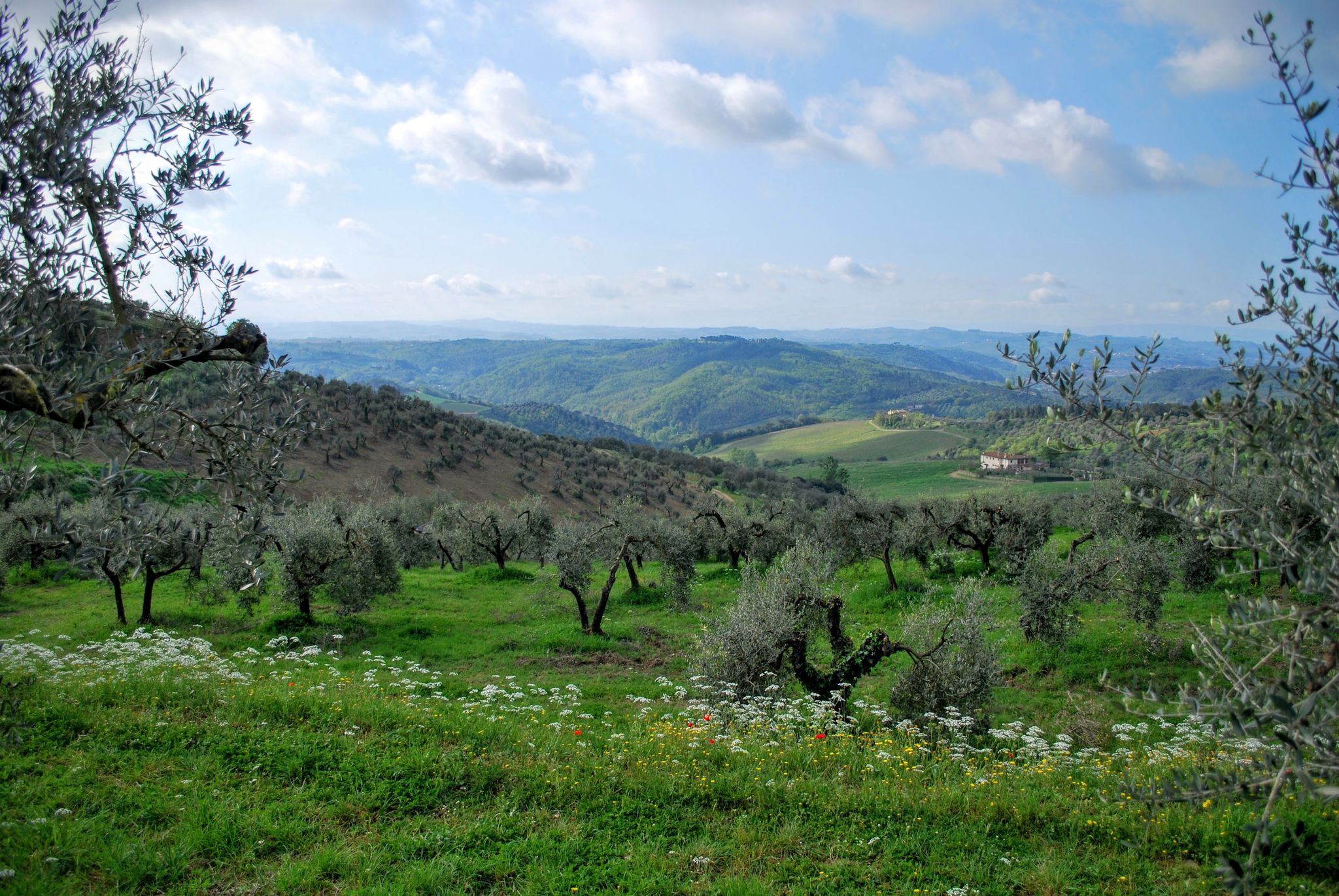
The holm oak of Faltognano is a monumental tree that is over a century old and is located near the church of Santa Maria Assunta in Faltognano, in the municipality of Vinci in the province of Florence. It is a specimen of holm oak (Quercus ilex) that has a trunk circumference of 4.60 m, is 11 m tall and dates back to before 1750 according to the inventory of monumental trees of Tuscany (progressive n°47). Over time it has undergone numerous prunings and interventions that have partially reduced its size and grandeur and altered its shape, which was once more dome-shaped. The plant has suffered from fungal attacks in recent decades and requires periodic care; at the moment various safety systems have been installed such as ropes, supports and a railing around the trunk to prevent branches from falling and limit access. In 2007 it received the Touring Club Award, an award announced by the TCI consuls of Tuscany for monumental trees. It is the symbol of the community of Faltognano and is located a short distance from the birthplace of Leonardo Da Vinci and the center of the city of Vinci; a center that can be seen inside the wonderful panoramic view that can be enjoyed from the foot of the tree.
1
0

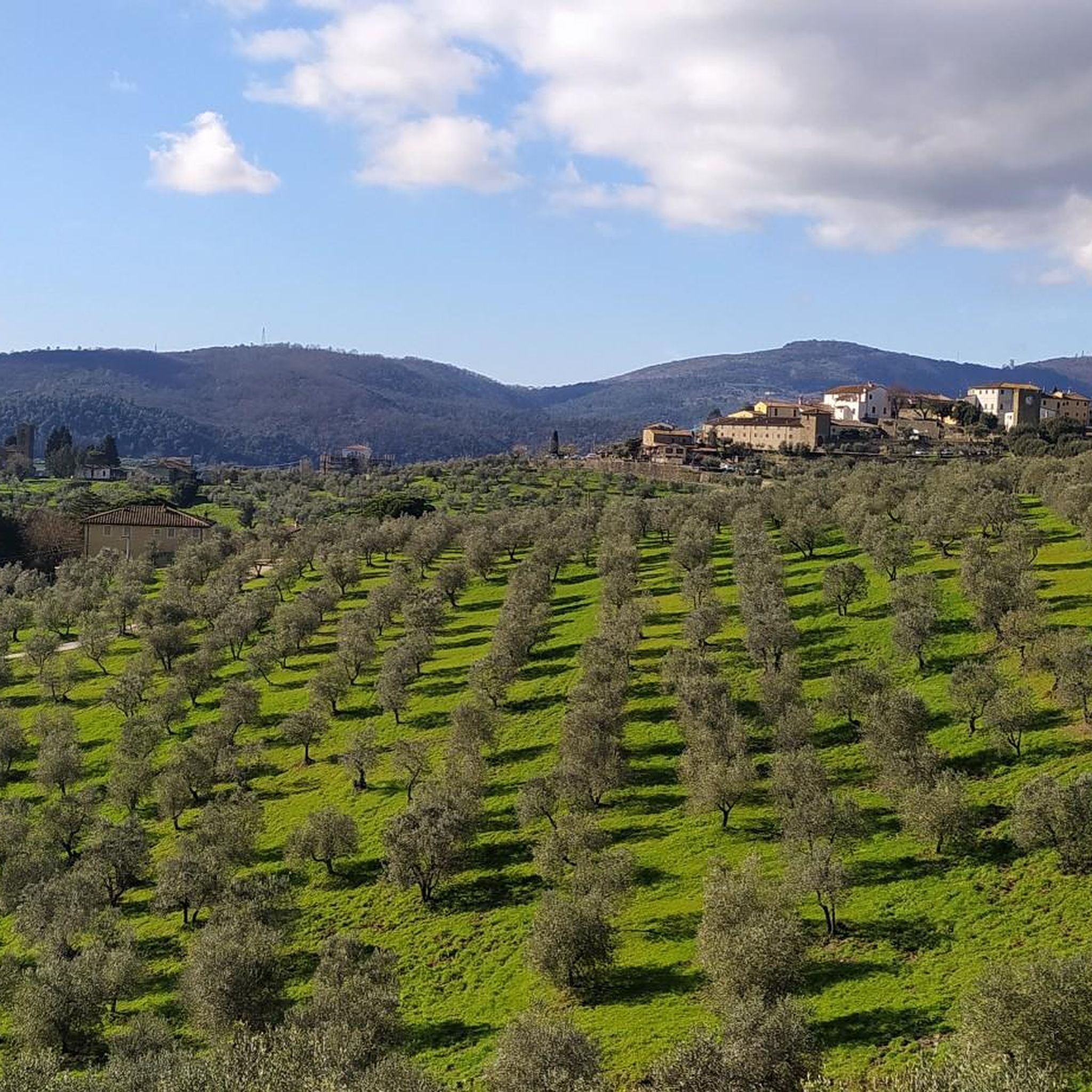
Devil's Boulder. It is a particular monolith located on the edge of a plateau surrounded by centenary holm oaks, similar - with smaller dimensions - to the so-called Etruscan Pyramid of Bomarzo. On the boulder there are writings that probably date back to a couple of centuries ago and indecipherable signs but what is most striking are the deep grooves perhaps due to uses and rituals that are lost in the mists of time. It is called "The Devil's Boulder" and is surrounded by centuries-old holm oaks in the Pietramarina woods, one of the most mysterious environments of Montalbano. The boulder is located near an area occupied by an Etruscan settlement, perhaps a sacrificial altar renamed "of the devil" by Christians to exorcise its pagan affiliation or, as a legend has it, "of the devil" because the devil left the the imprint of his hoof. However, the “Masso di Pietramarina” makes this corner of Montalbano suggestive and mysterious. It was also in a strategic position, given that from the top it is possible to see the sea.
0
0


The Parco delle Cascine di Tavola is a beautiful park that extends over about 300 hectares, just a few minutes from the city center, taking its name from the neighborhood of the same name in which it is located. In the fifteenth century, the farmhouses were created on the initiative of Lorenzo di Piero de' Medici, better known as the Magnificent. At the time, the livestock breeding and the production of cheeses originating in this locality satisfied the demand of all of Florence. Today, the park offers several opportunities to enjoy the spaces: walking, running, on one of the many benches or relaxing on the grass. It is not uncommon to spot wild animals. The park, usually quiet, offers panoramas and colors that strike the eyes and cheer up the spirit.
1
0
Discovered the door to hell told by Malaparte: it is a cave in Galceti Where did Dante go from to go to hell? But from Prato of course! Curzio Malaparte was sure of it and in some little-known stories he wrote it clearly: the gate of Hades is located in the city that gave him birth and precisely in Galceti. The exact location of the cave – narrated in texts such as The adventures of a captain of misfortune (1927), Imaginary Tuscany (1936), Games in front of Hell (1937), The golden sun of Etruscan Hell (1956), as well as a Maledetti Toscani (1957) – was identified after careful research by the association «Curzio Malaparte Prato in the world», founded and chaired by Walter Bernardi. Here are some passages from the story in which Malaparte describes the cave of hell. «The memory of the people of Prato wants us to go down to Hell along the road to Figline. Dante passed by there, along the Bardena: the wild forest is the pine forest of Galceti». «A few years ago a cartman from Coiano, whom I saw and knew up close, once entered a green marble quarry that had been abandoned for centuries, right under the third hump of Monferrato, near Figline, and came out with his face burnt , half blind and deaf, speechless with fright. His name was Agenor. From his hat, found under a stone at the entrance to a green marble quarry, at the bottom of the Galceti pine forest, it was understood that he had descended to Hell, all dressed up and with his feet in shoes, like Orpheus».
0
0
カルミニャーノでのの人気観光スポット

komootモバイルアプリでインスピレーションを得よう


さらに探索
これらのガイドで、最高の洞窟を探す範囲を広げましょうカルミニャーノでの:
