フィギエールの洞窟・トップ18
フィゲラス周辺の最高の城は、カタルーニャの歴史的要塞と戦略的な立地で知られる地域にあります。この地域は、海岸の景色から内陸の丘陵地帯まで多様な景観を特徴とし、これらの歴史的建造物に多様な背景を提供しています。フィゲラス自体は文化の中心地であり、周辺の遺産を探索するための玄関口となっています。ここにある城は、何世紀にもわたる軍事工学と地域の紛争を反映しています。
フィゲラス周辺の最高の城
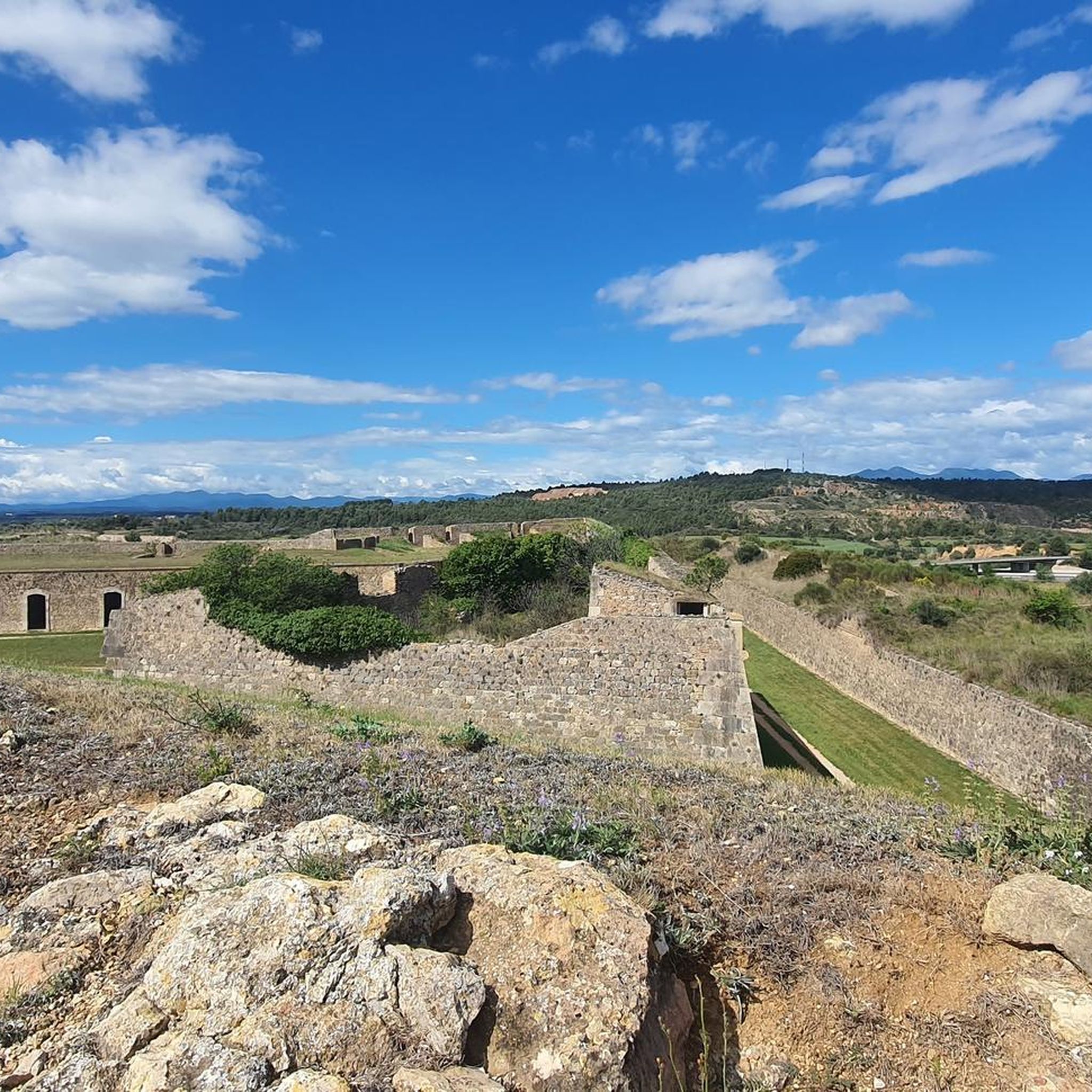
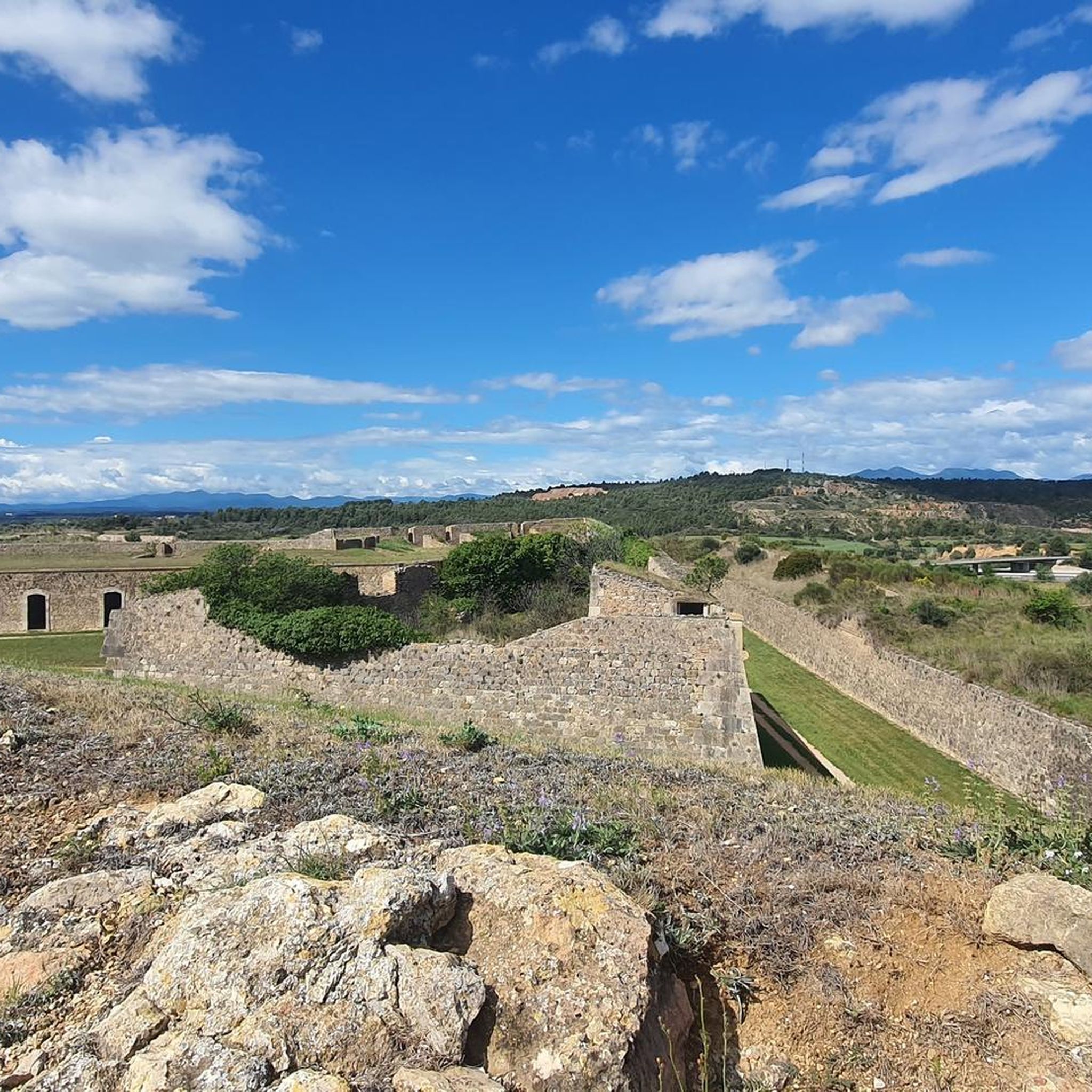
- 最も人気のある城は、ヨーロッパ最大の星形要塞であるサント・フェラン城です。この城は32ヘクタールの面積を占め、周囲3,120メートル、貯水槽には900万リットルの水を貯めることができます。
- もう一つの必見スポットは、中世起源の史跡であるサント・モリ城です。この印象的な建物は、15世紀にゴシック・ルネサンス様式の宮殿として再建され、中央の中庭と二連窓を備えています。
- 訪問者に人気なのは、13世紀末に建てられた城の一部であった史跡、サント・マルティ・デル・ファル教会と城です。これは単廊と長方形の後陣を持つロマネスク様式の寺院で、ゴシック様式への移行を示しています。
- フィゲラスは、その歴史的要塞、中世の遺跡、要塞化された教会で知られています。訪問者は、広大な軍事要塞から、より小さく戦略的に配置された城の遺構まで、さまざまな建造物を探索できます。
- フィゲラス周辺の城は、komootコミュニティによって高く評価されており、30以上の「いいね」と訪問者によって共有された30枚以上の写真があります。
最終更新日: 10月 7, 2026
カステル・デ・サン・フェラン
ハイライト • 城
翻訳者 Google •
役立つ情報 は

サン・マルティ・デル・ファル教会と城
ハイライト • 歴史的な場所
翻訳者 Google •
役立つ情報 は
今すぐサインアップして、こんな場所を発見しよう
最高のシングルトラック、ピーク、その他のエキサイティングなアウトドアスポットのおすすめを受け取ろう。
カスティーリョ・デ・サン・モリ
ハイライト • 城
翻訳者 Google •
役立つ情報 は
Castell de les Escaules
ハイライト • 城
Period 13th to 15th century
Location: Hill to the south of the town of Les Escaules
Special Interest
Protection Cultural property of national interest (BCIN)
翻訳者 Google •
役立つ情報 は

無料アカウントで今日から始めよう
次の冒険が待っています。
フィギエール周辺で人気
フィギエールでのの他の冒険


コミュニティからのヒント

...short or long hike possible 👌🥾...great view
0
0

If you don't want to go about 400 m along the National Road, there is a path, although it is only for mountain bikes and you will still have to push through certain rather complex sections.
0
0

The octagonal fortress Castell de Sant Ferran, covering 32 hectares, was built to accommodate 6,000 people and 500 horses. It is the largest bulwark fortress built in Europe in the 18th century.
1
0

Panoramic views of the Alt Empordar maritime mountains. You have two benches and a picnic area next to the motorhome and parking area. The neighborhood just below the castle is a bit problematic, so don't leave your bike behind because it can be stolen by the group of young people who come up to smoke boil and...
3
0
https://castellsantferran.com/es/horarios https://castellsantferran.com/es/horarios https://www.youtube.com/watch?v=uB1WPtwXzCo The Castle of San Fernando in Figueres, known as Castell de Sant Ferran, is the largest bastioned fortress in Europe, its construction beginning in 1753 under the reign of Ferdinand VI of Bourbon. It was designed by military engineer Juan Martín Zermeño and could house a garrison of 4,000 men. During the War of Independence, it was occupied by Napoleonic troops and later recovered by the Catalan migueletes. In the Spanish Civil War, it served as a concentration point for the International Brigades and a refuge for the Spanish Artistic Treasure, and in 1939 it hosted the last meeting of the Republican Cortes in national territory. It was subsequently used as a barracks until the 1960s and was opened to the public in 1996. The fortress has suffered significant damage throughout its history, including the destruction of part of its walls and structures during explosions in the Civil War. .
3
0
Located on a hill, at the end of the Castell pujada, it is a large bastioned fortification built in the 18th century following the project of the commander of the Corps of Engineers Juan Martín Zermeño. It occupies an area of 32 hectares with a perimeter of 3,120 meters, and the cisterns, located under the parade ground, hold 9 million liters of water. The castle of San Ferran, which had a capacity for 4,000 men, currently constitutes a heritage legacy of the first order, the largest monument in Catalonia and the largest modern fortress in Europe. Due to its enormous dimensions, the sophisticated construction techniques applied in the military engineering of the time, and its excellent state of conservation, a visit to the Sant Ferran castle constitutes a unique experience.
3
0
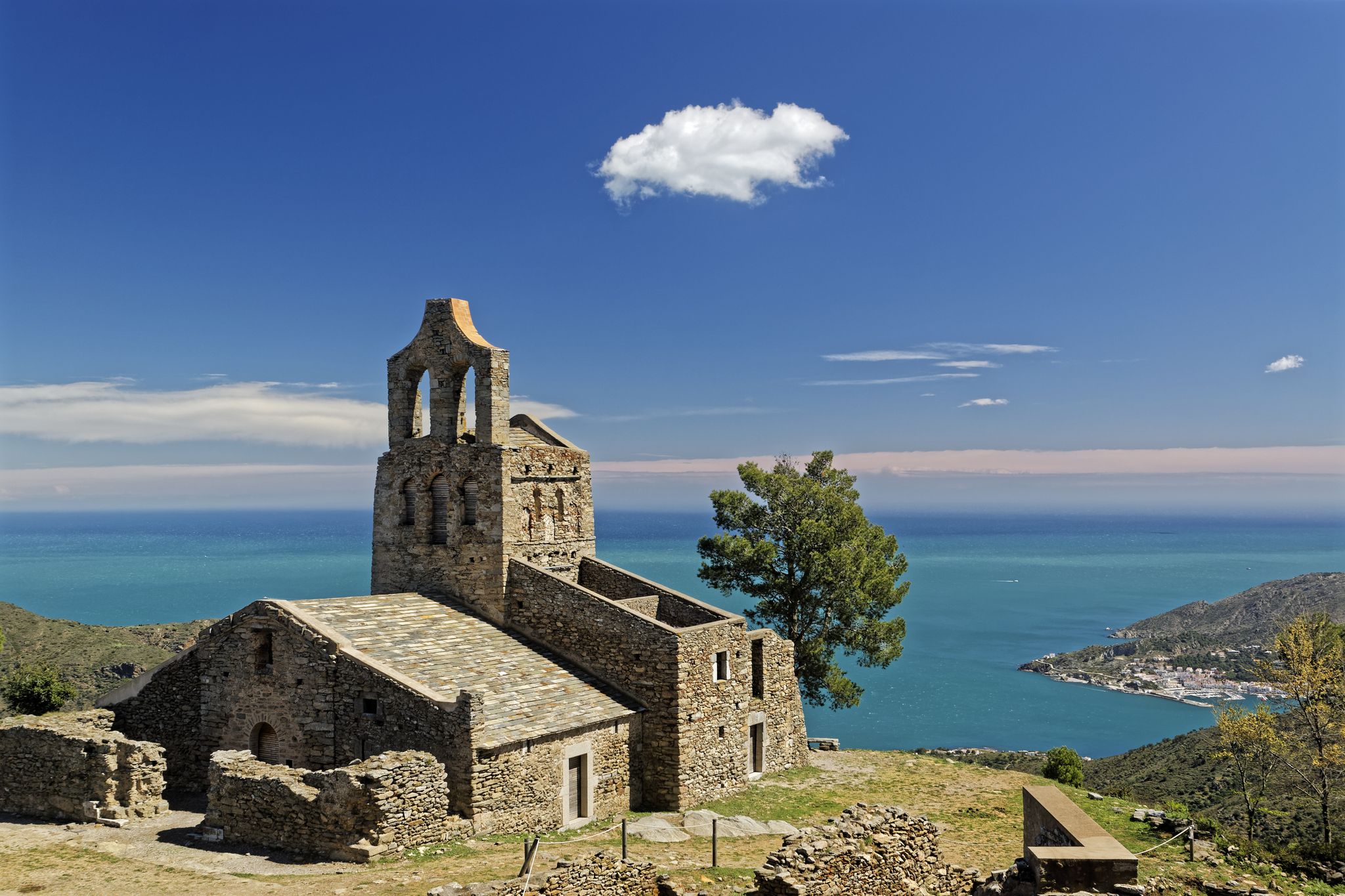
The temple of Sant Martí del Far, located at the highest part of the town, was part of the castle built at the end of the s. XIII. It is a single nave church with a rectangular apse. The vault of the nave is pointed and followed, the presbytery has the same shape. The cover, located to the west, has three semicircular arches in gradation, lintel and smooth tympanum. The most remarkable element of this facade is the upper half-point arched window, of large dimensions and with saw-tooth decoration. A saddle bell tower with two semicircular arches and an upper corsair supported by nine corbels complete this facade. The walls of the apse rise above the level of its vault. In this area, on the roof, a set of long loopholes opens around this rectangular apse. The upper part of the wall is finished by a corsera formed by small pointed arches. The fortification of the apse and that of the bell tower on the front are from the same period as the rest of the temple; on the other hand, on the side walls of the nave are raised stone walls finished with rectangular battlements that correspond to a late reform, possibly from the 18th century. On each of the side walls of the nave there are also five gargoyles and in the apse we find four with a very simple decoration. The entire church presents a set of well-spaced ashlars that form perfectly consecutive rows. In the upper part of the apse where the loopholes open there is a frieze made up of three rows of ashlars of a darker color that stands out within the monument as a whole. The church of Sant Martí del Far has been documented since the 13th and 14th centuries. It seems that it was rebuilt during the 13th century, when the Count of Empúries had the castle built. It is a Romanesque temple that indicates the transition to the Gothic style.”
0
0
https://www.youtube.com/watch?v=oi0HgiBDuF0The imposing building that we can see today was built in the 15th century on the remains of a medieval castle documented since 1149 and that in the century XIII was owned by Bernat de Creixell. Historians do not agree on whether the monastery of Sant Miquel de Fluvià had the superior lordship. In any case, we know that the Creixells passed by marriage to the Vilaguts and from these to the Rocabertís, already in the 15th century. It was at that time when the first major transformation of the castle took place and when Queen Joana Enríquez, mother of Ferdinand the Catholic, settled there for a while. Since then it has been in the hands of the descendants of Pere de Rocabertí, the Cardona-Rocabertí and then the Sentmenat and the Moxó. Maria Mercè de Sentmenat i de Patiño received the title of Marchioness of Sant Mori in 1893. The castle is located in the middle of the town. It is configured as a large massive block, rectangular in plan, with a central courtyard. The main portal is dovetailed and on the facades there are several bigeminated crown windows, decorated with noble coats of arms, one of which shows the fleurs-de-lis of the Vilagut. Other windows are the result of modern restoration. swIf you want, you can rent it for rooms or weddings... https://www.airbnb.es/rooms/30806789?adults=1&children=0&enable_m3_private_room=true&infants=0&pets=0&check_in=2024-02-29&check_out=2024-03-05&source_impression_id=p3_1704139137_peqk24%2FuplIlvbBN&previous_page_section _name=1000&federated_search_id=8a9627cf-4904-4024- 9e09-702153ebb233
3
0
よくある質問
フィゲレス近郊で訪れるべき、最も大きく最も重要な城は何ですか?
最も著名な城は、フィゲレスにあるサント・フェラン城です。この城はヨーロッパ最大の星形要塞として知られ、32ヘクタールの面積と3,120メートルの周囲長を誇ります。その広大な規模と洗練された18世紀の軍事工学は、ユニークな史跡となっています。
ユニークな体験やツアーを提供している城はありますか?
サント・フェラン城では、オーディオガイド付きで内部エリアを探索したり、オフロード車やインフレータブルボート(要事前予約)で外郭や地下空間にまで足を延ばしたりできるユニークなツアーを提供しています。これらのツアーは、要塞の洗練された建設技術を際立たせています。
フィゲレス周辺で家族連れに適した城はありますか?
サント・フェラン城とサント・モリ城は、どちらも家族連れに適した城としてリストアップされています。サント・フェラン城の広大さとユニークなツアーはあらゆる年齢層にとって魅力的であり、サント・モリ城はゴシック・ルネサンス様式の建築で中世の歴史を垣間見ることができます。
この地域の城はどのような歴史的重要性を持っていますか?
フィゲレス周辺の城、特にサント・フェラン城は、特にフランスからの侵攻に対してスペインのエル・アンポルダ地域を守る上で重要な役割を果たしました。サント・フェラン城は近代において戦略的に重要であり、イベリア半島戦争でも役割を担いました。サント・モリ城やケルマンソ城のような他の史跡は、中世の紛争と建築の進化の何世紀にもわたる歴史を反映しています。
城からパノラマビューを楽しむことはできますか?
はい、サント・フェラン城はその稜堡からフィゲレスと周辺地域の壮大なパノラマビューを提供しています。サント・マルティ・デル・ファル教会と城やカステル・デ・レス・エスカウレスも景観の眺めが良いビューポイントとして知られています。
これらの城の近くにハイキングやサイクリングルートはありますか?
はい、この地域では様々なアウトドアアクティビティが楽しめます。ハイキングでは、「フィゲレス市内ツアー - ダリ美術館とサント・フェラン城」や「フィゲレス城 — サルバドール・ダリ美術館からの周回ルート」のようなルートがあります。サイクリングでは、「フィゲレス - ローゼス自転車ルート」や「フィゲレス発、サント・フェラン城 – ダリ劇場美術館ループ」などのオプションがあります。さらに詳しいルートは、フィゲレス周辺のハイキングおよびフィゲレス周辺のMTBトレイルガイドでご覧いただけます。
フィゲレス周辺の城を訪れるのに最適な時期はいつですか?
特定の季節の開館時間は異なりますが、この地域は一般的に地中海性気候を楽しんでいます。サント・フェラン城のような城の外観を探索したり、近くのハイキングを楽しんだりするには、春と秋が快適な気温を提供します。夏は暑くなることがありますが、城は天候に関わらず歴史的な興味を提供します。
城に駐車場はありますか?
サント・フェラン城には駐車場があり、キャンピングカー・駐車場エリアの隣にはピクニックエリアもあります。他の城については、現地の情報を確認するか、近くの町に駐車して徒歩で訪れることをお勧めします。
城にはどのようなユニークな建築的特徴が見られますか?
サント・フェラン城は、10ヘクタールの堀、ホーンワークス、堡塁、広大な地下貯水槽を含む18世紀の星形要塞設計で注目に値します。サント・モリ城は、中央の中庭と二連窓を備えたゴシック・ルネサンス様式を特徴としています。サント・マルティ・デル・ファル教会と城は、単身廊と長方形の後陣を持つロマネスク様式の寺院で、ゴシック様式への移行を示しており、要塞化された要素も備えています。
宿泊施設として利用されている城はありますか?
サント・モリ城はゴシック・ルネサンス様式の宮殿として再建され、現在では客室や結婚式などのイベント用にレンタル可能で、ホテル兼レストランとしても運営されており、その優れた保存状態を保証しています。
探検する価値のある、あまり知られていない、または「隠れた名所」のような城はありますか?
サント・フェラン城はよく知られていますが、中世の遺跡と包囲戦の歴史を持つケルマンソ城や、素晴らしい眺めと孤立感を提供する人里離れたカステル・デ・レス・エスカウレスのような史跡を探検することで、この地域の歴史に対する異なる視点を得ることができます。
フィギエールでのの人気観光スポット

komootモバイルアプリでインスピレーションを得よう


さらに探索
他の場所で最高の城を探していますか?他のガイドを発見しましょうフィギエールでの:
