サンジール周辺のアトラクション&必見スポット - トップ20
サンジールには必見のスポットがたくさんあります。ハイキング愛好家やサイクリング愛好家の方は、ぜひサンジールを探索してこのエリアにある20
の隠れたスポットを訪れてみてください。このエリアの必見スポットを確認し、次の冒険に出かける計画を立てましょう。
最終更新日: 10月 18, 2026
マルティエールの処刑者の丘
ハイライト • その他
翻訳者 Google •
役立つ情報 は

カトリック教会 - ジェヴェゼのサント=ジュスティーヌ教会
ハイライト • その他
翻訳者 Google •
役立つ情報 は

今すぐサインアップして、こんな場所を発見しよう
最高のシングルトラック、ピーク、その他のエキサイティングなアウトドアスポットのおすすめを受け取ろう。
ロアゾン・パークの水車
ハイライト • 記念碑
翻訳者 Google •
役立つ情報 は

Le Moulin de Champcors
ハイライト • 記念碑
翻訳者 Google •
役立つ情報 は

アピニェ水上スポーツセンター
ハイライト • 湖
Close to the Apigné pond and 2 restaurants
Lots of possibilities for walks or bike rides
翻訳者 Google •
役立つ情報 は

無料でサインアップして、さらに多くの観光スポットを発見しましょう サンジールでの。
すでにアカウントをお持ちですか?
無料アカウントで今日から始めよう
次の冒険が待っています。


コミュニティからのヒント


Using the power of moving water to drive a mill wheel is an ancient invention that dates back to pre-Christian times. Thanks to such a construction, human or animal muscle power could be easily replaced by a watercourse - natural or artificially created - in order to grind grain into corn, for example. There are essentially two different ways of driving watermills: either the water simply hits the blades of the water wheel from below to set it in motion; or the water is guided above the wheel and falls onto the blades; this type of construction is more efficient due to natural gravity.
0
0

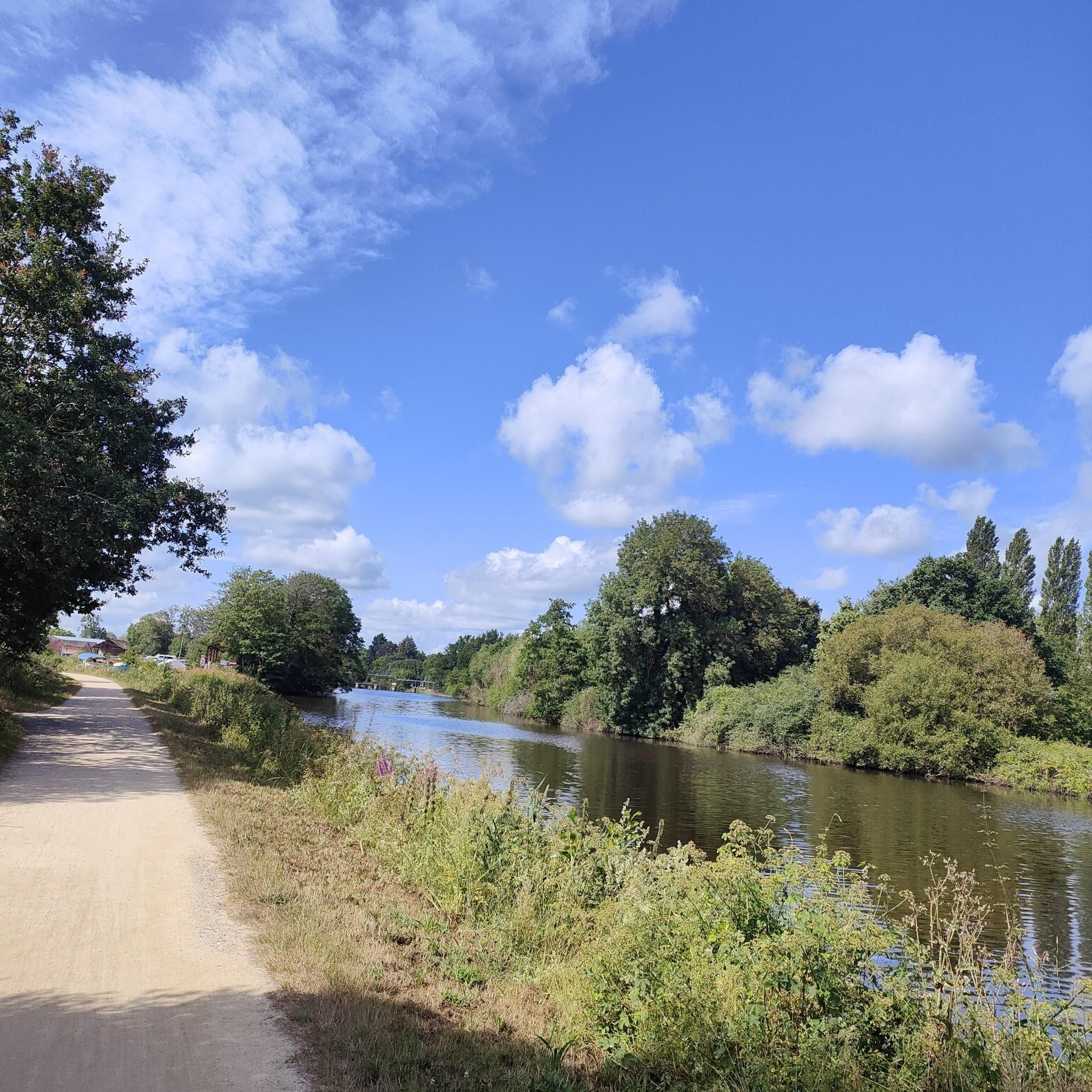
Beautiful walk on the Vilaine passing through Roazhon Park!
0
0

The Champcors mill is a thousand-year-old water mill in Vilaine and the commune of Bruz producing flour from wheat mainly from Maine-et-Loire for bakers from Ille-et-Vilaine wanting flour made from traditional way and without the addition of chemicals. Having belonged to the Champion de Cicé family, one of whose representatives gave his name to one of the streets in Rennes, it has been run since 1953 by the Pivan family. In 2012, Emmanuel Pivan produced, after his father and grandfather, 700 tonnes of flour per year, according to him, less than a fifth of the production of a large flour mill. wiki-rennes.fr
0
0
The oldest remains of the parish church of Sainte-Justine de Gévezé date from the 12th century, notably a bay in the south wall of the nave. The Sainte-Justine Church was rebuilt in the 15th and 16th centuries, of which it retains some elements of its framework, or even gargoyles and crossettes with fantastic animal shapes. A tower had been built between 1614 and 1628. This one threatening to fall into ruins was rebuilt in the middle of the 19th century, in a different place: the bottom of the nave. The plans and specifications for this new porch bell tower were drawn up by Jacques Mellet who took delivery of the work in 1858. (wiki-rennes.fr)
0
0

Saint Justine is a 1st century martyr in Padua. Baptized in Padua by a disciple of Saint Peter, she remained firmly faithful to faith in Jesus Christ at the time of the persecutions. For her faith, she was pierced with a sword. The fame of his so lively faith spread throughout the Roman Empire, as far as Gaul, despite the hostile climate towards Christians. In Gévezé, the oldest remains of the church date from the 12th century, notably a bay in the south wall of the nave. The Sainte-Justine Church was rebuilt in the 15th and 16th centuries, of which it retains some elements of its framework, or even gargoyles and crossettes with fantastic animal shapes. A tower had been built between 1614 and 1628. This one threatening to fall into ruins was rebuilt in the middle of the 19th century, in a different place: the bottom of the nave. The Sait-Justine church housed two side altars dedicated to the Virgin and Saint Anne, made of stone and marble by the Rennes sculptor Bernard Dupont in 1637. They were demolished in 1783, by kind rationalist supporters of the Fraternal Republic and democratic.
1
0

Built in 1937 by the French soldiers to make it a shooting range, the Butte de la Maltière became in 1940 a very important place for the city of Saint-Jacques de la Lande and for its history. Indeed, on June 18, 1940 when the Germans arrived in Rennes - and therefore St-Jacques - they invaded the Butte de la Maltière and remained there until August 4, 1944, the day of the Liberation of Rennes. By taking control of St-Jacques, the Germans got into the habit of coming to shoot the resistance fighters who bothered them there. The first man shot was on July 17, 1940 and was called Marcel Brossier, sentenced to death for having cut a telephone cable. It was the same fate for 75 other resistance fighters, mostly from Ille-et-Vilaine. The shooting that most marked public opinion in Rennes and St-Jacques was that of December 30, 1942. On that day, 25 resistance fighters aged 19 to 43 were killed.
0
1
Built in 1937 by the French soldiers to make it a shooting range, the Butte de la Maltière became in 1940 a very important place for the city of Saint-Jacques-de-la-Lande and for its history. Indeed, on June 18, 1940 when the Germans arrived in Rennes - and therefore St-Jacques - they invaded the Butte de la Maltière and remained there until August 4, 1944, the day of the Liberation of Rennes. By taking control of St-Jacques, the Germans got into the habit of coming to shoot the resistance fighters who bothered them there. The first man shot was on July 17, 1940 and was called Marcel Brossier, sentenced to death for having cut a telephone cable. It was the same fate for 75 other resistance fighters, mostly from Ille-et-Vilaine.
0
0

komootモバイルアプリでインスピレーションを得よう


さらに探索
まだ探しているハイライトが見つかりませんか?他の地域のトップアトラクションのガイドを見てみましょう:
