バリーヌのおすすめライド
4.6
(57)
484
ライダー
149
ライド
バリーヌ周辺のロードバイクルートをお探しですか?ここでは、komootが提供するバリーヌでのロードバイクライドのコレクション全体を評価して選び抜いた人気ルートをご紹介します。各ライドの詳細をぜひご覧ください。
最終更新日: 10月 19, 2026
4.8
(4)
14
ライダー
59.9km
02:36
230m
230m
中程度のロードライド. ある程度のフィットネスレベルが必要です。 全般的に舗装状態が良好で走行しやすい道です。
4.5
(2)
14
ライダー
73.7km
03:12
330m
330m
中程度のロードライド. ある程度のフィットネスレベルが必要です。 全般的に舗装状態が良好で走行しやすい道です。

4.0
(2)
11
ライダー
59.1km
02:23
280m
280m
中程度のロードライド. ある程度のフィットネスレベルが必要です。 ツアーの一部に、未舗装のため走行が難しい箇所があるかもしれません。
17
ライダー
63.5km
02:50
310m
310m
中程度のロードライド. ある程度のフィットネスレベルが必要です。 全般的に舗装状態が良好で走行しやすい道です。
5.0
(1)
9
ライダー
95.8km
04:17
790m
790m
中程度のロードライド. ある程度のフィットネスレベルが必要です。 全般的に舗装状態が良好で走行しやすい道です。
さらに多くのルートや他のユーザーのおすすめ情報を確認できます。
すでにアカウントをお持ちですか?
おすすめのツアーは他のkomootユーザーが実際に経験した何千ものアクティビティに基づいています。
無料アカウントで今日から始めよう
次の冒険が待っています。
コミュニティからのヒント


The original Marian shrine "La Salette," which is referred to in this patronal feast, is located in the French Alps (Grenoble district) and is an important Marian shrine, even if it has not achieved the same level of fame as other pilgrimage sites honoring the Mother of God—such as Lourdes in the French Pyrenees or Fatima in Portugal. The hiking highlight "La Salette" can be found on komoot at the following link =>> https://www.komoot.com/de-de/highlight/1861054
0
0

The church was built in 1865 by Father Migorel, who supposedly had three visions of a church to be built on a hilltop at the junction of three roads. It was consecrated in 1867 and opened for worship. The octagonal tower, erected in 1871, is decorated with polychrome bricks and topped with four turrets housing statues of archangels.
0
0

Located in the center of the village, it is dedicated to two twin brothers, Saint Gervais and Saint Protais, who were martyred in the 2nd century in Milan. Its construction dates from the 12th century. At that time, it included the flat-saddle nave and the choir. In the 15th and 16th centuries, it was completed by the south aisle and the ceiling covering. The south aisle was listed in July 1932, and the entire church has been listed since September 2011.
0
0

Église Saint Madeleine is a church where beautiful various statues of Saints, famous and less famous. The reason for so many different statues is that the school of sculpture was established here.
0
0

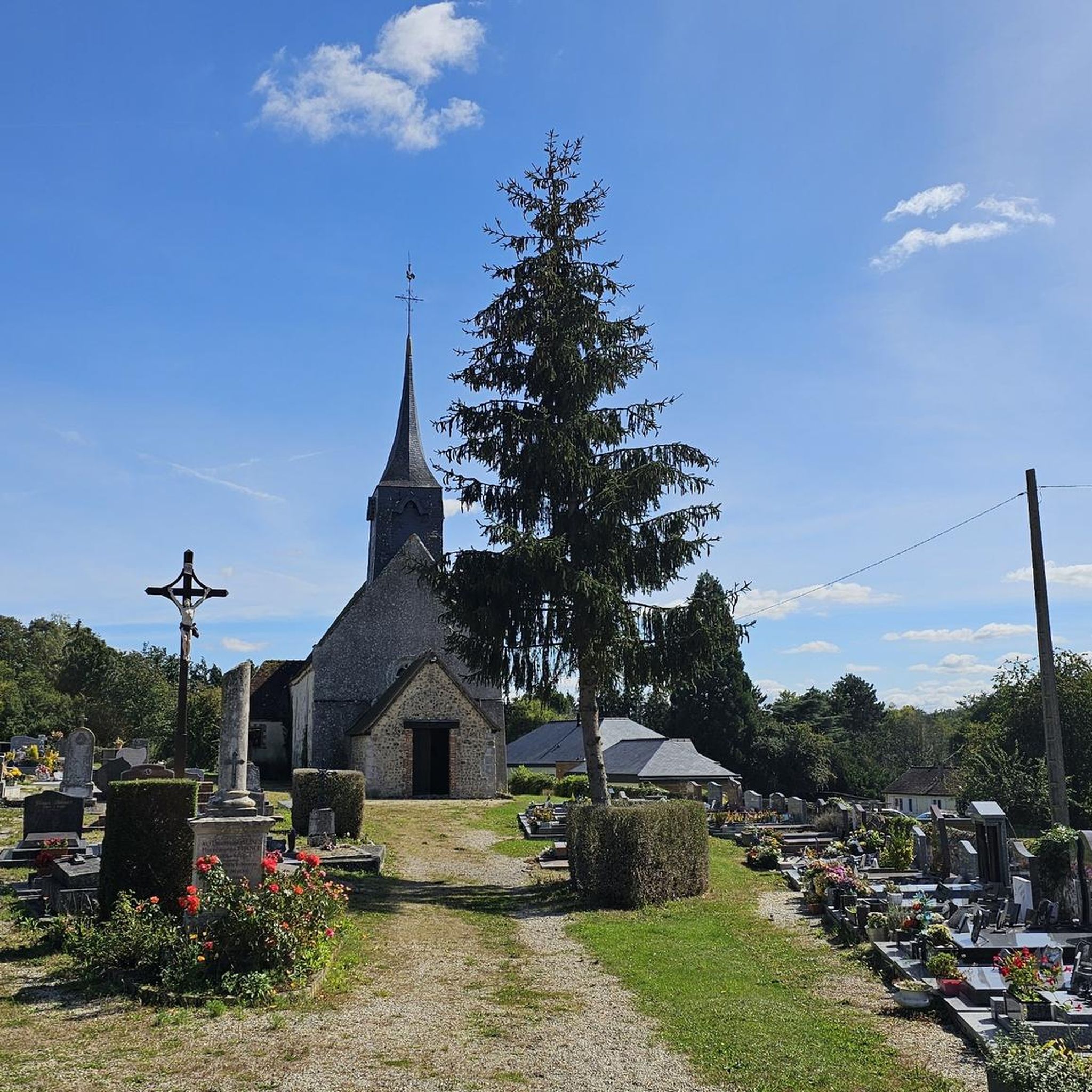
With a very simple plan, with its tiled nave and its small slate bell tower on the ridge, the church surrounded by its cemetery, set back from the road, overlooks the countryside planted with trees. The river is nearby, and its flowing water evokes that of the baptism of Jesus in the Jordan, as soon as we see the statue of the patron, Saint John the Baptist, in the choir. His arm raised towards the sky reminds us of his preaching in the desert of Palestine: "Prepare for the coming of the Messiah...". On the thin banner attached to his staff are written the words: "Ecce Agnus Dei", by which he already announced that he saw in Jesus the victim freely offering himself as a sacrifice for the Redemption of all men. Placed on the ground against the wall, a 17th century painting. depicts Jesus immersed up to his knees in the waters of the river, leaning with his hands crossed on his chest to receive the baptism of penance from the hand of John kneeling on the bank. We see “the Spirit descending on him like a dove” and we recall the words of John reported in the Gospel: “I am not worthy to bow down at his feet… I have baptized you in water; he will baptize you in the Holy Spirit.” Beside him, the angel wearing Jesus’ clothes turns his face towards a young child whom he guides with a hand placed on his shoulder, as if to teach him the profound meaning of baptism. Above the arch through which the nave opens onto the choir, the group of Christ on the cross surrounded by Mary and Saint John the Evangelist is a fine example of 16th century religious sculpture, faithful to traditional iconography. Similarly, at the back of the nave is the charming naive statue of Saint Fiacre: this young monk from Ireland loved to cultivate the vegetable garden of his monastery, near Meaux. Patron saint of gardeners, he holds his spade, and in the Perche region he was also invoked to cure various illnesses. More unique in style, the large Renaissance chest serving as a central altar was the former “work bench of the factory” reserved for the administrators of the parish’s resources and expenses. Let us admire the skill and imagination of the cabinetmaker who carved this series of full-length figures in oak under the arcades separated by “terms” inspired by Roman antiquity. Their distinctive attributes make us recognize Saints Christine, Barbara, Madeleine and Catherine on the front, and on the sides Saints Peter and Paul on the right, John the Baptist and Bartholomew on the left. Their silhouettes are more reminiscent of fairy tale characters…
0
0

Possibility of taking a walk in the park adjoining this beautiful ruin.
0
0
バリーヌでのの人気観光スポット

komootモバイルアプリでインスピレーションを得よう


さらに探索
他の地域の最高のロードサイクリングルートを見てみましょう。
